Portrait de Josef Kriehuber

Peintures de Josef Kriehuber : les 100 plus célèbres, selon le regard d'une galerie

Mis à jour en novembre 2026 · classé selon notre score de popularité (recherches, visites et commandes pour chaque œuvre) · 134 œuvres de Josef Kriehuber dans notre catalogue

En bref

Aux yeux de la galerie, la peinture la plus célèbre de Josef Kriehuber est Karoline Auguste. Fanny Elssler, Austrian ballerina (1830) et Prince Friedrich de Schwarzenberg (1847) complètent ce trio que tout le monde reconnaît. Parmi les 134 œuvres de Josef Kriehuber présentes dans notre catalogue, la galerie présente ci-dessous les 100 plus célèbres, chacune étant une œuvre originale avec son année, son musée et ce qui la rend unique.

1800 – 1876, Vienne Biedermeier Plus d'œuvres : National Portrait Gallery of Sweden

Les 10 meilleures peintures de Josef Kriehuber de la galerie

1
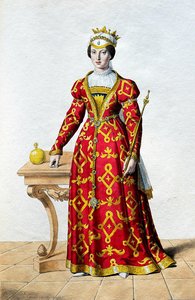
Karoline Auguste de Josef Kriehuber

Karoline Auguste

Lithographie

Dans ce portrait de Karoline Auguste, nous découvrons la représentation formelle d'une femme dont la tenue et la couronne suggèrent un rang social de haute importance. Josef Kriehuber, lithographe et peintre autrichien, a saisi son sujet en mettant l'accent sur la dignité intrinsèque de sa pose. L'œuvre dégage une présence calme et sereine, soulignant avec soin les détails de ses vêtements et les traits subtils de son visage. Il s'agit…

2
Fanny Elssler, Austrian ballerina (1830) de Josef Kriehuber

Fanny Elssler, Austrian ballerina

1830 · Lithography

The lithograph captures a moment of stillness in a life of movement. Fanny Elssler sits in a three-quarter view, her gaze drifting slightly away from the viewer toward an unseen point. She is an Austrian ballerina, frozen in a monochromatic world of silver and charcoal. Her posture is upright, a column of poise that suggests the quiet discipline behind the public spectacle of dance. The light is diffused, washing over…

3
Prince Friedrich de Schwarzenberg (1847) de Josef Kriehuber

Prince Friedrich de Schwarzenberg

1847 · Lithographie · Metropolitan Museum of Art, New York

Ce portrait saisissant capture le Prince Friedrich de Schwarzenberg dans l'atmosphère chargée de l'année 1847. Le sujet n'est pas simplement présenté comme un individu, mais comme l'incarnation même de la prestance militaire et de l'importance sociale au cours d'une ère charnière de l'histoire européenne. Revêtu des attributs formels de son rang — les lignes nettes de son uniforme, l'éclat autoritaire de l'épée tenue à la main — il impose le…

4
Josef Lanner, Austrian Composer (1825) de Josef Kriehuber

Josef Lanner, Austrian Composer

1825 · Lithograph

This monochrome portrait, titled Josef Lanner, Austrian Composer, was created by the artist Josef Kriehuber. The work depicts the Austrian composer Josef Lanner in a bust-length composition. The subject is presented as a gentleman of the era, shown from the chest up and facing slightly toward the viewer's left. The image is rendered in grayscale, utilizing varying shades of gray to define the form of the figure against a simple,…

5
Anton Bernhard Fürstenau, German flutist and composer (1830) de Josef Kriehuber

Anton Bernhard Fürstenau, German flutist and composer

1830 · Engraving

This monochrome engraving presents a bust-length portrait of Johann Baptist Forster, identified as the First Royal Magistrate of Saxony. The subject is positioned centrally against a dark, undifferentiated background, which focuses attention on the facial features and the formal attire. The composition follows a Neoclassical structure, emphasizing a realistic depiction of the man's physical presence. Light originates from above and slightly in front, casting highlights onto the forehead and the…

6
Ernst and Eduard Eichhorn, violin prodigies (1831) de Josef Kriehuber

Ernst and Eduard Eichhorn, violin prodigies

1831 · Lithograph

Josef Kriehuber produced Ernst and Eduard Eichhorn, violin prodigies, a black and white lithograph portrait. The work dates to about 1831. It captures the likeness of the two young musicians, Ernst and Eduard Eichhorn, who are identified as violin prodigies.

7
Karl von Rothkirch-Panthen, Bohemian-Austrian politician (1828) de Josef Kriehuber

Karl von Rothkirch-Panthen, Bohemian-Austrian politician

1828 · Lithography

The gaze of Karl von Rothkirch-Panthen, Bohemian-Austrian politician, meets the viewer through this striking lithograph. Josef Kriehuber captures the man in a moment of quiet dignity, presenting a figure of significant social and political weight. This portrait offers a window into the life of a man who navigated the complex corridors of power, eventually serving as a member of the Chamber of Deputies of the Imperial Council of Austria. Even…

8
Joseph Böhm, Hungarian Violinist and a director of the Vienna Conservatory (1830) de Josef Kriehuber

Joseph Böhm, Hungarian Violinist and a director of the Vienna Conservatory

1830 · Lithograph

This lithograph, titled "Joseph Böhm, Hungarian Violinist and a director of the Vienna Conservatory" by Josef Kriehuber, depicts the subject in a formal bust-length view. The portrait captures Joseph Böhm, a Hungarian violinist who held the position of professor at the Vienna Conservatory from 1819 to 1848. The image is rendered in a monochrome grayscale palette, utilizing fine lines to define the contours of the subject's face and attire. He…

9
Bulcs (1828) de Josef Kriehuber

Bulcs

1828 · Lithograph

A man stands centered against a muted, mountainous landscape, his gaze fixed and stern. He is a figure of history, or perhaps a memory of one, draped in the heavy textures of a warrior's attire. The light falls evenly across his face, revealing the fine, etched lines of his features and the sharp edges of his weaponry. He holds an axe, a bow, and arrows, tools of a life defined…

10
Ferdinand III (1828) de Josef Kriehuber

Ferdinand III

1828 · Lithograph

This portrait of Ferdinand III, executed by Josef Kriehuber, offers a quiet study of authority from the early nineteenth century. Created in 1828, the work captures the subject in a moment of formal repose. Kriehuber focuses on the dignity of the sitter, presenting him in full regal attire that signals his high status. The portrait provides a clear, direct encounter with a figure of historical significance.

Peintures de Josef Kriehuber, classées de 11 à 100

11Vladislav II (1828) de Josef KriehuberVladislav II1828 12Leopold I (1828) de Josef KriehuberLeopold I1828 13Joseph II (1828) de Josef KriehuberJoseph II1828 14Karl VI (1828) de Josef KriehuberKarl VI1828 15Koloman (1828) de Josef KriehuberKoloman1828 16Ferdinand I of Austria (1828) de Josef KriehuberFerdinand I of Austria1828 17Taksony (1828) de Josef KriehuberTaksony1828 18Lehel (1828) de Josef KriehuberLehel1828 19Bela III (1828) de Josef KriehuberBela III1828 20Ludwig I (1828) de Josef KriehuberLudwig I1828 21Geza (1828) de Josef KriehuberGeza1828 22Franz II (1828) de Josef KriehuberFranz II1828 23Johann Zapolya (1828) de Josef KriehuberJohann Zapolya1828 24Keve, legendary Hungarian military leader (1828) de Josef KriehuberKeve, legendary Hungarian military leader1828 25Geza I (1828) de Josef KriehuberGeza I1828 26Austrian Family, The Mother (1827) de Josef KriehuberAustrian Family, The Mother1827 27Austrian Family, the Father (1827) de Josef KriehuberAustrian Family, the Father1827 28Stephan V (1828) de Josef KriehuberStephan V1828 29Ladislaus IV (1828) de Josef KriehuberLadislaus IV1828 30Stephan II (1828) de Josef KriehuberStephan II1828 31Matthias Corvinus (1828) de Josef KriehuberMatthias Corvinus1828 32Ladislaus (1828) de Josef KriehuberLadislaus1828 33Austrian Family, The Son (1827) de Josef KriehuberAustrian Family, The Son1827 34Stephan IV (1828) de Josef KriehuberStephan IV1828 35Emmerich (1828) de Josef KriehuberEmmerich1828 36Stephan III (1828) de Josef KriehuberStephan III1828 37Ladislaus V (1828) de Josef KriehuberLadislaus V1828 38Ladislaus III (1828) de Josef KriehuberLadislaus III1828 39Karl I (1828) de Josef KriehuberKarl I1828 40Austrian Family, The Daughters (1827) de Josef KriehuberAustrian Family, The Daughters1827 41Ladislaus II (1828) de Josef KriehuberLadislaus II1828 42Andreas II (c.1177-1235), King on Hungary from 1205 to 1235 (1828) de Josef KriehuberAndreas II (c.1177-1235), King on Hungary from 1205 to 12351828 43Keme, legendary Hungarian military leader (1828) de Josef KriehuberKeme, legendary Hungarian military leader1828 44Attila, King of the Huns (1828) de Josef KriehuberAttila, King of the Huns1828 45Wenzel III (1828) de Josef KriehuberWenzel III1828 46Sabolch, legendary Hungarian military leader (1828) de Josef KriehuberSabolch, legendary Hungarian military leader1828 47Kadicha, legendary Hungarian military leader (1828) de Josef KriehuberKadicha, legendary Hungarian military leader1828 48Andreas I (c.1015-1060), King on Hungary from 1046 to 1060 (1828) de Josef KriehuberAndreas I (c.1015-1060), King on Hungary from 1046 to 10601828 49Wladislaw I (1828) de Josef KriehuberWladislaw I1828 50Elizabeth of Luxembourg (1828) de Josef KriehuberElizabeth of Luxembourg1828 51Samuel Aba (1828) de Josef KriehuberSamuel Aba1828 52Buda, legendary Hungarian military leader, namesake of Budapest (1828) de Josef KriehuberBuda, legendary Hungarian military leader, namesake of Budapest1828 53Andreas III (c.1265-1301), King on Hungary from 1290 to 1301 (1828) de Josef KriehuberAndreas III (c.1265-1301), King on Hungary from 1290 to 13011828 54Maria I (1828) de Josef KriehuberMaria I1828 55Arpad, Grand Prince of the Hungarians (1828) de Josef KriehuberArpad, Grand Prince of the Hungarians1828 56Karl Gustav Löwenhielm (1790-1858), count, lieutenant general, governor, married to 1. countess Gustava Charlotta Jacobina Aurora Gyldenstolpe 2. countess Natalie Alexandra von Buxhoeweden (1836) de Josef KriehuberKarl Gustav Löwenhielm (1790-1858), count, lieutenant general, governor, married to 1. countess Gustava Charlotta Jacobina Aurora Gyldenstolpe 2. countess Natalie Alexandra von Buxhoeweden1836 · National Portrait Gallery of Sweden 57Natalie Alexandra von Buxhoeweden (1814-1867), countess, maid of honour of Alexandra Fjodorovna of Russia, married to count Karl Gustav Löwenhielm (1839) de Josef KriehuberNatalie Alexandra von Buxhoeweden (1814-1867), countess, maid of honour of Alexandra Fjodorovna of Russia, married to count Karl Gustav Löwenhielm1839 · National Portrait Gallery of Sweden 58Josef Zinner Forstmeister, Matthias Zinner Hofjäger, Ferdinand Zinner Hofjäger (1835) de Josef KriehuberJosef Zinner Forstmeister, Matthias Zinner Hofjäger, Ferdinand Zinner Hofjäger1835 59Robert Schumann, Austrian Composer (1839) de Josef KriehuberRobert Schumann, Austrian Composer1839 60Christoph Graf Cavriani with his son Franz (1836) de Josef KriehuberChristoph Graf Cavriani with his son Franz1836 61Karl Josef Lipinsky, Polish music composer and virtuoso violinist (1837) de Josef KriehuberKarl Josef Lipinsky, Polish music composer and virtuoso violinist1837 62Countess Ludmilla Csaky, née Lazansky Von Bukowa with her son Ladislaus Csaky Graf Von Körösszegh U. Adorjan, politician (1839) de Josef KriehuberCountess Ludmilla Csaky, née Lazansky Von Bukowa with her son Ladislaus Csaky Graf Von Körösszegh U. Adorjan, politician1839 63Le Comte Guillaume Isidore De Montbel (1836) de Josef KriehuberLe Comte Guillaume Isidore De Montbel1836 64Children (1836) de Josef KriehuberChildren1836 65Gentleman in riding costume (1838) de Josef KriehuberGentleman in riding costume1838 66A Morning with Liszt (Hungarian Composer) (1846) de Josef KriehuberA Morning with Liszt (Hungarian Composer)1846 67Giorgio Ronconi, Italian Baritone (1840) de Josef KriehuberGiorgio Ronconi, Italian Baritone1840 68Thomas Lederer, Doctor and homeopath (1846) de Josef KriehuberThomas Lederer, Doctor and homeopath1846 69Filippo Coletti, Italian Baritone (1841) de Josef KriehuberFilippo Coletti, Italian Baritone1841 70Aloius Rubana, civil servant and councilor (1841) de Josef KriehuberAloius Rubana, civil servant and councilor1841 71Aloisia Eleonore Schönburg-Hartstein With children (1841) de Josef KriehuberAloisia Eleonore Schönburg-Hartstein With children1841 72Maria, née Czernin, and her daughter Wilhelmine Kinsky. Countess. (1844) de Josef KriehuberMaria, née Czernin, and her daughter Wilhelmine Kinsky. Countess.1844 73The Counts Jaromir, Rudolf, Herrmann and Humbert Czernin (1847) de Josef KriehuberThe Counts Jaromir, Rudolf, Herrmann and Humbert Czernin1847 74Eduard Woyna (1840) de Josef KriehuberEduard Woyna1840 75Franz Schubert, Austrian Composer (Posthumous Lithography) (1846) de Josef KriehuberFranz Schubert, Austrian Composer (Posthumous Lithography)1846 76Count Georg Esterházy Von Galántha (1840) de Josef KriehuberCount Georg Esterházy Von Galántha1840 77The Archdukes Franz Joseph, Ferdinand Max and Carl Ludwig (1844) de Josef KriehuberThe Archdukes Franz Joseph, Ferdinand Max and Carl Ludwig1844 78Portrait of Emperor Franz Joseph I at 23 Years of Age (1853) de Josef KriehuberPortrait of Emperor Franz Joseph I at 23 Years of Age1853 79Baron Heinrich von Hess, Austrian General (Field Marshal) (1854) de Josef KriehuberBaron Heinrich von Hess, Austrian General (Field Marshal)1854 80Brothers Kleins (1849) de Josef KriehuberBrothers Kleins1849 81Baron Carl von Ghega, Austrian railway engineer (1851) de Josef KriehuberBaron Carl von Ghega, Austrian railway engineer1851 82Antonie Countess Batthyany, bourn Zichy. Wife of Ludwig Graf Batthyany (1849) de Josef KriehuberAntonie Countess Batthyany, bourn Zichy. Wife of Ludwig Graf Batthyany1849 83Josef Kriehuber, Austrian Lithographer and Artist (Self-Portrait) (1852) de Josef KriehuberJosef Kriehuber, Austrian Lithographer and Artist (Self-Portrait)1852 84Karl Von Giskra, Austrian Politician (1861) de Josef KriehuberKarl Von Giskra, Austrian Politician1861 85Ludwig Gabillon, German actor of the Burgtheater and theatre director (1860) de Josef KriehuberLudwig Gabillon, German actor of the Burgtheater and theatre director1860 86Josef Unger, Austrian jurist and statesman (1861) de Josef KriehuberJosef Unger, Austrian jurist and statesman1861 87Franz Joseph I of Austria, Emperor of Austria (1860) de Josef KriehuberFranz Joseph I of Austria, Emperor of Austria1860 88Max Von Gomperz, Austrian industrialist and banker (1860) de Josef KriehuberMax Von Gomperz, Austrian industrialist and banker1860 89Josef Kriehuber, Austrian Lithographer (Self-portrait) (1860) de Josef KriehuberJosef Kriehuber, Austrian Lithographer (Self-portrait)1860 90Gabriele Saaint-Genois, b. Countess Stolberg with her daughter Anna (1858) de Josef KriehuberGabriele Saaint-Genois, b. Countess Stolberg with her daughter Anna1858 91Sir Julius Benedict, German-born composer and conductor (1861) de Josef KriehuberSir Julius Benedict, German-born composer and conductor1861 92Duchess Elisabeth of Bavaria, Empress of Austria (Sisi / Sissi) (1863) de Josef KriehuberDuchess Elisabeth of Bavaria, Empress of Austria (Sisi / Sissi)1863 93August Förster, German actor and theatre director (1863) de Josef KriehuberAugust Förster, German actor and theatre director1863 94Johann Emanuel Veith, Bohemian, Roman Catholic preacher (1860) de Josef KriehuberJohann Emanuel Veith, Bohemian, Roman Catholic preacher1860 95Portrait of a young woman with a rose (1859) de Josef KriehuberPortrait of a young woman with a rose1859 96Empress Elisabeth of Austria with her children Rudolf and Gisela (1858) de Josef KriehuberEmpress Elisabeth of Austria with her children Rudolf and Gisela1858 97Portrait of a gentleman with a top hat (1863) de Josef KriehuberPortrait of a gentleman with a top hat1863 98Portrait of a lady in a blue dress (1856) de Josef KriehuberPortrait of a lady in a blue dress1856 99Portrait of a country lady in a brown dress (1862) de Josef KriehuberPortrait of a country lady in a brown dress1862 100Vuk Karadžić, Serbian philologist, linguist and one of the most important reformers of the modern Serbian language (1865) de Josef KriehuberVuk Karadžić, Serbian philologist, linguist and one of the most important reformers of the modern Serbian language1865

Les peintures célèbres de Josef Kriehuber, période par période

Les sujets qui ont captivé Josef Kriehuber

Les quatre thèmes qui reviennent le plus souvent dans ces œuvres originales, chacun illustré par son plus bel exemple.

Les musées qui conservent les œuvres originales de Josef Kriehuber

Les 2 musées qui détiennent la plupart des peintures de cette page.

Musées Ville Œuvres de Josef Kriehuber Peintures de cette liste
National Portrait Gallery of Sweden, SträngnäsNational Portrait Gallery of Sweden Strängnäs 2 Karl Gustav Löwenhielm (1790-1858), count, lieutenant general, governor, married to 1. countess Gustava Charlotta Jacobina Aurora Gyldenstolpe 2. countess Natalie Alexandra von Buxhoeweden, Natalie Alexandra von Buxhoeweden (1814-1867), countess, maid of honour of Alexandra Fjodorovna of Russia, married to count Karl Gustav Löwenhielm
Metropolitan Museum of Art, New YorkMetropolitan Museum of Art New York 1 Prince Friedrich de Schwarzenberg

Josef Kriehuber, une œuvre emblématique par décennie

Œuvres par décennie

Choisissez une décennie pour découvrir l'œuvre originale qui la définit.

Les peintures de Josef Kriehuber : la galerie répond

Quelle est la peinture la plus célèbre de Josef Kriehuber ?Révéler la réponse

Karoline Auguste. Fanny Elssler, Austrian ballerina (1830) et Prince Friedrich de Schwarzenberg (1847) suivent.

Quelles sont les 10 plus grands tableaux de Josef Kriehuber ?Révéler la réponse

Karoline Auguste, Fanny Elssler, Austrian ballerina, Prince Friedrich de Schwarzenberg, Josef Lanner, Austrian Composer, Anton Bernhard Fürstenau, German flutist and composer, Ernst and Eduard Eichhorn, violin prodigies, Karl von Rothkirch-Panthen, Bohemian-Austrian politician, Joseph Böhm, Hungarian Violinist and a director of the Vienna Conservatory, Bulcs et Ferdinand III. Le classement ci-dessus indique l'année et le musée de chacun.

Combien d'œuvres Josef Kriehuber a-t-il créées ?Révéler la réponse

Notre catalogue comprend 134 œuvres de Josef Kriehuber, datées de 1825 à 1865.

Où sont exposées les œuvres originales les plus célèbres de Josef Kriehuber ?Révéler la réponse

Principalement dans National Portrait Gallery of Sweden (Strängnäs) et Metropolitan Museum of Art (New York). Le tableau des musées ci-dessus les répertorie tous.

Quand Josef Kriehuber a-t-il créé ses peintures les plus célèbres ?Révéler la réponse

En 1820s : 49 des 100 œuvres de cette page ont été créées à cette époque, dont Josef Lanner, Austrian Composer.

Quelles sont les premières et les dernières œuvres célèbres de Josef Kriehuber ?Révéler la réponse

Sur cette page, la plus ancienne date de Josef Lanner, Austrian Composer (1825) et la plus récente de Vuk Karadžić, Serbian philologist, linguist and one of the most important reformers of the modern Serbian language (1865).

Quels sont les sujets que Josef Kriehuber a le plus explorés ?Révéler la réponse

Man (62), Portrait (31) et Crown (24), à travers les 100 œuvres de cette page.

Avec quel médium Josef Kriehuber a-t-il le plus travaillé ?Révéler la réponse

Lithograph, pour 54 des 100 œuvres de cette page.

À quel mouvement Josef Kriehuber est-il associé ?Révéler la réponse

Biedermeier, à en juger par les originaux de cette page.

Quelles œuvres originales de Josef Kriehuber le National Portrait Gallery of Sweden détient-il ?Révéler la réponse

Karl Gustav Löwenhielm (1790-1858), count, lieutenant general, governor, married to 1. countess Gustava Charlotta Jacobina Aurora Gyldenstolpe 2. countess Natalie Alexandra von Buxhoeweden et Natalie Alexandra von Buxhoeweden (1814-1867), countess, maid of honour of Alexandra Fjodorovna of Russia, married to count Karl Gustav Löwenhielm : le National Portrait Gallery of Sweden, Strängnäs détient 2 des œuvres de cette page.

Josef Kriehuber : l'artiste

Josef Kriehuber : Un Maître de la Lithographie Autrichienne

Jeunesse et Formation

Josef Kriehuber (14 décembre 1800 – 30 mai 1876) est né à Vienne, en Autriche. Il a manifesté un talent artistique dès son plus jeune âge, ce qui l'a conduit à poursuivre une formation formelle. Bien que des détails précis sur sa première éducation soient quelque peu rares, il s'est rapidement établi comme un dessinateur et lithographe habile.

Développement Artistique et Style

Le développement artistique de Kriehuber était profondément enraciné dans la période du Biedermeier. Cette époque (environ 1815-1848) mettait l'accent sur la simplicité, le foyer et un intérêt pour la vie quotidienne – des thèmes qui deviendraient centraux dans son travail. Il s'est initialement concentré sur la lithographie de paysages mais a rapidement gagné une renommée pour ses compétences exceptionnelles en portraiture. Son style est caractérisé par un souci du détail, une précision et une capacité remarquable à capturer la ressemblance et la personnalité de ses sujets.

Un Portraitiste Prolifique

Kriehuber est devenu un artiste portraitiste exceptionnellement prolifique, créant plus de 3000 lithographies tout au long de sa carrière. Il répondait aux besoins d'une clientèle variée, comprenant des membres de la noblesse, des personnalités importantes et des fonctionnaires gouvernementaux. Ses portraits étaient très recherchés pour leur réalisme et leurs représentations flatteuses. Il ne se limitait pas à reproduire les apparences ; il transmettait un sentiment de caractère et de statut social dans chaque portrait.

Au-Delà des Portraits : Études de Vienne

Bien qu'il soit surtout connu pour ses portraits, Kriehuber a également consacré beaucoup de temps à documenter la ville de Vienne. Il a créé de nombreuses lithographies représentant des scènes du parc Prater, une zone récréative populaire. Ces études offrent des informations précieuses sur la vie et la culture viennoises au XIXe siècle.

Influences et Héritage

Les influences sur le travail de Kriehuber sont difficilement déterminables avec certitude. Cependant, son dévouement au réalisme s'aligne sur les tendances artistiques plus larges de l'époque. Il était un contemporain d'autres artistes portraitistes mais se distinguait par le volume et la constance de sa production. Son héritage réside dans la fourniture d'un enregistrement visuel inestimable de la société centrale européenne du XIXe siècle.

Réalisations et Reconnaissances Majeures

  • A créé plus de 3000 portraits lithographiques
  • A documenté la vie viennoise à travers des études du parc Prater
  • A obtenu une reconnaissance généralisée auprès de la noblesse et des fonctionnaires autrichiens
  • A enseigné à l'Académie Theresianum de Vienne, influençant les générations futures d'artistes.

Signification Historique

L’œuvre de Josef Kriehuber a une signification historique importante. Ses portraits offrent un aperçu des vies de personnalités importantes pendant une période de changements sociaux et politiques en Autriche. Ses lithographies servent de sources primaires essentielles pour comprendre la culture, la mode et la société viennoises du XIXe siècle. Il reste une figure notable dans l'histoire de l'art autrichien, célébré pour son habileté technique et son dévouement à capturer l'essence de ses sujets.