


1


Mis à jour en octobre 2026 · classé selon notre score de popularité (recherches, visites et commandes pour chaque œuvre) · 8 œuvres de Domenico Corvi dans notre catalogue
En bref
Parmi toutes les œuvres originales laissées par Domenico Corvi, la plus célèbre est The Glorification of Andrea Doria (1750), conservée dans la collection du Minneapolis Institute of Art, à Minneapolis. Juste après, on retrouve Camillus and the Schoolmaster of Falerii (1764) et Allegory of Painting (1764). Notre catalogue comprend 8 œuvres de Domenico Corvi ; la galerie a conservé les 8 que le monde admire le plus, chacune présentée avec sa date, son musée et son histoire.


Les 6 musées qui détiennent la plupart des peintures de cette page.
| Musées | Ville | Œuvres de Domenico Corvi | Peintures de cette liste |
|---|---|---|---|
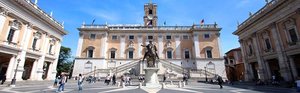 Musées du Capitole |
Rome | 2 | Camillus and the Schoolmaster of Falerii, The Vestal Tuccia |
 Minneapolis Institute of Art |
Minneapolis | 1 | The Glorification of Andrea Doria |
 Walters Art Museum |
Baltimore | 1 | Allegory of Painting |
 Galerie Nationale de Portraits Écossais |
Édimbourg | 1 | David Allan, 1744 - 1796. Artist |
 Accademia di San Luca |
Rome | 1 | Self-portrait |
 Musée des Beaux-Arts de Boston |
Boston | 1 | Virgin and Child |
Choisissez une décennie pour découvrir l'œuvre originale qui la définit.
The Glorification of Andrea Doria (1750), Minneapolis Institute of Art, Minneapolis. Suivus de Camillus and the Schoolmaster of Falerii (1764) et Allegory of Painting (1764).
29 ans : The Glorification of Andrea Doria date de 1750, et Domenico Corvi est né(e) en 1721.
Notre catalogue comprend 8 œuvres de Domenico Corvi, datées de 1750 à 1803.
Principalement dans Musées du Capitole (Rome), Minneapolis Institute of Art (Minneapolis) et Walters Art Museum (Baltimore). Le tableau des musées ci-dessus les répertorie tous.
En 1760s : 2 des 8 œuvres de cette page ont été créées à cette époque, dont Camillus and the Schoolmaster of Falerii.
Sur cette page, la plus ancienne date de The Glorification of Andrea Doria (1750) et la plus récente de Self-portrait (1803).
Camillus and the Schoolmaster of Falerii et The Vestal Tuccia : le Musées du Capitole, Rome détient 2 des œuvres de cette page.
Domenico Corvi was an Italian painter active during the close of the 18th century. Born in Viterbo, he moved to Rome to work under Francesco Mancini. His early career involved works in Viterbo and Palestrina, as well as the decoration of churches in and around Rome. In 1750, he won first prize at the Accademia di San Luca, later becoming a full member in 1756. During this time, he returned to his native Viterbo to participate in decorating the church of the Gonfalone, contributing roundels of the apostles Saints Simon and Jude and a scene of the Beheading of Saint John the Baptist.
Corvi's professional journey included significant commissions for various patrons. His works include:
In his later years, Corvi engaged in church decoration throughout Italy, spanning from Ravenna to Pisa, and from Venice to Spoleto. His ecclesiastical commissions included large canvases for the Cathedral of St. Ursus in Solothurn, Switzerland, featuring The Last Supper, the Coronation of the Virgin, the Incredulity of Saint Thomas, and the Pentecost.
Corvi held several official positions within the Accademia di San Luca. From 1757, he served as the director of the Scuola del Nudo at Campodoglio. His pupils included Giuseppe Cades, Francesco Alberi, and Vincenzo Camuccini. He died in Rome.