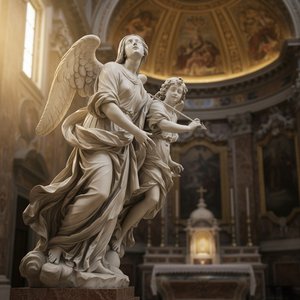
San Lorenzo in Lucina: A Journey Through Roman History and Art
Nestled within the heart of Rome, a city that breathes with millennia of stories, lies San Lorenzo in Lucina – a basilica not merely of worship, but of profound historical resonance and artistic evolution. More than just a church, it’s a layered palimpsest, each stratum of its existence whispering tales of emperors, popes, artists, and the enduring spirit of Rome itself. Visiting this unassuming yet remarkably rich site is akin to stepping through time, encountering echoes of ancient Roman grandeur intertwined with the opulent beauty of the Baroque era.
The basilica’s origins are deeply rooted in the early Christian community. Legend speaks of Lucina, a Roman matron who generously offered her home as a place of refuge for nascent Christians – a poignant story that underscores the church's foundational connection to Rome’s earliest faith. Dating back to the 4th century AD, San Lorenzo has witnessed pivotal moments in papal history; it served as a secret haven for Pope Marcellus I during periods of persecution and was the very location where Pope Damasus I was elected in 366 AD, solidifying its place as a cornerstone of Roman religious leadership. The building’s repeated reconstruction over centuries reflects not only evolving architectural styles but also the shifting political and religious landscapes of Rome – from the austere basilical plan of its initial construction to the lavish Baroque transformations of the 17th century.
A Symphony of Styles: Architecture and Design
San Lorenzo’s architecture is a captivating narrative in itself. Initially conceived as an aisled basilica, it underwent a dramatic metamorphosis under the hand of Cosimo Fanzago in the 17th century. Fanzago's genius transformed the side aisles into a series of ornate chapels, each leased to prominent noble families who commissioned elaborate decorations – a testament to Rome’s aristocratic patronage and a remarkable display of Baroque excess. The soaring ceiling, a masterpiece of coffering and gilding, immediately commands attention. At its center, a breathtaking panel depicts the Apotheosis of St. Lawrence, a vibrant celebration of the saint's martyrdom rendered in rich colors and dynamic movement. Later restorations, notably in the 19th century, introduced frescoes by Roberto Bompiani, offering a fascinating juxtaposition of Baroque grandeur and Neoclassical restraint – a deliberate attempt to balance the church’s historical weight with a more contemporary aesthetic.
Treasures Within: Collection Highlights
Within San Lorenzo's walls reside treasures that speak volumes about Roman art and religious devotion. Undoubtedly, Guido Reni’s “Christ on the Cross” dominates the high altar space, framed by six imposing columns of black marble – a dramatic statement of faith and artistic power. The sculpture is an example of High Renaissance style, with its balanced composition and serene depiction of Christ's sacrifice. The basilica houses the relics of St. Lawrence himself, enshrined within a meticulously crafted reliquary, a tangible link to the saint’s enduring legacy. A visit to the Cappella Fonseca, designed by the prodigious Gian Lorenzo Bernini, is an absolute must; its exquisite busts and the painting “Elisha Pouring Salt into the Bitter Fountain” by Giacinto Gimignani offer glimpses into Bernini's early artistic development. The tomb of Nicolas Poussin, a French master who spent his final years in Rome, stands as a poignant reminder of the city’s role as a haven for international artists – a testament to the enduring appeal of Roman beauty and culture.
Beyond the Walls: Historical Context
San Lorenzo's significance extends beyond its artistic merits. Its location near Palazzo Montecitorio, one of Rome’s most important government buildings, underscores its historical importance within the heart of the city’s political life. Furthermore, archaeological excavations surrounding the basilica have unearthed fragments related to Augustus’ sundial – a tangible connection to the Roman Empire and a fascinating glimpse into ancient Roman ingenuity. The discovery of these remnants highlights the layers of history embedded within San Lorenzo's foundations, transforming it into a living testament to Rome’s continuous evolution.
A Unique Sanctuary
San Lorenzo in Lucina is more than just a beautiful church; it’s an immersive experience – a journey through Roman history and artistic achievement. The interplay of ancient roots, Baroque grandeur, and significant religious relics creates an atmosphere unlike any other. It's a place where the echoes of emperors and popes mingle with the whispers of artists and pilgrims, offering visitors a profound sense of connection to Rome’s enduring legacy. A visit here is not merely sightseeing; it’s an encounter with the soul of the Eternal City.