
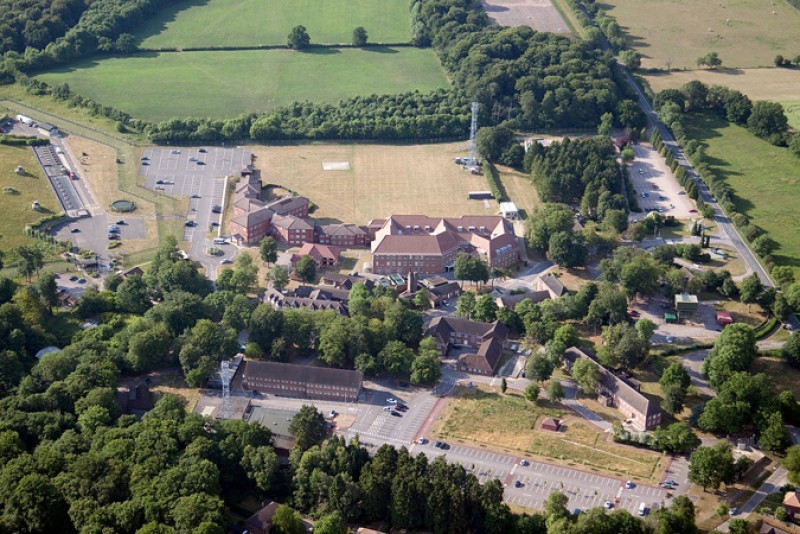
Keskeiset tiedot
- Works on APS: 4
- Featured artists:
- Thomas Cantrell Dugdale
- oswald hornby joseph birley
- Charles Ernest Cundall
- harold wyllie
- Alternate names:
- Royal Air Force High Wycombe
- RAF High Wycombe
- Southdown
- Location: High Wycombe, United Kingdom
Taidevisat
Jokaisessa kysymyksessä on vain yksi oikea vastaus.
Kysymys 1:
What was RAF High Wycombe primarily known for during World War II?
Kysymys 2:
The architectural design of RAF High Wycombe aimed to:
Kysymys 3:
Which command currently operates from RAF High Wycombe?
Kysymys 4:
What unique feature distinguishes RAF High Wycombe's construction compared to other military bases?
Kysymys 5:
Why was RAF High Wycombe initially constructed in a woodland area?
Näyttelytaiteilijat

Thomas Cantrell Dugdale
Brittiläinen taidemaalari Thomas Cantrell Dugdale (1880-1952) oli tunnettu muotokuvaaja ja sotataiteilija. Tutustu hänen maalauksiinsa, tekstiilisuunnitteluunsa sekä palvelukseensa ensimmäisessä ja toisessa maailmansodassa.


Oswald Hornby Joseph Birley
Sir Oswald Birley (1880–1952) oli johtava englantilainen muotokuvaaja, joka tunnettiin kuninkaallisista tilauksistaan sekä muotokuvistaan merkittäville 1900-luvun hahmoille, kuten Churchillille ja Gandhille. Tutustu hänen uraansa.

Charles Ernest Cundall
Charles Ernest Cundall (1890-1971) was a British painter known for his panoramic townscapes, landscapes & war art. Explore his versatile style influenced by Fauvism and Post-Impressionism. Discover his contribution to early 20th-century British art h
Liittyvät artikkelit
The Enduring Legacy of Architecture in Art: A Historical Survey of Representation & Meaning
Explore the rich history of architecture in art, from Renaissance theory to 19th-century reconstructions. Discover key artists & movements shaping visual representation – a guide for discerning collectors.
Monumentaalisen taiteen vaikutus ylellisten sisätilojen suunnittelussa: mittasuhteet, integrointi ja visuaalinen ilme
Opi monumentaalisen taiteen vaikutus ylellisten sisätilojen suunnittelussa. Asiantuntijaopas mittasuhteista, integroinnista ja visuaalisesta ilmeestä. Luo vaikuttava koti tai tila!
The Enduring Legacy of Architecture in Art: A Historical Survey of Representation & Aesthetic Influence
Explore the rich history of architecture's influence on art! Discover Renaissance perspective techniques, symbolism, & iconic masterpieces. Enhance your understanding with our expert analysis.
Teosluettelo
Ei taideteoksia löytynyt.


Tilaa uutiskirjeemme
Pysy ajan tasalla uusimmista taideuutisista, eksklusiivisista tarjouksista ja sisustusideoista.
Hanki 3 ilmaista taidesuositusta
Kerro meille projektistasi, niin taideasiantuntijamme tarjoavat sinulle kolme henkilökohtaista taidesuositusta.
Not Sure Where to Start?
Let Us Curate 3 Options Just for You - Free!