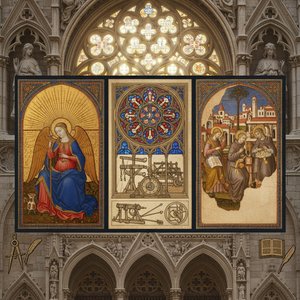
The Silent Majesty of San Martino a Gangalandi: A Tuscan Masterpiece Unveiled
Nestled amidst the rolling hills of Tuscany, in the small hamlet of San Martino a Gangalandi, stands a church that defies easy categorization – it’s not merely a place of worship, but a breathtaking testament to faith, artistry, and the enduring spirit of a bygone era. The Church of San Martino a Gangalandi, formally known as the Collegiate Church of Santa Maria Assunta, is a jewel of Romanesque-Gothic architecture, a structure that whispers tales of medieval piety, local patronage, and the remarkable vision of its creator, Maestro Benedetto da Maiano.
The history of this church is inextricably linked to the powerful Medici family. Originally a modest chapel built in the 12th century, it was significantly expanded and transformed under the auspices of Giovanni di Bernardo Buoninsegni, the Archbishop of Florence, in the mid-13th century. However, it’s Maestro Benedetto da Maiano's intervention in the late 14th and early 15th centuries that truly elevates San Martino a Gangalandi to its current status as an artistic landmark. Da Maiano, a pivotal figure bridging the Gothic and Renaissance styles, was commissioned by the local community – specifically, the powerful family of the Conti di Buona Serra – to undertake a radical redesign. He envisioned a church that would not only serve as a place of prayer but also as a symbol of civic pride and devotion, reflecting the wealth and influence of its patrons.
The architectural evolution is strikingly evident. The original Romanesque structure, characterized by its sturdy walls and simple arches, is seamlessly integrated with Da Maiano’s ambitious additions. He introduced soaring ribbed vaults – a hallmark of Gothic architecture – creating an unprecedented sense of verticality within the church's interior. This dramatic shift in space was coupled with the incorporation of Renaissance elements: delicate tracery windows, elaborate sculptural decoration, and a refined sense of proportion that moved decisively away from the more austere forms of the earlier period. The result is a harmonious blend of styles, a unique architectural dialogue that speaks to the evolving artistic sensibilities of the time.
A Symphony of Sculpture and Frescoes
Within San Martino a Gangalandi’s walls resides a collection of artworks that are as captivating as the architecture itself. The church is renowned for its exceptional cycle of frescoes, attributed primarily to the workshop of Lorenzo Monaco, a prominent Florentine painter associated with the Sienese school. These vibrant depictions of biblical scenes – including the Annunciation, the Nativity, and the deposition of Christ – adorn the walls of the central nave and side chapels. Monaco’s masterful use of color, his meticulous attention to detail, and his ability to imbue each scene with a profound sense of piety are truly remarkable. The frescoes offer a poignant glimpse into the devotional practices and artistic tastes of the 15th century.
Beyond the frescoes, the church boasts an impressive collection of sculpted tombs and monuments. The tomb of Archbishop Buoninsegni is particularly noteworthy, showcasing intricate marble carvings depicting scenes from his life and pontificate. The sculptures are imbued with a sense of solemnity and dignity, reflecting the importance placed on commemorating religious figures within the community. Furthermore, numerous smaller sculptural panels, often featuring saints and biblical characters, are scattered throughout the church, adding to its rich visual tapestry.
A Legacy of Patronage and Artistic Innovation
The story of San Martino a Gangalandi is fundamentally one of patronage – the generous support of wealthy families like the Conti di Buona Serra fueled the ambitious artistic projects undertaken within the church. This patronage wasn’t simply about displaying wealth; it was an investment in the spiritual well-being of the community and a testament to their faith. Da Maiano, as the architect and designer, skillfully translated this patronage into a tangible expression of civic pride and religious devotion.
Notably, San Martino a Gangalandi played a role in the dissemination of Renaissance artistic ideas. Da Maiano’s innovative approach to church design – his bold integration of Gothic and Renaissance elements – influenced subsequent architects and artists throughout Tuscany. The church served as a laboratory for experimentation, a place where new techniques and stylistic approaches were tested and refined. It's considered by many scholars to be one of the most important examples of transitional architecture between the Gothic and Renaissance periods in Italy.
Recent Discoveries and Ongoing Research
Despite its long history, San Martino a Gangalandi continues to yield fascinating discoveries. Recent archaeological investigations have unearthed evidence of earlier medieval structures beneath the church floor, shedding new light on the site’s origins and evolution. Ongoing research is focused on analyzing the pigments used in the frescoes, dating the sculptures, and reconstructing the original decorative scheme – a process that promises to reveal even more about this remarkable building and its artistic legacy.
OriginalUniqueArt offers meticulously crafted hand-painted reproductions of select images from within San Martino a Gangalandi, allowing art lovers worldwide to experience the beauty and grandeur of this Tuscan masterpiece in their own homes. Our reproductions strive to capture not only the visual details but also the spirit and atmosphere of this extraordinary church – a silent testament to faith, artistry, and the enduring power of human creativity.