Gerard van Spaendonck muotokuva

Gerard van Spaendonck -maalaukset: Gallerian silmin 17 kuuluisinta teosta

Päivitetty lokakuu 2026 · järjestetty suosituimmuuspisteiden mukaan (jokaisen teoksen haut, vierailut ja tilaukset) · 18 teosta taiteilijalta Gerard van Spaendonck luettelossamme

Lyhyesti

Gallerian silmissä Gerard van Spaendonckn tunnetuin maalaus on Miniature still life with flowers in a stone vase on a carved pedestal, with a basket of flowers and a nest. Grapes with Insects on a Marble Top (1791) ja Flower Still-life with an Alabaster Vase (1783) täydentävät kolmikon, jonka jokainen silmä tunnistaa. Galleria esittelee Gerard van Spaendonck teoksista 18 tunnetuimmat 17 teosta alla; jokainen on alkuperäisteos, josta kerrotaan vuosi, museo sekä teoksen erityispiirteet.

1746 – 1822, Tilburg Rococo Eniten teoksia: The Frick Collection

Gallerian 10 parasta Gerard van Spaendonck -maalausta

2
Grapes with Insects on a Marble Top (1791) tekijä Gerard van Spaendonck

Grapes with Insects on a Marble Top

1791 · Oil · The Frick Collection, New York

To gaze upon Gerard van Spaendonck's "Grapes with Insects on a Marble Top" is to step into a moment suspended between lush abundance and the quiet drama of natural life. This exquisite still life, dating from 1791, transcends a mere depiction of fruit; it is a vibrant meditation on the cycle of growth, decay, and enduring beauty. The composition immediately draws the eye to the generous clusters of grapes, rendered…

3
Flower Still-life with an Alabaster Vase (1783) tekijä Gerard van Spaendonck

Flower Still-life with an Alabaster Vase

1783 · Oil On Canvas · Rijksmuseum, Amsterdam

Flower Still-life with an Alabaster Vase is a notable oil on canvas by Gerard van Spaendonck. Created in 1783, this work is also recognized by the title Still Life of Flowers and Alabaster Vase. The artist, Gerard van Spaendonck, was a figure of significant standing in the Parisian art world, having been appointed as a miniature painter at the court of Louis XVI. His ability to render botanical forms with…

Gerard van Spaendonck -taideteokset, sijoitukset 11–17

Aiheet, jotka vangitsivat Gerard van Spaendonckin katseen

Nämä neljä aihetta toistuvat näissä alkuperäisteoksissa useimmin, jokaisesta löytyy hienoin esimerkki.

Museot, joissa Gerard van Spaendonck'n alkuperäisteokset sijaitsevat

Tämän sivun teoksista eniten sisältävät 7 museota.

Museo Kaupunki Gerard van Spaendonck teokset Tämän listan maalaukset
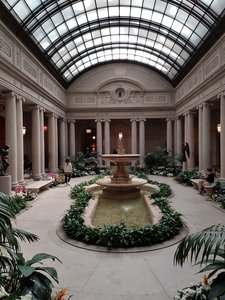
The Frick Collection, New YorkThe Frick Collection New York 1 Grapes with Insects on a Marble Top
Rijksmuseum, AmsterdamRijksmuseum Amsterdam 1 Flower Still-life with an Alabaster Vase
Noordbrabants Museum, 's-HertogenboschNoordbrabants Museum 's-Hertogenbosch 1 Des fleurs dans un vase en albâtre avec des fruits posés sur un plateau en marbre
Het Prinsenhof, DelftHet Prinsenhof Delft 1 Still Life with Fruit
Bowes Museum, Barnard CastleBowes Museum Barnard Castle 1 Flowers And Fruit
Fitzwilliam MuseumFitzwilliam Museum 1 A Vase Of Flowers
Ashmolean Museum, OxfordAshmolean Museum Oxford 1 Vase of Flowers

Gerard van Spaendonck, yksi tunnusomainen maalaus vuosikymmeneltä

Teokset vuosikymmenittäin

Valitse vuosikymmen nähdäksesi sen määrittäneen alkuperäisteoksen.

Gerard van Spaendonckn maalaukset: gallerian vastaukset

Mikä Gerard van Spaendonck -taideteos on kaikkien kuuluisin?Paljasta vastaus

Miniature still life with flowers in a stone vase on a carved pedestal, with a basket of flowers and a nest. Seuraavina ovat Grapes with Insects on a Marble Top (1791) ja Flower Still-life with an Alabaster Vase (1783).

Mitkä ovat Gerard van Spaendonck'n 10 parasta maalausta?Paljasta vastaus

Miniature still life with flowers in a stone vase on a carved pedestal, with a basket of flowers and a nest, Grapes with Insects on a Marble Top, Flower Still-life with an Alabaster Vase, Still-life With Flowers And Insects On Marble Plinth, Des fleurs dans un vase en albâtre avec des fruits posés sur un plateau en marbre, Still Life with Fruit, Tulip gardens, Flowers And Fruit, Bouquet ja A Vase Of Flowers. Yllä oleva sijoitus kertoo kunkin teoksen vuosiluvun ja museon.

Kuinka monta teosta Gerard van Spaendonck loi?Paljasta vastaus

Katalogissamme on 18 teosta taiteilijalta Gerard van Spaendonck, aikaväliltä 1781–1820.

Missä Gerard van Spaendonck'n kuuluisimmat alkuperäisteokset sijaitsevat?Paljasta vastaus

Pääasiassa The Frick Collection (New York), Rijksmuseum (Amsterdam) ja Noordbrabants Museum ('s-Hertogenbosch). Yllä oleva museotaulukko listaa ne kaikki.

Milloin Gerard van Spaendonck maalasi kuuluisimmat teoksensa?Paljasta vastaus

Aikakaudella 1780s: 2 sivun 17 teoksista on tehty silloin, joista Flower Still-life with an Alabaster Vase.

Mitkä ovat Gerard van Spaendonck'n varhaisimmat ja viimeisimmät kuuluisat teokset?Paljasta vastaus

Tällä sivulla vanhin on Des fleurs dans un vase en albâtre avec des fruits posés sur un plateau en marbre (1781) ja uusin Still Life with Fruit (1820).

Mihin aiheisiin Gerard van Spaendonck palasi useimmin?Paljasta vastaus

Flowers (11), Vase (4) ja Life (4), yhteensä 17 teosta tällä sivulla.

Mitä tekniikkaa Gerard van Spaendonck käytti eniten?Paljasta vastaus

Oil, 2 teoksesta sivun 17 teoksesta.

Mihin taidesuuntaukseen Gerard van Spaendonck kuuluu?Paljasta vastaus

Rococo, tämän sivun alkuperäisteosten perusteella.

Gerard van Spaendonck: taiteilija

Gerard van Spaendonck: A Life in Bloom

Early Life and Education

  • Born: 1746 in Tilburg, Netherlands.
  • Van Spaendonck came from an artistic family; his younger brother, Cornelis van Spaendonck, also became a successful painter.
  • In the 1760s, he began his formal training with decorative painter Willem Jacob Herreyns (also known as Guillaume-Jacques Herreyns) in Antwerp. This early exposure shaped his meticulous attention to detail and refined technique.

Move to Paris and Royal Appointment

  • In 1769, Van Spaendonck relocated to Paris, a pivotal move that launched his international career.
  • 1774: He was appointed as a miniature painter at the court of Louis XVI, marking a significant step in his recognition and patronage.
  • This position allowed him access to aristocratic circles and further refined his skills in delicate floral depictions.

Professor at Jardin des Plantes & Académie Membership

  • 1780: Van Spaendonck succeeded Madeleine Françoise Basseporte as professor of floral painting at the prestigious Jardin des Plantes.
  • Shortly after, he was elected a member of the Académie des Beaux-Arts, solidifying his status within the French art establishment.
  • He became an influential teacher, mentoring notable artists like Pierre-Joseph Redouté and Henriette Vincent.

Artistic Style & Major Works

  • Van Spaendonck excelled in both oil painting and watercolor techniques.
  • He contributed over fifty works to Les Vélins du Roi, a renowned collection of botanical watercolors commissioned by the French royal family. These pieces demonstrate his exceptional skill in capturing the nuances of floral forms.
  • Fleurs Dessinees d'apres Nature (Flowers Drawn from Life): Published between 1799 and 1801, this series of twenty-four engraved plates served as a valuable resource for students of floral painting. It remains a highly treasured book on the subject today.
  • His paintings often feature intricate details of flowers alongside insects, adding another layer of naturalism to his compositions.

Recognition and Legacy

  • 1788: Appointed as an advisor to the Académie.
  • 1795: Became a founding member of the Institut de France.
  • 1804: Received the Légion d'honneur and was ennobled by Napoleon Bonaparte, acknowledging his contributions to French art and culture.
  • Van Spaendonck died in Paris in 1822 and is buried in Père Lachaise Cemetery.
  • Historical Significance: Gerard van Spaendonck’s meticulous botanical illustrations and refined floral paintings played a crucial role in the development of botanical art. His work bridged the gap between scientific accuracy and artistic beauty, influencing generations of artists and botanists alike.