Andrea Di Bartolo muotokuva

Andrea Di Bartolo -maalaukset: Gallerian silmin 28 kuuluisinta teosta

Päivitetty marraskuu 2026 · järjestetty suosituimmuuspisteiden mukaan (jokaisen teoksen haut, vierailut ja tilaukset) · 30 teosta taiteilijalta Andrea Di Bartolo luettelossamme

Lyhyesti

Gallerian silmissä Andrea Di Bartolo's tunnetuin maalaus on Coronation of the Virgin (1410), jonka alkuperäinen teos on esillä Pinacoteca di Brera -museossa, kaupungissa Milano. St. Jerome in the Wildrness (1515) ja The Presentation of the Virgin in the Temple (1400) täydentävät kolmikon, jonka jokainen silmä tunnistaa. Galleria esittelee Andrea Di Bartolo teoksista 30 tunnetuimmat 28 teosta alla; jokainen on alkuperäisteos, josta kerrotaan vuosi, museo sekä teoksen erityispiirteet.

1360 – 1428, Siena Sienese school Eniten teoksia: National Gallery of Art

Gallerian 10 parasta Andrea Di Bartolo -maalausta

1
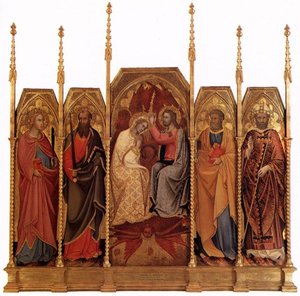
Coronation of the Virgin (1410) tekijä Andrea Di Bartolo

Coronation of the Virgin

1410 · Oil On Canvas · Pinacoteca di Brera, Milano

To stand before this depiction of the Coronation of the Virgin is to be transported across the veil of time, into a realm where earthly grandeur meets divine glory. The scene unfolds with breathtaking solemnity and vibrant energy, capturing that singular moment when Mary, the Mother of God, is elevated to her heavenly throne. Andrea di Bartolo’s masterful hand guides our gaze through this sacred gathering, presenting not merely an…

2
St. Jerome in the Wildrness (1515) tekijä Andrea Di Bartolo

St. Jerome in the Wildrness

1515 · Oil On Panel · The Bowes Museum, Barnard Castle

In the quiet, rugged expanse of a landscape that feels more European than Syrian, we encounter a moment of profound spiritual intensity. St. Jerome in the Wilderness is not merely a depiction of a saint; it is an immersive experience of penance and prayer. As the viewer’s eye meets the kneeling figure of St. Jerome, there is an immediate sense of the weight of devotion. The artist captures the saint…

3
The Presentation of the Virgin in the Temple (1400) tekijä Andrea Di Bartolo

The Presentation of the Virgin in the Temple

1400 · Tempera On Panel · National Gallery of Art, Washington

The Presentation of the Virgin in the Temple by Andrea Di Bartolo captures a pivotal moment from the life of the Madonna. Created about 1400/1405, the work illustrates the young Virgin Mary taking leave of her parents, Anna and Joachim. This narrative is drawn from an apocryphal account attributed to the evangelist Matthew, rather than the canonical Gospels.

4
Madonna of Humility, The Blessing Christ, Two Angels, and a Donor [obverse] (1380) tekijä Andrea Di Bartolo

Madonna of Humility, The Blessing Christ, Two Angels, and a Donor [obverse]

1380 · Tempera On Panel · National Gallery of Art, Washington

The late 14th-century Sienese School finds a profound expression in this tempera and gold leaf panel. Seated upon a patterned cushion, the Virgin Mary nurtures the infant Christ, a composition that emphasizes maternal intimacy within a rigid, hierarchical structure. The gold ground provides a non-naturalistic, divine backdrop, reflecting an omnipresent light that transcends earthly space. This portable altarpiece, dated to approximately 1380, utilizes a vertical arrangement to guide the viewer…

5
Christ on the Cross [reverse] (1380) tekijä Andrea Di Bartolo

Christ on the Cross [reverse]

1380 · Tempera On Panel · National Gallery of Art, Washington

The viewer encounters Christ on the Cross [reverse], a work by Andrea Di Bartolo that dates to about 1380/1390. This panel functions as a simplified version of a portable diptych, a small and intimate object designed for private contemplation. While the obverse of such an icon typically presents a Madonna and Child, this specific side focuses entirely on the central figure of the Crucifixion. It is a quiet, solitary scene…

6
The Crucifixion (1400) tekijä Andrea Di Bartolo

The Crucifixion

1400 · Tempera On Panel · Metropolitan Museum of Art, New York

In this panoramic composition, we find ourselves witnessing a profound moment of religious tragedy. The scene is crowded, filled with a dense assembly of mourners and soldiers that presses against the foreground, creating a sense of immediate, heavy presence. At the center, the figure of Christ is suspended on the cross, flanked by two thieves, while angels hover within the sky above. The composition is characteristic of the Sienese Gothic…

7
The Assumption of the Virgin with St. Thomas and Two Donors (Ser Palamedes and his Son Matthew) (1390) tekijä Andrea Di Bartolo

The Assumption of the Virgin with St. Thomas and Two Donors (Ser Palamedes and his Son Matthew)

1390 · Tempera On Panel · Virginia Museum of Fine Arts, Richmond

The composition ascends vertically, guiding the eye from the earthly realm toward a divine summit. At the center of this spiritual movement, the Virgin Mary rises through layers of angelic figures, her presence framed by a background of gold leaf that eliminates earthly shadows. This Sienese Gothic approach creates a flattened, sacred space where light is even and pervasive. The figures are defined by rhythmic, organic shapes and the precise,…

8
Den hellige Blasius (1395) tekijä Andrea Di Bartolo

Den hellige Blasius

1395 · Tempera On Panel · National Museum of Art, Architecture and Design, Oslo

The gaze meets Den hellige Blasius, a painting that holds a steady, sacred presence. This work by Andrea Di Bartolo brings a singular figure into view, presenting a religious scene or person through the lens of late medieval devotion. The subject, Saint Blasius, emerges from a background of gold, appearing as a quiet pillar of faith. Every line of the figure seems to carry the weight of a prayer, frozen…

9
The Crucifixion (1390) tekijä Andrea Di Bartolo

The Crucifixion

1390 · Tempera On Panel · National Museum in Warsaw, Varsova

The Crucifixion by Andrea Di Bartolo emerges from the shadows of the late fourteenth century, a solemn vision captured around 1400. This work places the viewer directly before the central event of Christian history, presenting the Crucifixion of Jesus Christ with a profound sense of spiritual weight. Every line and color choice works to anchor this sacred moment in a space that feels both otherworldly and deeply felt.

10
Saint Stephen (panel from the right pilaster of an altarpiece) (1397) tekijä Andrea Di Bartolo

Saint Stephen (panel from the right pilaster of an altarpiece)

1397 · Tempera On Panel · Victoria and Albert Museum, Lontoo

Saint Stephen (panel from the right pilaster of an altarpiece) is a work by Andrea Di Bartolo. This fragmentary panel originated as part of a series of superimposed figures from the right pilaster of an unidentified Italian altarpiece. The wood panel captures the first Christian martyr, Saint Stephen, in a moment of quiet, heavy presence. He is depicted with the symbols of his devotion and his end: a book held…

Andrea Di Bartolo -taideteokset, sijoitukset 11–28

Aiheet, jotka vangitsivat Andrea Di Bartoloin katseen

Nämä neljä aihetta toistuvat näissä alkuperäisteoksissa useimmin, jokaisesta löytyy hienoin esimerkki.

Museot, joissa Andrea Di Bartolo'n alkuperäisteokset sijaitsevat

Tämän sivun teoksista eniten sisältävät 8 museota.

Museo Kaupunki Andrea Di Bartolo teokset Tämän listan maalaukset
National Gallery of Art, WashingtonNational Gallery of Art Washington 5 The Presentation of the Virgin in the Temple, Madonna of Humility, The Blessing Christ, Two Angels, and a Donor [obverse], Christ on the Cross [reverse]
Musée du Petit Palais, AvignonMusée du Petit Palais Avignon 3 Saint Bishop, Saint Anthony Abbot, Saint Costanzo
Detroit Institute of Arts, DetroitDetroit Institute of Arts Detroit 2 Christ in Benediction, Madonna and Child
Pinacoteca di Brera, MilanoPinacoteca di Brera Milano 1 Coronation of the Virgin
The Bowes Museum, Barnard CastleThe Bowes Museum Barnard Castle 1 St. Jerome in the Wildrness
Metropolitan Museum of Art, New YorkMetropolitan Museum of Art New York 1 The Crucifixion
Virginia Museum of Fine Arts, RichmondVirginia Museum of Fine Arts Richmond 1 The Assumption of the Virgin with St. Thomas and Two Donors (Ser Palamedes and his Son Matthew)
National Museum of Art, Architecture and Design, OsloNational Museum of Art, Architecture and Design Oslo 1 Den hellige Blasius

Andrea Di Bartolo, yksi tunnusomainen maalaus vuosikymmeneltä

Teokset vuosikymmenittäin

Valitse vuosikymmen nähdäksesi sen määrittäneen alkuperäisteoksen.

Andrea Di Bartolon maalaukset: gallerian vastaukset

Mikä Andrea Di Bartolo -taideteos on kaikkien kuuluisin?Paljasta vastaus

Coronation of the Virgin (1410), Pinacoteca di Brera, Milano. Seuraavina ovat St. Jerome in the Wildrness (1515) ja The Presentation of the Virgin in the Temple (1400).

Kuinka vanha Andrea Di Bartolo oli valmistuessaan teos Coronation of the Virgin?Paljasta vastaus

50 vuotta vanha: Coronation of the Virgin on peräisin vuodelta 1410, ja Andrea Di Bartolo on syntynyt vuonna 1360.

Mitkä ovat Andrea Di Bartolo'n 10 parasta maalausta?Paljasta vastaus

Coronation of the Virgin, St. Jerome in the Wildrness, The Presentation of the Virgin in the Temple, Madonna of Humility, The Blessing Christ, Two Angels, and a Donor [obverse], Christ on the Cross [reverse], The Crucifixion, The Assumption of the Virgin with St. Thomas and Two Donors (Ser Palamedes and his Son Matthew), Den hellige Blasius, The Crucifixion ja Saint Stephen (panel from the right pilaster of an altarpiece). Yllä oleva sijoitus kertoo kunkin teoksen vuosiluvun ja museon.

Kuinka monta teosta Andrea Di Bartolo loi?Paljasta vastaus

Katalogissamme on 30 teosta taiteilijalta Andrea Di Bartolo, aikaväliltä 1380–1424.

Missä Andrea Di Bartolo'n kuuluisimmat alkuperäisteokset sijaitsevat?Paljasta vastaus

Pääasiassa National Gallery of Art (Washington), Musée du Petit Palais (Avignon) ja Detroit Institute of Arts (Detroit). Yllä oleva museotaulukko listaa ne kaikki.

Milloin Andrea Di Bartolo maalasi kuuluisimmat teoksensa?Paljasta vastaus

Aikakaudella 1400s: 8 sivun 28 teoksista on tehty silloin, joista The Presentation of the Virgin in the Temple.

Mitkä ovat Andrea Di Bartolo'n varhaisimmat ja viimeisimmät kuuluisat teokset?Paljasta vastaus

Tällä sivulla vanhin on Madonna of Humility, The Blessing Christ, Two Angels, and a Donor [obverse] (1380) ja uusin Madonna and Child (1424).

Mihin aiheisiin Andrea Di Bartolo palasi useimmin?Paljasta vastaus

Gold background (14), Woman (7) ja Child (6), yhteensä 28 teosta tällä sivulla.

Mitä tekniikkaa Andrea Di Bartolo käytti eniten?Paljasta vastaus

Tempera On Panel, 19 teoksesta sivun 28 teoksesta.

Mihin taidesuuntaukseen Andrea Di Bartolo kuuluu?Paljasta vastaus

Sienese school, tämän sivun alkuperäisteosten perusteella.

Mitä Andrea Di Bartolo -taiteilijan alkuperäisteoksia National Gallery of Art -museossa on?Paljasta vastaus

The Presentation of the Virgin in the Temple, Madonna of Humility, The Blessing Christ, Two Angels, and a Donor [obverse] ja Christ on the Cross [reverse]: National Gallery of Art, Washington -ssä on 5 tämän sivun teoksista.

Andrea Di Bartolo: taiteilija

Sienalaisen hartauden perintö

Sienalaisen koulukunnan Sienese School eläväisessä sydämessä Andrea Di Bartolo nousi mestariksi, jonka sivellin vangitsi aikakautensa syvän hengellisen intensiteetin. Tunnetun maalari Bartolo di Fredin poikana ja oppilaana Andrea Di Bartolo -taiteilijan taiteellinen matka juurtui syvälle isänsä työpajan perinteisiin. Hänen varhaiset vuotensa kuluivat uppoutuneena arvokkaisiin tilauksiin, jotka virtaivat hänen perheensä studiolle, muodostaen oppisopimuskautta, joka loi pohjan uskonnolliselle hartaudelle ja tekniselle mestaruudelle. Työskenneltyään valovoimaisien tekijöiden, kuten Luca di Tommè, rinnalla, hän osallistui merkittäviin yhteisöllisiin teoksiin, kuten Sienan katedraalin kengäntekijäkillin alttariseipäälle, mikä merkitsi hänen ensimmäistä dokumentoitua esiintymistään taidehistorian annaleissa.

Andrea Di Bartolo -taiteilijan taiteellisuus ei rajoittunut pelkästään kankaaseen; hän oli monipuolinen luoja, joka toimi maalari, lasimaalari ja käsikirjoitusten illuminointiartisti. Hänen työnsä siltoivat usein kuilun gotiikan perinteisen eteerisen sulavuuden ja nousevan humanismin välillä, joka lopulta määritteli renessanssin. Hänen uskonnollisissa aiheissaan on havaittavissa huolellinen yksityiskohtien tarkastelu ja kyky narratiiviseen syvyyteen. Olipa kyseessä Pyhän Hieronymuksen hiljainen yksinäisyys erämaassa tai ristinnaulittuun liittyvä dramaattinen jännite, Andrea hallitsi kyvyn ankkuroida kompositiot voimakkailla rakenteilla, jotka vetävät katsojan kontemplaation tilaan.

Valon ja kerronnan mestaruus

Andrea Di Bartolo -taiteilijan tekninen taituruus näkyy selkeimmin hänen kykynään manipuloida valoa ja tekstuuria herättääkseen tunteita. Hänen teoksilleen on ominaista loistokas laatu, jossa varjon ja loiston vuoropuineisuus heijastaa aiheidensa sisäisiä hengellisiä kamppailuja. Hänen pyhien hahmojen kuvauksissaan on aistittavissa painon ja läsnäolon tuntua; kardinaalin viitan raskaat, rytmikkäät poimut tai hunnun herkkä läpikuultavuus on toteutettu tarkkuudella, joka tekee jumalallisuudesta käsinkosketeltavan inhimillistä. Tämä mestaruus antoi hänelle mahdollisuuden luoda teoksia, jotka toimivat hiljaisina saarnoina, täynnä symbolista sanastoa, jonka tarkoituksena oli inspiroida uskovia hartautta.

Yksilöllisen taidokkuutensa lisäksi Andrea Di Bartolon historiallinen merkitys piilee hänen roolissaan Keski- ja Pohjois-Italian muuttuvassa maisemassa. Toimiessaan aktiivisesti 1300-luvun lopulla ja 1400-luvun alussa hän auttoi säilyttämään Sienan koulukunnan arvovallan suuren murroksen aikana. Hänen panoksensa alttariseipäisiin, lasimaalauksiin ja valaistuihin käsikirjoituksiin varmisti, että hänen taiteellinen visio levisi uskonnollisen elämän eri osa-alueisiin Sienassa ja sen lähikaupungeissa. Omistautumisellaan sekä käsityönsä koristeelliselle monimutkaisuudelle että aiheidensa juhlalliselle kauneudelle Andrea Di Bartolo jätti peruuttamattoman jäljen Italian visuaaliseen perintöön.