Robert Smithson muotokuva

Robert Smithson -maalaukset: Gallerian silmin 4 kuuluisinta teosta

Päivitetty marraskuu 2026 · järjestetty suosituimmuuspisteiden mukaan (jokaisen teoksen haut, vierailut ja tilaukset) · 6 teosta taiteilijalta Robert Smithson luettelossamme

Lyhyesti

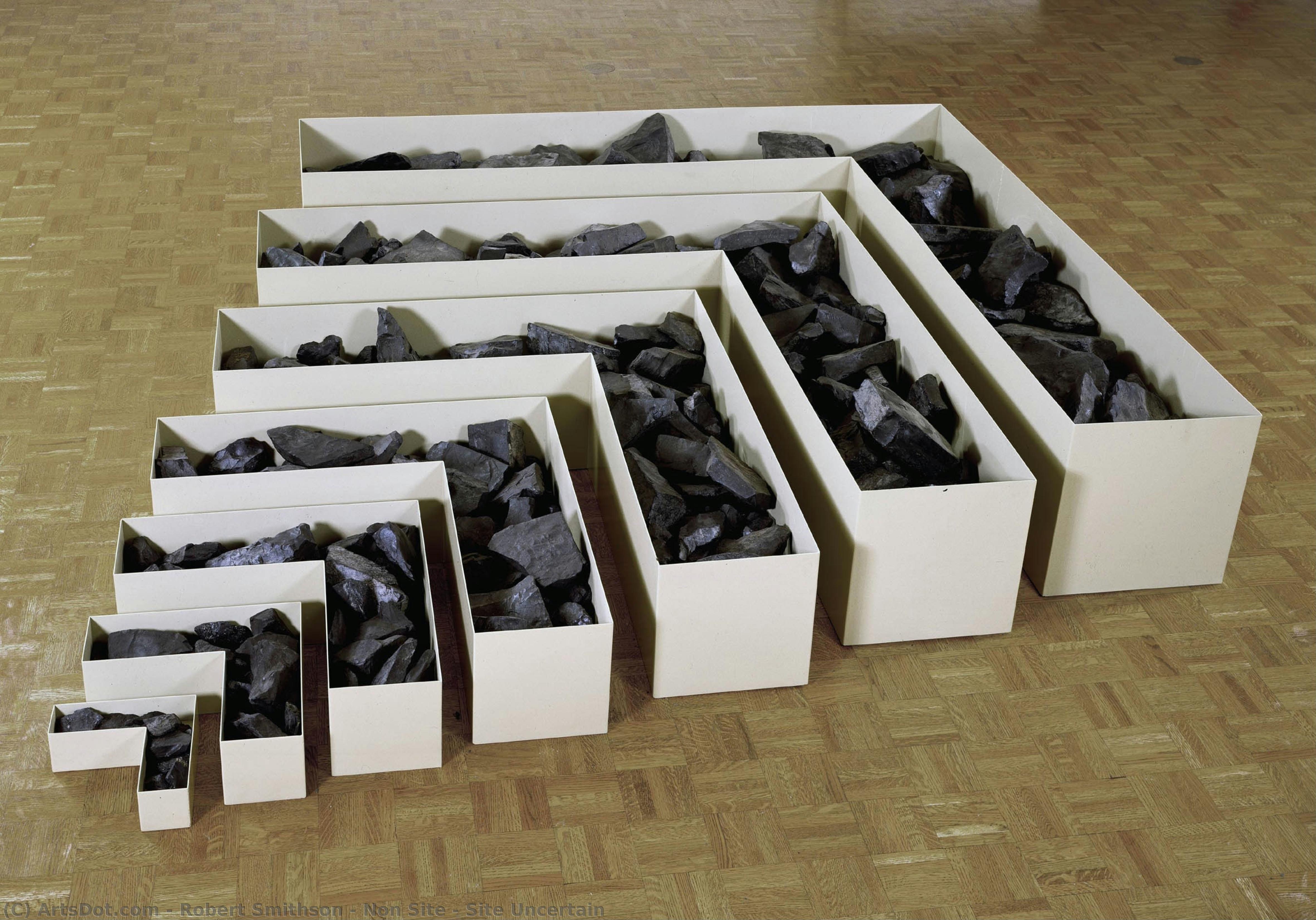
Gallerian silmissä Robert Smithson's tunnetuin maalaus on Non Site - Site Uncertain, jonka alkuperäinen teos on esillä Detroit Institute of Arts -museossa, kaupungissa Detroit. Three-Sided Vortex (1966) ja Ruin of Map of Hipparchus (100 B.C.) in Oswego Lake Quadrangle (1954 55) (1967) täydentävät kolmikon, jonka jokainen silmä tunnistaa. Galleria esittelee Robert Smithson teoksista 6 tunnetuimmat 4 teosta alla; jokainen on alkuperäisteos, josta kerrotaan vuosi, museo sekä teoksen erityispiirteet.

1938 – 1973, Passaic Eniten teoksia: Detroit Institute of Arts

Gallerian 10 parasta Robert Smithson -maalausta

Museot, joissa Robert Smithson'n alkuperäisteokset sijaitsevat

Tämän sivun teoksista eniten sisältävät 2 museota.

Museo Kaupunki Robert Smithson teokset Tämän listan maalaukset
Detroit Institute of Arts, DetroitDetroit Institute of Arts Detroit 1 Non Site - Site Uncertain
Chrysler Museum of Art, NorfolkChrysler Museum of Art Norfolk 1 Three-Sided Vortex

Robert Smithson, jokaisen vuoden tunnusomaisimmat teokset

5 vuotta, 1966 - 1970, kattavat Robert Smithson's koko aikaleimatun uran tällä sivulla: lyhyen uran, joka nähdään tässä vuosi vuodelta sen kuuluisimpien alkuperäisteosten kautta.

Teokset vuosittain

Valitse vuosi nähdäksesi alkuperäisteokset.

Robert Smithsonn maalaukset: gallerian vastaukset

Mikä Robert Smithson -taideteos on kaikkien kuuluisin?Paljasta vastaus

Non Site - Site Uncertain, Detroit Institute of Arts, Detroit. Seuraavina ovat Three-Sided Vortex (1966) ja Ruin of Map of Hipparchus (100 B.C.) in Oswego Lake Quadrangle (1954 55) (1967).

Kuinka monta teosta Robert Smithson loi?Paljasta vastaus

Katalogissamme on 6 teosta taiteilijalta Robert Smithson, aikaväliltä 1966–1970.

Missä Robert Smithson'n kuuluisimmat alkuperäisteokset sijaitsevat?Paljasta vastaus

Pääasiassa Detroit Institute of Arts (Detroit) ja Chrysler Museum of Art (Norfolk). Yllä oleva museotaulukko listaa ne kaikki.

Mitkä ovat Robert Smithson'n varhaisimmat ja viimeisimmät kuuluisat teokset?Paljasta vastaus

Tällä sivulla vanhin on Three-Sided Vortex (1966) ja uusin Torn Photograph from the 2nd Stop (Rubble) (2nd Mountain of Six Stops on a Section) from Artists Photographs (1970).

Robert Smithson: taiteilija

Early Life and Artistic Beginnings

  • Born: January 2, 1938, in Passaic, New Jersey
  • Early years spent in Rutherford and Clifton, New Jersey
  • Studied painting and drawing at the Art Students League of New York (1955-1956)
  • Early artwork explored collage influenced by homoerotic themes, science fiction, and pop art. Primarily identified as a painter during this period.
  • Influenced by William Carlos Williams, who was his pediatrician.

The Shift to Minimalism and Conceptual Art

  • After a three-year break from the art world, emerged in 1964 as a proponent of the minimalist movement.
  • Abandoned figurative work, focusing on glass sheet and neon lighting tubes exploring visual refraction and mirroring.
  • Developed interest in entropy (the second law of thermodynamics) – decay, renewal, chaos, order, non-sites, and earthworks. Saw entropy not as a disadvantage but as a form of transformation.
  • Associated with minimalist artists like Nancy Holt (his wife), Robert Morris, and Sol LeWitt.
  • Became a critic for *Arts Magazine* and *Artforum*, gaining recognition as a writer before his art.

Land Art and Earthworks: Spiral Jetty and Beyond

  • Fascination with industrial areas in New Jersey led to the development of "Non-Sites" – sculptures incorporating earth and rocks from specific locations, often combined with mirrors or glass.
  • Spiral Jetty (1970): His most famous work, a massive coil of basalt rock extending into the Great Salt Lake in Utah. A key example of land art, exploring themes of entropy, time, and geological processes.
  • Explored temporary sculptures using mirrors in the Yucatan Peninsula, documented in "Incidents of Mirror-Travel in the Yucatan."
  • Recovered 18th- and 19th-century conceptions of landscape architecture, influencing his later earthwork explorations.

Theoretical Writings and Landscape Perspectives

  • Wrote extensively on art theory, including "A Heap of Language," exploring how writing could become an artwork.
  • Examined Frederick Law Olmsted's design for Central Park in New York City, recovering issues of site specificity, human intervention, and the picturesque landscape.
  • His writings demonstrate a deep engagement with history, philosophy, geology, and cultural theory.

Legacy and Historical Significance

  • Died: July 20, 1973, in Tucson, Arizona (due to a heart attack while hiking).
  • Considered a pivotal figure in Land Art and Earthworks movements.
  • His work expanded the definition of art, blurring boundaries between sculpture, landscape, and natural processes.
  • Influenced generations of artists with his conceptual approach, exploration of entropy, and engagement with geological time scales.
  • The Holt/Smithson Foundation continues to preserve and promote his legacy.
