Richard Brakenburgh muotokuva

45 tunnetuinta Richard Brakenburgh -maalausta, gallerian valikoima

Päivitetty marraskuu 2026 · järjestetty suosituimmuuspisteiden mukaan (jokaisen teoksen haut, vierailut ja tilaukset) · 46 teosta taiteilijalta Richard Brakenburgh luettelossamme

Lyhyesti

Kaikista Richard Brakenburgh jättämistä alkuperäisteoksista kuuluisin on Tavern Scene (1692), joka kuuluu Nationalmuseum -kokoelmaan, Tukholma. Heti perässä tulevat Tavern interior with dancing peasants, (1690) ja Interior with a company celebrating Twelfth Night, the Feast of Epiphany (1690). Katalogissamme on 46 teosta taiteilijalta Richard Brakenburgh; galleria on säilyttänyt 45 maailman ihailluimmista teoksista, ja jokaisesta on esitetty sen päivämäärä, museo sekä tarina.

1650 – 1702, Haarlem Dutch golden age Eniten teoksia: Bavarian State Painting Collections

Richard Brakenburgh -taiteilijan 10 parasta maalausta: gallerian valinnat

1
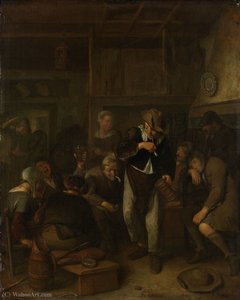
Tavern Scene (1692) tekijä Richard Brakenburgh

Tavern Scene

1692 · Oil On Canvas · Nationalmuseum, Tukholma

A single light source, perhaps a guttering candle, strikes the scene from the left. It catches the white fabric of a woman’s garment in the foreground, turning her into a bright anchor amidst a sea of ochre and deep brown. Around her, the tavern breathes with a heavy, crowded energy. Figures lean into one another, their postures shaped by the weight of conversation and the pull of drink. The air…

2
Tavern interior with dancing peasants, (1690) tekijä Richard Brakenburgh

Tavern interior with dancing peasants,

1690 · Oil On Canvas · Kunsthistorisches Museum, Wien

Step into the warmth of this 1690 tavern scene, where the air seems thick with the scent of spilled ale and the sound of rhythmic footsteps. Richard Brakenburgh has captured a fleeting moment of celebration among the peasantry, drawing us into a crowded, lively interior. The composition pulls the viewer through a deep perspective, moving from the immediate, tactile details of the foreground into a shadowy, bustling crowd that recedes…

3
Interior with a company celebrating Twelfth Night, the Feast of Epiphany (1690) tekijä Richard Brakenburgh

Interior with a company celebrating Twelfth Night, the Feast of Epiphany

1690 · Oil On Canvas · Kunsthistorisches Museum, Wien

In this work, titled Interior with a company celebrating Twelfth Night, the Feast of Epiphany, we find ourselves observing a quiet moment of communal gathering. Painted by Richard Brakenburgh in 1690, the scene captures a specific social ritual. It is a fine example of genre art, focusing on the everyday interactions and festivities of the period. The subject matter centers on a group of people gathered for the Twelfth Night…

4
Réunion dans un cabaret tekijä Richard Brakenburgh

Réunion dans un cabaret

Oil On Canvas

The air inside the cabaret feels thick, heavy with the scent of spilled ale and the warmth of too many bodies gathered in a single room. Light flickers from candles, casting long, dancing shadows that stretch across the floor and climb the walls. In the center of this swirling chaos, a group of figures moves in a rhythmic dance, their forms blurring slightly as they spin. Around them, the tavern…

5
Merry Company (1676) tekijä Richard Brakenburgh

Merry Company

1676 · Oil · Bavarian State Painting Collections, München

Richard Brakenburgh's Merry Company captures a lively social gathering, likely situated within a tavern or a domestic setting. The scene focuses on a group of people engaged in conversation and leisure, embodying the 'Merry Company' theme prevalent in Dutch Golden Age painting. This subject matter reflects the communal spirit and social interactions of the seventeenth century.

6
The Resurrection of Christ and the Visit of the Women to the Tomb (1676) tekijä Richard Brakenburgh

The Resurrection of Christ and the Visit of the Women to the Tomb

1676 · Oil · Bavarian State Painting Collections, München

In The Resurrection of Christ and the Visit of the Women to the Tomb, Richard Brakenburgh orchestrates a scene of intense, sudden movement. The composition follows a dynamic pyramidal structure that draws the eye upward toward a burst of light in the upper center. From this celestial radiance, a luminous, winged angelic figure descends, gesturing toward the earthly events unfolding below. The perspective is set slightly from below, which lends…

7
Drinkers and Musicians in a Cabaret, with Child with a Hoop (1675) tekijä Richard Brakenburgh

Drinkers and Musicians in a Cabaret, with Child with a Hoop

1675 · Oil On Canvas

The air in the room feels heavy with the scent of spilled ale and the low hum of conversation. Light spills from a large window on the left, cutting through the dimness to strike the faces of men gathered around a table. They are lost in the rhythm of the moment, some leaning into a drink, others lost to the music. In the corner, a child moves with a hoop,…

8
Monk's Entertainment in a Roman Cloister (1680) tekijä Richard Brakenburgh

Monk's Entertainment in a Roman Cloister

1680 · Oil On Canvas · Slovak National Gallery, Bratislava

In Monk's Entertainment in a Roman Cloister, Richard Brakenburgh employs a sophisticated chiaroscuro technique to define the cavernous interior. A single, unseen light source from the left casts strong highlights onto faces and hands, allowing them to emerge from deep, atmospheric shadows. This dramatic interplay of light and dark creates a sense of depth and bustling activity within the crowded space. Through precise perspective, the artist organizes the overlapping clusters…

9
Portrait of a young woman (1683) tekijä Richard Brakenburgh

Portrait of a young woman

1683 · Oil

In "Portrait of a young woman" by Richard Brakenburgh, the subject is captured in a three-quarter length pose. She sits centrally, anchored against a dark and atmospheric background that recedes into shadow. The color palette relies on deep blacks and browns, creating a somber foundation for the figure. This darkness pushes the subject forward, making her presence feel immediate and singular.

10
merry party (1686) tekijä Richard Brakenburgh

merry party

1686 · Oil · Museum Gouda, Gouda

The air in the room feels heavy with the scent of spilled ale and uninhibited laughter. A dense crowd of figures presses together in a crowded interior, their bodies caught in a moment of boisterous social indulgence. To the right, a large, heavy curtain hangs in deep folds, framing the scene like a stage set for a play that has already reached its climax. Light spills from the upper left,…

Richard Brakenburgh-valikoima jatkuu, 11–45

11A Game of Cards at an Inn (1683) tekijä Richard BrakenburghA Game of Cards at an Inn1683 · Statens Museum for Kunst 12Tavern Interior with a Maidservant and Drinkers (1680) tekijä Richard BrakenburghTavern Interior with a Maidservant and Drinkers1680 · Hallwyl Museum 13Adoration of the Shepherds (1694) tekijä Richard BrakenburghAdoration of the Shepherds1694 · Bavarian State Painting Collections 14An Interior with Figures (1689) tekijä Richard BrakenburghAn Interior with Figures1689 · National Gallery of Ireland 15The Eve of Saint Nicholas (1690) tekijä Richard BrakenburghThe Eve of Saint Nicholas1690 · Frans Halsin museo 16Dance in a Cottage (1699) tekijä Richard BrakenburghDance in a Cottage1699 · Nationalmuseum 17merry party (1691) tekijä Richard Brakenburghmerry party1691 · Frans Halsin museo 18A family on a terrace. (1691) tekijä Richard BrakenburghA family on a terrace.1691 19The Feast of St. Nicholas (1698) tekijä Richard BrakenburghThe Feast of St. Nicholas1698 20Family Scene (1680) tekijä Richard BrakenburghFamily Scene1680 · Fitzwilliamin museo 21May Queen Festival (1700) tekijä Richard BrakenburghMay Queen Festival1700 · Szépművészeti Múzeum 22Dutch Merchants Trading in a Chinese Harbor (1683) tekijä Richard BrakenburghDutch Merchants Trading in a Chinese Harbor1683 · Groninger Museum 23Celebration of a Birth (1683) tekijä Richard BrakenburghCelebration of a Birth1683 24Interior of a Farmhouse (1699) tekijä Richard BrakenburghInterior of a Farmhouse1699 · Fitzwilliamin museo 25Intérieur d'auberge tekijä Richard BrakenburghIntérieur d'aubergeLouvre 26Cabaret Interior tekijä Richard BrakenburghCabaret InteriorPetit Palais 27Jolly Company tekijä Richard BrakenburghJolly CompanyRoyal Museum of Fine Arts Antwerp 28Figural scene against architecture tekijä Richard BrakenburghFigural scene against architectureNational Museum in Warsaw 29INTERIEUR D'UN ESTAMINET tekijä Richard BrakenburghINTERIEUR D'UN ESTAMINET 30SCENE GALANTE tekijä Richard BrakenburghSCENE GALANTE 31LE LEVER DE LA MARIEE tekijä Richard BrakenburghLE LEVER DE LA MARIEE 32Feast of St Nicholas tekijä Richard BrakenburghFeast of St NicholasSzépművészeti Múzeum 33Family Portrait (1670) tekijä Richard BrakenburghFamily Portrait1670 · Art Museum Riga Bourse 34St Nicholas Eve (1685) tekijä Richard BrakenburghSt Nicholas Eve1685 · Amstelkring Museum 35The doctor's visit. tekijä Richard BrakenburghThe doctor's visit.Museum Boijmans Van Beuningen 36Moines et religieuses en goguette tekijä Richard BrakenburghMoines et religieuses en goguette 37In the tavern. tekijä Richard BrakenburghIn the tavern. 38Family Having Breakfast tekijä Richard BrakenburghFamily Having Breakfast 39Merry company. tekijä Richard BrakenburghMerry company.Museum Boijmans Van Beuningen 40Gallant scene at Palais des Beaux-Arts de Lille. tekijä Richard BrakenburghGallant scene at Palais des Beaux-Arts de Lille. 41Celebration of a Birth tekijä Richard BrakenburghCelebration of a BirthDulwichin taidegalleria 42Merry company tekijä Richard BrakenburghMerry companySzépművészeti Múzeum 43The Feast of St. Nicholas tekijä Richard BrakenburghThe Feast of St. NicholasRijksmuseum 44A Medical Practitioner Taking a Girl's Pulse and Holding a Flask of Her Urine tekijä Richard BrakenburghA Medical Practitioner Taking a Girl's Pulse and Holding a Flask of Her Urine 45Peasant's inn tekijä Richard BrakenburghPeasant's innRijksmuseum

Aiheet, jotka vangitsivat Richard Brakenburghin katseen

Nämä neljä aihetta toistuvat näissä alkuperäisteoksissa useimmin, jokaisesta löytyy hienoin esimerkki.

Museot, joissa Richard Brakenburgh'n alkuperäisteokset sijaitsevat

Tämän sivun teoksista eniten sisältävät 8 museota.

Museo Kaupunki Richard Brakenburgh teokset Tämän listan maalaukset
Bavarian State Painting Collections, MünchenBavarian State Painting Collections München 3 Merry Company, The Resurrection of Christ and the Visit of the Women to the Tomb, Adoration of the Shepherds
Szépművészeti Múzeum, BudapestSzépművészeti Múzeum Budapest 3 May Queen Festival, Feast of St Nicholas, Merry company
Nationalmuseum, TukholmaNationalmuseum Tukholma 2 Tavern Scene, Dance in a Cottage
Kunsthistorisches Museum, WienKunsthistorisches Museum Wien 2 Tavern interior with dancing peasants,, Interior with a company celebrating Twelfth Night, the Feast of Epiphany
Frans Halsin museo, HaringinFrans Halsin museo Haringin 2 The Eve of Saint Nicholas, merry party
Fitzwilliamin museo, KambriaFitzwilliamin museo Kambria 2 Family Scene, Interior of a Farmhouse
Museum Boijmans Van Beuningen, RotterdamMuseum Boijmans Van Beuningen Rotterdam 2 The doctor's visit., Merry company.
Rijksmuseum, AmsterdamRijksmuseum Amsterdam 2 The Feast of St. Nicholas, Peasant's inn

Richard Brakenburgh vuosikymmenittäin: jokaisen aikakauden määrittänyt alkuperäisteos

Teokset vuosikymmenittäin

Valitse vuosikymmen nähdäksesi sen määrittäneen alkuperäisteoksen.

Keräilijöiden kysymyksiä Richard Brakenburgh -taiteilijan maalauksista

Mistä teoksesta Richard Brakenburgh on tunnetuin?Paljasta vastaus

Tavern Scene (1692), Nationalmuseum, Tukholma. Seuraavina ovat Tavern interior with dancing peasants, (1690) ja Interior with a company celebrating Twelfth Night, the Feast of Epiphany (1690).

Kuinka vanha Richard Brakenburgh oli, kun Tavern Scene tehtiin?Paljasta vastaus

42 vuotta vanha: Tavern Scene on peräisin vuodelta 1692, ja Richard Brakenburgh on syntynyt vuonna 1650.

Mitkä ovat kymmenen kuuluisinta Richard Brakenburgh -taideteosta?Paljasta vastaus

Tavern Scene, Tavern interior with dancing peasants,, Interior with a company celebrating Twelfth Night, the Feast of Epiphany, Réunion dans un cabaret, Merry Company, The Resurrection of Christ and the Visit of the Women to the Tomb, Drinkers and Musicians in a Cabaret, with Child with a Hoop, Monk's Entertainment in a Roman Cloister, Portrait of a young woman ja merry party. Yllä oleva sijoitus kertoo kunkin teoksen vuosiluvun ja museon.

Kuinka monta maalausta Richard Brakenburgh jätti jälkeensä?Paljasta vastaus

Katalogissamme on 46 teosta taiteilijalta Richard Brakenburgh, aikaväliltä 1670–1700.

Missä museoissa Richard Brakenburgh's mestariteokset sijaitsevat?Paljasta vastaus

Pääasiassa Bavarian State Painting Collections (München), Szépművészeti Múzeum (Budapest) ja Nationalmuseum (Tukholma). Yllä oleva museotaulukko listaa ne kaikki.

Minä vuosina Richard Brakenburgh maalasi kuuluisimmat teoksensa?Paljasta vastaus

Aikakaudella 1680s: 10 sivun 45 teoksista on tehty silloin, joista Monk's Entertainment in a Roman Cloister.

Mitkä ovat Richard Brakenburgh ensimmäinen ja viimeinen tunnettua alkuperäisteosta?Paljasta vastaus

Tällä sivulla vanhin on Family Portrait (1670) ja uusin May Queen Festival (1700).

Mitä aiheita Richard Brakenburgh käytti useimmiten?Paljasta vastaus

People (19), Figures (10) ja Table (9), yhteensä 45 teosta tällä sivulla.

Mitä tekniikkaa Richard Brakenburgh käytti eniten?Paljasta vastaus

Oil On Canvas, 12 teoksesta sivun 45 teoksesta.

Mihin taidesuuntaukseen Richard Brakenburgh kuuluu?Paljasta vastaus

Dutch golden age, tämän sivun alkuperäisteosten perusteella.

Mitä Richard Brakenburgh -teoksia Bavarian State Painting Collections -museossa on esillä?Paljasta vastaus

Merry Company, The Resurrection of Christ and the Visit of the Women to the Tomb ja Adoration of the Shepherds: Bavarian State Painting Collections, München -ssä on 3 tämän sivun teoksista.

Richard Brakenburgh: elämä ja tuotanto

Elämä vangittuna kultakaudella

Syntynyt Alankomaiden historiallisessa Haarlemissa, Richard Brakenburgh nousi merkittäväksi hahmoksi hollantilaisen kultakauden elävässä kudelmassa. Hänen elämänsä ja taiteellinen näkemyksensä olivat syvällä Haarlemin kulttuurisessa maaperässä, jossa hän kehitti herkkyyden vangita seitsemännen vuosisadan elämän intiimejä ja usein riehakkaita hetkiä. Vaikka jotkut historialliset lähteet viittaavat hänen kantaneen sisällään leikkisän runoilijan sielua, hänen todellinen perintönsä elää niissä siveltimenvedoissa, jotka toivat oman aikakautensa sosiaalisen sykkeen eloon. Hänen matkansa taidemaailmassa oli leimattu vahvalla yhteydellä kotimaansa paikallisiin perinteisiin, ja hänen läsnäolonsa Leeuwardenissa seitsemännen vuosisadan loppukymmeninä viittaa liikkuvuuteen, joka antoi hänen vaikutusvaltansa ulottua syntymäpaikkansa ulkopuolelle.

Taiteellinen sukupolvi ja vaikutteet

Richard Brakenburghin tyylin kehitystä muovasivat mestarit, jotka sekä edeltivät häntä että seurasivat häntä taiteen polulla. Häntä pidetään Hendrik Mommersin oppilaana, opettajana, jonka kyky maalata älykkäitä genrefiiliksiä loi perustan Brakenburghin omille tutkimusmatkoille ihmisten välisessä vuorovaikutuksessa. Hänen teoksissaan lepää kuitenkin vielä suurempien mestareiden varjo; Jan Steenin vaikutus oli syvä ja merkittävä, ohjaten häntä kohti monimutkaisempia, tarinallisia sommitelmia. Brakenburghin ja Bernard Schendelin välillä vallitsee myös merkittävä tyylillinen vuoropuhelu, sillä molemmat taiteilijat elivät samalla aikakaudella ja lähestyivät aiheitaan samankaltaisella tavalla. Suuri osa hänen estetiikastaan voidaan jäljittää Adriaen van Ostaden perinteeseen, erityisesti hänen kykynsä kuvata iloisia juhlia ja eläväisiä kokoontumisia spontaanin energian tuntua välittäen.

Genren ja tekniikan mestaruus

Richard Brakenburghin tuotanto on saavuttanut arvostuksen kyvystään muuttaa arkipäiväiset näkymät poikkeuksellisiksi ikkunoiksi menneisyyteen. Hän erikoistui genremaalauksiin, jotka vangitsivat majataloelämän iloisen yhteisöllisyyden; kankaalta tuntuu melkein kuuluvan astioiden kilinä ja keskustelujen vaimea humina. Hänen tekninen taituruutensa ilmenee mestarillisessa chiaroscuro-tekniikan käytössä, jossa valon ja varjon dramaattinen vuoropuhelu veistää hahmoja ja täyttää sisätilat kotoisalla mystiikalla. Olipa kyseessä vilkas majatalo tai juhlava vuodenaikojen vaihtelun tuoma juhla, hänen sommittelunsa erottuvat seuraavilla tavoilla:

  • Tarkka perspektiivi: Hämmästyttävä kyky hyödyntää lineaarista perspektiiviä luodakseen syvyyttä täyteen ahdetuissa ja hämärissä tiloissa.
  • Valoa heijastava yksityiskohtaisuus: Valon taitava käyttö, joka poimii esiin lasitavaran reunat, rustiikkisten vaatteiden tekstuurit ja puisten huonekalujen kuluneet pinnat.
  • Narratiivinen syvyys: Hahmojen oivaltava asettelu, joka ohjaa katsojan silmän harmonisen mutta energisen kohtauksen läpi.

Perintö ja historiallinen merkitys

Vaikka hänen teoksiaan kehutaan usein niiden teknisestä sujuvuudesta ja viimeistellystä otteesta, Richard Brakenburghin todellinen merkitys kumpuaa hänen roolistaan hollantilaisen yhteiskunnan rakenteen kroniköijänä. Hänen maalauksensa toimivat pysyvinä otoksina kukoistavasta aikakaudesta, vangiten talteen niin perheportrettien arvokkuuden kuin yhteisten juhlien hillitsemättömän ilon. Hänen menestyksensä oli niin merkittävää, että se takasi vakauden hänen perheelleen; hänen kuolemansa jälkeen leski pystyi turvautumaan Frieslandissa periytyvään eläkkeeseen. Nykyään hänen panoksensa hollantilaisen kultakauden taiteeseen on edelleen elintärkeä, tarjoten nykyajan katsojille upottavan kokemuksen maailmasta, jossa historiallinen menneisyys ja nykyhetki sulautuvat toisiinsa kauniilla tavalla.