A Legacy of Elegance: The Life and Art of Raimundo de Madrazo y Garreta
Raimundo de Madrazo y Garreta, born in Rome in 1841, entered a world already brimming with artistic heritage—a world shaped by the towering figures of José de Madrazo, his grandfather, Director of the Museo del Prado, and Federico de Madrazo, his father, himself a celebrated portraitist. This familial lineage wasn’t merely about inheritance; it instilled within young Raimundo not only technical mastery but also an instinctive understanding of the prestige—and social responsibility—associated with artistic creation. His formative years unfolded within the sheltered confines of his family's studios, absorbing the foundational principles of classical technique from both father and grandfather—a grounding that would prove invaluable throughout his illustrious career. Formal studies at the Real Academia de Bellas Artes de San Fernando in Madrid, under Carlos Luis de Ribera and Carlos de Haes, further honed his skills, exposing him to the currents of contemporary artistic thought and fostering connections with fellow artists who would become lifelong collaborators. However, it was a transformative journey to Paris in 1860 that irrevocably altered the trajectory of his artistic development—a move that cemented his stylistic sensibilities for decades to come. Here, amidst the vibrant intellectual atmosphere of the Belle Époque, Raimundo encountered Léon Cogniet and forged alliances within the Parisian art world—relationships that would nurture his vision and propel him toward unprecedented success. Yet, it was Alfred Stevens’ influence during this pivotal period that subtly reshaped his artistic approach—a shift away from strict academic conventions toward a style imbued with grace, delicacy, and an unmistakable allure. Stevens championed a more refined aesthetic, prioritizing elegance and decorative splendor over mere anatomical accuracy—a preference that resonated deeply within Madrazo's artistic sensibilities and would become a defining characteristic of his oeuvre. This embrace of Rococo’s opulent ornamentation and Japonisme’s flattened perspective—a fascination with the visual language of Japanese art—represented a conscious departure from prevailing academic trends, signaling Madrazo’s commitment to exploring new expressive possibilities.Realism Infused with Refinement: Artistic Style and Influences
Madrazo's artistic style is fundamentally rooted in Realism; however, it transcends mere imitation through an infusion of sophistication that distinguishes it from its more austere counterparts. He possessed a remarkable ability to capture the nuances of human emotion and gesture—to convey not just what he saw but also what he felt—a skill honed by meticulous observation and underpinned by unwavering dedication to craft. Unlike many artists of his time who prioritized idealized beauty, Madrazo sought to portray subjects with unflinching honesty—yet simultaneously elevating them through masterful brushwork and subtle compositional choices. This duality—the simultaneous pursuit of accuracy and aesthetic refinement—became a hallmark of his artistic vision. Cogniet’s emphasis on anatomical precision served as an anchor for Madrazo's technique, grounding him in classical principles while Stevens’ advocacy for decorative embellishment broadened his stylistic horizons. The resulting synthesis—a style that blended realism with Rococo’s elegance and Japonisme’s visual vocabulary—created a uniquely expressive aesthetic that captivated audiences across Europe and America. His early paintings—historical canvases depicting heroic narratives—established his academic credentials and demonstrated his mastery of grand compositional techniques. Yet, it was his turn toward genre scenes—intimate depictions of everyday life—that truly cemented his reputation as one of Spain’s most celebrated artists. These *tableautin* offered glimpses into the domestic sphere—into family life, social gatherings, and moments of quiet contemplation—capturing not just visual details but also psychological depth with remarkable sensitivity. Madrazo's palette was characterized by muted tones—often dominated by browns, ochres, and grays—reflecting his preference for capturing atmospheric effects rather than highlighting vibrant colors. He employed a technique known as *sfumato*, blurring edges and softening contours to create an illusion of depth and luminosity—a masterful manipulation of light and shadow that contributed significantly to the expressive power of his paintings. Furthermore, Madrazo’s meticulous attention to detail—to capturing textures, fabrics, and facial expressions with astonishing accuracy—underscored his unwavering commitment to artistic excellence.Portraits of Distinction: Major Works and Themes
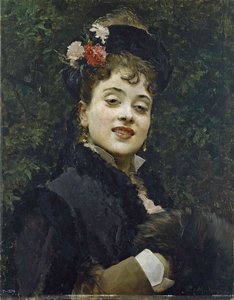
Raimundo de Madrazo achieved international renown primarily through his portraiture—a genre he pursued with unparalleled dedication and artistry throughout his life. He possessed an uncanny ability to penetrate the inner lives of his subjects—to capture not merely their physical likeness but also their character, temperament, and emotional state. His portraits were commissioned by prominent figures from across Europe—including royalty, aristocracy, and wealthy industrialists—reflecting his status as a leading artist of his era. Among his most celebrated works are *Portrait of his father painting*, a poignant depiction of familial affection rendered with exquisite detail; *Fond Memories*, capturing the melancholic beauty of nostalgia; and *The Death of Don Lope de Haro at… las Cortes de Alfaro*, a dramatic historical scene executed with masterful compositional skill. Yet, it was Madrazo’s genre paintings—particularly his depictions of Aline Masson—that garnered him enduring admiration for their sensual elegance and psychological insight. These canvases—*After the Bath*, *The Reluctant Mistress*, and *Portrait of Aline Masson in a Mantilla*—celebrated feminine beauty with an awareness of the complexities of human emotion—a testament to Madrazo’s artistic vision and his ability to convey profound feelings through subtle visual cues. His masterful use of light and shadow—his meticulous rendering of textures and fabrics—further enhanced the expressive power of these paintings, establishing them as masterpieces of bourgeois realism. His work was exhibited at the Paris Salon repeatedly throughout his life—a testament to his unwavering commitment to artistic excellence and a reflection of the esteem in which he was held by fellow artists and critics alike. He received numerous accolades for his achievements—including a first-class medal at the Exposition Universelle in 1889 and election into the French Academy—solidifying his position as one of Spain’s most distinguished painters. Raimundo de Madrazo died peacefully in Versailles in 1920, leaving behind an enduring legacy as a champion of Realism infused with Rococo’s grace and Japonisme's visual language—a painter whose art continues to inspire admiration for its beauty, skill, and psychological depth. His son, Federico de Madrazo y Ochoa ("Coco"), continued the family tradition—preserving Raimundo’s artistic legacy and ensuring that his name remained synonymous with excellence for generations to come.Kysymykset ja vastaukset
Mitä tunnelmia Raimundo de Madrazo y Garreta's teokset välittävät?
Raimundo de Madrazo y Garreta:n teoksia voi selata tunnelman mukaan artistin Tunnelmallinen huone -sivulta, jossa teokset on järjestetty niiden välittämän tunnelman mukaan.
Miten Raimundo de Madrazo y Garretan taide kehittyi ajan myötä?
Raimundo de Madrazo y Garreta-taiteilijan Ura kronikka on vieritettävä aikajana, joka esittää taiteilijan teokset kronologisessa järjestyksessä jaettuna uravaiheita vastaaviin lukuihin.
Voinko tutkia Raimundo de Madrazo y Garreta teoksia värispektrin mukaan?
Värispektri-sivulla Raimundo de Madrazo y Garreta:n teokset on järjestetty värin mukaan.