Pedro Figari muotokuva

56 tunnetuinta Pedro Figari -maalausta, jokainen ainutlaatuinen

Päivitetty lokakuu 2026 · järjestetty suosituimmuuspisteiden mukaan (jokaisen teoksen haut, vierailut ja tilaukset) · 56 teosta taiteilijalta Pedro Figari luettelossamme

Lyhyesti

Tertulia at the inn before eating. The inn (1919) on se Pedro Figari -maalaus, joka herättää eniten huomiota; alkuperäisteos kuuluu museolle National Museum of Fine Arts, Buenos Aires. Sen jälkeen katse siirtyy kohteisiin Candombe carnival (1932) ja Lavanderas En Los Medanos O Los Amigos. Pedro Figariin 56 teoksemme joukosta nämä 56 ovat kuuluisimpia; jokainen on ainutlaatuinen alkuperäisteos, joka on esitelty vuosiluvun, museon ja sen syyn kera, miksi teos on säilyttänyt suosionsa.

1861 – 1938, Montevideo Impressionism Eniten teoksia: National Museum of Fine Arts

Pedro Figari -taiteilijan 10 parasta maalausta gallerian silmin

4
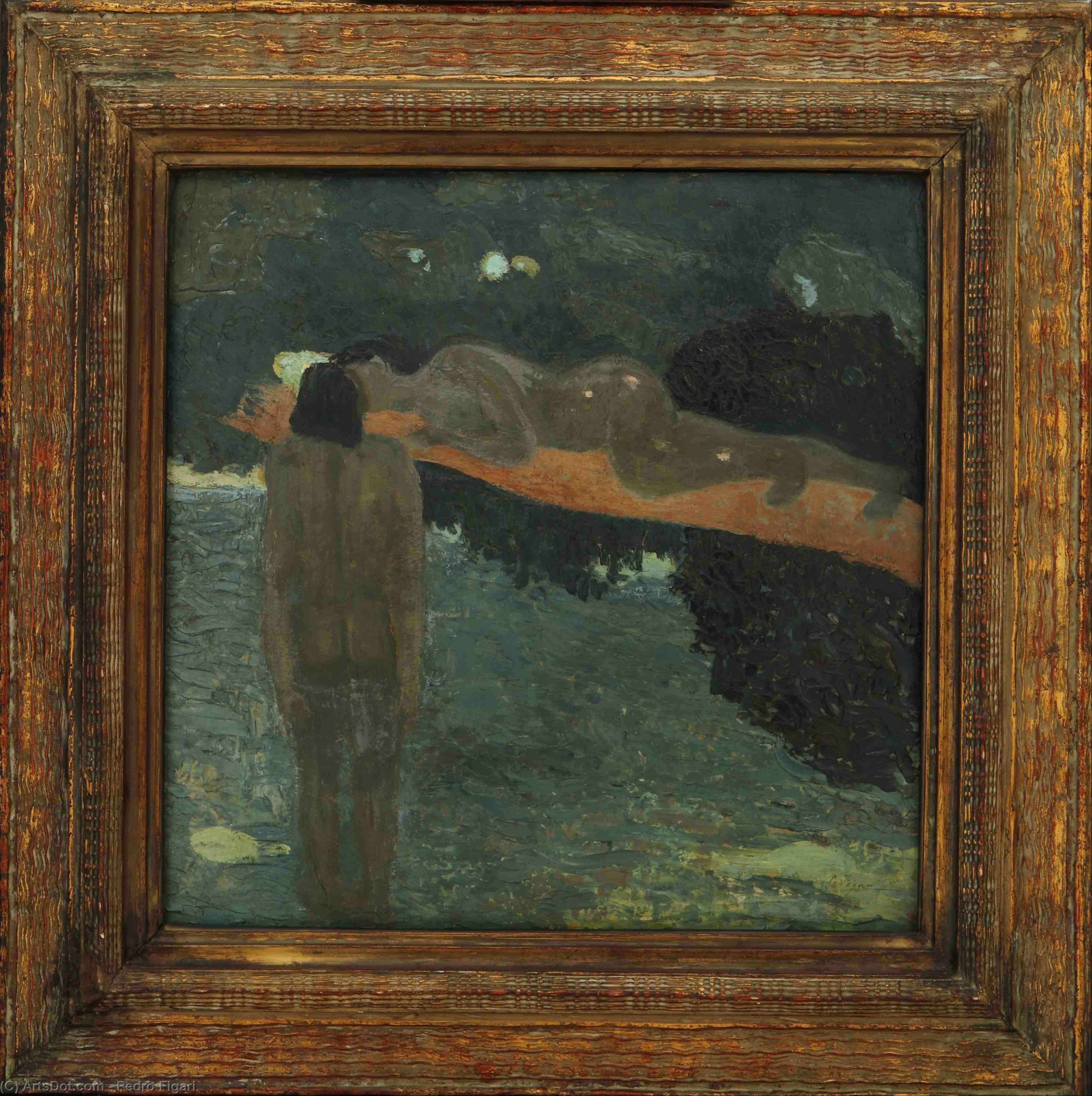
El Beso tekijä Pedro Figari

El Beso

Oil On Canvas · National Museum of Fine Arts, Buenos Aires

El Beso is an oil painting on canvas by Pedro Figari. Born in Montevideo in 1861, the artist lived until 1938, a period that saw him transition from a career in law and politics to a dedicated practice in the visual arts. His later years were defined by a shift toward a unique, intuitive approach to painting, often reconstructing scenes from memory rather than direct observation.

Pedro Figarin kuuluisia maalauksia, numerot 11–56

11La Vida tekijä Pedro FigariLa Vida 12El Requiebro tekijä Pedro FigariEl Requiebro 13El Patio O Patio Unitario tekijä Pedro FigariEl Patio O Patio UnitarioNational Museum of Fine Arts 14El Gaucho Candioti tekijä Pedro FigariEl Gaucho CandiotiNational Museum of Fine Arts 15Negras En La Puerta O Negras En Zaguán tekijä Pedro FigariNegras En La Puerta O Negras En ZaguánNational Museum of Fine Arts 16The Dance (Bailongo) (1925) tekijä Pedro FigariThe Dance (Bailongo)1925 17Creole Dance (1925) tekijä Pedro FigariCreole Dance1925 18Peeling the pava (1925) tekijä Pedro FigariPeeling the pava1925 · National Museum of Fine Arts 19Off for the Honeymoon (1925) tekijä Pedro FigariOff for the Honeymoon1925 20Double Wedding (1930) tekijä Pedro FigariDouble Wedding1930 21Idilio campero (1935) tekijä Pedro FigariIdilio campero1935 · Inter-American Development Bank 22Nocturne (1918) tekijä Pedro FigariNocturne1918 · Colección de Arte Amalia Lacroze de Fortabat 23A Request to Rosas tekijä Pedro FigariA Request to Rosas 24Mass departure tekijä Pedro FigariMass departureNational Museum of Fine Arts 25The pampas or return of the dance tekijä Pedro FigariThe pampas or return of the danceNational Museum of Fine Arts 26Injuria tekijä Pedro FigariInjuria 27La Diligancia tekijä Pedro FigariLa Diligancia 28Damas Antiguas tekijä Pedro FigariDamas Antiguas 29Rincón De Negros tekijä Pedro FigariRincón De Negros 30Las Visitas tekijä Pedro FigariLas Visitas 31La Media Caña tekijä Pedro FigariLa Media Caña 32Pericón - tekijä Pedro FigariPericón -National Museum of Fine Arts 33Jardín Bajo La Luna O Quietud En La Quinta tekijä Pedro FigariJardín Bajo La Luna O Quietud En La QuintaNational Museum of Fine Arts 34El Pericón tekijä Pedro FigariEl Pericón 35Negros Y Mulatas tekijä Pedro FigariNegros Y Mulatas 36Patio tekijä Pedro FigariPatioNational Museum of Fine Arts 37Cuestión De Razas tekijä Pedro FigariCuestión De Razas 38Alevosía tekijä Pedro FigariAlevosía 39Works Of Pedro Figari tekijä Pedro FigariWorks Of Pedro Figari 40Los miriñaques tekijä Pedro FigariLos miriñaques 41Reunión Colonial tekijä Pedro FigariReunión Colonial 42Pampa tekijä Pedro FigariPampaNational Museum of Fine Arts 43Deliberando tekijä Pedro FigariDeliberando 44Hacia La Fiesta tekijä Pedro FigariHacia La Fiesta 45Cuarteleras tekijä Pedro FigariCuartelerasNational Museum of Fine Arts 46Confidencia tekijä Pedro FigariConfidenciaNational Museum of Fine Arts 47Camelias Blancas tekijä Pedro FigariCamelias Blancas 48Las Vecinas tekijä Pedro FigariLas VecinasNational Museum of Fine Arts 49Candombe tekijä Pedro FigariCandombeNational Museum of Fine Arts 50Candombe O Candombe Bajo La Luna tekijä Pedro FigariCandombe O Candombe Bajo La LunaNational Museum of Fine Arts 51Lamento tekijä Pedro FigariLamentoNational Museum of Fine Arts 52Cancha De Bochas tekijä Pedro FigariCancha De BochasNational Museum of Fine Arts 53Pericón tekijä Pedro FigariPericónNational Museum of Fine Arts 54Baile En El Rancho tekijä Pedro FigariBaile En El RanchoNational Museum of Fine Arts 55Una Diligencia tekijä Pedro FigariUna DiligenciaNational Museum of Fine Arts 56Tertulia tekijä Pedro FigariTertuliaNational Museum of Fine Arts

Pedro Figarin kuuluisat maalaukset aikakausittain

Aiheet, jotka vangitsivat Pedro Figariin katseen

Nämä neljä aihetta toistuvat näissä alkuperäisteoksissa useimmin, jokaisesta löytyy hienoin esimerkki.

Museot, joissa Pedro Figari'n alkuperäisteokset sijaitsevat

Tämän sivun teoksista eniten sisältävät 3 museota.

Museo Kaupunki Pedro Figari teokset Tämän listan maalaukset
National Museum of Fine Arts, Buenos AiresNational Museum of Fine Arts Buenos Aires 25 Tertulia at the inn before eating. The inn, Candombe carnival, Lavanderas En Los Medanos O Los Amigos
Inter-American Development Bank, Washington, D.C.Inter-American Development Bank Washington, D.C. 1 Idilio campero
Colección de Arte Amalia Lacroze de Fortabat, Buenos AiresColección de Arte Amalia Lacroze de Fortabat Buenos Aires 1 Nocturne

Pedro Figari vuosikymmenten varrelta: jokaisesta yksi ainutlaatuinen alkuperäisteos

Teokset vuosikymmenittäin

Valitse vuosikymmen nähdäksesi sen määrittäneen alkuperäisteoksen.

Pedro Figarin maalaukset: kysymyksiä gallerialle

Mikä on Pedro Figari tunnetuin teos?Paljasta vastaus

Tertulia at the inn before eating. The inn (1919), National Museum of Fine Arts, Buenos Aires. Seuraavina ovat Candombe carnival (1932) ja Lavanderas En Los Medanos O Los Amigos.

Missä iässä Pedro Figari loi teoksen Tertulia at the inn before eating. The inn?Paljasta vastaus

58 vuotta vanha: Tertulia at the inn before eating. The inn on peräisin vuodelta 1919, ja Pedro Figari on syntynyt vuonna 1861.

Mitkä ovat Pedro Figari kymmenen kuuluisinta maalausta?Paljasta vastaus

Tertulia at the inn before eating. The inn, Candombe carnival, Lavanderas En Los Medanos O Los Amigos, El Beso, While the Ball Rolls, El Maturrango, Encuentro En El Camino, Carreta, La Amita ja Preparando El Candombe. Yllä oleva sijoitus kertoo kunkin teoksen vuosiluvun ja museon.

Kuinka monta Pedro Figari -teosta tunnetaan?Paljasta vastaus

Katalogissamme on 56 teosta taiteilijalta Pedro Figari, aikaväliltä 1918–1935.

Missä voi nähdä tunnetuimmat Pedro Figari -alkuperäisteokset?Paljasta vastaus

Pääasiassa National Museum of Fine Arts (Buenos Aires), Inter-American Development Bank (Washington, D.C.) ja Colección de Arte Amalia Lacroze de Fortabat (Buenos Aires). Yllä oleva museotaulukko listaa ne kaikki.

Mihin ajanjaksoon Pedro Figari tunnituimmat maalauksensa sijoittuvat?Paljasta vastaus

Aikakaudella 1920s: 4 sivun 56 teoksista on tehty silloin, joista The Dance (Bailongo).

Mikä on Pedro Figari kuuluisimmista maalauksista varhaisin ja mikä uusin?Paljasta vastaus

Tällä sivulla vanhin on Nocturne (1918) ja uusin Idilio campero (1935).

Mitä aiheita Pedro Figari suosi?Paljasta vastaus

Social gathering (4), Uruguayan culture (3) ja Latin america (3), yhteensä 56 teosta tällä sivulla.

Mihin taidesuuntaukseen Pedro Figari kuuluu?Paljasta vastaus

Impressionism ja Modernism, tämän sivun alkuperäisteosten perusteella.

Mitä Pedro Figari alkuperäisteoksia voin nähdä museossa National Museum of Fine Arts?Paljasta vastaus

Tertulia at the inn before eating. The inn, Candombe carnival ja Lavanderas En Los Medanos O Los Amigos: National Museum of Fine Arts, Buenos Aires -ssä on 25 tämän sivun teoksista.

Pedro Figari: taiteilijan muotokuva

A Life Imbued with Uruguayan Essence

Pedro Figari, a name that echoes through the halls of Latin American art history, was far more than simply a painter; he was a complex and deeply felt embodiment of his nation’s soul. Born in Montevideo in 1861, his life unfolded not as a straightforward progression but as a rich tapestry woven from legal practice, political engagement, literary pursuits, and ultimately, an extraordinary artistic awakening. Initially drawn to the structured world of law – earning his degree in 1886 – Figari’s early career exposed him to the realities of Uruguayan society, particularly the struggles faced by its impoverished citizens. This experience, far from being a mere backdrop, profoundly shaped his perspective and fueled a desire to capture the essence of everyday life on canvas. A marriage in the same year led to travels in France, an encounter that proved pivotal as he immersed himself in the vibrant world of post-impressionism – absorbing the bold colors and emotive brushstrokes of artists like Van Gogh and Gauguin. However, it wasn’t until 1921, at the remarkable age of sixty, that Figari truly embraced painting, unleashing a torrent of creativity that would forever alter his legacy and redefine Latin American art.

From Legal Chambers to Artistic Visions

For decades prior to this transformative moment, Figari had engaged in various intellectual endeavors, serving as a member of Parliament, directing the Escuela Nacional de Artes y Oficios (National School of Arts and Crafts), and contributing significantly to public discourse through his writings on law, education, aesthetics, and even utopian ideals. These diverse commitments weren’t distractions from his artistic potential; rather, they enriched it, providing him with a keen observational skill honed by years of legal practice and a deep understanding of human nature cultivated through his interactions with the marginalized. His legal training instilled in him an acute awareness of social dynamics and a sensitivity to the complexities of human relationships – qualities that would later find expression in his paintings. The move to Buenos Aires in 1921 proved to be a catalyst, providing him with a fresh start and a space to shed the constraints of earlier, more academically-influenced styles. It was here, amidst the bustling energy of Argentinean life, that he began to forge a truly unique artistic voice – one rooted in memory, emotion, and an unwavering commitment to capturing the spirit of his homeland.

A Pioneer’s Palette: Style and Subject Matter

Figari's artistic style is immediately recognizable for its vibrant color palettes, bold brushstrokes, and seemingly naïve simplicity. He wasn’t interested in creating illusions of depth or photographic accuracy; instead, he treated his canvases as studies in color and form, reconstructing Uruguayan scenes from the fragments of his memory. His paintings weren’t attempts to replicate reality but rather distillations of experience – capturing the essence of a moment, a feeling, or a social interaction. His subjects were drawn almost exclusively from the world he knew intimately—the gauchos roaming the vast pampas, the lively celebrations of carnival, the quiet rituals and daily life of Montevideo’s black community, and the intimate scenes unfolding within colonial patios. These weren't merely picturesque depictions; they were poignant reflections on Uruguayan identity, social customs, and a disappearing way of life. He captured fleeting moments – a dance in progress, a gathering of friends, a street scene bathed in sunlight – with an immediacy that felt both timeless and deeply rooted in place. His technique, often employing *impasto*—thickly applied paint creating visible brushstrokes—further emphasized the expressive power of color and texture, creating paintings that pulsated with energy and emotion.

Breaking with Tradition: A Latin American Voice

Pedro Figari emerged during a crucial period in Latin American art history – a time when artists were actively seeking to break free from European artistic dominance and define their own unique aesthetic identities. Traditional academic painting often focused on historical or religious subjects, prioritizing technical skill over genuine expression. Figari challenged this convention by embracing a more direct, unpretentious style that allowed him to subtly critique social norms and celebrate the vibrancy of Uruguayan culture. He believed in the power of art to connect with the everyday experiences of ordinary people, rejecting elitism in favor of authenticity. His work resonated with a growing sense of national pride and a desire to reclaim indigenous roots. He wasn’t alone in this endeavor—artists like Diego Rivera and Tarsila do Amaral were also forging new paths—but Figari's unique blend of memory, color, and social commentary established him as a pivotal figure in the development of Latin American modernism. He anticipated later modernist developments with his expressive brushwork and rejection of mechanistic representation.

Legacy and Enduring Influence

Pedro Figari’s legacy extends far beyond his individual artistic achievements. He is remembered not simply as a painter but as one of the first Latin American artists to successfully forge a distinctly regional style, prioritizing feeling and essence over strict realism. His work continues to inspire artists and art lovers alike with its vibrant energy, emotional depth, and unwavering commitment to capturing the spirit of Uruguay. He demonstrated that true modernity wasn’t about imitating European trends but about finding one's own voice—a lesson that resonated throughout Latin America and beyond. He died in 1938, leaving behind a body of work that stands as a testament to his artistic vision, intellectual curiosity, and enduring love for his homeland. His paintings are not merely representations of Uruguayan life; they *are* Uruguay – its colors, its rhythms, its soul – preserved on canvas for generations to come.