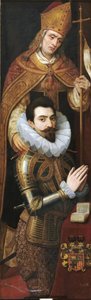
Otto van Veen muotokuva

73 tunnetuinta Otto van Veen -maalausta, jokainen ainutlaatuinen

Päivitetty marraskuu 2026 · järjestetty suosituimmuuspisteiden mukaan (jokaisen teoksen haut, vierailut ja tilaukset) · 74 teosta taiteilijalta Otto van Veen luettelossamme

Lyhyesti

The Last Supper (1592) on se Otto van Veen -maalaus, joka herättää eniten huomiota; alkuperäisteos kuuluu museolle Onze-Lieve Vrouwekathedraal, Antwerpen. Sen jälkeen katse siirtyy kohteisiin Portrait of Alessandro Farnese (1545-1592) (1585) ja Portrait of Alexander Farnese (1545-1592) (1592). Otto van Veenin 74 teoksemme joukosta nämä 73 ovat kuuluisimpia; jokainen on ainutlaatuinen alkuperäisteos, joka on esitelty vuosiluvun, museon ja sen syyn kera, miksi teos on säilyttänyt suosionsa.

1556 – 1629, Leiden Baroque Eniten teoksia: Bavarian State Painting Collections

Otto van Veen -taiteilijan 10 parasta maalausta gallerian silmin

1
The Last Supper (1592) tekijä Otto van Veen

The Last Supper

1592 · Oil On Canvas · Onze-Lieve Vrouwekathedraal, Antwerpen

To stand before this monumental depiction of The Last Supper is to be enveloped in an atmosphere thick with profound significance and hushed drama. It is more than merely a painting; it is a frozen moment of ultimate human reckoning, a tableau vivant capturing the solemnity of Christ’s final meal with his apostles. The sheer scale of the work, measuring an imposing 350 by 2247 centimeters, speaks to its monumental…

2
Portrait of Alessandro Farnese (1545-1592) (1585) tekijä Otto van Veen

Portrait of Alessandro Farnese (1545-1592)

1585 · Oil On Copper · Los Angelesin maakunnallinen taidemuseo, Los Angeles

The portrait of Alessandro Farnese is a highly ornate Mannerist miniature, rendered in oil heightened with gold on a copper support. The composition is hierarchical and symmetrical, centering an oval portrait of the subject within an elaborate, sculptural golden frame. Alessandro is depicted in a three-quarter view, wearing a white ruff collar and detailed armor. Behind him, a dark background is speckled with golden stars, suggesting a celestial or divine…

3
Portrait of Alexander Farnese (1545-1592) (1592) tekijä Otto van Veen

Portrait of Alexander Farnese (1545-1592)

1592 · Oil On Canvas · Kuninkaalliset Taidemuseot Brysselissä, Bryssel

Alexander Farnese, Duke of Parma, is captured in a formal bust-length portrait that emphasizes his status through the language of military regalia. He faces the viewer's right but directs his gaze forward, establishing a direct connection with the observer. The composition relies on the sharp contrast between a dark, indistinct background and the luminous details of his attire. A bright white lace ruff frames the face, while a crimson silk…

4
The Conspiracy of Claudius Civilis and the Batavians in the Schakerbos (1606) tekijä Otto van Veen

The Conspiracy of Claudius Civilis and the Batavians in the Schakerbos

1606 · Oil · Rijksmuseum, Amsterdam

In The Conspiracy of Claudius Civilis and the Batavians in the Schakerbos, Otto van Veen captures a pivotal moment of insurrection. The scene depicts the revolt of the Batavians against the Romans during AD 69 and 70. Here, Claudius Civilis is gathered with his supporters around a meal in the forest under the cover of night. It is a moment of quiet tension, where the oath of Civilis is taken…

5
After the Fall of Vetera Castra Claudius Civilis has his hair cut while his son shoots some prisoners (1606) tekijä Otto van Veen

After the Fall of Vetera Castra Claudius Civilis has his hair cut while his son shoots some prisoners

1606 · Oil On Panel · Rijksmuseum, Amsterdam

After the Fall of Vetera Castra Claudius Civilis has his hair cut while his son shoots some prisoners by Otto van Veen, executed about 1606, belongs to the series De Bataafse Opstand. This collection of twelve paintings was commissioned by the Dutch parliament, the States General, in 1613. The work functions as a visual record of the Batavian revolt against Roman forces during AD 69 and 70.

6
Saint Paul before proconsul Felix of Caesarea (1602) tekijä Otto van Veen

Saint Paul before proconsul Felix of Caesarea

1602 · Oil On Panel · Royal Museum of Fine Arts Antwerp, Antwerpen

The oil on panel painting titled Saint Paul before proconsul Felix of Caesarea was executed by the artist Otto van Veen. This work dates to 1602. The composition is presented on a vertical plane with dimensions measuring 253 × 101 cm. The physical surface of the panel supports the layers of pigment that form the figures and the architectural setting.

7
The Charity of Saint Nicholas of Myra (1606) tekijä Otto van Veen

The Charity of Saint Nicholas of Myra

1606 · Oil On Panel · Royal Museum of Fine Arts Antwerp, Antwerpen

The Charity of Saint Nicholas of Myra is an oil painting by Otto van Veen. Created around 1606, the work captures a moment of divine intervention during a period of scarcity. The scene depicts the saint performing a miracle to aid a suffering population. Specifically, it portrays St. Nicholas miraculously multiplying corn-sacks unloaded from boats in the harbor to provide for the people of Myra during a famine.

8
Amazones and Skythians (1629) tekijä Otto van Veen

Amazones and Skythians

1629 · Oil On Canvas · Kunsthistorisches Museum, Wien

The oil on panel work titled Amazones and Skythians was executed by Otto van Veen. Born in 1556 in Leiden, Netherlands, the artist lived until 1629. This piece captures a gathering of figures defined by their strength. The subject matter focuses on strong women, specifically the alleged Amazons and Spartans.

9
The Calling of Zacchaeus who is Sitting in a Fig Tree (1606) tekijä Otto van Veen

The Calling of Zacchaeus who is Sitting in a Fig Tree

1606 · Oil On Canvas · Royal Museum of Fine Arts Antwerp, Antwerpen

In "The Calling of Zacchaeus who is Sitting in a Fig Tree" by Otto van Veen, a profound spiritual encounter unfolds amidst a dense, moving crowd. Painted about 1606, the scene captures the exact moment of divine calling, freezing a pivotal instant of recognition and redemption. The biblical narrative of Zacchaeus comes alive as the viewer witnesses the intersection of the earthly and the divine. High above the bustling assembly,…

10
Jan Miraeus, Bishop of Antwerp (1611) tekijä Otto van Veen

Jan Miraeus, Bishop of Antwerp

1611 · Oil On Panel · Royal Museum of Fine Arts Antwerp, Antwerpen

A single light source strikes the subject from the upper left, carving a face out of the surrounding gloom. Jan Miraeus sits in a quiet, heavy stillness. His skin possesses the pale, matte texture of fine porcelain, contrasting sharply against the deep, velvety burgundy of his clerical attire. The shadows cling to the right side of his features, tracing the lines of a life spent in contemplation and command. There…

Otto van Veenn kuuluisia maalauksia, numerot 11–73

11Portrait of Albrecht VII, Archduke of Austria (1559-1621) (1596) tekijä Otto van VeenPortrait of Albrecht VII, Archduke of Austria (1559-1621)1596 · Kunsthistorisches Museum 12The Mystic Marriage of St. Catherine (1589) tekijä Otto van VeenThe Mystic Marriage of St. Catherine1589 · Kuninkaalliset Taidemuseot Brysselissä 13Carrying of the Cross (1592) tekijä Otto van VeenCarrying of the Cross1592 · Bavarian State Painting Collections 14Christ on the Mount of Olives (1592) tekijä Otto van VeenChrist on the Mount of Olives1592 · Bavarian State Painting Collections 15Presentation of Jesus in the Temple (1592) tekijä Otto van VeenPresentation of Jesus in the Temple1592 · Bavarian State Painting Collections 16Triumph of the Catholic Church (1592) tekijä Otto van VeenTriumph of the Catholic Church1592 · Bavarian State Painting Collections 17Justitia and Pax (1592) tekijä Otto van VeenJustitia and Pax1592 · Bavarian State Painting Collections 18Flagellation (1592) tekijä Otto van VeenFlagellation1592 · Bavarian State Painting Collections 19Birth of Christ (1592) tekijä Otto van VeenBirth of Christ1592 · Bavarian State Painting Collections 20Assumption of Mary (1592) tekijä Otto van VeenAssumption of Mary1592 · Bavarian State Painting Collections 21Visitation of Mary (1592) tekijä Otto van VeenVisitation of Mary1592 · Bavarian State Painting Collections 22Pentecost (1592) tekijä Otto van VeenPentecost1592 · Bavarian State Painting Collections 23Crowning with Thorns (1592) tekijä Otto van VeenCrowning with Thorns1592 · Bavarian State Painting Collections 24Martyrdom of Saint Andrew (1592) tekijä Otto van VeenMartyrdom of Saint Andrew1592 · Bavarian State Painting Collections 25Triumph of the Catholic Church (1592) tekijä Otto van VeenTriumph of the Catholic Church1592 · Bavarian State Painting Collections 26Triumph of the Catholic Church (1592) tekijä Otto van VeenTriumph of the Catholic Church1592 · Bavarian State Painting Collections 27Triumph of the Catholic Church (1592) tekijä Otto van VeenTriumph of the Catholic Church1592 · Bavarian State Painting Collections 28Triumph of the Catholic Church (1592) tekijä Otto van VeenTriumph of the Catholic Church1592 · Bavarian State Painting Collections 29Coronation of Mary (1592) tekijä Otto van VeenCoronation of Mary1592 · Bavarian State Painting Collections 30Ascension of Christ (1592) tekijä Otto van VeenAscension of Christ1592 · Bavarian State Painting Collections 31Christ on the Cross (1592) tekijä Otto van VeenChrist on the Cross1592 · Bavarian State Painting Collections 32The Twelve-Year-Old Jesus in the Temple (1592) tekijä Otto van VeenThe Twelve-Year-Old Jesus in the Temple1592 · Bavarian State Painting Collections 33Triumph of the Catholic Church (1592) tekijä Otto van VeenTriumph of the Catholic Church1592 · Bavarian State Painting Collections 34The Resurrection (1592) tekijä Otto van VeenThe Resurrection1592 · Bavarian State Painting Collections 35The Lamentation over Christ (1590) tekijä Otto van VeenThe Lamentation over Christ1590 36The Last Supper (1592) tekijä Otto van VeenThe Last Supper1592 · San Fernandon kuninkaallinen taideakatemia 37The Lamentation of Christ with Angels (1589) tekijä Otto van VeenThe Lamentation of Christ with Angels1589 · Augustiner Museum 38During a Famine in Myra Saint Nicholas Saves the People (1606) tekijä Otto van VeenDuring a Famine in Myra Saint Nicholas Saves the People1606 · Royal Museum of Fine Arts Antwerp 39The Judgement of Zaleucus (1607) tekijä Otto van VeenThe Judgement of Zaleucus1607 · Art Institute of Chicago 40Allegory of the Temptations of Youth (1595) tekijä Otto van VeenAllegory of the Temptations of Youth1595 · Nationalmuseum 41Xantippe Dousing Socrates (1607) tekijä Otto van VeenXantippe Dousing Socrates1607 42Lycurgus Demonstrares the Importance of Education (1607) tekijä Otto van VeenLycurgus Demonstrares the Importance of Education1607 43Portrait of "Count Hendrik van den Bergh (1573-1638)" on canvas by Otto van Veen, circa 1618 (1618) tekijä Otto van VeenPortrait of "Count Hendrik van den Bergh (1573-1638)" on canvas by Otto van Veen, circa 16181618 44Brinno Raised upon the Shield, Otto van Veen, 1600 - 1613 (1613) tekijä Otto van VeenBrinno Raised upon the Shield, Otto van Veen, 1600 - 16131613 · Rijksmuseum 45The Batavians Surround the Romans at Vetera, Otto van Veen, 1600 - 1613 (1613) tekijä Otto van VeenThe Batavians Surround the Romans at Vetera, Otto van Veen, 1600 - 16131613 · Rijksmuseum 46The Batavians Defeating the Romans on the Rhine, Otto van Veen, 1600 - 1613 (1613) tekijä Otto van VeenThe Batavians Defeating the Romans on the Rhine, Otto van Veen, 1600 - 16131613 · Rijksmuseum 47The Peace Negotiations between Julius Civilis and the Roman General Cerialis, Otto van Veen, 1600 - 1613 (1613) tekijä Otto van VeenThe Peace Negotiations between Julius Civilis and the Roman General Cerialis, Otto van Veen, 1600 - 16131613 · Rijksmuseum 48The Adoration of the Magi and The Presentation in the Temple (1624) tekijä Otto van VeenThe Adoration of the Magi and The Presentation in the Temple1624 49The Persian women (1629) tekijä Otto van VeenThe Persian women1629 · Kunsthistorisches Museum 50The Artist Painting, Surrounded by his Family (1584) tekijä Otto van VeenThe Artist Painting, Surrounded by his Family1584 · Louvre 51The Last Supper (1670) tekijä Otto van VeenThe Last Supper1670 · Bavarian State Painting Collections 52The Calling of Matthew (1606) tekijä Otto van VeenThe Calling of Matthew1606 · Royal Museum of Fine Arts Antwerp 53Emblem (1607) tekijä Otto van VeenEmblem1607 · Koninklijke Bibliotheek 54Distribution of Herring and White Bread during the Siege of Leiden (1574) tekijä Otto van VeenDistribution of Herring and White Bread during the Siege of Leiden1574 · Rijksmuseum 55The Conference of the Gauls at Reims, Otto van Veen, 1600 - 1613 (1613) tekijä Otto van VeenThe Conference of the Gauls at Reims, Otto van Veen, 1600 - 16131613 · Rijksmuseum 56Valentinus Taken Prisoner, Otto van Veen, 1600 - 1613 (1613) tekijä Otto van VeenValentinus Taken Prisoner, Otto van Veen, 1600 - 16131613 · Rijksmuseum 57A Nocturnal Banquet, Otto van Veen, 1600 - 1613 (1613) tekijä Otto van VeenA Nocturnal Banquet, Otto van Veen, 1600 - 16131613 · Rijksmuseum 58The Batavians Besiege the Roman Army Regiments at Vetera, Otto van Veen, 1600 - 1613 (1613) tekijä Otto van VeenThe Batavians Besiege the Roman Army Regiments at Vetera, Otto van Veen, 1600 - 16131613 · Rijksmuseum 59The Romans nearly Overpower the Army of Julius Civilis through the Treachery of a Batavian, Otto van Veen, 1600 - 1613 (1613) tekijä Otto van VeenThe Romans nearly Overpower the Army of Julius Civilis through the Treachery of a Batavian, Otto van Veen, 1600 - 16131613 · Rijksmuseum 60The Beheading of Claudius Paulus and the Capture of Julius Civilis, Otto van Veen, 1600 - 1613 (1613) tekijä Otto van VeenThe Beheading of Claudius Paulus and the Capture of Julius Civilis, Otto van Veen, 1600 - 16131613 · Rijksmuseum 61An unknown Flemish Family (1625) tekijä Otto van VeenAn unknown Flemish Family1625 62Zijluiken van het altaarstuk van de meerseniers tekijä Otto van VeenZijluiken van het altaarstuk van de meerseniersRoyal Museum of Fine Arts Antwerp 63Gemeine Jeuchts Beeldt. Allegori på ungdommens fristelser tekijä Otto van VeenGemeine Jeuchts Beeldt. Allegori på ungdommens fristelserStatens Museum for Kunst 64Alonso de Idiaquez, 1st Duke of Ciudad Real tekijä Otto van VeenAlonso de Idiaquez, 1st Duke of Ciudad Real 65Juana de Robles, Duchess of Ciudad Real tekijä Otto van VeenJuana de Robles, Duchess of Ciudad Real 66Allégorie (le Temps ) tekijä Otto van VeenAllégorie (le Temps ) 67Dispute d'Athéna et de Poséïdon tekijä Otto van VeenDispute d'Athéna et de Poséïdon 68The Dead Christ Supported by Angels tekijä Otto van VeenThe Dead Christ Supported by Angels 69On the Disposal of Wealth Illustration to Horace, Carmina III tekijä Otto van VeenOn the Disposal of Wealth Illustration to Horace, Carmina IIIFitzwilliam Museum 70Putti Enacting a Bacchanalian Scene tekijä Otto van VeenPutti Enacting a Bacchanalian SceneHam House 71Christ in the House of Mary and Martha tekijä Otto van VeenChrist in the House of Mary and Martha 72Portrait of Nicolaas Rockox tekijä Otto van VeenPortrait of Nicolaas RockoxRubens House 73Allégorie du Temps (1607) tekijä Otto van VeenAllégorie du Temps1607

Otto van Veenn kuuluisat maalaukset aikakausittain

Aiheet, jotka vangitsivat Otto van Veenin katseen

Nämä neljä aihetta toistuvat näissä alkuperäisteoksissa useimmin, jokaisesta löytyy hienoin esimerkki.

Museot, joissa Otto van Veen'n alkuperäisteokset sijaitsevat

Tämän sivun teoksista eniten sisältävät 8 museota.

Museo Kaupunki Otto van Veen teokset Tämän listan maalaukset
Bavarian State Painting Collections, MünchenBavarian State Painting Collections München 23 Carrying of the Cross, Christ on the Mount of Olives, Presentation of Jesus in the Temple
Rijksmuseum, AmsterdamRijksmuseum Amsterdam 13 The Conspiracy of Claudius Civilis and the Batavians in the Schakerbos, After the Fall of Vetera Castra Claudius Civilis has his hair cut while his son shoots some prisoners, Brinno Raised upon the Shield, Otto van Veen, 1600 - 1613
Royal Museum of Fine Arts Antwerp, AntwerpenRoyal Museum of Fine Arts Antwerp Antwerpen 7 Saint Paul before proconsul Felix of Caesarea, The Charity of Saint Nicholas of Myra, The Calling of Zacchaeus who is Sitting in a Fig Tree
Kunsthistorisches Museum, WienKunsthistorisches Museum Wien 3 Amazones and Skythians, Portrait of Albrecht VII, Archduke of Austria (1559-1621), The Persian women
Kuninkaalliset Taidemuseot Brysselissä, BrysselKuninkaalliset Taidemuseot Brysselissä Bryssel 2 Portrait of Alexander Farnese (1545-1592), The Mystic Marriage of St. Catherine
Onze-Lieve Vrouwekathedraal, AntwerpenOnze-Lieve Vrouwekathedraal Antwerpen 1 The Last Supper
Los Angelesin maakunnallinen taidemuseo, Los AngelesLos Angelesin maakunnallinen taidemuseo Los Angeles 1 Portrait of Alessandro Farnese (1545-1592)
San Fernandon kuninkaallinen taideakatemia, MadridSan Fernandon kuninkaallinen taideakatemia Madrid 1 The Last Supper

Otto van Veen vuosikymmenten varrelta: jokaisesta yksi ainutlaatuinen alkuperäisteos

Teokset vuosikymmenittäin

Valitse vuosikymmen nähdäksesi sen määrittäneen alkuperäisteoksen.

Otto van Veenn maalaukset: kysymyksiä gallerialle

Mikä on Otto van Veen tunnetuin teos?Paljasta vastaus

The Last Supper (1592), Onze-Lieve Vrouwekathedraal, Antwerpen. Seuraavina ovat Portrait of Alessandro Farnese (1545-1592) (1585) ja Portrait of Alexander Farnese (1545-1592) (1592).

Missä iässä Otto van Veen loi teoksen The Last Supper?Paljasta vastaus

36 vuotta vanha: The Last Supper on peräisin vuodelta 1592, ja Otto van Veen on syntynyt vuonna 1556.

Mitkä ovat Otto van Veen kymmenen kuuluisinta maalausta?Paljasta vastaus

The Last Supper, Portrait of Alessandro Farnese (1545-1592), Portrait of Alexander Farnese (1545-1592), The Conspiracy of Claudius Civilis and the Batavians in the Schakerbos, After the Fall of Vetera Castra Claudius Civilis has his hair cut while his son shoots some prisoners, Saint Paul before proconsul Felix of Caesarea, The Charity of Saint Nicholas of Myra, Amazones and Skythians, The Calling of Zacchaeus who is Sitting in a Fig Tree ja Jan Miraeus, Bishop of Antwerp. Yllä oleva sijoitus kertoo kunkin teoksen vuosiluvun ja museon.

Kuinka monta Otto van Veen -teosta tunnetaan?Paljasta vastaus

Katalogissamme on 74 teosta taiteilijalta Otto van Veen, aikaväliltä 1574–1629.

Missä voi nähdä tunnetuimmat Otto van Veen -alkuperäisteokset?Paljasta vastaus

Pääasiassa Bavarian State Painting Collections (München), Rijksmuseum (Amsterdam) ja Royal Museum of Fine Arts Antwerp (Antwerpen). Yllä oleva museotaulukko listaa ne kaikki.

Mihin ajanjaksoon Otto van Veen tunnituimmat maalauksensa sijoittuvat?Paljasta vastaus

Aikakaudella 1590s: 28 sivun 73 teoksista on tehty silloin, joista The Last Supper.

Mikä on Otto van Veen kuuluisimmista maalauksista varhaisin ja mikä uusin?Paljasta vastaus

Tällä sivulla vanhin on Distribution of Herring and White Bread during the Siege of Leiden (1574) ja uusin Amazones and Skythians (1629).

Mitä aiheita Otto van Veen suosi?Paljasta vastaus

People (27), Man (18) ja Woman (16), yhteensä 73 teosta tällä sivulla.

Mitä materiaaleja Otto van Veen käytti eniten?Paljasta vastaus

Oil On Canvas, 20 teoksesta sivun 73 teoksesta.

Mihin taidesuuntaukseen Otto van Veen kuuluu?Paljasta vastaus

Baroque ja Mannerism, tämän sivun alkuperäisteosten perusteella.

Mitä Otto van Veen alkuperäisteoksia voin nähdä museossa Bavarian State Painting Collections?Paljasta vastaus

Carrying of the Cross, Christ on the Mount of Olives ja Presentation of Jesus in the Temple: Bavarian State Painting Collections, München -ssä on 23 tämän sivun teoksista.

Otto van Veen: taiteilijan muotokuva

A Life Bridging Renaissance and Baroque: The World of Otto van Veen

Otto van Veen, a name that resonates through the corridors of Flemish art history, represents a fascinating convergence of eras – a skilled painter deeply rooted in the late Renaissance yet profoundly influenced by the burgeoning Baroque. Born around 1556 in Leiden, Netherlands, into a family distinguished by its civic leadership (his father served as burgomaster), Van Veen’s life unfolded as a series of carefully considered transitions, shaped by religious upheaval and artistic exploration. The relocation of his family to Antwerp in 1572, driven by their Catholic faith amidst the rising tide of Protestantism, wasn't merely a geographical shift; it was a pivotal moment that fundamentally altered his intellectual and artistic trajectory. This move plunged him into an environment teeming with intellectual ferment and artistic innovation, exposing him to influential figures like Dominicus Lampsonius and Jean Ramée – individuals who would lay the groundwork for his future career as a humanist artist deeply versed in classical learning. His subsequent journey to Rome around 1574 or 1575 proved to be an immersion into the very heart of the Italian Renaissance, a period that indelibly shaped his artistic sensibilities and provided him with the stylistic vocabulary he would later employ. The precise nature of his Roman tutelage remains subject to scholarly debate – some scholars suggest a direct mentorship under Federico Zuccari, while others emphasize independent study – but its impact on his development is undeniable.

Patronage, Pedagogy, and the Shaping of a Master

Upon returning from Italy, Van Veen swiftly established himself as a highly sought-after artist within the vibrant artistic landscape of Antwerp. His talent quickly secured him a prestigious position as court painter to Alexander Farnese, Duke of Parma, governor of the Southern Netherlands, in Brussels. This patronage wasn’t simply a matter of financial security; it provided access to a sophisticated artistic milieu and offered invaluable opportunities for large-scale commissions – projects that allowed Van Veen to hone his skills and establish himself as a leading figure in the region's art scene. He was formally recognized as a master within Antwerp’s Guild of St. Luke in 1593, solidifying his professional standing and marking a significant milestone in his career. However, Van Veen’s legacy extends far beyond the individual paintings he created; it is inextricably linked to his role as a teacher, particularly his profound influence on the young Peter Paul Rubens. From approximately 1594 or 1595 until 1598, Van Veen served as Rubens' mentor, imparting not only technical skills but also a rigorous classical education and a deep appreciation for humanist principles – values that would become central to Rubens’ own artistic vision. This mentorship was transformative, shaping the young artist’s intellectual framework and laying the foundation for his future triumphs. During this period of intense instruction, Van Veen also undertook numerous religious commissions, adorning churches throughout Antwerp with altarpieces and elaborate chapel decorations, demonstrating his versatility and growing reputation as a skilled and reliable artist capable of executing complex and ambitious projects.

Mannerist Sensibility and the Language of Emblems

Van Veen’s artistic style is firmly rooted in Mannerism, an aesthetic movement that flourished during the late 16th century – a period characterized by a deliberate departure from the idealized forms and balanced compositions of the High Renaissance. His paintings often exude an air of elegance, sophistication, and intellectual contemplation. He was known as a *pictor doctus* – a learned painter – reflecting his commitment to incorporating humanist themes into his work. Mannerist artists frequently employed elongated figures, graceful poses, complex spatial arrangements, and a refined palette, prioritizing psychological depth and emotional intensity over strict naturalism. Van Veen’s compositions are often imbued with a sense of dynamism and movement, achieved through subtle shifts in perspective and the strategic placement of figures within the frame. Beyond his work as a painter, Van Veen made significant contributions to the burgeoning field of emblem books – a popular genre that combined images with text to convey moral and philosophical messages. His *Quinti Horatii Flacci Emblemata* (1607), *Amorum Emblemata* (1608), and *Amoris Divini Emblemata* (1615) are prime examples of this form, showcasing his skill as both an artist and a scholar. The *Amorum Emblemata*, in particular, achieved widespread influence, serving as a model for subsequent emblem books and inspiring artists across various disciplines. Its depictions of putti enacting scenes from classical literature and mythology, accompanied by witty mottos, captured the spirit of Renaissance humanism and its fascination with love – both earthly and divine.

Later Years and Enduring Influence

Even as artistic tastes began to shift towards the dynamism and dramatic intensity of the Baroque style in the early 17th century, Van Veen continued to thrive professionally and creatively. He maintained connections with the Archdukes Albert and Isabella, though without holding a formal court appointment – his skills remained highly valued for their versatility. A significant undertaking during this period was a commission to create a series of twelve paintings depicting battles between Romans and Batavians, commissioned by the Dutch States General based on earlier engravings he had produced. This project demonstrates his ability to adapt to changing political landscapes and cater to diverse artistic demands. Throughout his career, Van Veen remained actively involved in Antwerp’s artistic community, serving as dean of both the Guild of St. Luke (1602) and the Romanists (1606). He came from a family with considerable artistic talent; his brother Gijsbert was an accomplished engraver, his daughter Gertruid also pursued painting, and several nephews worked as pastel artists. Otto van Veen died in Brussels in 1629, leaving behind a legacy that extended far beyond his own oeuvre. Arnold Houbraken, the renowned Dutch art historian, recognized him as the most impressive artist and scholar of his time, even featuring his portrait on the title page of his influential *De Groote Schouburgh der Nederlantsche Konstschilders en Schildersessen*. His enduring significance lies not only in his own artistic achievements but also in his pivotal role as a teacher – most notably to Peter Paul Rubens – and his contribution to the intellectual and artistic currents of his era. He stands as a compelling figure, bridging the gap between the Renaissance and Baroque periods, embodying the ideals of the humanist artist, and leaving an indelible mark on the history of Flemish painting.