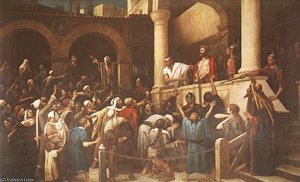
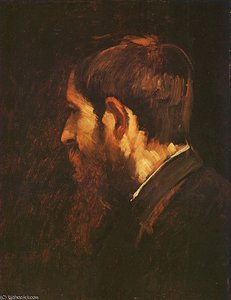
Mihály Munkácsy muotokuva

100 tunnetuinta Mihály Munkácsy -maalausta, jokainen ainutlaatuinen

Päivitetty marraskuu 2026 · järjestetty suosituimmuuspisteiden mukaan (jokaisen teoksen haut, vierailut ja tilaukset) · 139 teosta taiteilijalta Mihály Munkácsy luettelossamme

Lyhyesti

The Wrestler's Challenge (1875) on se Mihály Munkácsy -maalaus, joka herättää eniten huomiota; alkuperäisteos kuuluu museolle Art Institute of Chicago, Chicago. Sen jälkeen katse siirtyy kohteisiin Self-Portrait II. (1881) ja Christ on the Cross. Mihály Munkácsyin 139 teoksemme joukosta nämä 100 ovat kuuluisimpia; jokainen on ainutlaatuinen alkuperäisteos, joka on esitelty vuosiluvun, museon ja sen syyn kera, miksi teos on säilyttänyt suosionsa.

1844 – 1900, Mukatševo Realism Eniten teoksia: Unkarin kansallinen galleria

Mihály Munkácsy -taiteilijan 10 parasta maalausta gallerian silmin

1
The Wrestler's Challenge (1875) tekijä Mihály Munkácsy

The Wrestler's Challenge

1875 · Oil On Panel · Art Institute of Chicago, Chicago

The Wrestler's Challenge is an oil on panel painting created by the Hungarian artist Mihály Munkácsy. The work emerged in 1875. It captures a moment of physical tension held within a dim, rustic space. The artist, Mihály Munkácsy, was born in Mukachevo, Ukraine, and brought his specific vision to this composition.

2
Self-Portrait II. (1881) tekijä Mihály Munkácsy

Self-Portrait II.

1881 · Oil On Canvas · Unkarin kansallinen galleria, Budapest

The oil-on-canvas work titled Self-Portrait II. presents a direct encounter with the artist, Mihály Munkácsy. Painted about 1881, this intimate study captures the man behind the brush. The subject is the artist himself, looking out from the frame with a gaze that meets the viewer's own. It is a quiet confrontation of identity and presence.

3
Christ on the Cross tekijä Mihály Munkácsy

Christ on the Cross

Oil On Canvas · Déri Museum, Debrecen

The scene unfolds with the heavy, unmistakable weight of the crucifixion of Jesus Christ. In "Christ on the Cross," the viewer finds themselves amidst a moment of profound religious significance, where the central figure hangs upon the wood, suspended between heaven and earth. This explicit portrayal of the crucifixion captures a moment of intense human suffering and spiritual gravity. The atmosphere remains thick with the solemnity of the event, drawing…

4
Apotheosis of the Renaissance (1888) tekijä Mihály Munkácsy

Apotheosis of the Renaissance

1888 · Oil · Kunsthistorisches Museum, Wien

The ceiling of the Kunsthistorisches Museum in Vienna does not merely exist; it breathes. It is a grand, multi-layered vision of celestial triumph, where the heavy architecture of the Renaissance meets the infinite blue of the heavens. A dome, seemingly sliced open, invites the eye upward through a complex, swirling motion of light and shadow. Below, the terrestrial world is crowded and heavy, filled with the deep reds and earthy…

5
Portrait of a Little Girl (1890) tekijä Mihály Munkácsy

Portrait of a Little Girl

1890 · Oil On Canvas · Kunsthalle Bremen, Bremen

Mihály Munkácsy’s Portrait of a Little Girl is a vertical composition focusing on the subject from the waist up. Positioned slightly off-center, the girl is set against a dark, indistinct background. This void of detail pushes the figure forward, emphasizing the stark contrast between the deep, moody tones of black and dark brown and the subject herself. A bright, creamy white blouse and a crimson skirt provide the primary points…

8
Hay Wagon in a Grove (1868) tekijä Mihály Munkácsy

Hay Wagon in a Grove

1868 · Oil On Canvas

In "Hay Wagon in a Grove" by Mihály Munkácsy, we find ourselves observing a quiet moment of agricultural labor. The composition is anchored by a large, central haystack, which several figures are busy loading or managing. This central activity is set against a vast, expansive sky that occupies the upper two-thirds of the canvas, creating a sense of immense space. The landscape recedes into a deep perspective, drawing the eye…

9
Making Lint (1871) tekijä Mihály Munkácsy

Making Lint

1871 · Oil · Unkarin kansallinen galleria, Budapest

Making Lint is a genre picture by the artist Mihály Munkácsy. This work was created about 1871. The painting depicts a group of people gathered in a dimly lit, rustic interior, likely during a meal. The composition is crowded, with figures arranged around a central table. The scene focuses on a moment of quiet, weary domestic life.

Mihály Munkácsyn kuuluisia maalauksia, numerot 11–100

11A condemned man (1870) tekijä Mihály MunkácsyA condemned man1870 · The Mesdag Collection 12Easter Sprinkling (1865) tekijä Mihály MunkácsyEaster Sprinkling1865 · Unkarin kansallinen galleria 13Male Study for “The Condemned Cell” (1869) tekijä Mihály MunkácsyMale Study for “The Condemned Cell”1869 · Unkarin kansallinen galleria 14Head of girl (1869) tekijä Mihály MunkácsyHead of girl1869 15The Condemned (1870) tekijä Mihály MunkácsyThe Condemned1870 · Frye Art Museum 16The Village Blacksmith (1875) tekijä Mihály MunkácsyThe Village Blacksmith1875 · Dayton Art Institute 17Study for the Pawnbroker's Shop (1874) tekijä Mihály MunkácsyStudy for the Pawnbroker's Shop1874 · Unkarin kansallinen galleria 18Study for the Village Hero (1874) tekijä Mihály MunkácsyStudy for the Village Hero1874 · Unkarin kansallinen galleria 19Male Study for the Pawnbroker's Shop (1873) tekijä Mihály MunkácsyMale Study for the Pawnbroker's Shop1873 · Unkarin kansallinen galleria 20Night Wanderers I. (1872) tekijä Mihály MunkácsyNight Wanderers I.1872 · Unkarin kansallinen galleria 21Gypsy Camp (1873) tekijä Mihály MunkácsyGypsy Camp1873 · Alte Nationalgalerie 22Condemned cell II (1878) tekijä Mihály MunkácsyCondemned cell II1878 · Unkarin kansallinen galleria 23In the Kitchen (1872) tekijä Mihály MunkácsyIn the Kitchen1872 24Self-portrait (1875) tekijä Mihály MunkácsySelf-portrait1875 25Christ before Pilate (1881) tekijä Mihály MunkácsyChrist before Pilate1881 26Praying Leviathan (1882) tekijä Mihály MunkácsyPraying Leviathan1882 · Dordrechts Museum 27Portrait of Charles Sedelmeyer (1879) tekijä Mihály MunkácsyPortrait of Charles Sedelmeyer1879 · Unkarin kansallinen galleria 28Christ before Pilate (1881) tekijä Mihály MunkácsyChrist before Pilate1881 · Déri Museum 29Christ on the Cross (Study painting) (1882) tekijä Mihály MunkácsyChrist on the Cross (Study painting)1882 · Unkarin kansallinen galleria 30The Hero of the Village (reduction) (1882) tekijä Mihály MunkácsyThe Hero of the Village (reduction)1882 · Unkarin kansallinen galleria 31Flowers in a Vase / Drawing up of bouquets (1881) tekijä Mihály MunkácsyFlowers in a Vase / Drawing up of bouquets1881 · Pushkinin Valtion Taidemuseo 32An afternoon in the park (1880) tekijä Mihály MunkácsyAn afternoon in the park1880 33After Lunch (Maternal Happiness) (1892) tekijä Mihály MunkácsyAfter Lunch (Maternal Happiness)1892 · Unkarin kansallinen galleria 34Study for the Painting Titled Hímző leány (1886) tekijä Mihály MunkácsyStudy for the Painting Titled Hímző leány1886 35Embroidering Girl (1888) tekijä Mihály MunkácsyEmbroidering Girl1888 36Ballad (1888) tekijä Mihály MunkácsyBallad1888 37Piano-lesson (1890) tekijä Mihály MunkácsyPiano-lesson1890 38Conquest (Settlement of the Magyars in Hungary) (1893) tekijä Mihály MunkácsyConquest (Settlement of the Magyars in Hungary)1893 39Conquest (The entry of the Hungarians in the Carpathian Basin) (1893) tekijä Mihály MunkácsyConquest (The entry of the Hungarians in the Carpathian Basin)1893 40The Music Room (1878) tekijä Mihály MunkácsyThe Music Room1878 · Metropolitan Museum of Art 41A Study for "Paradise Lost (1899) tekijä Mihály MunkácsyA Study for "Paradise Lost1899 · Brooklyn Museum 42a self portrait of the artist tekijä Mihály Munkácsya self portrait of the artist 43The Avenger of His Honor (End of a Duel) (1869) tekijä Mihály MunkácsyThe Avenger of His Honor (End of a Duel)1869 44Storm at the Puszta (1867) tekijä Mihály MunkácsyStorm at the Puszta1867 · Unkarin kansallinen galleria 45The Battlefield of Isaszeg (1867) tekijä Mihály MunkácsyThe Battlefield of Isaszeg1867 · Unkarin kansallinen galleria 46Evening Atmosphere (1870) tekijä Mihály MunkácsyEvening Atmosphere1870 · Unkarin kansallinen galleria 47Grove (1873) tekijä Mihály MunkácsyGrove1873 48Corn Field (1874) tekijä Mihály MunkácsyCorn Field1874 · Unkarin kansallinen galleria 49Gypsies_at_the_forest_edge (1873) tekijä Mihály MunkácsyGypsies_at_the_forest_edge1873 50Window bay (1877) tekijä Mihály MunkácsyWindow bay1877 · Unkarin kansallinen galleria 51Twilight Landscape (1882) tekijä Mihály MunkácsyTwilight Landscape1882 · Unkarin kansallinen galleria 52Landscape with Alley and Building (1882) tekijä Mihály MunkácsyLandscape with Alley and Building1882 · Unkarin kansallinen galleria 53Still Life with Flowers and Jug (1881) tekijä Mihály MunkácsyStill Life with Flowers and Jug1881 · Unkarin kansallinen galleria 54Entrance to Colpachi Park (1888) tekijä Mihály MunkácsyEntrance to Colpachi Park1888 55The Drinker tekijä Mihály MunkácsyThe Drinker 56Self-Portrait tekijä Mihály MunkácsySelf-Portrait 57I Entered the Kitchen tekijä Mihály MunkácsyI Entered the Kitchen 58Grandfather's Name Day tekijä Mihály MunkácsyGrandfather's Name Day 59Self-contempt tekijä Mihály MunkácsySelf-contemptNationalmuseum 60Apotheosis of the Renaissance tekijä Mihály MunkácsyApotheosis of the RenaissanceKunsthistorisches Museum 61untitled (1319) tekijä Mihály Munkácsyuntitled (1319)Unkarin kansallinen galleria 62untitled (7430) tekijä Mihály Munkácsyuntitled (7430) 63Christ Before Pilate - tekijä Mihály MunkácsyChrist Before Pilate - 64untitled (6571) tekijä Mihály Munkácsyuntitled (6571) 65untitled (537) tekijä Mihály Munkácsyuntitled (537)Déri Museum 66untitled (7526) tekijä Mihály Munkácsyuntitled (7526)Unkarin kansallinen galleria 67Visiting the New Baby tekijä Mihály MunkácsyVisiting the New Baby 68The faggot gatherer tekijä Mihály MunkácsyThe faggot gatherer 69Hungarian Rider On The Evening Way Home tekijä Mihály MunkácsyHungarian Rider On The Evening Way Home 70untitled (2598) tekijä Mihály Munkácsyuntitled (2598) 71Enough, dear mother! tekijä Mihály MunkácsyEnough, dear mother! 72Dark Street (1871) tekijä Mihály MunkácsyDark Street1871 · Unkarin kansallinen galleria 73Hungarian Village Scene tekijä Mihály MunkácsyHungarian Village Scene 74untitled (22) tekijä Mihály Munkácsyuntitled (22)Walters Art Museum 75untitled (7470) tekijä Mihály Munkácsyuntitled (7470) 76untitled (8291) tekijä Mihály Munkácsyuntitled (8291) 77baby's visitors tekijä Mihály Munkácsybaby's visitors 78untitled (2243) tekijä Mihály Munkácsyuntitled (2243) 79untitled (2090) tekijä Mihály Munkácsyuntitled (2090)Unkarin kansallinen galleria 80Milton Dictating 'paradise Lost' tekijä Mihály MunkácsyMilton Dictating 'paradise Lost' 81The Story Of A Battle tekijä Mihály MunkácsyThe Story Of A Battle 82untitled (9090) tekijä Mihály Munkácsyuntitled (9090) 83untitled (719) tekijä Mihály Munkácsyuntitled (719)Unkarin kansallinen galleria 84untitled (8984) tekijä Mihály Munkácsyuntitled (8984) 85Mozart Directing His Requiem On His Deathbed tekijä Mihály MunkácsyMozart Directing His Requiem On His Deathbed 86untitled (3851) tekijä Mihály Munkácsyuntitled (3851) 87untitled tekijä Mihály Munkácsyuntitled 88untitled (357) tekijä Mihály Munkácsyuntitled (357) 89untitled (3307) tekijä Mihály Munkácsyuntitled (3307) 90untitled (2533) tekijä Mihály Munkácsyuntitled (2533) 91In The Barbizon Woods tekijä Mihály MunkácsyIn The Barbizon Woods 92untitled (2957) tekijä Mihály Munkácsyuntitled (2957) 93untitled (5193) tekijä Mihály Munkácsyuntitled (5193) 94untitled (9901) tekijä Mihály Munkácsyuntitled (9901)Unkarin kansallinen galleria 95untitled (8787) tekijä Mihály Munkácsyuntitled (8787) 96Avenue In Colpach tekijä Mihály MunkácsyAvenue In ColpachUnkarin kansallinen galleria 97Visit To A New Mother tekijä Mihály MunkácsyVisit To A New MotherBavarian State Painting Collections 98In The Barbizon Woods - tekijä Mihály MunkácsyIn The Barbizon Woods - 99untitled (4051) tekijä Mihály Munkácsyuntitled (4051) 100Apotheosis Of The Renaissance tekijä Mihály MunkácsyApotheosis Of The Renaissance

Mihály Munkácsyn kuuluisat maalaukset aikakausittain

Aiheet, jotka vangitsivat Mihály Munkácsyin katseen

Nämä neljä aihetta toistuvat näissä alkuperäisteoksissa useimmin, jokaisesta löytyy hienoin esimerkki.

Museot, joissa Mihály Munkácsy'n alkuperäisteokset sijaitsevat

Tämän sivun teoksista eniten sisältävät 8 museota.

Museo Kaupunki Mihály Munkácsy teokset Tämän listan maalaukset
Unkarin kansallinen galleria, BudapestUnkarin kansallinen galleria Budapest 34 Self-Portrait II., In front of the Collecting Box, Making Lint
Déri Museum, DebrecenDéri Museum Debrecen 3 Christ on the Cross, Christ before Pilate, untitled (537)
Kunsthistorisches Museum, WienKunsthistorisches Museum Wien 2 Apotheosis of the Renaissance, Apotheosis of the Renaissance
Art Institute of Chicago, ChicagoArt Institute of Chicago Chicago 1 The Wrestler's Challenge
Kunsthalle Bremen, BremenKunsthalle Bremen Bremen 1 Portrait of a Little Girl
Ernest Zmeták Art Gallery Nové Zámky 1 In Front of the Inn
The Mesdag Collection, HaagThe Mesdag Collection Haag 1 A condemned man
Frye Art Museum, Washington, D.C.Frye Art Museum Washington, D.C. 1 The Condemned

Mihály Munkácsy vuosikymmenten varrelta: jokaisesta yksi ainutlaatuinen alkuperäisteos

Teokset vuosikymmenittäin

Valitse vuosikymmen nähdäksesi sen määrittäneen alkuperäisteoksen.

Mihály Munkácsyn maalaukset: kysymyksiä gallerialle

Mikä on Mihály Munkácsy tunnetuin teos?Paljasta vastaus

The Wrestler's Challenge (1875), Art Institute of Chicago, Chicago. Seuraavina ovat Self-Portrait II. (1881) ja Christ on the Cross.

Missä iässä Mihály Munkácsy loi teoksen The Wrestler's Challenge?Paljasta vastaus

31 vuotta vanha: The Wrestler's Challenge on peräisin vuodelta 1875, ja Mihály Munkácsy on syntynyt vuonna 1844.

Mitkä ovat Mihály Munkácsy kymmenen kuuluisinta maalausta?Paljasta vastaus

The Wrestler's Challenge, Self-Portrait II., Christ on the Cross, Apotheosis of the Renaissance, Portrait of a Little Girl, In front of the Collecting Box, In Front of the Inn, Hay Wagon in a Grove, Making Lint ja The Convict (Condemned Cell). Yllä oleva sijoitus kertoo kunkin teoksen vuosiluvun ja museon.

Kuinka monta Mihály Munkácsy -teosta tunnetaan?Paljasta vastaus

Katalogissamme on 139 teosta taiteilijalta Mihály Munkácsy, aikaväliltä 1864–1899.

Missä voi nähdä tunnetuimmat Mihály Munkácsy -alkuperäisteokset?Paljasta vastaus

Pääasiassa Unkarin kansallinen galleria (Budapest), Déri Museum (Debrecen) ja Kunsthistorisches Museum (Wien). Yllä oleva museotaulukko listaa ne kaikki.

Mihin ajanjaksoon Mihály Munkácsy tunnituimmat maalauksensa sijoittuvat?Paljasta vastaus

Aikakaudella 1870s: 23 sivun 100 teoksista on tehty silloin, joista The Wrestler's Challenge.

Mikä on Mihály Munkácsy kuuluisimmista maalauksista varhaisin ja mikä uusin?Paljasta vastaus

Tällä sivulla vanhin on In Front of the Inn (1864) ja uusin A Study for "Paradise Lost (1899).

Mitä aiheita Mihály Munkácsy suosi?Paljasta vastaus

Man (21), Woman (15) ja Shadows (11), yhteensä 100 teosta tällä sivulla.

Mitä materiaaleja Mihály Munkácsy käytti eniten?Paljasta vastaus

Oil On Canvas, 22 teoksesta sivun 100 teoksesta.

Mihin taidesuuntaukseen Mihály Munkácsy kuuluu?Paljasta vastaus

Realism, tämän sivun alkuperäisteosten perusteella.

Mitä Mihály Munkácsy alkuperäisteoksia voin nähdä museossa Unkarin kansallinen galleria?Paljasta vastaus

Self-Portrait II., In front of the Collecting Box ja Making Lint: Unkarin kansallinen galleria, Budapest -ssä on 30 tämän sivun teoksista.

Mihály Munkácsy: taiteilijan muotokuva

Mihály Munkácsy – The Hungarian Pioneer Painter in Genre Art

Mihály Munkácsy, born Michael Leo Lieb on February 20, 1844, in the small town of Munkács (now Mukachevo, Ukraine), emerged from a childhood steeped in hardship and illuminated by talent. His early life was marked by profound loss; orphaned at the tender age of seven with the passing of both parents, Mihály Lieb faced a future fraught with uncertainty. Initially apprenticed as a joiner – a practical trade meant to secure his livelihood – his innate artistic inclinations could not be suppressed. This yearning for creative expression led him to Elek Szamossy, an itinerant painter who recognized and nurtured the young boy’s talent, providing foundational instruction that would set him on a path toward artistic mastery. A pivotal moment arrived with a state grant enabling Munkácsy to broaden his horizons through study abroad, first in Vienna (1865), then Munich (1866), and finally Düsseldorf (1868). It was within the walls of these academies, particularly under the influence of the Düsseldorf school of painting, that he honed his technical skills and began to formulate a distinctive artistic voice.

Early Years: From Loss to Artistic Awakening

Munkácsy’s formative years were defined by tragedy – the sudden demise of his parents left him alone at a young age—yet paradoxically fueled his determination to pursue art. Recognizing his innate aptitude, Szamossy steered him toward painting, introducing him to the techniques and aesthetics of Hungarian Realism. The Düsseldorf school profoundly impacted Munkácsy’s artistic sensibilities, emphasizing emotional expression within figures and fostering an unwavering commitment to portraying reality with uncompromising honesty. This dedication would become a hallmark of his oeuvre, shaping his approach to subjects ranging from rural life to biblical narratives. His early paintings—such as “The Cauldron” (1864) and “Easter Merrymaking” (1865)—demonstrate the influence of contemporaries like Károly Lotz and János Jankó – artists who championed theatrical compositions and vibrant color palettes, reflecting the spirit of Hungarian Romanticism. These works foreshadowed Munkácsy’s later mastery of dramatic visual storytelling.

The Parisian Revelation: Embracing Modernity

A transformative encounter at the 1867 Paris Universal Exposition irrevocably altered Munkácsy's artistic trajectory. Surrounded by the burgeoning world of Impressionist painting, he absorbed new stylistic ideas—particularly the broader brushstrokes and lighter palettes championed by artists like Claude Monet and Pierre-Auguste Renoir—marking a decisive departure from the more conventional Hungarian aesthetic. This embrace of Impressionistic principles would become evident in his subsequent paintings, where he skillfully blended realism with atmospheric effects. The resulting style – characterized by tonal color schemes and nuanced depictions of light – signaled Munkácsy’s willingness to experiment and adapt to evolving artistic trends.

The Masterpiece: “The Last Day of a Condemned Man”

1869 witnessed the creation of Munkácsy's magnum opus, "The Last Day of a Condemned Man," which cemented his reputation as one of Hungary’s foremost artists and catapulted him to international acclaim. The painting powerfully conveyed themes of oppression, moral uncertainty, and impending tragedy—themes that resonated deeply with audiences and established Munkácsy as a pioneer in genre art. Its dramatic composition and masterful use of color captivated critics and viewers alike, securing the Gold Medal of the Paris Salon and propelling Munkácsy to prominence within the Parisian artistic community. This monumental work exemplifies his unwavering commitment to portraying human emotion with unflinching honesty—a characteristic that would define much of his subsequent artistic output.

The Trilogy: Biblical Grandeur Revisited

Between 1873 and 1875, Munkácsy embarked on a ambitious undertaking – the commission of “Christ Before Pilate,” “Golgotha,” and “Ecce Homo”—a project that would solidify his legacy as one of Hungary’s most influential painters. Influenced by Ludwig Knaus' Düsseldorf school, he skillfully captured the psychological complexities of biblical narratives—demonstrating an unparalleled ability to convey emotion within figures and crafting scenes imbued with profound symbolic significance. The resulting paintings achieved monumental success, captivating audiences across Europe and securing Munkácsy’s place among the artistic titans of his era. His unwavering dedication to portraying faith and human suffering continues to inspire admiration and scholarly study today.

A Lasting Legacy: Influence and Remembrance

Mihály Munkácsy died in Paris on May 1, 1900, leaving behind a remarkable body of work that transcends time—a testament to the transformative power of art and its enduring capacity to illuminate the human condition. His paintings remain treasured artifacts of Hungarian cultural heritage, exhibited prominently in museums throughout Hungary and internationally. Furthermore, Munkácsy’s stylistic innovations continue to inform contemporary artists—demonstrating his profound impact on the trajectory of artistic expression. He is remembered not merely as a painter but as a visionary artist who reshaped the landscape of Realism and elevated Hungarian art to unparalleled heights.