

1


Päivitetty marraskuu 2026 · järjestetty suosituimmuuspisteiden mukaan (jokaisen teoksen haut, vierailut ja tilaukset) · 21 teosta taiteilijalta Michele Cascella luettelossamme
Lyhyesti
Untitled (166) on se Michele Cascella -maalaus, joka herättää eniten huomiota. Sen jälkeen katse siirtyy kohteisiin Untitled (346) ja Large plate (1923). Michele Cascellain 21 teoksemme joukosta nämä 21 ovat kuuluisimpia; jokainen on ainutlaatuinen alkuperäisteos, joka on esitelty vuosiluvun, museon ja sen syyn kera, miksi teos on säilyttänyt suosionsa.


 Untitled (125)
12
 Untitled (938)
13
 Untitled (446)
14
 Portofino
15
 House by the Sea
16
 Little Girl in Green, (1972)
17
 A House in Italy
18
 On the Naviglio Canal1929 · Gallerie d'Italia – Milano
19
 London1929 · Gallerie d'Italia – Milano
20
 Open window; View of Portofino; Portofino1956 · Gallerie d'Italia – Milano
21
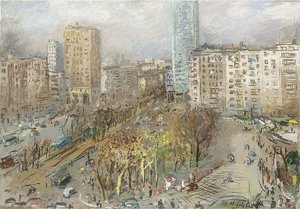
 Via San Calimero in Milan1966 · Gallerie d'Italia – Milano
Nämä neljä aihetta toistuvat näissä alkuperäisteoksissa useimmin, jokaisesta löytyy hienoin esimerkki.
Tämän sivun teoksista eniten sisältävät 2 museota.
| Museo | Kaupunki | Michele Cascella teokset | Tämän listan maalaukset |
|---|---|---|---|
 Gallerie d'Italia – Milano |
Milan | 4 | On the Naviglio Canal, London, Open window; View of Portofino; Portofino |
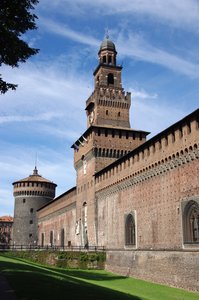 Sforzan linna |
Milano | 3 | Large plate, Plate, Tile |
Valitse vuosikymmen nähdäksesi sen määrittäneen alkuperäisteoksen.


Untitled (166). Seuraavina ovat Untitled (346) ja Large plate (1923).
Untitled (166), Untitled (346), Large plate, Plate, Tile, Untitled (290), Untitled (857), Untitled (856), Untitled (270) ja Untitled (973). Yllä oleva sijoitus kertoo kunkin teoksen vuosiluvun ja museon.
Katalogissamme on 21 teosta taiteilijalta Michele Cascella, aikaväliltä 1923–1966.
Pääasiassa Gallerie d'Italia – Milano (Milan) ja Sforzan linna (Milano). Yllä oleva museotaulukko listaa ne kaikki.
Aikakaudella 1920s: 3 sivun 21 teoksista on tehty silloin, joista Large plate.
Tällä sivulla vanhin on Large plate (1923) ja uusin Via San Calimero in Milan (1966).
Italian art (2) ja Buildings (2), yhteensä 21 teosta tällä sivulla.
Contemporary realism, tämän sivun alkuperäisteosten perusteella.
On the Naviglio Canal, London ja Open window; View of Portofino; Portofino: Gallerie d'Italia – Milano, Milan -ssä on 4 tämän sivun teoksista.
To wander through the works of Michele Cascella is to embark on a sensory journey through the sun-drenched landscapes of Italy, where every brushstroke breathes with the warmth of the Adriatic coast. Born in 1892 in the seaside town of Ortona, Cascella was destined for a life steeped in color and creativity. His artistic soul was nurtured within a profound familial lineage, shaped primarily by the mentorship of his father, Basilio Cascella. This relationship was more than mere instruction; it was an immersion into a shared visual language that blended the boundaries between painting, ceramics, and lithography. Growing up in an environment where art was both a vocation and a way of life, Michele learned to observe the subtle nuances of light as it danced across the rural Abruzzo countryside, a theme that would become the heartbeat of his lifelong oeuvre.
The development of Cascella’s style was a masterful evolution of technique and medium. While he is most celebrated for his evocative oil paintings and delicate watercolors, his versatility allowed him to leave an indelible mark on various artistic disciplines. His early years were marked by a nomadic education, absorbing the diverse aesthetic atmospheres of Naples, Milan, Turin, Venice, London, and Palermo. This exposure to different European sensibilities infused his work with a cosmopolitan elegance, even as his subject matter remained deeply rooted in the rustic charm of his homeland. Whether he was working on a sprawling canvas or a fine lithographic print, Cascella possessed a unique ability to capture the essence of everyday life—the quiet dignity of rural landscapes and the vibrant spirit of the Italian people—with a keen eye for detail and an unmistakable sense of warmth.
Cascella’s career was defined by a consistent pursuit of excellence that earned him a prestigious place on the international stage. His talent was recognized by the most significant art institutions of his era, most notably through his repeated invitations to exhibit at the Venice Biennale from 1924 until 1942. These exhibitions served as a platform for him to showcase a style that blended traditional naturalism with a modern, almost lyrical, sensibility. His works do not merely depict scenes; they evoke emotions, inviting the viewer to feel the breeze of an Italian summer or the stillness of a forest at dusk.
The historical significance of his work is cemented by its presence in some of the world's most renowned collections. The enduring legacy of Michele Cascella can be traced through several key achievements:
As we reflect on the life of Michele Cascella, we see an artist who successfully bridged the gap between the intimate and the monumental. He took the humble elements of his surroundings—a simple village street, a tranquil castle landscape, or a blooming garden—and elevated them through a sophisticated use of color and light. His art remains a testament to the enduring power of the natural world and the profound beauty found in the quiet corners of our existence.

