Kathleen Cicely Melzi: A Pioneer of Botanical Impressionism
Kathleen Cicely Melzi (1907–1992) remains a relatively obscure figure in the annals of British art history, yet her distinctive style—characterized by luminous watercolors and meticulous botanical studies infused with an expressive Impressionistic sensibility—holds considerable artistic merit. Born in Dieppe, Normandy, France, Melzi’s formative years were steeped in the vibrant atmosphere of the coastal town renowned for its flower festivals and artistic patronage. This environment profoundly shaped her artistic vision, fostering a deep appreciation for the natural world and inspiring her lifelong dedication to capturing its fleeting beauty with unparalleled sensitivity.
Melzi's early life was marked by an innate fascination with botany and art—a combination that would ultimately define her artistic trajectory. She received her initial artistic training at Chelsea School of Art in London during the 1930s, where she honed her watercolor skills under the tutelage of Harold Macmillan, a celebrated botanical artist himself. Macmillan instilled in Melzi a rigorous approach to observation and technique—a cornerstone of her practice—emphasizing accurate color rendition alongside expressive brushwork. This mentorship proved invaluable, shaping Melzi’s understanding of both scientific precision and artistic interpretation.
The influence of Impressionism permeated Melzi's artistic worldview. Like many artists of her time, she drew inspiration from Monet, Renoir, and Sisley – masters who championed the use of light and color to convey emotion and atmosphere. However, Melzi transcended mere imitation, forging a unique aesthetic that blended Impressionistic luminosity with meticulous botanical detail. Her canvases shimmered with atmospheric haze—a hallmark of Impressionism—yet simultaneously revealed astonishing precision in depicting petal textures, leaf venation, and stem contours. She skillfully captured the essence of her subjects – not just their appearance but also their inherent dynamism – transforming them into embodiments of beauty and wonder.
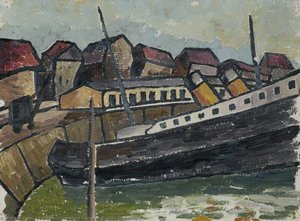
Melzi’s prolific output consisted of over 300 watercolors predominantly focused on floral subjects—particularly begonias, roses, orchids, and lilies. Her paintings were more than simply depictions; they were profound meditations on the natural world, expressed through a masterful interplay of light and shadow. Particularly noteworthy is “View of Dieppe, Normandy 2,” which exemplifies her ability to convey both the grandeur of the landscape and the subtle nuances of botanical detail simultaneously. Melzi’s technique involved layering thin washes of watercolor pigment—often applied in multiple glazes—to achieve remarkable depth and luminosity. She meticulously studied plant specimens under magnification, painstakingly documenting their structural features before transferring them onto paper with unwavering accuracy.
Despite receiving limited recognition during her lifetime – primarily confined to private collections and occasional exhibitions – recent scholarship has begun to illuminate Melzi’s significance within the broader context of British botanical art history. Her paintings stand as testament to a singular artistic vision—one that prioritized both scientific observation and expressive artistry—demonstrating how Impressionistic principles could be effectively deployed to elevate botanical illustration to new heights of aesthetic achievement. Melzi's legacy continues to inspire artists today, reminding us of the enduring power of beauty and the importance of honoring the natural world through creative endeavor.