John Runciman muotokuva

John Runciman -maalaukset: Gallerian silmin 12 kuuluisinta teosta

Päivitetty marraskuu 2026 · järjestetty suosituimmuuspisteiden mukaan (jokaisen teoksen haut, vierailut ja tilaukset) · 12 teosta taiteilijalta John Runciman luettelossamme

Lyhyesti

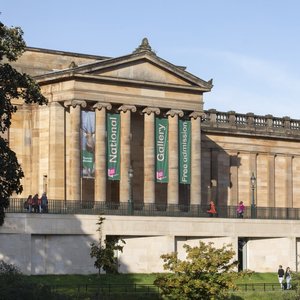
Gallerian silmissä John Runciman's tunnetuin maalaus on King Lear in the Storm (1767), jonka alkuperäinen teos on esillä Scottish National Gallery -museossa, kaupungissa Edinburgh. Mary and Joseph Outside the Inn (1763) ja Christ Taking Leave of his Mother (1760) täydentävät kolmikon, jonka jokainen silmä tunnistaa. Galleria esittelee John Runciman teoksista 12 tunnetuimmat 12 teosta alla; jokainen on alkuperäisteos, josta kerrotaan vuosi, museo sekä teoksen erityispiirteet.

1744 – 1766, Edinburgh Eniten teoksia: Scottish National Gallery

Gallerian 10 parasta John Runciman -maalausta

1
King Lear in the Storm (1767) tekijä: Vincent van Gogh John Runciman

King Lear in the Storm

1767 · Oil On Panel · Scottish National Gallery, Edinburgh

The sky is a bruised weight of gray and shadow. Below, the sea churns in violent, diagonal strokes, a chaotic movement that mirrors the internal collapse of a monarch. In this 1767 oil on panel, the elements do not merely surround the figures; they invade them. The salt spray and the wind are physical manifestations of a psyche unraveling. A king stands amidst the wreckage of his own authority, caught…

2
Mary and Joseph Outside the Inn (1763) tekijä: Vincent van Gogh John Runciman

Mary and Joseph Outside the Inn

1763 · Oil On Panel · Yale Center for British Art, New Haven

In Mary and Joseph Outside the Inn, John Runciman captures a somber biblical scene unfolding within a heavy, atmospheric landscape. The composition leans heavily to one side, where a large, dark, and dilapidated building dominates the left frame, casting a sense of enclosure over the travelers. This asymmetrical arrangement creates a tension between the solid, weathered structure and the open, hazy expanse to the right. Two adults stand together near…

3
Christ Taking Leave of his Mother (1760) tekijä: Vincent van Gogh John Runciman

Christ Taking Leave of his Mother

1760 · Oil · Scottish National Gallery, Edinburgh

In this intimate scene, we find ourselves witnessing a profound moment of transition. The painting depicts Christ taking leave of his mother, Mary, a subject that carries a heavy weight of impending sorrow and divine purpose. The figures are positioned in close proximity, their physical closeness underscoring the emotional gravity of their parting. Jesus holds a baby in his arms, a detail that adds a layer of tenderness to the…

5
Salome Receiving Saint John the Baptist's Head (1760) tekijä: Vincent van Gogh John Runciman

Salome Receiving Saint John the Baptist's Head

1760 · Oil · Scottish National Gallery, Edinburgh

In Salome Receiving Saint John the Baptist's Head, John Runciman presents a heavy, dramatic moment from biblical narrative. The composition centers on the figure of Salome as she receives the head of John the Baptist, which is held upon a platter. This central exchange is framed by a backdrop of a building featuring a prominent stone wall, providing a sense of architectural permanence to the unfolding scene. The artist has…

6
The Good Samaritan (1760) tekijä: Vincent van Gogh John Runciman

The Good Samaritan

1760 · Oil · Scottish National Gallery, Edinburgh

The Good Samaritan is a work by the Scottish painter John Runciman. Created around 1760, this piece emerged from a period of significant development for the artist. Runciman, who was born in Edinburgh, Scotland, was the younger brother of the artist Alexander Runciman. His early years in Edinburgh provided the foundation for a career marked by a deep interest in religious and historical narratives.

8
Three Heads: The Witches of Macbeth (1768) tekijä: Vincent van Gogh John Runciman

Three Heads: The Witches of Macbeth

1768 · Gouache · Scottish National Portrait Gallery, Edinburgh

In the hauntingly ephemeral sketch Three Heads: The Witches of Macbeth, the viewer is thrust into a realm where the boundaries between reality and nightmare dissolve. Created around 1768 by the Scottish artist John Runciman, this work serves as a visceral window into the late eighteenth-century fascination with the macabre and the theatrical. The subject matter—the prophetic, unsettling trio from Shakespeare’s most famous tragedy—is rendered not through grand, sweeping strokes,…

9
John Runciman (1744–1768), Artist, Self Portrait (1767) tekijä: Vincent van Gogh John Runciman

John Runciman (1744–1768), Artist, Self Portrait

1767 · Oil · Scottish National Portrait Gallery, Edinburgh

A hand rests against a chin, a gesture of quiet contemplation. In this 1767 self-portrait, the artist captures himself amidst the shadows of Rome. He wears a hat and formal attire, the tie at his neck a sharp detail against the soft contours of his face. The light finds the ridge of his nose and the thoughtful set of his eyes, leaving the background to dissolve into an indistinct, dark…

10
The Baptism of Christ tekijä: Vincent van Gogh John Runciman

The Baptism of Christ

Oil On Panel

In this oil on panel, we find ourselves within a rugged, cavernous grotto where the physical world meets the celestial. The composition is anchored by a powerful verticality, a singular beam of light that descends from the upper right to illuminate the figure of Christ. This light does not merely illuminate; it defines the space, cutting through the shadows of the rocky enclosure to touch the water and the pale,…

John Runciman -taideteokset, sijoitukset 11–12

Aiheet, jotka vangitsivat John Runcimanin katseen

Nämä neljä aihetta toistuvat näissä alkuperäisteoksissa useimmin, jokaisesta löytyy hienoin esimerkki.

Museot, joissa John Runciman'n alkuperäisteokset sijaitsevat

Tämän sivun teoksista eniten sisältävät 4 museota.

Museo Kaupunki John Runciman teokset Tämän listan maalaukset
Scottish National Gallery, EdinburghScottish National Gallery Edinburgh 7 King Lear in the Storm, Christ Taking Leave of his Mother, The Flight into Egypt
Scottish National Portrait Gallery, EdinburghScottish National Portrait Gallery Edinburgh 2 Three Heads: The Witches of Macbeth, John Runciman (1744–1768), Artist, Self Portrait
Yale Center for British Art, New HavenYale Center for British Art New Haven 1 Mary and Joseph Outside the Inn
The Hunterian Museum and Art Gallery, GlasgowThe Hunterian Museum and Art Gallery Glasgow 1 Hagar and the Angel

John Runciman, jokaisen vuoden tunnusomaisimmat teokset

7 vuotta, 1760 - 1766, kattavat John Runciman's koko aikaleimatun uran tällä sivulla: lyhyen uran, joka nähdään tässä vuosi vuodelta sen kuuluisimpien alkuperäisteosten kautta.

Teokset vuosittain

Valitse vuosi nähdäksesi alkuperäisteokset.

John Runcimann maalaukset: gallerian vastaukset

Mikä John Runciman -taideteos on kaikkien kuuluisin?Paljasta vastaus

King Lear in the Storm (1767), Scottish National Gallery, Edinburgh. Seuraavina ovat Mary and Joseph Outside the Inn (1763) ja Christ Taking Leave of his Mother (1760).

Mitkä ovat John Runciman'n 10 parasta maalausta?Paljasta vastaus

King Lear in the Storm, Mary and Joseph Outside the Inn, Christ Taking Leave of his Mother, The Flight into Egypt, Salome Receiving Saint John the Baptist's Head, The Good Samaritan, Christ with his Disciples on the Road to Emmaus, Three Heads: The Witches of Macbeth, John Runciman (1744–1768), Artist, Self Portrait ja The Baptism of Christ. Yllä oleva sijoitus kertoo kunkin teoksen vuosiluvun ja museon.

Kuinka monta teosta John Runciman loi?Paljasta vastaus

Katalogissamme on 12 teosta taiteilijalta John Runciman, aikaväliltä 1760–1766.

Missä John Runciman'n kuuluisimmat alkuperäisteokset sijaitsevat?Paljasta vastaus

Pääasiassa Scottish National Gallery (Edinburgh), Scottish National Portrait Gallery (Edinburgh) ja Yale Center for British Art (New Haven). Yllä oleva museotaulukko listaa ne kaikki.

Milloin John Runciman maalasi kuuluisimmat teoksensa?Paljasta vastaus

Aikakaudella 1760: 6 sivun 12 teoksista on tehty silloin, joista Christ Taking Leave of his Mother.

Mitkä ovat John Runciman'n varhaisimmat ja viimeisimmät kuuluisat teokset?Paljasta vastaus

Tällä sivulla vanhin on Christ Taking Leave of his Mother (1760) ja uusin Hagar and the Angel (1766).

Mihin aiheisiin John Runciman palasi useimmin?Paljasta vastaus

Man (6), People (4) ja Landscape (4), yhteensä 12 teosta tällä sivulla.

Mitä tekniikkaa John Runciman käytti eniten?Paljasta vastaus

Oil On Panel, 6 teoksesta sivun 12 teoksesta.

Mitä John Runciman -taiteilijan alkuperäisteoksia Scottish National Gallery -museossa on?Paljasta vastaus

King Lear in the Storm, Christ Taking Leave of his Mother ja The Flight into Egypt: Scottish National Gallery, Edinburgh -ssä on 7 tämän sivun teoksista.

John Runciman: taiteilija

John Runciman: A Brief, Dramatic Life of an Eighteenth-Century Scottish Artist

John Runciman (1744 – c. 1768 or 1769), a name largely absent from mainstream art history, nevertheless produced a remarkably potent body of work during his tragically short career. Born in Edinburgh, Scotland, into a family with strong connections to the shipping industry—his father, Walter Runciman, was a prominent figure—Runciman’s artistic path diverged significantly from the established norms of the time, marked by an intense emotionalism and a fascination with biblical narratives and historical scenes. His life, tragically cut short at the age of just twenty-four or twenty-five, is as compelling as the dramatic paintings he created, offering a poignant glimpse into the world of a struggling artist in the late 18th century.

Runciman’s early artistic training occurred within the framework of the Foulis Academy in Glasgow, a renowned institution that fostered a generation of Scottish artists. He apprenticed under Robert Norie, a landscape painter, and later partnered with his brother, Alexander Runciman, also an artist. This collaboration initially focused on landscapes, but Runciman quickly gravitated towards more emotionally charged subjects—particularly biblical scenes—demonstrating a willingness to experiment with style and technique. Crucially, he benefited from the patronage of Robert Alexander of Edinburgh, who provided financial support that enabled him to pursue his artistic ambitions in Rome between 1767 and 1768. This period proved formative, exposing him to the works of masters like Rembrandt and allowing him to develop a distinctive style characterized by dramatic lighting, intense color palettes, and a palpable sense of movement.

Runciman’s artistic output during this Roman sojourn was remarkably prolific, producing self-portraits, studies of biblical figures, and several finished paintings. His most celebrated works from this period include “Flight into Egypt,” currently housed in the National Gallery of Scotland, a powerfully evocative depiction of Mary and Joseph fleeing to Egypt, imbued with an almost theatrical quality. The painting’s use of chiaroscuro—the dramatic contrast between light and dark—creates a sense of urgency and emotional intensity. Another significant work is “King Lear in the Storm,” a monumental canvas depicting Shakespeare's tragic king confronting a raging tempest at sea. This piece, also held by the National Gallery, showcases Runciman’s ability to capture both the physical drama of the scene and the psychological turmoil of its central figure. The painting’s composition—a dynamic interplay of figures against a turbulent sky—demonstrates his growing mastery of perspective and color.

Despite his artistic promise, Runciman's career was plagued by personal difficulties and ultimately cut short by illness. His health deteriorated rapidly in 1768, and he reportedly destroyed many of his works, partly due to the harsh criticism from fellow artist James Nevay. This act, often interpreted as a rejection of his own art, speaks volumes about the pressures faced by artists during that era—the constant need to prove one’s worth and the vulnerability to negative critique. His untimely death in Naples at the age of twenty-four or twenty-five left behind a relatively small but intensely expressive body of work. However, Runciman's legacy endures through his paintings, which continue to captivate viewers with their dramatic intensity and emotional depth.

Runciman’s Style and Influences

Runciman’s artistic style can be characterized as a synthesis of influences—a blend of Baroque drama, Rembrandt’s chiaroscuro technique, and the emerging Romantic sensibility. His use of light and shadow is particularly striking, creating a sense of theatricality and emotional intensity that sets his work apart from many of his contemporaries. He was deeply influenced by the works of Rembrandt, evident in his masterful manipulation of light and his ability to convey complex emotions through subtle gestures and expressions. The influence of Caravaggio is also apparent in his dramatic compositions and use of tenebrism.

Furthermore, Runciman’s work reflects the broader artistic trends of the late 18th century—a growing interest in biblical narratives, a fascination with historical subjects, and an increasing emphasis on emotional expression. His paintings are not merely depictions of events; they are explorations of human experience—of faith, suffering, and redemption. The dramatic lighting and dynamic compositions contribute to this sense of heightened emotion, creating works that resonate deeply with viewers.

Major Works

John Runciman’s oeuvre is relatively small, but his major works stand as testaments to his artistic talent and expressive power. Among the most significant paintings are:

Historical Significance

Despite his relatively obscure status in art history, John Runciman's work holds a significant place within the context of 18th-century Scottish painting. He represents a bridge between the more traditional landscape traditions of the era and the emerging Romantic movement—a period characterized by emotional intensity, dramatic subject matter, and an interest in exploring the darker aspects of human experience. Runciman’s paintings are not merely aesthetically pleasing; they offer a valuable window into the artistic and cultural currents of his time. His tragically short life serves as a poignant reminder of the challenges faced by artists—particularly those who dared to break from established conventions and pursue their own unique vision.