Harry John Johnson muotokuva

22 tunnetuinta Harry John Johnson -maalausta, gallerian valikoima

Päivitetty marraskuu 2026 · järjestetty suosituimmuuspisteiden mukaan (jokaisen teoksen haut, vierailut ja tilaukset) · 22 teosta taiteilijalta Harry John Johnson luettelossamme

Lyhyesti

Kaikista Harry John Johnson jättämistä alkuperäisteoksista kuuluisin on John Ferneley (1838), joka kuuluu National Portrait Gallery -kokoelmaan, Lontoo. Heti perässä tulevat Upper Section of Great Hall Entrances (1874) ja Portrait of David Cox sketching (1844). Katalogissamme on 22 teosta taiteilijalta Harry John Johnson; galleria on säilyttänyt 22 maailman ihailluimmista teoksista, ja jokaisesta on esitetty sen päivämäärä, museo sekä tarina.

1826 – 1884, Birmingham Eniten teoksia: Alexandra Palace

Harry John Johnson -taiteilijan 10 parasta maalausta: gallerian valinnat

1
John Ferneley (1838) tekijä Harry John Johnson

John Ferneley

1838 · Oil · National Portrait Gallery, Lontoo

The year is 1838, and the portrait captures a sense of prestige that feels rooted in the very fabric of the nineteenth century. The subject's expression is one of quiet contemplation, as if he is caught in the middle of a profound thought. The formal nature of his dress and the meticulous rendering of his features suggest a man of standing, someone whose life is defined by the same precision…

2
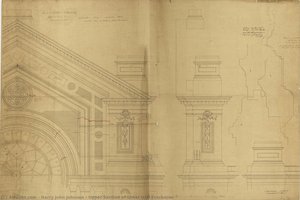
Upper Section of Great Hall Entrances (1874) tekijä Harry John Johnson

Upper Section of Great Hall Entrances

1874 · Drawing · Alexandra Palace, Lontoo

In this exquisite architectural drawing from 1874, we are transported to the heart of London’s architectural splendor. The Upper Section of Great Hall Entrances serves as a breathtaking window into the soul of the Alexandra Palace, capturing a moment when British design reached a pinnacle of monumental ambition. Through the meticulous hand of Harry John Johnson, the viewer is invited to gaze upward at the soaring arches and stately columns…

Harry John Johnson-valikoima jatkuu, 11–22

Aiheet, jotka vangitsivat Harry John Johnsonin katseen

Nämä neljä aihetta toistuvat näissä alkuperäisteoksissa useimmin, jokaisesta löytyy hienoin esimerkki.

Museot, joissa Harry John Johnson'n alkuperäisteokset sijaitsevat

Tämän sivun teoksista eniten sisältävät 3 museota.

Museo Kaupunki Harry John Johnson teokset Tämän listan maalaukset
Alexandra Palace, LontooAlexandra Palace Lontoo 13 Upper Section of Great Hall Entrances, Architectural Details, Elevation of the North Front
Birmingham Museum and Art Gallery, BirminghamBirmingham Museum and Art Gallery Birmingham 2 Portrait of David Cox sketching, Athens
National Portrait Gallery, LontooNational Portrait Gallery Lontoo 1 John Ferneley

Harry John Johnson vuosikymmenittäin: jokaisen aikakauden määrittänyt alkuperäisteos

Teokset vuosikymmenittäin

Valitse vuosikymmen nähdäksesi sen määrittäneen alkuperäisteoksen.

Keräilijöiden kysymyksiä Harry John Johnson -taiteilijan maalauksista

Mistä teoksesta Harry John Johnson on tunnetuin?Paljasta vastaus

John Ferneley (1838), National Portrait Gallery, Lontoo. Seuraavina ovat Upper Section of Great Hall Entrances (1874) ja Portrait of David Cox sketching (1844).

Kuinka vanha Harry John Johnson oli, kun John Ferneley tehtiin?Paljasta vastaus

12 vuotta vanha: John Ferneley on peräisin vuodelta 1838, ja Harry John Johnson on syntynyt vuonna 1826.

Mitkä ovat kymmenen kuuluisinta Harry John Johnson -taideteosta?Paljasta vastaus

John Ferneley, Upper Section of Great Hall Entrances, Portrait of David Cox sketching, Architectural Details, Elevation of the North Front, Elevations of Front of Conservatory, Elevation of Fronts and Great Hall Cross Section, Elevation of the South Front, Drawing of Great Hall Entrance ja South Elevation of Refreshment Wing. Yllä oleva sijoitus kertoo kunkin teoksen vuosiluvun ja museon.

Kuinka monta maalausta Harry John Johnson jätti jälkeensä?Paljasta vastaus

Katalogissamme on 22 teosta taiteilijalta Harry John Johnson, aikaväliltä 1838–1874.

Missä museoissa Harry John Johnson's mestariteokset sijaitsevat?Paljasta vastaus

Pääasiassa Alexandra Palace (Lontoo), Birmingham Museum and Art Gallery (Birmingham) ja National Portrait Gallery (Lontoo). Yllä oleva museotaulukko listaa ne kaikki.

Minä vuosina Harry John Johnson maalasi kuuluisimmat teoksensa?Paljasta vastaus

Aikakaudella 1870s: 13 sivun 22 teoksista on tehty silloin, joista Upper Section of Great Hall Entrances.

Mitkä ovat Harry John Johnson ensimmäinen ja viimeinen tunnettua alkuperäisteosta?Paljasta vastaus

Tällä sivulla vanhin on John Ferneley (1838) ja uusin Upper Section of Great Hall Entrances (1874).

Mitä aiheita Harry John Johnson käytti useimmiten?Paljasta vastaus

Architecture (3), Victorian era (3) ja Building design (2), yhteensä 22 teosta tällä sivulla.

Mitä Harry John Johnson -teoksia Alexandra Palace -museossa on esillä?Paljasta vastaus

Upper Section of Great Hall Entrances, Architectural Details ja Elevation of the North Front: Alexandra Palace, Lontoo -ssä on 13 tämän sivun teoksista.

Harry John Johnson: elämä ja tuotanto

A Visionary of the Victorian Line: The Life and Legacy of Harry John Johnson

In the heart of the industrial revolution, amidst the soot and soaring ambition of Birmingham, lived a man whose pen captured the very soul of British architectural grandeur. Harry John Johnson (1826–1884) was not merely a draftsman; he was a chronicler of an era defined by its unyielding pursuit of precision and monumental scale. Born in 1826, Johnson emerged from the rigorous academic environment of the King Edward VI Grammar School, where he first mastered the mathematical foundations that would later allow him to translate complex structural engineering into delicate, breathtaking art. His intellectual journey took a unique turn at Harris Manchester College, Oxford, where his studies in theology provided a contemplative depth to his observational skills, fostering a reverence for the permanence and dignity of the structures he so meticulously documented.

Johnson’s artistry flourished within the specialized realm of architectural draughtsmanship, a discipline that demanded both technical perfection and an aesthetic eye for proportion. Serving the Birmingham Philosophical Society, he became a vital link between the conceptual blueprints of architects and the visual realization of their dreams. His work was characterized by an extraordinary command of pen and ink, a medium that allowed him to navigate the intricate shadows and sharp edges of Victorian masonry with unparalleled clarity. Through his hands, the heavy stone and iron of the nineteenth century were transformed into elegant compositions of light and line, capturing the rhythmic beauty of classical facades and the structural ingenuity of new engineering marvels.

Masterpieces of Precision and Architectural Detail

The true brilliance of Johnson’s oeuvre lies in his ability to freeze a moment of architectural triumph in time. His drawings serve as historical windows, offering us a glimpse into the splendor of structures that defined the Victorian landscape. One cannot discuss his contributions without reflecting on his celebrated works from 1874, a period where his technical mastery reached its zenith. His elevations of the South Facade Architectural Details and the South Elevation of the Refreshment Wing at Alexandra Palace stand as testament to his ability to render the monumental with an intimate touch. In these pieces, every cornice, column, and ornamental flourish is rendered with such fidelity that one can almost feel the weight of the stone and the grandeur of the palace's design.

Beyond the grand palaces, Johnson possessed a remarkable talent for capturing the delicate intersection of nature and engineering. His Elevations of Front of Conservatory showcases his ability to document the intricate glasswork and iron frameworks that were becoming hallmarks of Victorian leisure architecture. This work highlights a significant aspect of his development: the transition from purely structural documentation to an art form that celebrates the aesthetic harmony of the built environment. His legacy is defined by these specific achievements:

  • Technical Mastery: The use of fine pen and ink to achieve high-contrast shadows and intricate textures in classical masonry.
  • Historical Documentation: Providing irreplaceable visual records of iconic British landmarks like Alexandra Palace during their period of greatest significance.
  • Architectural Sensitivity: A unique ability to balance the rigid requirements of engineering accuracy with the fluid beauty of artistic composition.

Ultimately, Harry John Johnson remains a vital figure for those who appreciate the intersection of art and industry. While his name may not occupy the same spotlight as the great landscape painters of his age, his contribution to the visual history of Britain is profound. He captured the structural heartbeat of a nation in transition, leaving behind a collection of works that continue to inspire awe through their meticulous detail and their enduring celebration of Victorian architectural elegance.