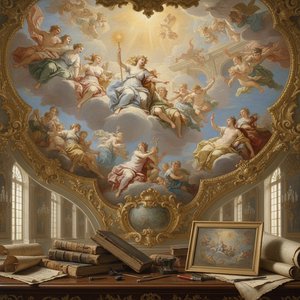
Giovanni Domenico Tiepolo: Rokokon freskotemppari
Giovanni Domenico Tiepolo (30. elokuuta 1727 – 3. maaliskuuta 1804) oli Venetsian tasavallan merkittävä italialainen taidemaalari ja grafiikan taiteilija. Hänet tunnetaan rokokon tyylisuunnan johtavana hahmona, joka peri ja laajensi kuuluisan isänsä, Giovanni Battista Tiepolon, perintöä. Hänen uransa kesti useita vuosikymmeniä ja jätti jälkeensä rikkaan tuotannon, jota leimaavat eloisat värit, dynaamiset sommitelmat sekä tyylikkäät esitykset mytologisista kohtauksista, muotokuvista ja maisemista.
Varhaiset vuodet ja koulutus
Taiteellisesta suvusta syntyneenä Giovanni Domenicon varhaisvuodet kietoutuivat syvästi taiteen maailmaan. Hänen isänsä, monumentaalisista freskoistaan tunnettu mestari Giovanni Battista Tiepolo, toimi hänen ensisijaisena mentorinaan. Giovanni Domenico sai tiukan koulutuksen isänsä ohjauksessa oppien tekniikoita ja tyylillisiä vivahteita, jotka muovasivat hänen omaa taiteellista kehitystään. Hän hyötyi myös muiden aikansa merkittävien taiteilijoiden, kuten Sebastiano Riccin ja Federico Bencovichin, vaikutuksista, mikä laajensi entisestään hänen taiteellisia horisonttejaan. Nuorena miehenä hän avusti usein isäänsä suurissa projekteissa, saaden korvaamatonta käytännön kokemusta freskomaalauksesta.
Taiteellinen ura ja tyyli
Giovanni Domenicon ura kukoisti 1700-luvun aikana. Hän vakiinnutti asemansa taitavana taiteilijana, joka kykeni tuottamaan sekä itsenäisiä teoksia että osallistumaan yhteisöllisiin projekteihin. Vaikka hän työskenteli aluksi läheisesti isänsä kanssa, hän kehitti vähitellen oman erottuvan tyylinsä säilyttäen kuitenkin venetsialaiselle taiteelle ominaiset rokokon estetiikan elementit. Hänen taiteellinen tuotantonsa sisälsi freskoja, kankaille maalattuja teoksia sekä etsauksia.
- Freskot: Tiepolo oli erityisen kuuluisa freskoistaan, joilla hän koristeli lukuisia kohteita ympäri Italiaa näyttävillä kohtauksilla. Huomattavia esimerkkejä ovat Venetsian Grand Canalilla sijaitsevan Ca' Dolfinin freskot sekä Gesuatin (Santa Maria del Rosario) kirkon katto myös Venetsiassa.
- Maalaukset: Freskojen lisäksi hän loi merkittävän määrän kankaille maalattuja teoksia, jotka esittivät usein mytologisia aiheita tai muotokuvia. Esimerkkeinä toimivat "Perseus ja Andromeda" (katso tästä), "Euroopan ryöstö" (katso tästä) ja "Metsästäjä peuran kanssa" (katso tästä).
- Etsaukset: Tiepolo osoitti taitonsa myös etsauksessa luoden yksityiskohtaisia ja ilmeikkäitä grafiikan teoksia, kuten "Die heiligen Augustinus, Ludwig von Frankreich, Johannes Evangelist und Magnus" (katso tästä).
Vaikutteet ja kehitys
Giovanni Domenicon taiteellinen kehitys sai syvän vaikutteen isästään, Giovanni Battista Tiepolosta. Hän peri vanhemman Tiepolon mestaruuden värien käytössä, sommittelussa ja kerronnallisessa tarinankerronnassa. Kuitenkin Giovanni Domenicon tyyli kehittyi painottamaan enemmän genremalauksia ja arkipäivän elämän kuvauksia, mikä erotti hänet isänsä monumentaalisemmista ja klassisvaikutteisista teoksista. Hän osoitti myös kiinnostusta teatraalisuuteen ja liikkeeseen, mikä näkyy maalauksissa kuten "Pulcinella" (katso tästä) ja "Herkuleen apostoli" (katso tästä).
Historiallinen merkitys
Giovanni Domenico Tiepolo pelasi ratkaisevan roolin venetsialaisen rokokon taiteen jatkuvuudessa ja evoluutiossa. Vaikka hän jäi elinaikanaan isänsä kuuluisuuden varjoon, hänet tunnetaan nykyään merkittävänä taiteilijana omilla ansioillaan. Hänen freskonsa ja maalauksensa tarjoavat arvokkaita näkymiä 1700-luvun Venetsian ja Italian taiteelliseen makuun ja kulttuurisiin arvoihin. Hänen kykynsä yhdistää klassiset teemat nykyaikaisiin aistimuksiin vahvisti hänen paikkansa rokokko-liikkeessä, jättäen jälkeensä eloisan taiteellisen perinnön, joka jatkaa yleisön lumoamista vielä tänäkin päivänä.