

1


Päivitetty marraskuu 2026 · järjestetty suosituimmuuspisteiden mukaan (jokaisen teoksen haut, vierailut ja tilaukset) · 2 teosta taiteilijalta Giovanni Bon luettelossamme
Lyhyesti
Kaikista Giovanni Bon jättämistä alkuperäisteoksista kuuluisin on The Fall of Adam and Eve (1400), joka kuuluu Dogen palatsi -kokoelmaan, Venetsia. Katalogissamme on 2 teosta taiteilijalta Giovanni Bon; galleria on säilyttänyt 2 maailman ihailluimmista teoksista, ja jokaisesta on esitetty sen päivämäärä, museo sekä tarina.
Museo, jossa on eniten tämän sivun maalauksista.
| Museo | Kaupunki | Giovanni Bon teokset | Tämän listan maalaukset |
|---|---|---|---|
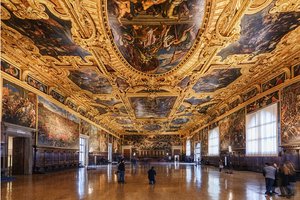 Dogen palatsi |
Venetsia | 2 | The Fall of Adam and Eve, Porta della Carta |
Vuosien 1400–1438 välillä Giovanni Bon työskenteli 39 vuotta: valinta seuraa tätä pitkää uraa vuosi vuodelta, taiteilijan hienoimpien alkuperäisteosten kautta.
Valitse vuosi nähdäksesi alkuperäisteokset.

The Fall of Adam and Eve (1400)
20 vuotta vanha: The Fall of Adam and Eve on peräisin vuodelta 1400, ja Giovanni Bon on syntynyt vuonna 1380.
Katalogissamme on 2 teosta taiteilijalta Giovanni Bon, aikaväliltä 1400–1438.
Pääasiassa Dogen palatsi (Venetsia). Yllä oleva museotaulukko listaa ne kaikki.
Tällä sivulla vanhin on The Fall of Adam and Eve (1400) ja uusin Porta della Carta (1438).
The Fall of Adam and Eve ja Porta della Carta: Dogen palatsi, Venetsia -ssä on 2 tämän sivun teoksista.
In the vibrant, salt-misted atmosphere of the early 15th century, a period where the delicate elegance of the Gothic era began to dance with the burgeoning humanism of the Renaissance, the name Giovanni Bon emerged as a cornerstone of Venetian identity. Born around 1380 in the rugged, strategically vital enclave of Campione d'Italia, Bon’s early life was shaped by the artistic traditions of Lombardy. This heritage, steeped in intricate detail and expressive movement, provided him with a foundational language that he would later translate into the grander, more monumental scale required by the maritime republic of Venice. As he moved toward the heart of Venetian power, his work became an essential thread in the city's growing architectural and sculptural tapestry.
The development of Bon’s artistry was not a solitary journey but one deeply embedded in the collaborative spirit of the workshop tradition. It is widely believed that he honed his technical mastery under the influence of masters like Bartolomeo Buonatello, whose command over classical forms offered a glimpse into the future of Italian art. Within the bustling studios of Venice, Bon operated within a milieu where craftsmanship was a communal endeavor. This period of his life was defined by a profound synthesis of styles; he possessed the unique ability to retain the flowing, rhythmic drapery and emotive dynamism characteristic of the Gothic style while simultaneously embracing the structural clarity and anatomical burgeoning that signaled the arrival of the Renaissance.
The true magnitude of Giovanni Bon’s contribution is best witnessed through his monumental architectural commissions, which served as much as civic statements as they did artistic triumphs. His hands helped shape the very face of Venetian authority, most notably through his involvement with the Porta della Carta (the Gate of Lead) at the Doge’s Palace. This masterpiece, a breathtaking intersection of sculpture and architecture, stands as a testament to his ability to command large-scale narratives in stone. His work on such projects was not merely about decoration; it was about imbuing the physical structures of the state with a sense of divine and temporal permanence.
Beyond the gates of the Doge's Palace, Bon’s influence reached into the sacred spaces of the city. His contributions to the decoration of significant religious sites, such as the Sant'Andrea Maggiore and his involvement in the intricate marble works that adorned Venice's most prestigious basilicas, showcased a versatility that few of his contemporaries could match. To look upon his work is to see the transition of an era: