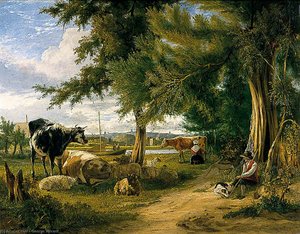
George Vincent muotokuva

46 tunnetuinta George Vincent -maalausta, gallerian valikoima

Päivitetty marraskuu 2026 · järjestetty suosituimmuuspisteiden mukaan (jokaisen teoksen haut, vierailut ja tilaukset) · 46 teosta taiteilijalta George Vincent luettelossamme

Lyhyesti

Kaikista George Vincent jättämistä alkuperäisteoksista kuuluisin on A View of Cheddar Gorge (1820), joka kuuluu Yale Center for British Art -kokoelmaan, New Haven. Heti perässä tulevat A Harbor Scene in the Isle of Wight, Looking Towards the Needle (1824) ja A View of Thames Street, Windsor (1828). Katalogissamme on 46 teosta taiteilijalta George Vincent; galleria on säilyttänyt 46 maailman ihailluimmista teoksista, ja jokaisesta on esitetty sen päivämäärä, museo sekä tarina.

1796 – 1832, Norwich Romanticism Eniten teoksia: Yale Center for British Art

George Vincent -taiteilijan 10 parasta maalausta: gallerian valinnat

George Vincent-valikoima jatkuu, 11–46

George Vincentn kuuluisat maalaukset aikakausittain

Aiheet, jotka vangitsivat George Vincentin katseen

Nämä neljä aihetta toistuvat näissä alkuperäisteoksissa useimmin, jokaisesta löytyy hienoin esimerkki.

Museot, joissa George Vincent'n alkuperäisteokset sijaitsevat

Tämän sivun teoksista eniten sisältävät 5 museota.

Museo Kaupunki George Vincent teokset Tämän listan maalaukset
Yale Center for British Art, New HavenYale Center for British Art New Haven 3 A View of Cheddar Gorge, A Harbor Scene in the Isle of Wight, Looking Towards the Needle, A View of Thames Street, Windsor
Fitzwilliam MuseumFitzwilliam Museum 2 Loch etive, argyllshire, View In The Highlands
Felbrigg Hall, NorwichFelbrigg Hall Norwich 1 River Scene with Boats
Birmingham Museum and Art Gallery, BirminghamBirmingham Museum and Art Gallery Birmingham 1 Landscape, Cattle Crossing a Stream
TyntesfieldTyntesfield 1 Fishing Boats in a Harbour

George Vincent vuosi vuodelta: jokaisen vuoden määrittävät alkuperäisteokset

Vain vuosikymmenen aikana, 1820–1828, on luotu maailmaan jokainen tämän valikoiman George Vincent alkuperäisteos: tässä ne ovat, vuosi vuodelta.

Teokset vuosittain

Valitse vuosi nähdäksesi alkuperäisteokset.

Keräilijöiden kysymyksiä George Vincent -taiteilijan maalauksista

Mistä teoksesta George Vincent on tunnetuin?Paljasta vastaus

A View of Cheddar Gorge (1820), Yale Center for British Art, New Haven. Seuraavina ovat A Harbor Scene in the Isle of Wight, Looking Towards the Needle (1824) ja A View of Thames Street, Windsor (1828).

Kuinka vanha George Vincent oli, kun A View of Cheddar Gorge tehtiin?Paljasta vastaus

24 vuotta vanha: A View of Cheddar Gorge on peräisin vuodelta 1820, ja George Vincent on syntynyt vuonna 1796.

Mitkä ovat kymmenen kuuluisinta George Vincent -taideteosta?Paljasta vastaus

A View of Cheddar Gorge, A Harbor Scene in the Isle of Wight, Looking Towards the Needle, A View of Thames Street, Windsor, A Harbour Scene in the Isle of Wight, Mousehole heath, norfolk, Loch etive, argyllshire, Lane scene, Castle ashby, northamptonshire, View near Norwich ja View near Wroxham, Norfolk. Yllä oleva sijoitus kertoo kunkin teoksen vuosiluvun ja museon.

Kuinka monta maalausta George Vincent jätti jälkeensä?Paljasta vastaus

Katalogissamme on 46 teosta taiteilijalta George Vincent, aikaväliltä 1820–1828.

Missä museoissa George Vincent's mestariteokset sijaitsevat?Paljasta vastaus

Pääasiassa Yale Center for British Art (New Haven), Fitzwilliam Museum ja Felbrigg Hall (Norwich). Yllä oleva museotaulukko listaa ne kaikki.

Mitkä ovat George Vincent ensimmäinen ja viimeinen tunnettua alkuperäisteosta?Paljasta vastaus

Tällä sivulla vanhin on A View of Cheddar Gorge (1820) ja uusin A View of Thames Street, Windsor (1828).

Mitä aiheita George Vincent käytti useimmiten?Paljasta vastaus

Rural landscape (9), Landscape (9) ja Tranquility (5), yhteensä 46 teosta tällä sivulla.

Mihin taidesuuntaukseen George Vincent kuuluu?Paljasta vastaus

Romanticism ja Dutch golden age, tämän sivun alkuperäisteosten perusteella.

Mitä George Vincent -teoksia Yale Center for British Art -museossa on esillä?Paljasta vastaus

A View of Cheddar Gorge, A Harbor Scene in the Isle of Wight, Looking Towards the Needle ja A View of Thames Street, Windsor: Yale Center for British Art, New Haven -ssä on 3 tämän sivun teoksista.

George Vincent: elämä ja tuotanto

A Norfolk Son: The Life and Art of George Vincent

George Vincent, born in Norwich in 1796, remains a compelling figure within the constellation of the Norwich School painters. His story is one interwoven with both artistic promise and personal tragedy, a narrative reflective of the challenges faced by many artists navigating the burgeoning art world of 19th-century England. The son of James Vincent, a weaver specializing in shawls, and Mary Freeman, young George experienced early loss with the passing of an older brother in infancy. This formative experience perhaps instilled within him a sensitivity that would later permeate his evocative landscapes – a sensitivity born from witnessing vulnerability and fragility at a tender age. Educated at Norwich School, he swiftly found himself immersed in a vibrant artistic milieu, forging close bonds with Frederick and John Berney Crome – sons of the pivotal John Crome, who would become Vincent’s mentor and profoundly shape his artistic trajectory. This apprenticeship was crucial; it wasn't merely technical instruction but an immersion into the very ethos of the Norwich School, alongside fellow pupils like James Stark. The influence of Dutch landscape masters, a hallmark of Crome’s own aesthetic, began to subtly infuse Vincent’s early work, hinting at the unique blend that would define his style – a blend rooted in observation and informed by a deep appreciation for tonal harmony. Vincent's artistic journey commenced under the watchful eye of John Crome, whose unwavering dedication to capturing the spirit of Norfolk instilled in Vincent a similar commitment to portraying the region’s beauty with uncompromising honesty. Together they explored the marshes, rivers, and hillsides of their homeland, meticulously documenting textures and colors that would become synonymous with the Norwich School's distinctive vision. Vincent’s early canvases demonstrated an instinctive understanding of atmospheric perspective – a technique championed by Crome himself – skillfully conveying depth and luminosity that transported viewers into the heart of the Norfolk countryside. He wasn’t striving for grand pronouncements or dramatic narratives; rather, he sought to capture fleeting moments of tranquility and grandeur, mirroring the rhythms of nature itself.

London, Debt, and Disappearance

A significant turning point arrived in 1818 when Vincent relocated to London, initially securing commissions from wealthy patrons eager to adorn their homes with landscapes reflecting the pastoral idylls of Norfolk. However, this newfound success proved elusive; Vincent’s ambition soon collided with unforeseen financial difficulties. A marriage followed in 1821, accompanied by an imprudent investment – a substantial purchase of a house intended as a symbol of domestic stability – which plunged him into mounting debts and ultimately culminated in his incarceration at the Fleet Prison in 1824. This was a devastating setback, yet Vincent refused to surrender his artistic pursuits amidst these oppressive circumstances. Remarkably, he continued to paint during his imprisonment, selling works to alleviate his financial burdens and maintain some semblance of independence – an act of defiance against adversity that underscored his unwavering devotion to his craft. Upon his release in 1827, Vincent resumed exhibiting with the Norwich Society of Artists, albeit with diminished output; the shadow of his previous hardships lingered, subtly altering the character of his artistic endeavors. The final years of Vincent’s life remain shrouded in mystery, punctuated by rumors concerning alcoholism and a personal “folly” that further strained relationships and exacerbated his precarious financial situation. Precise details regarding his demise are scarce, with speculation suggesting he perished in Bath around 1832 – an enigma that continues to fascinate art historians.

A Lasting Legacy: Vincent’s Place in British Art

Despite the brevity of his life and the hardships endured, George Vincent cemented his place as a cornerstone of Norwich School painting and, consequently, British landscape artistry. His contribution to establishing the school's reputation for authentic emotional depth was undeniable; he didn’t merely depict Norfolk scenery; he conveyed its essence – its quiet dignity, its subtle beauty, its profound connection to the natural world. Vincent’s stylistic innovations—particularly his masterful incorporation of Dutch landscape painting techniques—represented a pivotal step forward in British art history. He prioritized meticulous detail and atmospheric perspective, mirroring the sensibilities of Rembrandt and Vermeer, thereby elevating Norfolk landscapes beyond mere representations into immersive experiences for the viewer. His paintings are not grand historical dramas or allegorical pronouncements; they are intimate portraits of a place he cherished deeply – imbued with a contemplative spirit that resonates powerfully even today. Vincent’s legacy extends far beyond his individual artworks; he embodies the spirit of perseverance and artistic integrity—qualities that continue to inspire artists and scholars alike. He remains an important figure not only for understanding the Norwich School but also for gaining insight into the broader socio-cultural context of Victorian England, a testament to his enduring contribution to British art heritage.
  • Key Influences: John Crome, Dutch Landscape Painting
  • Major Themes: Norfolk Landscapes, Rural Life, Marine Scenes
  • Notable Exhibitions: Norwich Society of Artists, Royal Academy, British Institution