Lyhyesti
Woodcut from the Christian Social Book the Devil's Devices by H.d.c. Pepler, Showing a Bricklayer Overcoming the Devil Through Honest Work (1915) on se Eric Gill -maalaus, joka herättää eniten huomiota. Sen jälkeen katse siirtyy kohteisiin Woodcut Showing Hammersmith, Illustrating the Book the Devil's Devices, Or, Control Versus Service by Hilary Pepler (1915) ja Carrying of the Cross (1926). Eric Gillin 23 teoksemme joukosta nämä 23 ovat kuuluisimpia; jokainen on ainutlaatuinen alkuperäisteos, joka on esitelty vuosiluvun, museon ja sen syyn kera, miksi teos on säilyttänyt suosionsa.
Eric Gill -taiteilijan 10 parasta maalausta gallerian silmin
Eric Gilln kuuluisia maalauksia, numerot 11–23
Aiheet, jotka vangitsivat Eric Gillin katseen
Nämä neljä aihetta toistuvat näissä alkuperäisteoksissa useimmin, jokaisesta löytyy hienoin esimerkki.
Nativity 2 teosta
Museot, joissa Eric Gill'n alkuperäisteokset sijaitsevat
Museo, jossa on eniten tämän sivun maalauksista.
| Museo | Kaupunki | Eric Gill teokset | Tämän listan maalaukset |
|---|---|---|---|
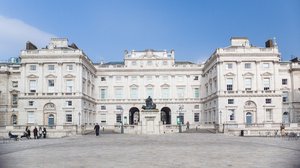
| Lontoo | 1 | Nude Woman Reclining on a Leopard Skin |
Eric Gill vuosien varrelta: jokaisen ainutlaatuiset alkuperäisteokset
15 vuotta erottaa Eric Gill's ensimmäisen ja viimeisen tässä näytetyn alkuperäisteoksen välillä, 1915 ja 1929: jokaisella vuodella on oma paikkansa alla.
Teokset vuosittain
Valitse vuosi nähdäksesi alkuperäisteokset.
Woodcut from the Christian Social Book the Devil's Devices by H.d.c. Pepler, Showing a Bricklayer Overcoming the Devil Through Honest Work
Lisää teoksia 1915
Eric Gilln maalaukset: kysymyksiä gallerialle
Mikä on Eric Gill tunnetuin teos?Paljasta vastaus
Woodcut from the Christian Social Book the Devil's Devices by H.d.c. Pepler, Showing a Bricklayer Overcoming the Devil Through Honest Work (1915). Seuraavina ovat Woodcut Showing Hammersmith, Illustrating the Book the Devil's Devices, Or, Control Versus Service by Hilary Pepler (1915) ja Carrying of the Cross (1926).
Missä iässä Eric Gill loi teoksen Woodcut from the Christian Social Book the Devil's Devices by H.d.c. Pepler, Showing a Bricklayer Overcoming the Devil Through Honest Work?Paljasta vastaus
33 vuotta vanha: Woodcut from the Christian Social Book the Devil's Devices by H.d.c. Pepler, Showing a Bricklayer Overcoming the Devil Through Honest Work on peräisin vuodelta 1915, ja Eric Gill on syntynyt vuonna 1882.
Mitkä ovat Eric Gill kymmenen kuuluisinta maalausta?Paljasta vastaus
Woodcut from the Christian Social Book the Devil's Devices by H.d.c. Pepler, Showing a Bricklayer Overcoming the Devil Through Honest Work, Woodcut Showing Hammersmith, Illustrating the Book the Devil's Devices, Or, Control Versus Service by Hilary Pepler, Carrying of the Cross, Nude Woman Reclining on a Leopard Skin, Eve, A Garden Enclosed Is My Sister, 'i Am Black But Comely, Dancing Couple, Fuge, Dilecti Mi For Canticum Canticorum ja Self Portrait. Yllä oleva sijoitus kertoo kunkin teoksen vuosiluvun ja museon.
Kuinka monta Eric Gill -teosta tunnetaan?Paljasta vastaus
Katalogissamme on 23 teosta taiteilijalta Eric Gill, aikaväliltä 1915–1929.
Missä voi nähdä tunnetuimmat Eric Gill -alkuperäisteokset?Paljasta vastaus
Pääasiassa Courtauld Gallery (Lontoo). Yllä oleva museotaulukko listaa ne kaikki.
Mihin ajanjaksoon Eric Gill tunnituimmat maalauksensa sijoittuvat?Paljasta vastaus
Aikakaudella 1915: 2 sivun 23 teoksista on tehty silloin, joista Woodcut from the Christian Social Book the Devil's Devices by H.d.c. Pepler, Showing a Bricklayer Overcoming the Devil Through Honest Work.
Mikä on Eric Gill kuuluisimmista maalauksista varhaisin ja mikä uusin?Paljasta vastaus
Tällä sivulla vanhin on Woodcut from the Christian Social Book the Devil's Devices by H.d.c. Pepler, Showing a Bricklayer Overcoming the Devil Through Honest Work (1915) ja uusin Eve (1929).
Mihin taidesuuntaukseen Eric Gill kuuluu?Paljasta vastaus
Art deco ja Arts and crafts, tämän sivun alkuperäisteosten perusteella.
Eric Gill: taiteilijan muotokuva
A Life Carved in Stone and Letterforms
Arthur Eric Rowton Gill, known to the world as Eric Gill, was a figure of immense artistic talent and profound contradiction. Born in Brighton in 1882, his life unfolded against the backdrop of shifting cultural currents – the waning years of Victorianism, the rise of Modernism, and the tumultuous decades between two World Wars. He wasn’t simply an artist; he was a craftsman, a philosopher, a religious seeker, and ultimately, a deeply flawed human being whose legacy remains as complex and challenging as his art itself. Gill's early life, marked by a large family – one of twelve children – instilled in him a strong work ethic and a deep connection to the physical world. A move to Chichester in 1897 proved formative, providing access to artistic education at the local technical school. However, it was his subsequent journey to London that set the course for his unique path. Initially apprenticed to architect W.D. Caroe, specializing in ecclesiastical architecture, Gill soon found himself stifled by the constraints of formal training. This dissatisfaction led him to explore alternative avenues – evening classes in stonemasonry at Westminster Technical Institute and calligraphy under the influential Edward Johnston, creator of the iconic London Underground typeface. These studies ignited a passion for direct engagement with materials and the power of letterforms that would define his career.From Architecture to Direct Carving: A New Aesthetic
By 1903, Gill decisively abandoned architecture, embracing instead the life of a calligrapher, letter-cutter, and monumental mason. He established himself in Ditchling, Sussex, a village that would become synonymous with his artistic endeavors and the burgeoning Arts and Crafts movement. Around 1910, he began to explore direct carving – a technique where the artist directly shapes the stone without preliminary models, allowing for an immediacy and spontaneity rarely seen in traditional sculpture. Early works like Madonna and Child (1910) and Ecstasy (1911) reveal his burgeoning style: simplified forms, a deliberate roughness of surface, and a powerful sense of spiritual yearning. Gill’s artistic sensibility was deeply informed by a wide range of influences. He admired medieval ecclesiastical statuary for its devotional power, drew inspiration from the monumental scale and serene beauty of Egyptian, Greek, and Indian sculpture, and embraced the expressive freedom of Post-Impressionist painters like Cézanne, Van Gogh, and Gauguin. His breakthrough came with Mother and Child (1912), which garnered public recognition and established his reputation as a sculptor of considerable talent. A fascination with Indian temple sculpture led to a collaborative project with Jacob Epstein – a colossal monument inspired by the Jain structures at Gwalior Fort, demonstrating Gill’s willingness to engage with diverse artistic traditions. He further cemented his position within religious art through his powerful sculptures for the Stations of the Cross in Westminster Cathedral (1914).Typefaces and Craft Communities: A Vision of Holistic Art
Gill's creative output extended far beyond sculpture. Recognizing the importance of typography as an integral part of visual communication, he embarked on a career as a typeface designer. In 1924, seeking a more communal way of life, he moved to Capel-y-ffin in Powys, Wales, establishing a workshop with fellow artist David Jones and others. This was followed by the establishment of a printing press and lettering workshop in Speen, Buckinghamshire, in 1928. Here, he designed some of his most enduring typefaces: Perpetua (1925), Gill Sans (1927), Joanna (1930), and Solus. These fonts weren’t merely functional; they were expressions of his artistic principles – clarity, legibility, and a harmonious balance between form and content. Gill was also a dedicated teacher, training numerous apprentices who went on to become prominent figures in their own right, including David Kindersley, John Skelton, Laurie Cribb, Donald Potter, and Walter Ritchie. He founded the Guild of St Joseph and St Dominic at Ditchling, embodying his belief in manual labor, Catholic craftsmanship, and a rejection of industrial mass production. This guild represented Gill’s attempt to create an alternative social order based on artistic skill and spiritual values.Legacy and Controversy: A Complex Inheritance
Eric Gill's influence on 20th-century art and design is undeniable. His direct carving technique revitalized sculpture, his typefaces like Gill Sans remain widely used and influential in graphic design today, and he was honored as a Royal Designer for Industry – the highest British award for designers. However, his legacy is irrevocably tarnished by revelations of deeply disturbing personal conduct. His diaries, published posthumously, revealed instances of sexual abuse involving his daughters and even his dog. This has led to intense debate about how to reconcile his artistic achievements with his reprehensible actions. Later works included sculptures for the BBC’s Broadcasting House in London (1932) and bas-reliefs and signage for the Palestine Archaeological Museum (Rockefeller Museum) in Jerusalem (1934). He continued sculpting until his death in 1940, leaving behind a body of work that demonstrates a unique synthesis of craftsmanship, religious devotion, and modernist aesthetics. Gill’s story serves as a potent reminder that artistic genius does not excuse moral failings, and that confronting the complexities of an artist's life is essential to understanding their work fully. He remains a controversial figure, prompting ongoing discussions about art, morality, and the responsibility of acknowledging uncomfortable truths within our cultural heritage.- Born: Brighton, United Kingdom (1882)
- Died: 1940
- Notable Works: Madonna and Child (1910), Ecstasy (1911), Mother and Child (1912), Perpetua typeface (1925), Gill Sans typeface (1927)


