1


Päivitetty marraskuu 2026 · järjestetty suosituimmuuspisteiden mukaan (jokaisen teoksen haut, vierailut ja tilaukset) · 7 teosta taiteilijalta Emily C Way luettelossamme
Lyhyesti
Kaikista Emily C Way jättämistä alkuperäisteoksista kuuluisin on Edward Montagu (1839–1916), 8th Earl of Sandwich (1887). Heti perässä tulevat James Wilson (1848–1907) (1897) ja Blanche Egerton (1832–1894), Wife of the 7th Earl of Sandwich (1888). Katalogissamme on 7 teosta taiteilijalta Emily C Way; galleria on säilyttänyt 7 maailman ihailluimmista teoksista, ja jokaisesta on esitetty sen päivämäärä, museo sekä tarina.

The room feels quiet, held in a stillness that only a formal portrait can command. An older gentleman sits before us, his presence filling the space with a heavy, quiet authority. He is dressed in a dark suit and waistcoat, the fabric appearing thick and substantial under the directional light. This light catches the contours of his face, pulling his features out from the surrounding gloom, while the background recedes…


In this portrait, Emily C Way captures Sir J. H. Greville Smyth, Bt, in a moment of quiet composure. Painted about 1890, the work presents the subject as an older gentleman, possessing a certain gravity that comes with his station. He is depicted with a well-groomed beard and mustache, features that frame a face settled into a look of calm confidence. There is a stillness here, a sense of a…

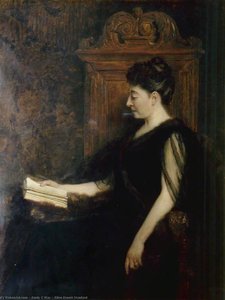
The painting depicts a woman seated in a chair, captured in a moment of quiet contemplation. She is positioned with her hands resting upon a book, appearing to be deeply engaged in reading or studying its contents. The composition is rendered with significant detail, focusing on the intricate features of the subject and the nuances of her immediate environment.

A man sits anchored in the frame, his hands tucked into his pockets as if holding a quiet secret. He wears the formal attire of a bygone era, a suit and tie that speak of structured lives and the gravity of public standing. His beard and mustache are rendered with a focus that demands attention, framing a face that has weathered the passage of years. The background dissolves into a…

This portrait, dating from 1899, depicts a man seated in a chair, captured in a moment of quiet engagement. He is dressed in formal attire, consisting of a suit and tie, and is shown wearing glasses. His hands hold a newspaper, which he appears to be reading. The subject is characterized by a mustache, adding to the dignified presence of the figure.
Nämä neljä aihetta toistuvat näissä alkuperäisteoksissa useimmin, jokaisesta löytyy hienoin esimerkki.
Tämän sivun teoksista eniten sisältävät 2 museota.
| Museo | Kaupunki | Emily C Way teokset | Tämän listan maalaukset |
|---|---|---|---|
 Belfast Harbour Commissioners |
Belfast | 1 | James Wilson (1848–1907) |
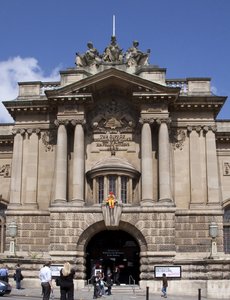 Bristol Museum - Art Gallery |
Bristol | 1 | Sir J. H. Greville Smyth, Bt |
Valinta kattaa Emily C Way yli 13 vuotta, vuodesta 1887 vuoteen 1899, säilyttäen kunkin vuoden hienoimmat alkuperäisteokset.
Valitse vuosi nähdäksesi alkuperäisteokset.
In this portrait, Emily C Way captures Sir J. H. Greville Smyth, Bt, in a moment of quiet composure. Painted about 1890, the work presents the subject as an older gentleman, possessing a certain gravity that comes with his station. He is depicted with a well-groomed beard and mustache, features that frame a face settled into a look of calm confidence. There is a stillness here, a sense of a…
The painting depicts a woman seated in a chair, captured in a moment of quiet contemplation. She is positioned with her hands resting upon a book, appearing to be deeply engaged in reading or studying its contents. The composition is rendered with significant detail, focusing on the intricate features of the subject and the nuances of her immediate environment.
A man sits anchored in the frame, his hands tucked into his pockets as if holding a quiet secret. He wears the formal attire of a bygone era, a suit and tie that speak of structured lives and the gravity of public standing. His beard and mustache are rendered with a focus that demands attention, framing a face that has weathered the passage of years. The background dissolves into a…
The room feels quiet, held in a stillness that only a formal portrait can command. An older gentleman sits before us, his presence filling the space with a heavy, quiet authority. He is dressed in a dark suit and waistcoat, the fabric appearing thick and substantial under the directional light. This light catches the contours of his face, pulling his features out from the surrounding gloom, while the background recedes…
This portrait, dating from 1899, depicts a man seated in a chair, captured in a moment of quiet engagement. He is dressed in formal attire, consisting of a suit and tie, and is shown wearing glasses. His hands hold a newspaper, which he appears to be reading. The subject is characterized by a mustache, adding to the dignified presence of the figure.
Edward Montagu (1839–1916), 8th Earl of Sandwich (1887). Seuraavina ovat James Wilson (1848–1907) (1897) ja Blanche Egerton (1832–1894), Wife of the 7th Earl of Sandwich (1888).
16 vuotta vanha: Edward Montagu (1839–1916), 8th Earl of Sandwich on peräisin vuodelta 1887, ja Emily C Way on syntynyt vuonna 1871.
Katalogissamme on 7 teosta taiteilijalta Emily C Way, aikaväliltä 1887–1899.
Pääasiassa Belfast Harbour Commissioners (Belfast) ja Bristol Museum - Art Gallery (Bristol). Yllä oleva museotaulukko listaa ne kaikki.
Tällä sivulla vanhin on Edward Montagu (1839–1916), 8th Earl of Sandwich (1887) ja uusin Robert Perceval Maxwell (1813–1905) (1899).
Man (3), Suit (3) ja Tie (3), yhteensä 7 teosta tällä sivulla.
Oil On Canvas, 5 teoksesta sivun 7 teoksesta.
Emily Carr (1871–1945) stands as a singular figure in Canadian art history, a trailblazer who fused the stylistic tenets of Post-Impressionism with an unparalleled sensitivity to British Columbia’s landscapes and the profound spirituality of First Nations culture. Born in Victoria, Canada, her artistic journey began amidst a burgeoning intellectual milieu—the daughter of Michael Eugene Ossebelle (often cited as Richard Carr) and Theresa Osment. Her upbringing provided formative influences that would permeate her entire oeuvre. Raised within a landscape that was simultaneously an expatriate British settlement and the ancestral home of the Songhees First Nation, Carr grew up at a cultural crossroads, a perspective that would later define her unique artistic voice.
Carr's early life was marked by considerable travel, fostering exposure to European art movements like those of Cézanne and Gauguin. These encounters were crucial in shaping her distinctive style, igniting within her an ardent desire to capture the essence of place—specifically the rugged beauty of British Columbia—with uncompromising honesty. Rejecting academic conventions, she championed a bold approach characterized by thick impasto brushstrokes and vibrant color palettes. Her canvases pulsated with life, conveying not merely visual representations but palpable sensations of wind, rain, and sunlight filtering through ancient cedar forests. Her work often featured unexpected colors, swirls of paint, and vibratory textures that included blurred edges and faint geometries, creating a sensorial experience that felt almost magical.
Her artistic breakthrough arrived in the early 1900s when Carr began documenting the totem poles erected by First Nations communities along British Columbia’s coast. Unlike many artists of her time who approached Indigenous subjects with ethnographic detachment, Carr engaged in genuine dialogue with Elders, immersing herself in their oral traditions and gaining insight into their cosmology. This profound connection resulted in seminal works that sought to capture the spiritual weight of these monumental structures. Her fascination with the indigenous villages and the monumental art of the coast allowed her to bridge the gap between the natural world and human heritage.
As her career progressed, Carr’s work evolved from more traditional depictions toward a modernist abstraction. She became a leading figure in Canadian modernism, standing on par with the legendary Group of Seven. While she was often inspired by the lush, green Pacific Northwest forests, her use of light and expressive brushwork pushed the boundaries of what landscape painting could achieve in Canada. Her ability to translate the heavy, damp atmosphere of the West Coast into paint made her a chronicler of an era that was rapidly changing, capturing the majesty of the old-growth forests before they were irrevocably altered by industrialization.
Beyond the canvas, Carr was a vivid writer and a master of prose, a multi-talented artist whose literary contributions were as significant as her visual ones. She was praised for her "complete candour" and "strong prose," qualities that allowed her to document the life of her surroundings with deep intimacy. Her first book, Klee Wyck (1941), won the Governor General's Literary Award for non-fiction, a testament to her ability to weave narrative and observation into a compelling tapestry of human and natural experience. This book remains much in demand today, serving as a vital window into the cultural landscape of the early twentieth century.
Today, Emily Carr is revered as a Canadian national treasure and an icon of the arts. Her historical significance lies not only in her technical mastery but in her role as a bridge between cultures and eras. She remains one of the first artists of national significance to emerge from the West Coast, leaving behind a legacy that continues to inspire awe. Her life's work stands as a testament to the power of observation, the importance of cultural empathy, and the enduring beauty of the Canadian wilderness.