1


Päivitetty lokakuu 2026 · järjestetty suosituimmuuspisteiden mukaan (jokaisen teoksen haut, vierailut ja tilaukset) · 14 teosta taiteilijalta David Annesley luettelossamme
Lyhyesti
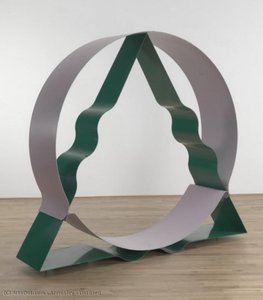
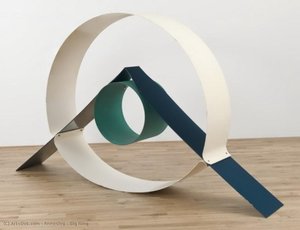
Gallerian silmissä David Annesley's tunnetuin maalaus on X-Act (1964), jonka alkuperäinen teos on esillä Tate Modern -museossa, kaupungissa Lontoo. Narrow Blue Circle (1966) ja Big Ring (1965) täydentävät kolmikon, jonka jokainen silmä tunnistaa. Galleria esittelee David Annesley teoksista 14 tunnetuimmat 14 teosta alla; jokainen on alkuperäisteos, josta kerrotaan vuosi, museo sekä teoksen erityispiirteet.


In the vast landscape of mid-century modernism, few works capture the delicate tension between weight and weightlessness quite like David Annesley’s ‘Untitled’ (1969). This mesmerizing, mandala-like sculpture serves as a masterclass in structural harmony, inviting the viewer into a rhythmic dance of shapes that seem to breathe within their own metallic confines. At first glance, the eye is drawn to the vibrant, sun-drenched yellow of its aluminum form, a hue…

Nämä neljä aihetta toistuvat näissä alkuperäisteoksissa useimmin, jokaisesta löytyy hienoin esimerkki.
Tämän sivun teoksista eniten sisältävät 3 museota.
| Museo | Kaupunki | David Annesley teokset | Tämän listan maalaukset |
|---|---|---|---|
 Tate Modern |
Lontoo | 11 | X-Act, Narrow Blue Circle, Big Ring |
 Museum of London |
Lontoo | 1 | Untitled |
 Tate Britain |
Lontoo | 1 | Mauve, Orange, Yellow, Turquoise on Pale Blue |
7 vuotta, 1964 - 1970, kattavat David Annesley's koko aikaleimatun uran tällä sivulla: lyhyen uran, joka nähdään tässä vuosi vuodelta sen kuuluisimpien alkuperäisteosten kautta.
Valitse vuosi nähdäksesi alkuperäisteokset.

In the vast landscape of mid-century modernism, few works capture the delicate tension between weight and weightlessness quite like David Annesley’s ‘Untitled’ (1969). This mesmerizing, mandala-like sculpture serves as a masterclass in structural harmony, inviting the viewer into a rhythmic dance of shapes that seem to breathe within their own metallic confines. At first glance, the eye is drawn to the vibrant, sun-drenched yellow of its aluminum form, a hue…
Lisää teoksia 1969

X-Act (1964), Tate Modern, Lontoo. Seuraavina ovat Narrow Blue Circle (1966) ja Big Ring (1965).
28 vuotta vanha: X-Act on peräisin vuodelta 1964, ja David Annesley on syntynyt vuonna 1936.
X-Act, Narrow Blue Circle, Big Ring, Loquat, Swing Low, Orinoco, Godroon, Big Yellow Circle, Untitled ja Untitled. Yllä oleva sijoitus kertoo kunkin teoksen vuosiluvun ja museon.
Katalogissamme on 14 teosta taiteilijalta David Annesley, aikaväliltä 1964–1970.
Pääasiassa Tate Modern (Lontoo), Museum of London (Lontoo) ja Tate Britain (Lontoo). Yllä oleva museotaulukko listaa ne kaikki.
Aikakaudella 1965: 4 sivun 14 teoksista on tehty silloin, joista Big Ring.
Tällä sivulla vanhin on X-Act (1964) ja uusin Mauve, Orange, Yellow, Turquoise on Pale Blue (1970).
Color field (3), Abstract (2) ja Sculpture (2), yhteensä 14 teosta tällä sivulla.
Post minimalism, tämän sivun alkuperäisteosten perusteella.
X-Act, Narrow Blue Circle ja Big Ring: Tate Modern, Lontoo -ssä on 11 tämän sivun teoksista.
David Annesley stands as a luminous figure within the pantheon of British sculpture, a master of form whose work captures the rhythmic pulse of the mid-century modern era. Born in London in 1936, Annesley’s artistic identity was forged through a global odyssey that saw him traverse the landscapes of Zimbabwe and Australia before returning to the heart of the English art scene. This diverse exposure to different environments and textures provided a rich, foundational layer to his aesthetic sensibility, allowing him to approach the concept of space with a unique, international perspective. His journey is not merely one of geographical movement, but an evolutionary process of refining how metal, color, and gravity interact to create a sense of living motion.
The trajectory of Annesley’s career was profoundly shaped by his formative years at St Martin's School of Art in London. It was here that he encountered the monumental influence of Sir Anthony Caro, a mentor whose radical approach to sculpture would leave an indelible mark on Annesley’s soul. Under Caro’s guidance, Annesley learned to reject the heavy, representational traditions of the past in favor of a more spontaneous, abstract language. This period of study encouraged him to view sculpture not as a static object of commemoration, but as an active participant in its environment—a way to manipulate the very air around a form through the use of welded metal and bold, structural lines.
To encounter an Annesley sculpture is to witness a dance between industrial strength and visual lightness. His technique is characterized by a masterful command over welded metal, which he shapes into striking geometric configurations that often rest directly upon the ground. By eschewing traditional pedestals, Annesley allows his works to inhabit the same physical plane as the viewer, fostering an intimate and visceral engagement with the art. These pieces, such as the captivating Godroon (196 and Big Ring (1965), demonstrate a profound understanding of how weight can be visually defied through clever construction and strategic placement.
Beyond the structural integrity of his work lies a vibrant, emotive use of color. Annesley’s palette is famously bold, frequently utilizing saturated reds and brilliant yellows to breathe life into his metallic compositions. This infusion of pigment serves a dual purpose: it provides a striking contrast to the raw, industrial nature of the metal while simultaneously injecting a sense of kinetic energy into the static forms. Through this interplay of color and geometry, Annesley explores the delicate relationship between material perception and physical reality, creating works that feel as though they are vibrating with an internal light.
The enduring significance of David Annesley’s oeuvre lies in his ability to translate the complexities of movement into the permanence of metal. His works, such as the dynamic Jump, serve as meditations on freedom and the elegance of abstraction, capturing a sense of upward momentum that transcends the physical limitations of the medium. As a key voice in the development of contemporary British sculpture, Annesley helped bridge the gap between the heavy traditions of early modernism and the more fluid, experimental approaches of late 20th-century art.
Throughout his career, Annesley has remained dedicated to the pursuit of a pure, abstract language. His contributions to the art world are marked by several key achievements:
Today, Annesley’s legacy continues to resonate within the halls of contemporary art, offering a timeless testament to the power of bold form and the infinite possibilities of the abstract imagination.