Clement Burlison muotokuva

Clement Burlison -maalaukset: Gallerian silmin 33 kuuluisinta teosta

Päivitetty marraskuu 2026 · järjestetty suosituimmuuspisteiden mukaan (jokaisen teoksen haut, vierailut ja tilaukset) · 36 teosta taiteilijalta Clement Burlison luettelossamme

Lyhyesti

Gallerian silmissä Clement Burlisonn tunnetuin maalaus on Cain and Abel (1846). Madonna della sedia (copy after Raphael) (1846) ja Sir Robert Peel (1788–1850), 2nd Bt, Prime Minister (1852) täydentävät kolmikon, jonka jokainen silmä tunnistaa. Galleria esittelee Clement Burlison teoksista 36 tunnetuimmat 33 teosta alla; jokainen on alkuperäisteos, josta kerrotaan vuosi, museo sekä teoksen erityispiirteet.

1815 – 1899 Eniten teoksia: Durham University

Gallerian 10 parasta Clement Burlison -maalausta

1
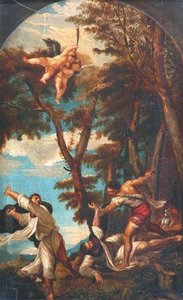
Cain and Abel (1846) tekijä: Vincent van Gogh Clement Burlison

Cain and Abel

1846 · Oil

The composition presents a dramatic and chaotic scene of violence. Muscular figures dominate the lower half of the canvas, engaged in a struggle that emphasizes physical tension and movement. The scene unfolds within a landscape of trees, a body of water, and distant mountains under a cloudy sky. A celestial element, an angel, occupies the upper portion of the frame, providing a vertical counterpoint to the earthly conflict below. The…

2
Madonna della sedia (copy after Raphael) (1846) tekijä: Vincent van Gogh Clement Burlison

Madonna della sedia (copy after Raphael)

1846 · Oil

This circular oil painting, titled Madonna della sedia (copy after Raphael), was executed by the British artist Clement Burlison. Created about 1846, the work represents a meticulous engagement with a classical composition, demonstrating the technical skill Burlison applied to his renditions of established religious subjects. The piece captures a quiet, intimate moment through a careful study of form and light.

3
Sir Robert Peel (1788–1850), 2nd Bt, Prime Minister (1852) tekijä: Vincent van Gogh Clement Burlison

Sir Robert Peel (1788–1850), 2nd Bt, Prime Minister

1852 · Oil On Canvas

The subject is presented in a three-quarter view, occupying the center of the frame with a composed and serious expression. He is positioned within a study or library, a setting that implies intellect and wealth through the presence of a richly decorated backdrop and wooden furniture. The lighting is dramatic, utilizing strong contrasts between light and shadow to define the contours of his face and the textures of his formal…

4
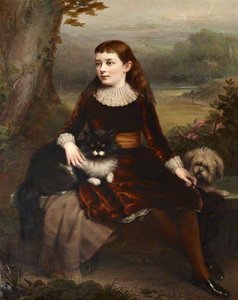
Alice Frances Theodora Wythes (1875–1957), Marchioness of Bristol, as a Young Girl (1886) tekijä: Vincent van Gogh Clement Burlison

Alice Frances Theodora Wythes (1875–1957), Marchioness of Bristol, as a Young Girl

1886 · Oil On Canvas · Ickworth, Suffolk County

A young girl sits centered upon a garden bench, her presence anchored by the quiet company of her pets. To her side, a dog and a large black cat flank her, creating a triangular composition that emphasizes stability and domestic peace. The setting is an outdoor space, perhaps a private park or a manicured garden, where the background dissolves into a soft, blurred landscape of trees and foliage. This atmospheric…

5
Durham tekijä: Vincent van Gogh Clement Burlison

Durham

A bridge spans a river, acting as the central axis for this landscape. Below, the water reflects the soft light of the sky, while the surrounding terrain is populated by grazing sheep. A woman walks across the stone structure, her movement captured in a moment of quiet transit. Nearby, another figure stands, grounding the scene in a sense of lived experience. Above the river, two birds are suspended in flight,…

6
Profane Love (copy after Titian) (1846) tekijä: Vincent van Gogh Clement Burlison

Profane Love (copy after Titian)

1846

In this 1846 oil painting, Clement Burlison explores a scene of quiet intimacy and complex emotion. A woman sits upon a bench, her form partially draped in a deep red cloth that catches the light with a soft, tactile quality. In her lap, she holds a baby, a detail that grounds the composition in a sense of maternal presence. The atmosphere is thick with a subtle, observational grace, as if…

7
The Dogana, San Giorgio, Venice, Italy (copy after Joseph Mallord William Turner) (1846) tekijä: Vincent van Gogh Clement Burlison

The Dogana, San Giorgio, Venice, Italy (copy after Joseph Mallord William Turner)

1846 · Oil

The water ripples softly under a fleet of boats, each one a small silhouette against the shimmering surface of the Adriatic. In this scene, the air feels heavy with the dampness of a Venetian morning, where the light begins to peel back the shadows of the night. Boats of various sizes drift peacefully, some large and sturdy, others small and nimble, as they navigate the calm currents. Near the vessels,…

8
John Bramwell (1794–1882), Mayor of Durham (1840–1842, 1845–1846 1852–1853) (1847) tekijä: Vincent van Gogh Clement Burlison

John Bramwell (1794–1882), Mayor of Durham (1840–1842, 1845–1846 1852–1853)

1847 · Oil

In this 1847 portrait, we encounter John Bramwell, a man whose life was deeply intertwined with the civic governance of Durham. He served as Mayor during several distinct periods, including 1840–1842, 1845–1846, and 1852–1853. The artist, Clement Burlison, captures him in a moment of quietude, a departure from the formal, often rigid postures typical of mid-Victorian official portraiture. Bramwell is depicted with his hands clasped, a gesture that suggests a…

9
Self Portrait (copy of Anthony van Dyck) (1844) tekijä: Vincent van Gogh Clement Burlison

Self Portrait (copy of Anthony van Dyck)

1844 · Oil On Canvas

Clement Burlison’s 1844 oil on canvas, Self Portrait (copy of Anthony van Dyck), offers a nineteenth-century perspective on a seventeenth-century subject. The work presents a man with brown hair and a beard, his gaze directed toward the viewer. He is dressed in a white shirt and a black vest, a composition that emphasizes the interplay between light and shadow. This reproduction captures the essence of the original subject through a…

10
Madonna and Child with Saint Jerome (copy after Bartolomé Esteban Murillo) (1846) tekijä: Vincent van Gogh Clement Burlison

Madonna and Child with Saint Jerome (copy after Bartolomé Esteban Murillo)

1846 · Oil

The room feels warm, bathed in a soft, golden light that seems to emanate from the figures themselves. Mary holds her child with a gentle, protective grace, her presence anchoring the entire composition. Around them, the air is thick with a sense of togetherness, as if the world outside has ceased to exist. An angel lingers near the baby, adding a celestial touch to this quiet, domestic scene. A deep…

Clement Burlison -taideteokset, sijoitukset 11–33

Aiheet, jotka vangitsivat Clement Burlisonin katseen

Nämä neljä aihetta toistuvat näissä alkuperäisteoksissa useimmin, jokaisesta löytyy hienoin esimerkki.

Museot, joissa Clement Burlison'n alkuperäisteokset sijaitsevat

Tämän sivun teoksista eniten sisältävät 3 museota.

Museo Kaupunki Clement Burlison teokset Tämän listan maalaukset
Durham University, DurhamDurham University Durham 4 Joe Bainbridge, the Castle Postman, The Reverend Dr John Cundill (1812–1894), The Reverend Canon Henry Jenkyns (1795–1878), MA, DD
Ickworth, Suffolk CountyIckworth Suffolk County 1 Alice Frances Theodora Wythes (1875–1957), Marchioness of Bristol, as a Young Girl
Darlington Library, DarlingtonDarlington Library Darlington 1 Holy Trinity Church, Darlington, County Durham

Clement Burlison, yksi tunnusomainen maalaus vuosikymmeneltä

Teokset vuosikymmenittäin

Valitse vuosikymmen nähdäksesi sen määrittäneen alkuperäisteoksen.

Clement Burlisonn maalaukset: gallerian vastaukset

Mikä Clement Burlison -taideteos on kaikkien kuuluisin?Paljasta vastaus

Cain and Abel (1846). Seuraavina ovat Madonna della sedia (copy after Raphael) (1846) ja Sir Robert Peel (1788–1850), 2nd Bt, Prime Minister (1852).

Kuinka vanha Clement Burlison oli valmistuessaan teos Cain and Abel?Paljasta vastaus

31 vuotta vanha: Cain and Abel on peräisin vuodelta 1846, ja Clement Burlison on syntynyt vuonna 1815.

Mitkä ovat Clement Burlison'n 10 parasta maalausta?Paljasta vastaus

Cain and Abel, Madonna della sedia (copy after Raphael), Sir Robert Peel (1788–1850), 2nd Bt, Prime Minister, Alice Frances Theodora Wythes (1875–1957), Marchioness of Bristol, as a Young Girl, Durham, Profane Love (copy after Titian), The Dogana, San Giorgio, Venice, Italy (copy after Joseph Mallord William Turner), John Bramwell (1794–1882), Mayor of Durham (1840–1842, 1845–1846 1852–1853), Self Portrait (copy of Anthony van Dyck) ja Madonna and Child with Saint Jerome (copy after Bartolomé Esteban Murillo). Yllä oleva sijoitus kertoo kunkin teoksen vuosiluvun ja museon.

Kuinka monta teosta Clement Burlison loi?Paljasta vastaus

Katalogissamme on 36 teosta taiteilijalta Clement Burlison, aikaväliltä 1843–1889.

Missä Clement Burlison'n kuuluisimmat alkuperäisteokset sijaitsevat?Paljasta vastaus

Pääasiassa Durham University (Durham), Ickworth (Suffolk County) ja Darlington Library (Darlington). Yllä oleva museotaulukko listaa ne kaikki.

Milloin Clement Burlison maalasi kuuluisimmat teoksensa?Paljasta vastaus

Aikakaudella 1840s: 11 sivun 33 teoksista on tehty silloin, joista Cain and Abel.

Mitkä ovat Clement Burlison'n varhaisimmat ja viimeisimmät kuuluisat teokset?Paljasta vastaus

Tällä sivulla vanhin on The Village Festival (copy after David Wilkie) (1843) ja uusin The Reverend Dr John Cundill (1812–1894) (1889).

Mihin aiheisiin Clement Burlison palasi useimmin?Paljasta vastaus

People (8), Man (6) ja Water (4), yhteensä 33 teosta tällä sivulla.

Mitä tekniikkaa Clement Burlison käytti eniten?Paljasta vastaus

Oil, 14 teoksesta sivun 33 teoksesta.

Mitä Clement Burlison -taiteilijan alkuperäisteoksia Durham University -museossa on?Paljasta vastaus

Joe Bainbridge, the Castle Postman, The Reverend Dr John Cundill (1812–1894) ja The Reverend Canon Henry Jenkyns (1795–1878), MA, DD: Durham University, Durham -ssä on 4 tämän sivun teoksista.

Clement Burlison: taiteilija

Clement Burlison: A Victorian Master of Light and Observation

Clement Burlison (1815-1899) stands as a quietly significant figure in 19th-century British art, a painter whose meticulous observation and skillful rendering of light and atmosphere secured him a place among the most accomplished portraitists and genre painters of his era. Often overshadowed by more flamboyant contemporaries, Burlison’s legacy rests on a body of work characterized by a remarkable sensitivity to detail, a deep understanding of human psychology, and an ability to capture fleeting moments of everyday life with understated grace.

Born in Hartlepool, England, Burlison's early artistic training was largely self-directed. He began his career as a draughtsman for the North Western Steam Navigation Company, a position that provided him with invaluable experience in observing and documenting the world around him – a skill he would later translate into his paintings. This period instilled in him a keen eye for perspective, composition, and the subtle nuances of light reflecting off water and buildings. He initially studied under John Brett at the Liverpool Academy of Arts, absorbing elements of the Pre-Raphaelite style, particularly its emphasis on realism and detailed depiction of nature. However, Burlison quickly developed his own distinct approach, prioritizing psychological insight alongside technical mastery.

A Portraitist of His Time

Burlison’s fame primarily rests upon his portraiture, a genre in which he excelled with remarkable consistency over several decades. He produced hundreds of portraits, ranging from grandees of the landed gentry to humble tradesmen and members of the working class. What distinguishes Burlison's portraits is not merely their technical accuracy but also the profound empathy he conveyed towards his subjects. He avoided the overly flattering or idealized representations common in many Victorian portraits, instead presenting individuals with a frankness that revealed both their virtues and their flaws. His ability to capture the essence of a person – their character, temperament, and social standing – is evident in works like “Alice Frances Theodora Wythes (1875–1957), Marchioness of Bristol, as a Young Girl,” a tender depiction of a young girl surrounded by her beloved pets. The painting’s warmth and intimacy are achieved through the careful use of light and shadow, creating a sense of quiet contemplation.

His portraiture was not limited to the wealthy elite; he frequently depicted ordinary people, offering a valuable glimpse into the lives of those often overlooked by mainstream art. These scenes – a fisherman mending his nets, a blacksmith at work, a group of children playing in the street – are imbued with a sense of realism and social commentary, reflecting Burlison’s commitment to portraying the diverse tapestry of Victorian society.

Genre Scenes and Religious Subjects

Beyond portraiture, Burlison also produced a significant body of genre scenes—paintings depicting everyday life. These works often featured local settings and characters, capturing the rhythms and customs of Hartlepool and its surrounding areas. He was particularly adept at portraying maritime subjects, reflecting his upbringing in a port town. His paintings frequently showcased the bustling activity of the docks, the arrival of ships, and the lives of sailors and fishermen.

Burlison’s religious works, though less numerous than his portraits or genre scenes, are equally noteworthy. He produced several copies after renowned masterpieces, most notably a stunning rendition of “Madonna della sedia (copy after Raphael).” This circular oil painting, executed with meticulous detail and a deep understanding of the original's composition, demonstrates Burlison’s technical skill and his ability to imbue classic works with his own artistic sensibility. The work is a testament to his dedication to mastering the techniques of the Old Masters.

Influence and Legacy

Clement Burlison’s influence extends beyond his individual paintings. His meticulous observation, psychological insight, and commitment to realism served as an inspiration for subsequent generations of British artists. His work aligns closely with the style of David Wilkie, a 19th-century painter known for his scenes of London life, suggesting a direct line of artistic influence. Burlison’s legacy is one of quiet achievement—a testament to the power of patient observation, technical skill, and a genuine appreciation for the human condition.

Today, Burlison's paintings are housed in public collections across England and beyond, offering viewers a rare opportunity to connect with the art of a master painter who deserves greater recognition for his significant contribution to Victorian art. His work continues to resonate with audiences today, reminding us of the beauty and complexity of everyday life.