

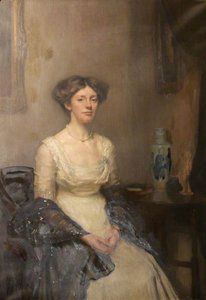
1


Päivitetty marraskuu 2026 · järjestetty suosituimmuuspisteiden mukaan (jokaisen teoksen haut, vierailut ja tilaukset) · 35 teosta taiteilijalta Arnold Mason luettelossamme
Lyhyesti
Thomas William Dampier Bide (1844–1916) (1909) on se Arnold Mason -maalaus, joka herättää eniten huomiota; alkuperäisteos kuuluu museolle Museum of South Somerset, Yeovil. Sen jälkeen katse siirtyy kohteisiin John Parkinson (1947) ja Olive Mary Wolryche Whitmore (1879–1951), Mrs Eustace Scott Hamilton Russell (1900). Arnold Masonin 35 teoksemme joukosta nämä 34 ovat kuuluisimpia; jokainen on ainutlaatuinen alkuperäisteos, joka on esitelty vuosiluvun, museon ja sen syyn kera, miksi teos on säilyttänyt suosionsa.

The John Parkinson painting by Arnold Mason is a stunning oil on canvas artwork that showcases the artist's exceptional skill in capturing the essence of his subject. Created in 1947, this painting measures 210 x 124 cm and is currently located at the Gravesham Borough Council in Gravesend, United Kingdom. The Artist and His Work Arnold Mason was a talented artist known for his attention to detail and ability to…


 Girl with a Hand Mirror1929
12
 Job Nixon (1891–1938)1932
13
 Portrait of a Woman1931 · The Resource Centre
14
 Red Ships at La Rochelle, France1930 · Alfred East Art Gallery
15
 Seated Nude1937
16
 Portrait of a Young Woman1934
17
 Alderman W. E. Thomas, Mayor of Gravesend (1921 1922)1941 · Gravesham Borough Council
18
 Elinor Glyn, née Sutherland1942
19
 Lady Eleanor Joan Clara Nathan (1892–1972)1948 · Guildhall Art Gallery
20
 Robert Palmer, VC1948 · Gravesham Borough Council
21Alderman J. Tennant1947 · The Hepworth Wakefield
22
 Gerald Harry Beloe, Master (1922), Treasurer (1932–1944)1944 · Merchants Hall
23
 Sir Henry Upcher (1870–1954), Chairman of Norfolk County Council (1941–1950)1950
24
 Brown Study1949
25
 Llanbedr, near Conway
26
 Miss ColeSalford Museum - Art Gallery
27
 Indian GirlAlfred East Art Gallery
28
 Port Scene
29
 Flower Piece
30
 River Scene
31
 The HousekeeperSalford Museum - Art Gallery
32
 BargesThe Brewhouse Arts Centre
33
 River Scene with a Bridge
34
 The Reverend Canon Frederick Llewellyn Hughes, CB, CBE, MC, TD, MA, KHC, Chaplain General to the King (1944–1951)
Nämä neljä aihetta toistuvat näissä alkuperäisteoksissa useimmin, jokaisesta löytyy hienoin esimerkki.
Tämän sivun teoksista eniten sisältävät 8 museota.
| Museo | Kaupunki | Arnold Mason teokset | Tämän listan maalaukset |
|---|---|---|---|
 Museum of South Somerset |
Yeovil | 3 | Thomas William Dampier Bide (1844–1916), Mary Anne Whetham, née Dampier (b.1843), Elizabeth Dampier Bide (1838–1915) |
 Gravesham Borough Council |
Greenwich | 3 | John Parkinson, Alderman W. E. Thomas, Mayor of Gravesend (1921 1922), Robert Palmer, VC |
 Alfred East Art Gallery |
Kettering | 2 | Red Ships at La Rochelle, France, Indian Girl |
 Salford Museum - Art Gallery |
Greater Manchester | 2 | Miss Cole, The Housekeeper |
 The Resource Centre |
Newark | 1 | Portrait of a Woman |
 Guildhall Art Gallery |
Lontoo | 1 | Lady Eleanor Joan Clara Nathan (1892–1972) |
 The Hepworth Wakefield |
Wakefield | 1 | Alderman J. Tennant |
 Merchants Hall |
Bristol | 1 | Gerald Harry Beloe, Master (1922), Treasurer (1932–1944) |
Valitse vuosikymmen nähdäksesi sen määrittäneen alkuperäisteoksen.

The John Parkinson painting by Arnold Mason is a stunning oil on canvas artwork that showcases the artist's exceptional skill in capturing the essence of his subject. Created in 1947, this painting measures 210 x 124 cm and is currently located at the Gravesham Borough Council in Gravesend, United Kingdom. The Artist and His Work Arnold Mason was a talented artist known for his attention to detail and ability to…

Thomas William Dampier Bide (1844–1916) (1909), Museum of South Somerset, Yeovil. Seuraavina ovat John Parkinson (1947) ja Olive Mary Wolryche Whitmore (1879–1951), Mrs Eustace Scott Hamilton Russell (1900).
24 vuotta vanha: Thomas William Dampier Bide (1844–1916) on peräisin vuodelta 1909, ja Arnold Mason on syntynyt vuonna 1885.
Thomas William Dampier Bide (1844–1916), John Parkinson, Olive Mary Wolryche Whitmore (1879–1951), Mrs Eustace Scott Hamilton Russell, Head of a Girl, Ibiza, Balearics, Lord Granville West (1904–1984), Head of a Child, Mary Anne Whetham, née Dampier (b.1843), Elizabeth Dampier Bide (1838–1915) ja Quai Du Port, Martigues, France. Yllä oleva sijoitus kertoo kunkin teoksen vuosiluvun ja museon.
Katalogissamme on 35 teosta taiteilijalta Arnold Mason, aikaväliltä 1900–1950.
Pääasiassa Museum of South Somerset (Yeovil), Gravesham Borough Council (Greenwich) ja Alfred East Art Gallery (Kettering). Yllä oleva museotaulukko listaa ne kaikki.
Aikakaudella 1940s: 8 sivun 34 teoksista on tehty silloin, joista John Parkinson.
Tällä sivulla vanhin on Olive Mary Wolryche Whitmore (1879–1951), Mrs Eustace Scott Hamilton Russell (1900) ja uusin Sir Henry Upcher (1870–1954), Chairman of Norfolk County Council (1941–1950) (1950).
Portrait (2) ja Formal (2), yhteensä 34 teosta tällä sivulla.
Thomas William Dampier Bide (1844–1916), Mary Anne Whetham, née Dampier (b.1843) ja Elizabeth Dampier Bide (1838–1915): Museum of South Somerset, Yeovil -ssä on 3 tämän sivun teoksista.