La Fête Dieu
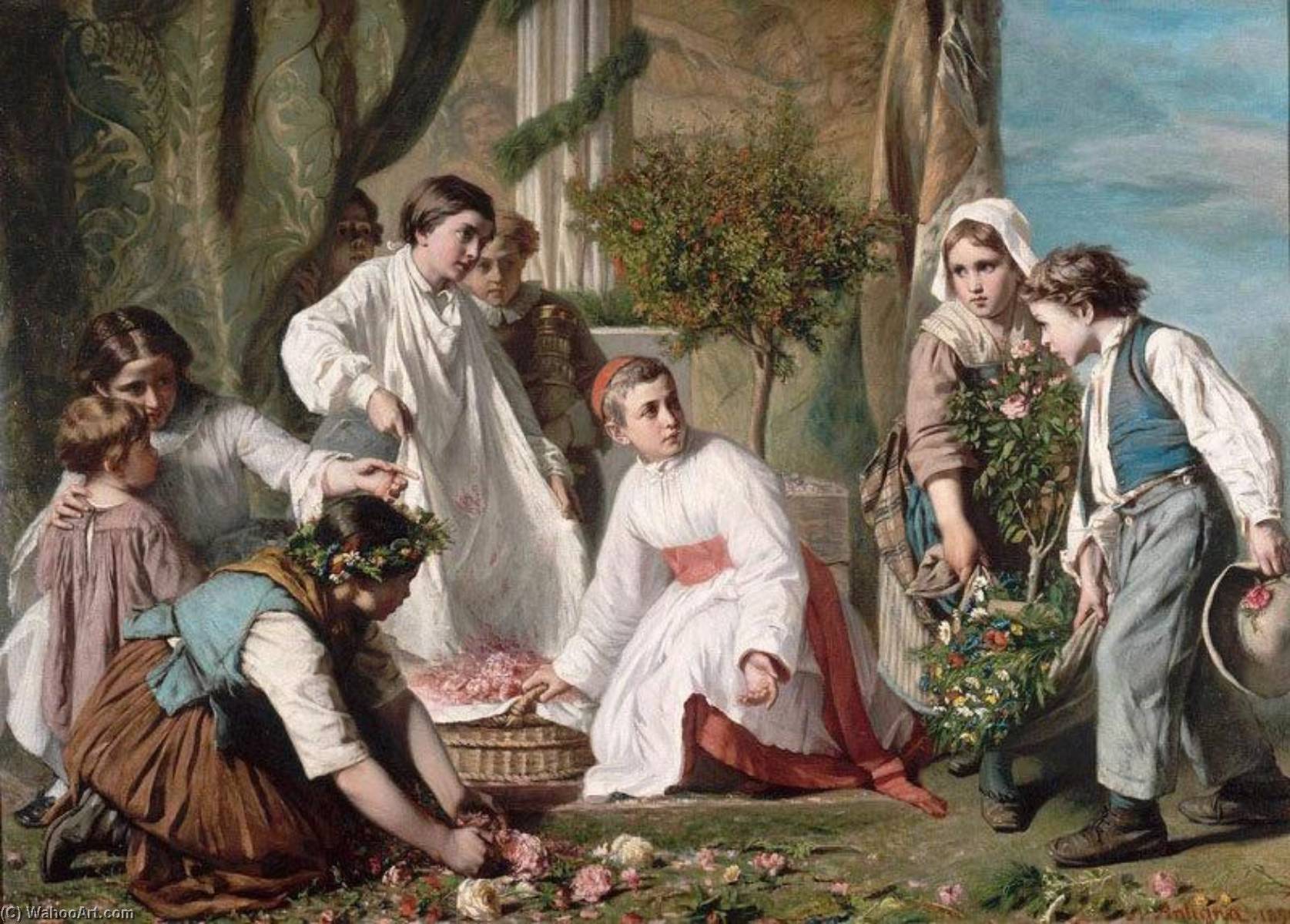
The oil on canvas titled La Fête Dieu was painted by Alexandre Antigna in 1855. This work measures 55 x 76 3/4 inches (140 x 195 cm). It captures a moment of preparation, where the weight of tradition meets the lightness of youth.
Lyhyesti
Kaikista Alexandre Antigna jättämistä alkuperäisteoksista kuuluisin on La Fête Dieu. Heti perässä tulevat The Lightning (1848) ja L'Eclair. Katalogissamme on 21 teosta taiteilijalta Alexandre Antigna; galleria on säilyttänyt 21 maailman ihailluimmista teoksista, ja jokaisesta on esitetty sen päivämäärä, museo sekä tarina.
The oil on canvas titled La Fête Dieu was painted by Alexandre Antigna in 1855. This work measures 55 x 76 3/4 inches (140 x 195 cm). It captures a moment of preparation, where the weight of tradition meets the lightness of youth.
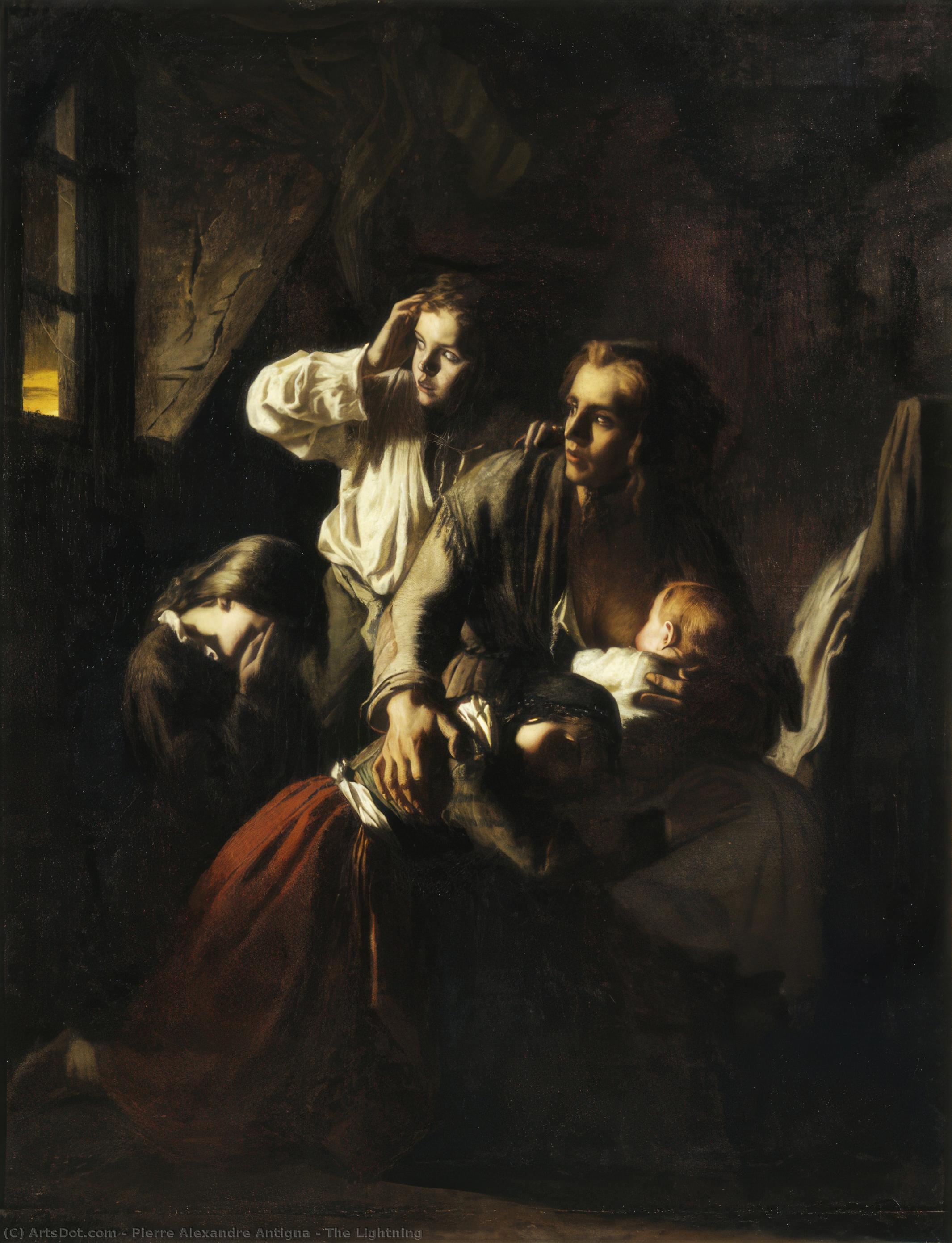
“The Lightning,” painted in 1848 by the French artist Pierre Alexandre Antigna, is more than just a depiction of a family huddled together during an electrical storm; it’s a poignant meditation on vulnerability, familial love, and the raw power of nature. Antigna, a key figure in Parisian Realism, masterfully captures a fleeting moment of intense emotion within a dimly lit interior, drawing the viewer into a scene brimming with both…
The oil on canvas titled L'Eclair was painted in 1848. This tableau captures a singular moment of tension. Alexandre Antigna, born in Orléans, France, in 1817, rendered the scene with a steady hand. The pigment settles into the weave of the fabric, holding a fragment of a storm within its fibers.
The air feels heavy with the scent of dry hay and sun-warmed earth as a group of children whirl in a rhythmic circle. They move through a wide, rural landscape, their small figures caught in a moment of pure, uninhibited joy. The composition pulls the eye into a continuous loop, following the sweep of outstretched arms and the swirling motion of colorful skirts. Reds, blues, and whites flash against the…
The sketch depicts a young girl captured in mid-stride, her body leaning slightly forward into the direction of her movement. She is positioned off-center to the right, creating a sense of momentum as she walks. Her head is tilted downward, eyes fixed upon an open book held in her outstretched hands. The figure is rendered from the mid-thigh upward, focusing the viewer's attention on the interaction between her posture and…
The light falls from the upper left, casting soft shadows across a gathering of Aragonese people. They sit upon weathered stone steps, framed by the deep green of a grapevine. A woman holds an infant, her chemise a bright white against the earthy tones of the scene. Beside them, a young boy cradles a musical instrument, his small hands poised in a moment of stillness. The air feels heavy with…
This oil painting presents a close-up portrait of a young girl, focusing tightly on her head and hands. The subject is positioned in a direct, eye-level view, her chin resting upon her hands in a pensive posture. A headscarf wraps around her face, creating organic folds that frame her features. The lighting originates from the upper left, casting shadows across her face and highlighting the specific expression in her eyes.…
A solitary woman rests in a dimly lit, rustic interior, her form surrendered to sleep. Positioned slightly to the left of center, she is balanced by the large, circular silhouette of a spinning wheel to the right. The composition is vertical, drawing the eye to the heavy, nocturnal atmosphere of the room. Deep, earthy tones of umber and sienna dominate the space, creating a sense of profound stillness. A sharp…
The oil painting titled Gypsy Girl presents a quiet, heavy moment captured on canvas. This work is the creation of Alexandre Antigna, an artist who emerged from the city of Orléans, France. Born in 1817, Antigna brings a specific, focused gaze to the subjects he encounters, often finding the weight of existence in the faces of those living on the margins of society.
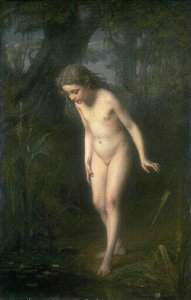
is an oil on canvas by the French painter Alexandre Antigna. The work presents a nude female figure wading into a body of water. This central subject is situated within a dense forest setting, where the natural environment forms a dark, enveloping backdrop around the form.
Nämä neljä aihetta toistuvat näissä alkuperäisteoksissa useimmin, jokaisesta löytyy hienoin esimerkki.
Tämän sivun teoksista eniten sisältävät 6 museota.
| Museo | Kaupunki | Alexandre Antigna teokset | Tämän listan maalaukset |
|---|---|---|---|
| Pariisi | 2 | The Lightning, L'Eclair | |
| Orléans | 2 | Aragonese of Anso, The Fire | |
| Limoux | 1 | Circle of children | |
| Worcester | 1 | Head of a Girl | |
| Saint-Brieuc | 1 | The sleeping spinner | |
| Gent | 1 | Gypsy Girl |
Valitse vuosikymmen nähdäksesi sen määrittäneen alkuperäisteoksen.
“The Lightning,” painted in 1848 by the French artist Pierre Alexandre Antigna, is more than just a depiction of a family huddled together during an electrical storm; it’s a poignant meditation on vulnerability, familial love, and the raw power of nature. Antigna, a key figure in Parisian Realism, masterfully captures a fleeting moment of intense emotion within a dimly lit interior, drawing the viewer into a scene brimming with both…
The air feels heavy with the scent of dry hay and sun-warmed earth as a group of children whirl in a rhythmic circle. They move through a wide, rural landscape, their small figures caught in a moment of pure, uninhibited joy. The composition pulls the eye into a continuous loop, following the sweep of outstretched arms and the swirling motion of colorful skirts. Reds, blues, and whites flash against the…
The light falls from the upper left, casting soft shadows across a gathering of Aragonese people. They sit upon weathered stone steps, framed by the deep green of a grapevine. A woman holds an infant, her chemise a bright white against the earthy tones of the scene. Beside them, a young boy cradles a musical instrument, his small hands poised in a moment of stillness. The air feels heavy with…
La Fête Dieu. Seuraavina ovat The Lightning (1848) ja L'Eclair.
La Fête Dieu, The Lightning, L'Eclair, Circle of children, Girl striding out reading a book, Aragonese of Anso, Head of a Girl, The sleeping spinner, Gypsy Girl ja Miroir des bois. Yllä oleva sijoitus kertoo kunkin teoksen vuosiluvun ja museon.
Katalogissamme on 21 teosta taiteilijalta Alexandre Antigna, aikaväliltä 1848–1872.
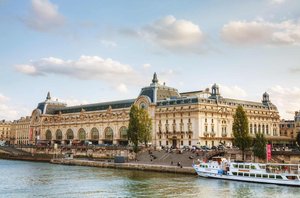
Pääasiassa Musée d'Orsay (Pariisi), Musée des Beaux-Arts (Orléans) ja musée Petiet de Limoux (Limoux). Yllä oleva museotaulukko listaa ne kaikki.
Aikakaudella 1850s: 3 sivun 21 teoksista on tehty silloin, joista Circle of children.
Tällä sivulla vanhin on The Lightning (1848) ja uusin Aragonese of Anso (1872).
Woman (8), Children (4) ja Girl (4), yhteensä 21 teosta tällä sivulla.
Oil On Canvas, 15 teoksesta sivun 21 teoksesta.
Romanticism, tämän sivun alkuperäisteosten perusteella.
The Lightning ja L'Eclair: Musée d'Orsay, Pariisi -ssä on 2 tämän sivun teoksista.
1800-luvun Ranskan sydämessä, aikakaudella, jota määrittivät syvät sosiaaliset mullistukset ja taiteellisten paradigmojen murros, Jean Pierre Alexandre Antigna nousi esiin maalarina, jonka empatia oli vertaansa vailla. Orléansissa vuonna 1817 syntynyt taiteellinen matka sai alkunsa nuoruuden perinteisistä maisemista, joita muovasi paikallisen taiteilijan François Salmonin valvova silmä. Pariisin kutsu osoittautui kuitenkin vastustamattomaksi. Päästyään arvostettuun École Nationale Supérieure des Beaux-Arts -instituuttiin vuonna 1837, Antigna uppoutui akateemisen kurinalaisuuden maailmaan opiskellen mestareiden, kuten Sébastien Norblin de la Gourdainen ja kuuluisan Paul Delaroche, alaisuudessa. Nämä varhaiset vuodet leimattuivat uskonnollisten aiheiden ja muodollisten muotokuvien keskittymisellä, noudattaen aikakauden vakiintuneita tyylillisiä konventioita.
Antignan sielun todellinen metamorfoosi ei kuitenkaan tapahtunut akatemian kultaisissa saleissa, vaan Île Saint-Louisin varjoisilla ja kapeilla kaduilla. Elämällä Pariisin köyhyysalueiden keskellä taiteilijaestäytyi urbaanin köyhyyden raakoihin ja suodattamattomiin kamppailuihin. Tämä syvä altistuminen inhimilliselle kurjuudelle toimi katalyyttinä, joka ohjasi hänet pois idealisoidusta uskonnollisesta ikonografiasta kohti karua ja tinkimätöntä realismia. Kun vuoden 1848 vallankumous pyyhkäisi Ranskan yli, Antigna oli täysin omaksunut tyylin, joka pyrki dokumentoimaan olemassaolon raskautta. Hänen kangaskuvansa alkoivat sykkiä yhteiskunnan marginaalissa elävien ihmisten raskaita taakkoja ja hiljaista kestävyyttä, kuvattuna tekstuuripitoisella siveltimenjäljellä ja sellaisella emotionaalisella syvyydellä, joka vangitsi Pariisin Salonkin huomion.
Uran edetessä Antignan taiteellinen visio laajeni Pariisin urbaanin rajauksen ulkopuolelle. Ohjattuna loputtomalla uteliaisuudella ihmisyyden ja luonnon maailmaa kohtaan, hän lähti laajoille matkalle Bretagnen karuille maisemille ja Espanjan eloisille alueille. Nämä matkat antoivat hänelle mahdollisuuden yhdistää sosiaalisen tietoisuutensa kasvavaan naturalismiin. Noin vuonna 1860 hänen työnsä alkoi heijastaa luonnon tarkkaa havainnointia, jossa maiseman ilmakehän laatuista tuli yhtä merkittävä aihe kuin niissä asuvat ihmiset. Olipa kyseessä myrskyn dramaattinen jännitys tai maaseututyöväen hiljainen arvokkuus, hänen tekniikkansa pysyi ankkuroituna syvään myötätuntoon.
Hänen mestaruutensa tunnusti virallisesti Ranskan valtio myöntämällä hänelle Ranskan Kunniamerkin (Legion of Honor) vuonna 1861, virstanpylväs, joka vakiinnutti hänen asemansa sukupolvensa merkittävimpien hahmojen joukossa. Vaikka hänen tyylinsä kehittyi kohti luonnonmukaisempia kuvauksia, hänen työnsä ydin pysyi haavoittuvuuden ja voiman tutkimisena. Huomattavat teokset, kuten Salamanisku, osoittavat tämän dualismin, jossa sähkömyrskyn keskellä kyyryssä oleva perhe toimii koskettavana meditaationa perheen rakkaudesta luonnon pelottavan voiman keskellä. Valon, varjon ja impasto-tekstuurien käytön kautta Antigna teki enemmän kuin vain maalasi kohtauksia; hän vangitsi selviytymisen olemuksen.
Pierre Alexandre Antignan historiallinen merkitys piilee hänen kykenevyydessään siltojen rakentamiseen romanttisen tunteen ja realistisen totuuden välille. Hän ei ainoastaan tarkkaillut köyhyyttä, vaan antoi sille arvokkuuden, joka haastoi aikakauden sosiaaliset hierarkiat. Hänen elämänsä, joka päättyi Pariisissa vuonna 1878, jätti jälkeensä teoskannan, joka toimii elintärkeänä visuaalisena tallenteena 1800-luvun ranskalaisesta elämästä. Hänen vaikutuksensa näkyy tavassa, jolla hän käytti seuraavia elementtejä nostaakseen aiheitaan:
Nykyään Antigna muistetaan paitsi kohtauksistaan maalanneena, myös aikakautensa myötätuntoisena äänenä – taiteilijana, joka katsoi urbaanin kamppailun pimeyteen ja löysi sieltä ihmishengen kestävyyden valon.