The Great Reset: From Rococo Excess to Neoclassical Order
 Neoclassical Art: The Ultimate Guide to Timeless Power, Precision, and the Classical Ideal
The Great Reset: Moving from Rococo Excess to Neoclassical Order Neoclassicism Unveiled: The Timeless Elegance of Order, Reason, and Classical Antiquity The Enlightenment Catalyst: From Rococo Excess to Rational Restraint The Revival of Antiquity: Ex...
However, as the intellectual currents of the Enlightenment began to surge across Europe, this perceived decadence faced a rigorous critique from profound thinkers like Voltaire and Rousseau. They championed a new era of human agency, advocating for a return to natural law and the cultivation of civic virtue. This intellectual revolution demanded a visual language that could mirror its core values: reason, order, and clarity. The frantic, unscripted energy of the Rococo was increasingly viewed as a symptom of moral decay, prompting a deliberate turning away from the ornate toward something more permanent, disciplined, and profoundly dignified.
Echoes of Antiquity: The Rediscovery of Greco-Roman Ideals
--- title: Neoclassicism - The Metropolitan Museum of Art author: Cybele Gontar url: https://www.metmuseum.org/essays/neoclassicism hostname: metmuseum.org description: The Neoclassical style arose from first-hand observation and reproduction of anti...
This era was characterized by a desire to capture the universal truths found in the art of Greece and Rome. As students traveled on the Grand Tour through Italy, they returned to their home countries imbued with a rediscovered reverence for Greco-Roman ideals. This period saw the landscape of art transformed into a living palimpsest of history, where the glory of the past was meticulously reconstructed. The influence of these ancient ruins spread across Europe, inspiring a movement that sought to find harmony and proportion in the shadows of the classical past.
Masters of Precision: Defining the Neoclassical Aesthetic
 Goethe in the Roman Campagna
Johann Heinrich Wilhelm Tischbein’s Goethe in the Roman Campagna: A Portrait of Enlightenment The painting “Goethe in the Roman Campagna,” executed by Johann Heinrich Wilhelm Tischbein in 1787, stands as a cornerstone of Neoclassical portraiture and ...
Consider, for instance, the masterful depiction in Johann Heinrich Wilhelm Tischbein’s Goethe in the Roman Campagna. The painting is much more than a portrait; it is a meditation on observation and contemplation. Through the skillful use of chiaroscuro—the dramatic interplay of light and shadow—Tischbein sculpts his subject against the Roman landscape, reflecting the era's commitment to intellectual curiosity. Artists like Jacques-Louis David and the engraver Bartolomeo Pinelli furthered this legacy, with Pinelli offering a poignant window into the soul of Rome through his precise, scholarly engagement with the city's inhabitants and historical narratives.
Architectural Grandeur: The Enduring Legacy of Classical Form
 Palazzo Braschi
A Monument of Papal Ambition and Neoclassical Splendor In the beating heart of Rome, where the lively echoes of Piazza Navona meet the historic pulse of Campo de' Fiori, stands Palazzo Braschi—a majestic architectural testament to an era of unparalle...
A breathtaking example is the Palazzo Braschi in Rome. Designed by the visionary Cosimo Morelli, its monumental facade—defined by striking red granite columns—evokes the imperial ghosts of antiquity. Such architecture serves as a physical manifestation of power and prestige, utilizing heavy, noble materials to create an atmosphere of stability and grandeur. This architectural language, characterized by straight lines and classical orders, remains one of the most enduring legacies of the movement, providing a sense of structural truth that continues to inspire awe.
Reimagining History: Bringing Neoclassical Elegance to Modern Spaces
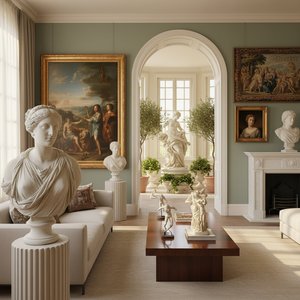
While our hearts often wander toward the light-drenched landscapes of Monet or the vibrant textures of Van Gogh, there is an undeniable power in the order and dignity of the Neoclassical era. At OriginalUniqueArt.com, we believe that the beauty of art history lies in its ability to be reimagined for the contemporary soul. We specialize in bringing the weight and elegance of these historical masterpieces into your personal sanctuary.Whether you seek a hand-painted reproduction that captures the precise, smooth finish of a classical portrait or wish to "remix" history by requesting a custom piece, our artists are dedicated to preserving this academic excellence. Our process ensures that every hand-made oil painting on cotton canvas carries the depth and tonal range that no print can replicate. We invite you to explore the possibility of transforming your space with the timeless grace of the past:
- Custom Commissions: Transform a personal milestone into a masterpiece with the dignity of a classical portrait.
- Professional Digital Mockups: See how the structured elegance of Neoclassical forms will look on your walls before the brush ever touches the canvas.
- Artistic Continuity: From large-scale murals to multi-panel sets, we help you recreate the grandeur of historical galleries within your own home.