The Essence of Impressionistic Realism: A Symphony of Light and Form
To gaze upon a masterpiece of Impressionistic Realism is to witness a profound dialogue between the ephemeral and the eternal. This singular movement, often described as a bridge between the fleeting impressions of light and the grounded precision of classical technique, offers an experience that transcends mere observation. It is not simply about depicting a subject, but about capturing the very breath of a moment—the way sunlight dances across a petal or how shadows deepen in the quiet corners of a garden. Unlike pure Impressionism, which may dissolve form into a haze of color, or strict Realism, which can sometimes lack atmospheric soul, this hybrid style seeks a harmonious equilibrium. It invites the viewer to feel the warmth of a summer afternoon while simultaneously appreciating the structural integrity and tangible presence of the world around us.
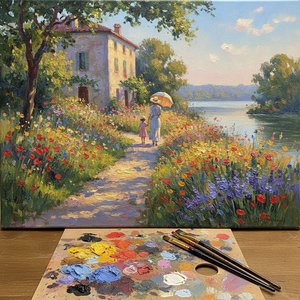
At its heart, this genre celebrates the sensory experience of existence. There is a poetic tension held within every canvas: the struggle to freeze time without stripping it of its movement. When we observe a landscape rendered in this style, we are not merely looking at trees and sky; we, the observers, are participating in the light itself. The artist acts as a conductor, orchestrating various elements of color and tone to evoke a specific emotional resonance, ensuring that the subject remains recognizable yet imbued with a luminous, almost spiritual, vitality.
Mastering the Brushstroke: The Technical Nuances of Texture and Detail
The true magic of Impressionistic Realism resides in the meticulous application of medium. It is a discipline where the artist’s hand must be both delicate and assertive. To achieve this effect, painters often employ a sophisticated layering process, building depth through impasto techniques that allow light to catch on the physical ridges of the paint. These visible, tactile brushstrokes serve a dual purpose: they provide a sense of three-dimensional texture that breathes life into the canvas, and they guide the viewer's eye through the composition, creating a rhythmic flow of energy.
Achieving this balance requires an intimate knowledge of chemistry and light. The use of premium pigments with high lightfastness is essential to ensure that the vibrant hues do not fade into obscurity over time. Artists often utilize specific oils, such as safflower, for lighter tones to prevent the dreaded yellowing effect, preserving the purity of the whites and highlights. This technical rigor allows for a "living" quality in the artwork—a texture so rich that the painting seems to shift slightly as one moves before it. It is through this careful marriage of structural detail and expressive movement that the artist achieves a level of realism that feels more vivid than reality itself.
Luminous Landscapes and Intimate Still Lifes: Iconic Expressions of the Genre
The versatility of Impressionistic Realism allows it to flourish across various subject matters, from the vast, sweeping vistas of the outdoors to the quiet, contemplative corners of a domestic interior. In the realm of landscapes, we see the influence of plein air traditions, where artists like Claude Monet or Frederick Edward John Goff captured the architectural grandeur of cities and the serene beauty of nature with brilliant color and atmospheric depth. These works often focus on the interplay between light and shadow, using the landscape as a stage for the sun's daily performance.
Conversely, the genre finds an equally profound expression in the intimacy of still life. Consider the luminous beauty found in works such as Renoir’s Still Life with Peaches and Grapes; here, the focus shifts to the simple elegance of organic forms. The artist uses light to emphasize the succulent texture of fruit and the delicate translucency of leaves, turning a mundane arrangement into a celebration of life's quiet abundance. Whether it is a bustling street scene reminiscent of Van Gogh’s Guinguette or a solitary floral arrangement, the goal remains constant: to find the extraordinary within the ordinary through the masterful manipulation of light and form.
The Emotional Resonance of Color: Capturing Atmosphere through Pigment
Color is the primary language of emotion in Impressionistic Realism. It is not merely a tool for identification, but a medium for atmosphere. An artist does not simply paint a blue sky; they paint the specific, vibrating azure of a midday sun or the melancholic, bruised violet of an approaching storm. This use of color is deeply psychological, capable of evoking feelings of tranquility, nostalgia, or even profound longing. By layering subtle variations of hue, the painter creates a sense of depth and air, making the atmosphere feel thick with moisture or crisp with clarity.
This mastery of palette extends to the way shadows are handled. In this tradition, shadows are rarely black; instead, they are composed of deep blues, purples, and reflected greens, mirroring the colors of the surrounding environment. This technique ensures that even the darkest parts of a painting contribute to the overall luminosity of the piece. When color is applied with such intentionality, the canvas ceases to be a flat surface and becomes a window into a world where every pigment choice serves to deepen the viewer's emotional connection to the subject.
Curating the Aesthetic: Integrating Impressionistic Masterpieces into Modern Interiors
For the discerning collector, integrating works of this caliber into a contemporary living space offers an opportunity to create a sophisticated sanctuary. The textured, light-drenched nature of Impressionistic Realism provides a stunning contrast to the clean lines and minimalist aesthetics often found in modern architecture. A large-scale oil reproduction, perhaps split across multiple panels in a multi-panel layout, can serve as a breathtaking focal point for a grand hallway or a wide living room wall, adding both movement and historical weight to the decor.
Beyond mere decoration, these pieces act as anchors of character. Whether one chooses a vibrant, post-impressionist street scene to inject energy into a studio, or a soft, light-filled landscape to bring serenity to a bedroom, the art dictates the mood of the room. For those looking to customize their environment, the ability to "remix" history—requesting a modern photograph be reimagined in the impasto style of a master—allows for a truly bespoke approach to interior design, ensuring that the art is not just an addition to the home, but an extension of the inhabitant's personal narrative.
OriginalUniqueArt: Preserving the Legacy of Fine Art Through Bespoke Reproductions
At OriginalUniqueArt.com, we believe that the profound beauty of the Old Masters and the Impressionist greats should be accessible to all who cherish them. Since our inception in 2004, we have dedicated ourselves to the art of the high-quality reproduction, bridging the gap between museum archives and the private home. Our process is one of meticulous craftsmanship, where academic-trained artists apply layers of oil paint to heavy-duty cotton canvas, ensuring that every brushstroke retains the tactile, three-dimensional spirit of the original masterpiece.
We offer a range of services designed for the true art enthusiast, from Giclée prints that utilize 12-color pigment-based inks for century-long longevity, to fully bespoke oil commissions where personal memories can be transformed into historical triumphs. Whether you are seeking a custom portrait, a large-format mural for a luxury hotel, or an expert consultation to find the perfect piece for your collection, our commitment to quality and transparency remains unparalleled. We invite you to explore our vast library of over 465,000 paintings and join a global community of collectors who celebrate the enduring power of light, color, and human creativity.