The Genesis of Abstraction: From Representation to Inner Vision
 Wikipedia: Abstract art
Abstract art uses visual language of shape, form, color and line to create a composition which may exist with a degree of independence from visual references in the world. Abstract art, non-figurative art, non-objective art, and non-representational ...
For centuries, art served as a mirror reflecting the external world – landscapes, portraits, historical events meticulously rendered for posterity. But by the late 19th and early 20th centuries, a profound shift began to occur. Artists, increasingly captivated by the burgeoning fields of psychology and philosophy, questioned the very purpose of representation. Why merely *depict* reality when one could evoke emotion, explore the subconscious, or distill experience into its purest form? This questioning wasn’t a rejection of skill, but rather a re-evaluation of what that skill could achieve. The Impressionists, with their fleeting glimpses of light and color, laid the groundwork by prioritizing perception over precise imitation. Post-Impressionist masters like Cézanne fractured forms to reveal underlying structures, while Van Gogh imbued his canvases with raw emotional intensity. These were crucial steps toward dismantling traditional artistic conventions, paving the way for a complete break from figuration.
The early pioneers of abstraction weren’t unified in their approach. Wassily Kandinsky, often credited as one of the founders of abstract art, sought to express spiritual truths through non-representational forms and vibrant color palettes – his Improvisation. Klamm Ravine (1910) exemplifies this pursuit, a dynamic composition brimming with energy and symbolic resonance. Simultaneously, artists like Robert Delaunay explored the interplay of color and light in purely abstract compositions, seeking to capture the essence of modern experience. This initial phase wasn’t about eliminating subject matter entirely; it was about transforming it, reducing it to its essential elements – shape, form, color, line – and exploring their inherent expressive power.
Abstract Expressionism: A New Vanguard Emerges in Post-War America
The devastation of World War II profoundly impacted the artistic landscape. The horrors witnessed demanded a new language, one capable of conveying the anxieties, traumas, and existential questions of the era. While European artists grappled with these themes, a vibrant movement began to coalesce in New York City: Abstract Expressionism. This wasn’t a cohesive school with a shared style, but rather a constellation of artists united by a commitment to radical self-expression and audacious formal innovation. The shift of the art world's center from Paris to New York was seismic.
Key figures like Jackson Pollock revolutionized painting with his “drip” technique – pouring and flinging paint onto canvases laid on the floor, creating dynamic webs of color and texture. This wasn’t merely a technical innovation; it was an attempt to bypass conscious control, allowing the subconscious to guide the creative process. Willem de Kooning, while also embracing abstraction, retained a more visceral connection to figuration, his powerful paintings often depicting fragmented figures imbued with raw energy. Franz Kline's bold black and white compositions, reminiscent of Japanese calligraphy, explored the expressive potential of gesture and form. The movement wasn’t solely about action; artists like Mark Rothko sought emotional depth through expansive fields of color, creating meditative canvases that invited contemplation.
Color Field Painting: Exploring Emotional Depth Through Chromatic Immersion
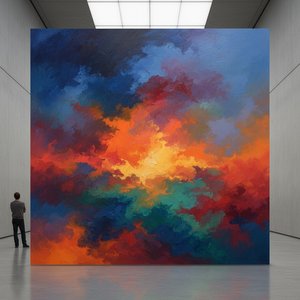
Emerging as a distinct branch within Abstract Expressionism, Color Field painting focused on the power of large, unified areas of color to evoke emotion and create immersive experiences. While sharing roots with its predecessor, Color Field artists deliberately eschewed gestural brushwork in favor of smoother surfaces and more contemplative compositions. Barnett Newman’s “zips” – vertical bands of color interrupting vast fields of hue – served as focal points for meditation and spiritual reflection. Mark Rothko, arguably the most iconic figure of this movement, created monumental canvases that enveloped viewers in layers of luminous color, inviting a profound emotional response.
The emphasis wasn’t on narrative or representation; it was about the pure experience of color itself – its ability to evoke feelings of serenity, awe, or even unease. Artists like Helen Frankenthaler developed innovative techniques, such as the “soak-stain” method, allowing colors to seep into unprimed canvas, creating ethereal washes and blurred boundaries. This pursuit of emotional resonance through chromatic immersion marked a significant departure from earlier abstract styles.
Beyond the Canvas: The Influence of Surrealism and Psychological Theory
Abstract Expressionism didn’t emerge in a vacuum. It was deeply influenced by the intellectual currents of its time, particularly the theories of Sigmund Freud and the principles of Surrealism. Surrealist artists sought to unlock the power of the subconscious through dreamlike imagery and automatic writing – techniques that resonated with Abstract Expressionists seeking to bypass conscious control and tap into deeper emotional sources. The emphasis on myth, archetype, and the irrational found expression in the abstract forms and symbolic compositions of many American painters.
The German expatriate Hans Hofmann (1880–1966) became the most influential teacher of modern art in the United States, and his impact reached both artists and critics. Artists like Arshile Gorky, initially influenced by Surrealism, developed a unique abstract language that blended biomorphic forms with gestural brushwork. The exploration of psychological themes – anxiety, trauma, identity – became central to the movement’s concerns. This wasn't simply about creating visually striking images; it was about exploring the inner landscape of the human psyche.
Key Figures & Defining Characteristics of Abstract Art Movements
While numerous artists contributed to the evolution of abstract art, certain figures stand out as particularly influential. Jackson Pollock’s revolutionary drip technique redefined painting itself, emphasizing process over product. Willem de Kooning’s powerful and often unsettling canvases explored the complexities of human emotion and figuration. Mark Rothko’s monumental color field paintings invited contemplation and spiritual reflection. Barnett Newman’s “zips” served as focal points for meditation and emotional resonance.
Defining characteristics across these movements include a rejection of traditional representation, an emphasis on formal innovation (shape, form, color, line), a commitment to self-expression, and a willingness to experiment with new techniques and materials. The scale of the works often increased dramatically, reflecting the artists’ desire to create immersive experiences. The use of unconventional materials – house paint, industrial pigments – further challenged traditional artistic boundaries.
Collecting Abstract Art: Considerations for Discerning Investors
Investing in abstract art requires careful consideration and a discerning eye. Unlike representational works, assessing quality can be more subjective, relying on factors such as composition, color harmony, texture, and the artist’s historical significance. Researching an artist's provenance – their exhibition history, critical reception, and place within the broader art historical context – is crucial.
Consider the movement itself: Abstract Expressionism remains highly sought after, but prices can be substantial. Color Field painting offers a more accessible entry point for collectors. Look for works that demonstrate originality, emotional depth, and technical skill. Consulting with an art advisor or appraiser can provide valuable insights. At OriginalUniqueArt.com, we offer museum-quality reproductions of iconic abstract artworks, allowing you to experience the beauty and power of these masterpieces in your own home. We also provide expert appraisal services to help you build a discerning collection and navigate the art market with confidence.