
 Esikatselu
 Jaa
Jaa Jaa
Jaa
 Tarkemmat tiedot

 Lataa
Lataa
 Samanlaisia
 Röntgenkuva
 Diaesitys
Työvuokraajan pastori
 Öljyväri kankaalle
- Seinätaide
- Pre-Raphaelite Romanticism
 1851
1851- luku
 76.0 x 110.0 cm
 Manchesterin taidegalleria
 Näytä lisää
Käsinmaalattu öljykopio
Käsinmaalattu öljyväri kankaalle haluamassasi koossa ja kehyksissä, taiteilijoidemme valmistamana tilauksesta. ( Osta printti Osta kuva)




P118B $10

P118H $10

P118W $10

P438Z $10

P508JH $12

P508YH $12

P805H $10

P805Z $10

P919BZ $10

P919G $10

P919XJ $10

P959ZH $10

P968JZ $12

W106C $8

W218G $10

W218JH $8

W218Y $10

W307PJ $10

W316G $10

W316PJ $8

W316Y $10

W398PJ $8

W4111J $10

W500HY $15

W500JH $15

W692G $12

W849H $8

W940BG $15

W953PJ $8




Valitse valmiista mitoistamme sellaiset, jotka vastaavat teoksen alkuperäisiä mittasuhteita.

Voit syöttää omat mitat sopimaan tiettyyn kehykseen tai tilaan. Jos valitsemasi koko ei vastaa alkuperäisen kuvan mittasuhteita, rajaamme taideteoksen tai jatkamme maalausta käsin maalatuilla elementeillä. Digitaalinen esikatselu lähetetään hyväksyttäväksi ennen tuotannon aloittamista.
Huomioithan, että näytöllä oleva esikatselu ei vastaa todellista rajausta tai jatkamista. Vain digitaalinen mallikuva näyttää lopullisen sommittelun tarkasti.
Vaikka mittatilaustyöt ovat mahdollisia, suosittelemme valitsemaan mitan ennalta määritetystä listasta alkuperäisten mittasuhteiden säilyttämiseksi.
Tilauksen jälkeen OriginalUniqueArt.com -tiimi lähettää asiakkaalle ohjeet ja esikatselukuvan.
Maailmanlaajuinen toimitus () 3–4 viikossa tavallisen 5 viikon sijaan. (14 elokuu). Laadusta ei tingitä.

Ilmainen pikatoimitus ympäri maailman

Korkealaatuinen pellavakangas

Kattava kuljetusvakuutus

Tulliveron palautustakuu

Täydellinen värien vastaavuustakuu

60 päivän palautusoikeus (vain valmistusvirheet)

100% rahat takaisin -takuu

Määräalennus tarjous
 Lasivaihtoehto on saatavilla vain alle 110 cm kokoisina teoksina

Työvuokraajan pastori
Reproduktiotekniikka
Replikaatin koko
-


Kokonaishinta
$ 325
Teoksen kuvaus
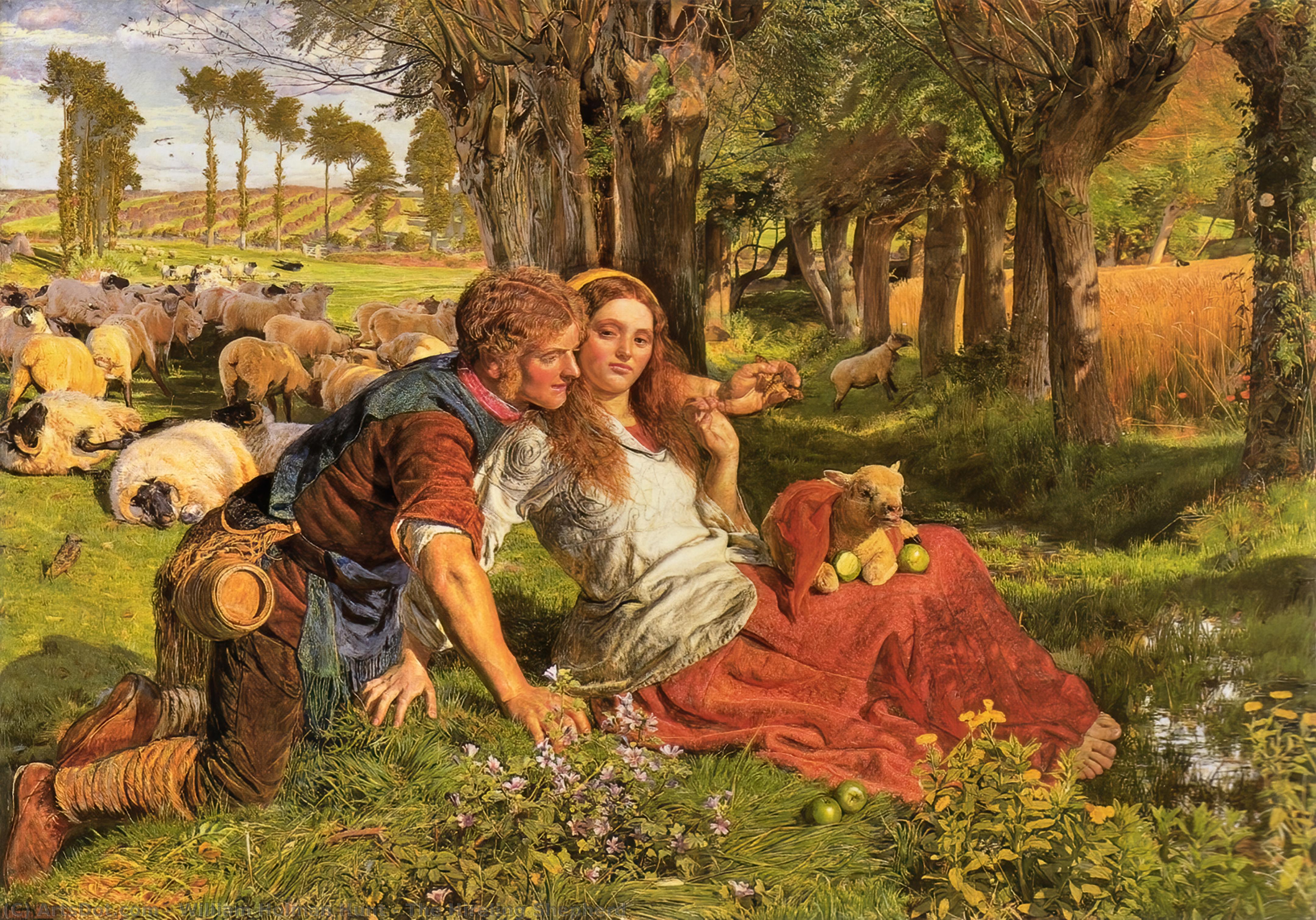
Työvuokraajan pastori: esirappelainen mestariteos
Uppoudu William Holman Huntin "The Hireling Shepherd" -teoksen lumoavaan maailmaan, hurmaavaan työhön, joka kiteyttää esirappelilaisten veljeskunnan omistautumisen naturalismille ja symboliselle syvyydelle. Tämä vuonna 1851 valmistunut mestariteos kutsuu katsojan pastoraaliseen näkymään, joka on täynnä monimutkaisia yksityiskohtia, eloisia värejä ja syviä kerronnallisia kerroksia.
Intriikien täyttämä pastoraalinen kohtaus
Maalaus esittää nuorta paimenta ja neitoa vehreässä maaseutumaisemassa. Paimen, joka on laiminlyönyt laumansa, on uppoutunut näyttämään naiselle kuolonkantta eli kuolleensymbolista kiitävää koimasta. Tämä näennäisen viaton vuorovaikutus sijoittuu vaeltavien lampaiden, vehnäpellon ja seesteisen maiseman taustalle, luoden harmonian tunnetta, jota hienovaraiset jännitteet rikkovat.
Esirappelilainen tyyli ja tekniikka
Huntin huolellinen yksityiskohtien tarkastelu ja elävä väripaletti ovat esirappelilaisen tyylin tunnusmerkkejä. Maanläheiset vihreän, ruskean ja punaisen sävyt sulautuvat saumattomasti pehmeämpiin sinisen ja valkoisen vivahteisiin, luoden rikkaan ja tekstuuripitoisen visuaalisen kokemuksen. Sileät, sekoitetut siveltimenvedot tuovat eloa hahmoihin ja luonnon elementteihin, esitellen Huntin öljymaalaustaidon mestaruutta.
Historiallinen konteksti ja symboliikka
Maalattu aikana, jolloin taiteellinen kapina Royal Academyn akateemisia perinteitä vastaan kiihtyi, "The Hireling Shepherd" heijastaa esirappelaisten halua palata keskiaikaisen taiteen puhtauteen ja yksityiskohtaisuuteen. Teoksen symboliikka on monivivahteista: paimenen laumansa laiminlyönti voidaan nähdä metaforana hengellisestä huolimattomuudesta, kun taas kuolonkantta saattaa edustaa kuolevaisuutta tai houkutusta. Huntin käyttämät raamatulliset viittaukset lisäävät merkityksen kerroksia, kutsuen katsojaa pohtimaan vastuun ja moraalisen ohjauksen syvempiä teemoja.
Emotionaalinen vaikutus ja perintö
"The Hireling Shepherd" -teoksen emotionaalinen voima piilee sen kyvyssä herättää tyynen rauha ja romantiikkaa, samalla kun se vihjaa hienovaraisesti alla vaanii jännitteisiin. Pastoraalinen idylli on yhtä aikaa kutsuva ja ajatuksia herättävä, mikä tekee siitä kiehtovan kohteen niin taiteen ystäville kuin keräilijöillekin. Huntin työ on jättänyt pysyvän jäljen taidemaailmaan inspiroimalla sukupolvia taiteilijoita ja hurmatessaan yleisöä edelleen kauneudellaan ja syvyydellään.
Miksi valita tämä reproduktio?
Sisustussuunnittelijoille ja taiteen harrastajille, jotka haluavat tuoda tilaansa ripauksen esirappelaista eleganssia, korkealaatuinen "The Hireling Shepherd" -reproduktio tarjoaa hienostuneen yhdistelmän historiallista merkitystä ja esteettistä vetovoimaa. Maalauksen rikkaat värit ja yksityiskohtainen sommittelu tekevät siitä näyttävän keskipisteen mihin tahansa ympäristöön, perinteisista kodeista nykytaiteen gallerioihin.
Koe William Holman Huntin mestariteoksen ajaton lumo ja tuo palanen esirappelaista taidetta osaksi omaa maailmaasi tällä upealla reproduktiolla.
Taiteilijan elämäkerta
A Life Devoted to Vision
William Holman Hunt, born in Cheapside, London on April 2, 1827, was more than simply a painter; he was a philosophical and spiritual seeker who translated his deepest convictions onto canvas. His early life, though rooted in the bustling commercial world of his father’s warehouse business, held within it an artistic inclination that would ultimately defy expectations. Initially destined for a career mirroring his father's, Hunt found solace and purpose in art, beginning with surreptitious sketching and later, after some struggle, formal training at the Royal Academy Schools. This period of apprenticeship, however, proved restrictive. He yearned for an artistic expression that transcended prevailing academic conventions—a desire that would soon propel him toward revolutionary change. He felt stifled by what he perceived as the artificiality of contemporary art and sought a return to the sincerity and detail found in pre-Renaissance masters, a sentiment central to the formation of the Pre-Raphaelite Brotherhood. Hunt’s journey wasn't merely about aesthetics; it was a quest for truth, morality, and spiritual resonance within the realm of visual representation.The Genesis of a Revolutionary Brotherhood
In 1848, alongside Dante Gabriel Rossetti and John Everett Millais, Hunt established the Pre-Raphaelite Brotherhood (PRB). This collective wasn’t just an artistic movement; it was a rebellion against what they saw as the decline of art since Raphael. The PRB advocated for a return to meticulous detail, vibrant colors, and sincere subject matter characteristic of early Italian painting—before the perceived artificiality of High Renaissance ideals took hold. Hunt's commitment to this philosophy remained unwavering throughout his career. Early works like *The Hireling Shepherd*, painted in 1851, exemplify this dedication. The painting’s painstaking realism – from the texture of the sheep’s wool to each individual blade of grass – was revolutionary for its time. It wasn’t merely a depiction of rural life; it was an attempt to convey moral and symbolic meaning through precise observation of nature. *The Awakening Conscience*, also from this period, further solidified Hunt’s reputation for intensely naturalistic scenes imbued with psychological depth and moral weight. These paintings weren't just visually striking; they were statements about the artist's belief in art as a vehicle for truth and spiritual awakening. The Brotherhood sought to challenge the established norms of artistic production, rejecting what they perceived as formulaic academic painting in favor of a more direct and honest engagement with the world around them.A Pilgrimage of Faith and Symbolic Depth
Hunt’s artistic journey took an extraordinary turn with his travels to the Holy Land in the 1850s and 60s. Driven by a desire for historical and topographical accuracy, he embarked on a pilgrimage to Palestine and Syria, meticulously documenting landscapes, costumes, and customs. This dedication to authenticity profoundly influenced his later works, imbuing them with an unparalleled sense of realism and spiritual resonance. *The Shadow of Death*, painted during this period, stands as a powerful example. The painting depicts the scene of Christ’s sacrifice in a way that was both visually arresting and deeply symbolic, reflecting Hunt's profound religious convictions. He sought to capture not just the physical reality but also the emotional weight and spiritual significance of biblical events. His meticulous research into ancient texts and archaeological findings ensured that his depictions were as accurate as possible, adding layers of historical depth to his paintings. *The Light of the World*, begun in 1851 and completed in 1853, encapsulates this synthesis of faith and artistic skill. The image of Christ knocking at a door, offering salvation to those who open their hearts, became immensely popular and remains one of the most recognizable religious paintings of the Victorian era. Hunt’s commitment extended beyond mere representation; he sought to imbue his works with layers of symbolic meaning, drawing upon biblical texts, medieval allegory, and contemporary social commentary. He believed that art had a moral purpose—to uplift, inspire, and guide viewers toward spiritual enlightenment.Key Influences & Themes
- Influences: John Ruskin’s writings on art and morality; Early Italian Renaissance painting (pre-Raphael); Biblical texts and medieval allegory.
- Major Themes: Religious faith, moral awakening, the beauty of nature, social commentary, symbolism. Hunt consistently explored themes of redemption, sacrifice, and the search for spiritual truth in his work.
- Key Dates: April 2, 1827: Born in Cheapside, London; 1851-1853: Painted *The Light of the World*; September 7, 1910: Passed away and buried in St Paul’s Cathedral, London.
Enduring Legacy
William Holman Hunt's legacy extends far beyond the beauty of his paintings. He revolutionized Victorian art by championing realism, symbolism, and spiritual depth, leaving an indelible mark on generations of artists and viewers alike. His works continue to inspire awe and contemplation, reminding us of the power of art to illuminate the human condition and explore the mysteries of faith. His meticulous attention to detail, combined with his profound understanding of religious and moral themes, established him as one of the most significant figures in Pre-Raphaelite art. Hunt’s influence can be seen in the works of subsequent artists who sought to create paintings that were both visually stunning and intellectually stimulating. His commitment to truth, beauty, and spiritual exploration continues to resonate with audiences today, solidifying his place as a true visionary artist.
William Holman Hunt
1827 - 1910 , Iso-Britannia
Pikatiedot
- Artistic Movement Or Style: Prerafaeliitti
- Artists Or Movements Influenced By This Artist: ['Prerafaeliitit']
- Artists Who Influenced This Artist:
- Ruskin
- Italian
- Date Of Birth: 2. huhtikuuta 1827
- Date Of Death: 7. syyskuuta 1910
- Full Name: William Holman Hunt
- Nationality: Englannin
- Notable Artworks:
- The Light of the World
- Awakening
- Shadow
- Place Of Birth: Cheapside, Lontoo
Liittyvät artikkelit

Dante Gabriel Rossettin 25 mestariteosta: Taidetta ja inspiraatiota kotiisi | OriginalUniqueArt
Tutustu Dante Gabriel Rossettin 25 lumoavinta mestariteosta! Uppoudu viktoriaanisen ajan symbolismiin ja Pre-Raphaelite taiteen maailmaan. Löydä inspiraatiota sisustukseesi ja hanki korkealaatuisia taideprinttejä OriginalUniqueArt.comista. Tutki kokoelma verkossa!

Sir John Everett Millais: Pre-Raphaelite Rebellion & Victorian Narrative Detail
Explore the revolutionary art of Sir John Everett Millais & the Pre-Raphaelite Brotherhood. Discover their radical realism, symbolic narratives, and lasting impact on Victorian aesthetics. A deep dive into 19th-century masterpieces.
The Pre-Raphaelite Brotherhood: Rebellion, Romance & Medieval Revival
Explore the captivating world of the Pre-Raphaelite Brotherhood! Discover their rebellious spirit, iconic masterpieces & lasting influence on art history. Learn about Rossetti, Millais & more.

Arthur Hughes: Pre-Raphaelite Visions of Beauty & Melancholy
Explore the captivating world of Arthur Hughes (1832-1915), a leading Pre-Raphaelite painter. Discover his dreamy landscapes, poetic narratives & iconic Victorian artworks. Learn about his life, style & collecting today.

John William Waterhouse: Pre-Raphaelite Mythmaker & Poetic Depictions of Female Identity
Explore the captivating world of John William Waterhouse, a master of Pre-Raphaelite painting. Discover his iconic depictions of mythology and female identity in this expert guide.



