Katso seinällä
 Lähetä
 Jaa
Jaa
 Tarkemmat tiedot
 Opas
Opas

 Lataa kuva
 Samanlaisia kohteita
 Röntgenkuvaus
 Diaesitys
 Tilastot
Syksy


 Lue lisää
Tällä sivulla esitettyä taideteosta suojaa tekijänoikeuslaki, mikä tarkoittaa, ettemme voi laillisesti luoda tai myydä täsmälleen samanlaista jäljennöstä. Tämä suoja toteutetaan kansainvälisten sopimusten, kuten esimerkiksi Berne-konventio ja kansallisilla laeilla, mukaan lukien niillä määritellyt Yhdysvaltain tekijänoikeuslaki – Luku 17. Kaikki oikeudet pidätetään. Luvaton kopiointi tai jäljittely on kielletty.
Tämä menetelmä noudattaa täysin tekijänoikeussäännöksiä, sillä se ei sisällä suojatun taideteoksen kopioimista tai jäljentämistä. Sen sijaan kyseessä on luova uudelleentulkinta – uusi maalaus, joka ammentaa vaikutteita alkuperäisestä, mutta ei ole sen identtinen kopio.
Giclée- ja taideprintit
Museolaatuisia giclée- tai kankaitaulun tulosteita nopealla tuotannolla ja joustavilla viimeistelyvaihtoehdoilla. ( Tilaa käsinmaalattu jäljennös Siirry digitaaliseen kuvaan)




P118B €10

P118H €10

P118W €10

P438Z €10

P508JH €12

P508YH €12

P805H €10

P805Z €10

P919BZ €10

P919G €10

P919XJ €10

P959ZH €10

P968JZ €12

W106C €8

W218G €10

W218JH €8

W218Y €10

W307PJ €10

W316G €10

W316PJ €8

W316Y €10

W398PJ €8

W4111J €10

W500HY €15

W500JH €15

W692G €12

W849H €8

W940BG €15

W953PJ €8




Valitse valmiista mitoistamme sellaiset, jotka vastaavat teoksen alkuperäisiä mittasuhteita.

Kirjoita tarvitsemasi leveys ja korkeus, jotta tuloste sopii kehyskokoon tai seinällesi. Tulostetta voidaan vain leikata, sitä ei voi koskaan tehdä suuremmaksi kuin alkuperäinen kuva, joten eri muotoinen koko aiheuttaa osan kuvasta katoamisen. Lähetämme sinulle digitaalisen mallikuvan hyväksyttäväksi ennen kuin aloitamme tulostuksen. Tällä sivulla näkyvä kuva ei näytä lopullista leikkausta — vain mallikuva näyttää sen.
Maailmanlaajuinen toimitus () 2 viikossa tavallisen 4–5 viikon sijaan. (24 lokakuu)

Ilmainen pikatoimitus ympäri maailman

Korkealaatuinen pellavakangas

Kattava kuljetusvakuutus

Tulliveron palautustakuu

Takuu täydellisestä värien vastaavuudesta

100 päivän palautusoikeus valmistusvirhetapauksissa

100% rahat takaisin -takuu

Määräalennus saatavilla
 Lasivaihtoehto on saatavilla vain alle 110 cm kokoisille teoksille

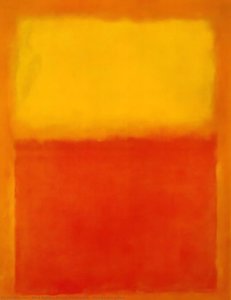
Syksy
Giclée- ja taideprintit
Replikaatin koko
-


Kokonaishinta
€ 70
AUTUMN: A Window Into Rothko’s Soul
Mark Rothko’s ‘Autumn’ isn't merely a depiction of the season; it’s an ambitious exploration of emotional resonance achieved through the simplest possible means. The painting presents a series of rectangular blocks of color – deep blues suggesting shadowed windows framed by stark white – arranged with deliberate ambiguity that invites prolonged contemplation. It stands as a cornerstone of Abstract Expressionism, transcending easy categorization and embodying Rothko's profound belief in art’s capacity to evoke primal feelings within the viewer.
Rothko wasn’t interested in representing the external world; his artistic vision centered on capturing internal states—melancholy, longing, perhaps even a fragile hope peering out from behind a veil of darkness. Unlike Impressionists who sought to capture fleeting moments of light and color, Rothko aimed for something deeper: an experience that bypassed rational thought and tapped directly into the subconscious.
The technique employed in ‘Autumn’ is deceptively understated. Rothko applied paint in thin washes, layering color upon color with painstaking care to create luminous fields that seem to breathe and vibrate on the canvas. This wasn’t about meticulous brushwork or precise rendering—rather, it was about allowing the colors themselves to communicate their emotional weight. The blues chosen for these ‘windows’ aren't cheerful azure but rather a somber hue, hinting at introspection and reflecting the quietude of twilight.
The white frames surrounding the blocks of color serve as crucial elements in Rothko’s composition. They don’t simply delineate the shapes; they intensify the emotional impact of the blues, creating a sense of depth that draws the viewer inward—a visual echo of the contemplative mood he sought to convey. The overall balance is carefully considered, avoiding symmetry and lending the painting an organic quality reminiscent of natural forms.
Rothko’s intention wasn't to produce aesthetically pleasing objects but rather to provoke a visceral reaction – a feeling of awe, sadness, or even spiritual awakening. This ambition aligns perfectly with the Rothko Chapel in Houston, Texas, where fourteen canvases by Rothko are displayed as part of an immersive experience designed for meditation and reflection.
Born Marcus Yakovlevich Rothkowitz in Latvia in 1903, Rothko’s journey to becoming one of the most influential artists of the 20th century was shaped by displacement and intellectual curiosity. His family's emigration to America in 1913 instilled a sense of otherness that arguably fueled his lifelong exploration of universal themes. Initially experimenting with figurative painting—depicting cityscapes and portraits—Rothko gradually moved away from representation, driven by a desire to express deeper emotional truths.
The Second World War proved pivotal in Rothko’s artistic development. Faced with the anxieties of conflict, he turned to mythological subjects and Surrealism as mediums for conveying trauma and despair. However, it was during this period that he arrived at his signature style—large-scale color field paintings—a stylistic breakthrough that cemented his place among the titans of Abstract Expressionism.
Rothko’s unwavering commitment to his artistic vision extended beyond mere technique; it encompassed a philosophical stance rooted in Jungian psychology. He believed that art should serve as a catalyst for confronting unconscious fears and accessing hidden realms of experience—a conviction that profoundly influenced his oeuvre.
The Rothko Chapel, conceived as a space for spiritual contemplation, embodies this ethos perfectly. Its fourteen canvases—including ‘Autumn’, which occupies a prominent position—are positioned to maximize the impact of ambient light and encourage viewers to engage in quiet introspection. Owning a reproduction of this artwork isn’t simply acquiring a decorative piece; it's inviting a moment of mindful reflection into your home or office – a subtle reminder that art possesses the power to connect us to something transcendent.
Kysymykset ja vastaukset
Onko teoksesta Mark Rothko:n "Syksy" saatavilla diashow-esitystä?
Teoksen Mark Rothko:n "Syksy" voi katsella diaesityksenä teoksen Diaesitys -sivulla.
Mikä hallitseva sävy lävistää teoksen Mark Rothko:n "Syksy"?
Teoksen Mark Rothko:n "Syksy" hallitseva sävy on Meripihkasta sahramiin. Tämä sävy on paletin perussävy.
Kuinka kylläinen "Syksy"-teoksen väripaletti on?
Teoksen Mark Rothko:n "Syksy" värikylläisyys on Hienovaraiset värit.
Taiteilijan elämäkerta
Early Life and the Seeds of Artistic Vision
Mark Rothko, born Markus Yakovlevich Rothkowitz in Dvinsk, Latvia, in 1903, carried within him from the outset a sense of displacement that would profoundly shape his artistic journey. His early years were marked by the anxieties of a Jewish family living within the Pale of Settlement, shadowed by pogroms and political unrest. This atmosphere instilled a deep sensitivity to human suffering, a theme that would resonate throughout his oeuvre. The 1913 immigration to Portland, Oregon, represented not just a geographical shift but a cultural upheaval for the young Rothko. While his father, a pharmacist and intellectual with socialist leanings, fostered a home filled with debate and learning, the loss of Jacob Rothkowitz shortly after their arrival cast a long shadow. This early experience of loss, coupled with the challenges of assimilation, fueled a lifelong exploration of existential themes – mortality, trauma, and the search for meaning in a chaotic world. Though he excelled academically at Yale University, Rothko found himself drawn more to the vibrant energy of New York City, abandoning formal studies to pursue his passion for art at the Art Students League. These formative years laid the groundwork for an artistic vision that would ultimately challenge conventional notions of painting and redefine the emotional power of color.From Figurative Beginnings to Abstract Expressionism
Rothko’s initial artistic explorations were firmly rooted in realism, depicting urban scenes and portraits with a keen eye for detail. However, these early works already hinted at the psychological depth that would become his hallmark. As the 1940s unfolded, and the world grappled with the horrors of World War II, Rothko’s art underwent a dramatic transformation. Influenced by Surrealism and mythology, he began to move away from representational imagery, seeking instead to express universal human emotions through symbolic forms. This period saw the emergence of multi-form paintings – canvases populated by ambiguous, biomorphic shapes that seemed to hover between figuration and abstraction. These works were not merely experiments in form; they were deeply felt responses to the anxieties and uncertainties of a world at war. By the late 1940s, Rothko had arrived at his signature style: large-scale canvases featuring rectangular blocks of color that appeared to float and resonate with one another. He stripped away all vestiges of recognizable imagery, focusing instead on the pure emotional impact of color and form. This marked a pivotal moment in the development of Abstract Expressionism, and established Rothko as a leading figure in this groundbreaking movement.The Color Field and the Pursuit of Transcendence
Rothko’s mature work is defined by what came to be known as “Color Field” painting – vast expanses of luminous color that envelop the viewer in an immersive experience. These paintings are not about *what* they depict, but rather *how* they make you feel. Rothko believed that art should engage the viewer viscerally, bypassing intellectual analysis and speaking directly to the emotions. He meticulously layered thin washes of paint, creating subtle variations in tone and texture that seemed to emanate from within the canvas. The edges of his rectangular forms are often blurred, allowing them to blend and interact with one another, creating a sense of depth and movement. Rothko deliberately avoided titles beyond numbers – “No. 1,” “No. 6” – encouraging viewers to confront the paintings without preconceived notions and allow their own emotional responses to guide their experience. He sought to create a space for contemplation, a sanctuary where viewers could connect with something larger than themselves. His ambition was nothing less than to evoke profound spiritual experiences through the language of color.Major Achievements and Lasting Legacy
Among Rothko’s most significant achievements are “No. 10 (1950),” a pivotal work that exemplifies his evolving style, and the Seagram Murals (1958). Commissioned for the Four Seasons restaurant in New York City, these murals were ultimately rejected by Rothko, who felt they would be compromised by their intended environment. He instead donated them to the Tate Gallery in London, where they continue to inspire awe and contemplation. Perhaps his most ambitious project was the Rothko Chapel (1971) in Houston, Texas – a non-denominational sanctuary housing fourteen of his paintings. Designed as a space for quiet reflection, the chapel is considered a sacred place by many, embodying Rothko’s belief in the spiritual power of art. Rothko's influence on subsequent generations of artists has been immense. He paved the way for Minimalist art and continues to inspire contemporary painters who explore the emotional possibilities of abstraction. Despite struggling with depression throughout his life, culminating in his tragic suicide in 1970, Mark Rothko remains one of the most important and influential artists of the 20th century – a master of color whose work continues to resonate with audiences around the world. ## The Enduring Power of Emotional Resonance- Rothko’s paintings are celebrated for their ability to convey universal human emotions—tragedy, ecstasy, despair, and hope.
- His exploration of color as a vehicle for emotional expression revolutionized abstract painting.
- The Rothko Chapel stands as a testament to his belief in the spiritual power of art.
- He remains a pivotal figure in Abstract Expressionism and a major influence on contemporary artists.

Mark Rothko
1903 - 1970 , Latvia
Tietoa taiteilijasta
- Artistic Movement Or Style: Abstrakti ekspressionismi
- Artists Or Movements Influenced By This Artist: ['Minimalismi']
- Date Of Birth: 25. syyskuuta 1903
- Date Of Death: 25. helmikuuta 1970
- Full Name: Mark Rothko
- Nationality: Venäläinen imperiumi-Amerikan kansalainen
- Notable Artworks:
- Ei. 10 (1950)
- Seagram Murals
- Rothko Chapel
- Place Of Birth: Dvinsk, Latvia
Aiheeseen liittyvät artikkelit
Beyond the Brushstroke: A Definitive Guide to the Emotional Power of Color Field Painting
Explore the profound history and emotional depth of Color Field painting. From Mark Rothko to Barnett Newman, discover how pure color redefined modern art through our expert-led guide for students and collectors alike.
Color Field Painting: The Emotional Power of Pure Abstraction and Chromatic Depth
Explore the profound emotional depth of Color Field painting. Discover the history of mid-century abstraction, from Rothko to Newman, and learn how pure color transforms the viewer's experience through our expert art history guide.

The Sublimity of Color: Exploring the Emotional Landscapes of Mark Rothko's Abstract Expressionism
Explore the profound emotional depth of Mark Rothko's abstract expressionism. Discover the history, techniques & lasting impact of this pivotal Color Field painter. Expert insights for collectors and art enthusiasts.

Abstraktin ekspressionismin mestariteokset: Taidetta ja inspiraatiota kotiisi
Tutustu abstraktin ekspressionismin 10 mestariteokseen! Jackson Pollock, Mark Rothko ja muut taiteilijat inspiroivat tunteellisuudellaan. Löydä upeita taidemaalauksia kotiisi OriginalUniqueArt.comista – museolaatuista laatua ja sisustusehdotuksia.
Mark Rothkon 25 mestariteosta: Värien syvyydessä – Taidetta kotiisi OriginalUniqueArtilta
Tutustu Mark Rothkon 25 mestariteokseen ja syvälliseen maailmaan abstraktin ekspressionismin parissa. Löydä tunteelliset väritaulut, taidehistorian helmet ja inspiraatiota kotiisi OriginalUniqueArtilta. Tutki kokoelma verkossa!