Russian Modernism · 1910
scheherezade odalisque (Léon Bakst, 1910)
Léon Bakst (1866–1924) on luonut teoksen scheherezade odalisque. Se on peräisin vuodelta 1910. Se kuuluu Russian Modernism-liikkeeseen. Se on valmistettu materiaalilla Watercolor.
- 1910
- Watercolor

 Esikatselu

 Käsinmaalattu öljymaalaus
 Jaa teos
 Jaa
 Teostiedot


 Lataa kuva
 Samanlaisia kohteita
 Röntgenkuvaus
 Diaesitys
 Kysymykset ja vastaukset

 Tilastot
scheherezade odalisque lyhyesti
- Teoksen nimi
- scheherezade odalisque
- Taiteilija
- Léon Bakst (1866–1924)
- Taiteilijan syntymäpaikka
- Hrodna, Valko-Venäjä
- Päivämäärä
- 1910
- Tekniikka
- Watercolor
- Taidesuuntaus
- Russian Modernism
- Aikakausi
- Modern
- Aihe
- odalisque figure, dance motif, oriental scene, russian art style, red and yellow colors, ballet poster design
Mitä scheherezade odalisque esittää?
Identification of Scheherezade Odalisque
The work before us is titled scheherezade odalisque, a watercolor illustration produced in 1910 by the artist Léon Bakst. This piece emerged during a period of significant creative output for the artist, a time when his visual language was actively redefining the boundaries of theatrical and decorative design. It captures a specific moment in the early twentieth century, reflecting the aesthetic shifts occurring within the European avant-garde.
In this 1910 watercolor, Léon Bakst presents a single female figure. The composition focuses on the dancer, utilizing fluid lines to define the contours of her body and the surrounding drapery. The subject is a performer, a dancer, and a nude female figure, rendered with a sense of movement that suggests the atmosphere of an orientalist setting. It is a work that belongs to the realms of Russian Modernism and Art Deco, embodying the stylistic sensibilities of the era.
Composition and Visual Elements
The composition centers entirely on a single female figure, captured in the midst of a dance. There is a sense of rhythmic movement established through the use of fluid lines that define the contours of her body and the surrounding drapery. This focus on the silhouette allows the viewer to follow the grace of her pose as she holds a fan in her hand. A gold bracelet adorns her arm, adding a subtle point of light to the figure's movement.
Color and pattern are used to define the subject's attire. She wears a red dress, which is detailed with a pattern of yellow dots. This motif is repeated on her skirt, creating a visual continuity that emphasizes the motion of her dance. The interplay between the bold red of the garment and the repetitive yellow dots provides a structured yet dynamic visual rhythm across the figure.
Technique and Artistic Materials
In this watercolor illustration, the artist employs a delicate application of pigment on watercolor paper. The medium allows for a specific kind of transparency, achieved through the careful use of watercolor washes. These washes create a sense of depth and atmosphere, allowing colors to bleed into one another with a controlled softness. It is a quiet, methodical process that relies on the natural absorption of the paper to define the form.
The composition is defined by fluid lines that trace the contours of the figure and the surrounding drapery. There is a rhythmic quality to these strokes, which work in tandem with a deliberate layering of color. This layering builds a subtle complexity, where each subsequent wash interacts with the one beneath it to establish shape and shadow. The result is a work that feels both spontaneous and meticulously structured through its technical execution.
Related Works by Léon Bakst
To understand the creative landscape surrounding this piece, one might look to the other explorations the artist undertook during this prolific period. In 1910, he produced Scheherezade negre argent, a work that shares a thematic connection to the orientalist motifs found here. That same year, his influence extended to the stage through his work on the ballet Scheherezade, where he was responsible for both the scenery and the costumes. The year 1910 also saw the creation of Carnaval, further demonstrating his engagement with the theatrical and the decorative.
As his career progressed, his design projects expanded to include the scenery for Le Spectre de la Rose in 1911. He continued to shape the aesthetic of the stage with his designs for the production of Daphnis and Chloe in 1912. Later, in about 1917, he produced a Portrait of a Lady, showing a different facet of his artistic output beyond the grand scale of the ballet stage.
scheherezade odalisque korkearesoluutioiset kuvat
Tekijänoikeudet: teos on vapaasti käytettävissä, taiteilija kuoli vuonna 1924.
Léon Bakst, scheherezade odalisque (1910). Tekijänoikeudet vapaat.
Kysymyksiä teoksesta scheherezade odalisque ja vastauksia niihin
Milloin "scheherezade odalisque" on tehty?
"scheherezade odalisque" on peräisin vuodelta 1910. Teoksen valmistumisajankohta sijoittaa sen Léon Bakst uran ja aikakauden kontekstiin.
Mitä tekniikkaa Léon Bakst:n "scheherezade odalisque" on käytetty?
Teoksen Léon Bakst:n "scheherezade odalisque" tekniikka on Watercolor. Vedosten tavoitteena on jäljitellä tämän tekniikan ulkoasua.
Mitä aiheita teoksessa Léon Bakst:n "scheherezade odalisque" esiintyy?
Léon Bakst:n "scheherezade odalisque" esittää: odalisque figure, dance motif, oriental scene, russian art style, red and yellow colors, ballet poster design, leon bakst artwork.
Onko Léon Bakst:n "scheherezade odalisque" vapaasti käytettävissä oleva teos?
Léon Bakst:n "scheherezade odalisque" on vapaasti käytettävissä – tekijänoikeussuoja on päättynyt. Tämä tila määrittää, miten teoksen kuvaa saa käyttää uudelleen.
Kenen teokseksi "scheherezade odalisque" on merkitty?
Teoksen "scheherezade odalisque" taiteilija on Léon Bakst. Teos on luetteloitu Léon Bakst nimellä.
Mihin taidesuuntaukseen Léon Bakst:n "scheherezade odalisque" kuuluu?
"scheherezade odalisque" on Russian Modernism-tyylisuuntaan kuuluva teos. Tyylisuunta ilmaisee taiteellisen perinteen, johon teos kuuluu.
Mihin kohtaan Léon Bakst uraa teos "scheherezade odalisque" sijoittuu?
"scheherezade odalisque" edustaa taiteilijan Léon Bakst tuotantokautta Early Modern."
Kuinka vanha Léon Bakst oli, kun "scheherezade odalisque" luotiin?
Léon Bakst oli 44 vuotias luodessaan teoksen "scheherezade odalisque" vuonna 1910. Ikä on laskettu taiteilijan syntymävuodesta 1866.
Mikä selittää teoksen Léon Bakst:n "scheherezade odalisque" tekijänoikeustilanteen?
Teoksen "scheherezade odalisque" tekijänoikeustilanne (vapaasti käytettävissä – tekijänoikeussuoja on päättynyt) määräytyy taiteilijan kuolinvuoden 1924 perusteella.
Tietoa taiteilijasta, Léon Bakst
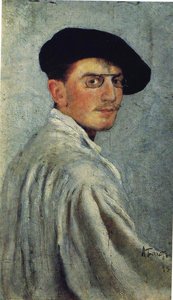
1866–1924, Valko-Venäjä
Léon Bakst
Varhainen elämä ja taiteellisen kapinan siemenet Léon Bakst, oikealta nimeltään Leyb-Khaim Izrailevits Rosenberg, syntyi vuonna 1866 Grodnon kaupungissa Venäjän keisarikunnassa – nykyisessä Valko-Venäjässä. Hän oli juutalainen venäläinen taiteilija, joka kasvoi Venäjällä ajanjaksolla, jolloin juutalaisten asema oli usein epävakaa ja heitä kohtasi syrjintää. Vaikka hän oli ylpeä perimästään, hän otti uuden sukunimen – Bakst – vuonna 1889, kun hän avioliitossa muutti uskoaan ja joutui elämään luterilaisena. Tämä päätös heijastaa yhteiskunnallisia haasteita, joita taiteilijoilla oli tuohon aikaan, erityisesti juutalaisilla taiteilijoilla.
Tietoa taiteilijasta Léon Bakst Léon Bakstn merkittävimmät teokset
Myös Léon Bakst -teoksia
 Kukkien kuviointi ruudukkoon
 Costume design for the ballet ''Cleopatra''1909
 Operatic costume designs1911
 Drawing young divinity Narcisse costume, ballet Diaghilev1911
Esseitä teoksesta scheherezade odalisque
 French artworks of the 1910sIconic French works by Matisse, Braque, and Monet define the 1910s. Explore the full collection online at OriginalUniqueArt.com.
 Fauvism and Cubism: Distinguishing Color Revolution from Spatial AnalysisMaster the core differences between Fauvism and Cubism through expert analysis. Discover how color and space redefined modern art today.
 Belarusian artworks of the 1910sBelarusian art from the 1910s featuring Marc Chagall, Chaim Soutine, and Léon Bakst. Find museum-quality reproductions on OriginalUniqueArt…