Expressionist Orientalism
Chinoiseries (James Ensor)
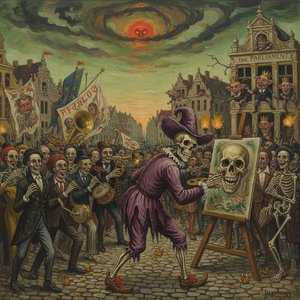
James Ensor (1860–1949) on luonut teoksen Chinoiseries. Se kuuluu Expressionist Orientalism-liikkeeseen. Se on valmistettu materiaalilla Acrylic On Canvas.
- Acrylic On Canvas

 Esikatselu

 Käsinmaalattu öljymaalaus
 Jaa teos
 Jaa
 Tiedot-arkki


 Lataa kuva
 Samanlaisia kohteita
 Röntgenkuvaus
 Diaesitys
 Kysymykset ja vastaukset

 Tilastot
Chinoiseries lyhyesti
- Otsikko
- Chinoiseries
- Taiteilija
- James Ensor (1860–1949)
- Taiteilija syntynyt
- Oostende, Belgia
- Tekniikka
- Acrylic On Canvas
- Tyylisuunta
- Expressionist Orientalism
- Aihe
- chinoiseries, james ensor, masks, figures, exoticism, belgium
Mitä Chinoiseries esittää?
A World Within Walls: Unpacking James Ensor’s “Chinoiseries”
James Ensor's "Chinoiseries," painted in 1880, isn’t merely a depiction of an interior scene; it’s a carefully constructed psychological landscape. This captivating work, residing within the Royal Museums of Fine Arts of Belgium in Brussels, offers a glimpse into the artist’s uniquely unsettling and intensely personal vision. Ensor, born in Ostend to an English father and Belgian mother, possessed a sensibility deeply shaped by his upbringing amidst the vibrant chaos of a seaside resort town – a place saturated with masks, curiosities, and a potent sense of theatricality. This early exposure profoundly influenced his artistic trajectory, leading him away from conventional academic training and toward a fiercely independent style that would forever challenge the established norms of art.
The Dance of Form and Feeling: Style and Technique
“Chinoiseries” is a masterclass in Expressionist technique, subtly blended with elements of Orientalism. Ensor’s brushstrokes are not delicate or refined; they are bold, assertive, and often deliberately rough, conveying an underlying sense of unease and emotional intensity. The color palette—dominated by deep blues and greens—creates a claustrophobic atmosphere, intensifying the feeling of being trapped within the confines of the room. Notice how he utilizes contrasting colors – the vibrant reds and yellows of the decorative objects against the somber background – to draw the eye and heighten the drama. The composition itself is deliberately unbalanced, with the figures positioned in ways that disrupt any sense of harmony or stability. This deliberate distortion reflects Ensor’s interest in exploring the darker aspects of human experience.
- Oil on Canvas: The medium lends itself perfectly to Ensor's expressive style, allowing for rich textures and a dynamic application of paint.
- Bold Brushwork: Visible brushstrokes contribute significantly to the painting’s emotional impact.
- Color Palette: Deep blues and greens create an atmosphere of mystery and introspection.
Decoding the Symbols: Orientalism, Masks, and Human Connection
The title itself, “Chinoiseries,” immediately signals Ensor’s fascination with the exotic – specifically, Chinese-inspired motifs. The table laden with porcelain vases, bowls, and cups isn't simply decorative; it represents a deliberate attempt to introduce an element of the ‘other’ into a European setting. This reflects a broader trend in 19th-century art, where artists sought to explore and interpret foreign cultures through visual representation. However, Ensor doesn’t offer a romanticized view of the Orient. Instead, he presents these objects within a context that is unsettling and ambiguous. The two figures present – one standing, the other seated – are deliberately undefined, their faces obscured or averted, suggesting a lack of genuine connection. The cat, perched on the floor, adds another layer of intrigue, embodying mystery and perhaps even a touch of foreboding.
A Portrait of an Artist’s Mind: Context and Legacy
“Chinoiseries” is often compared to the work of Clyfford Still, a pioneer of Abstract Expressionism, due to their shared emphasis on emotional intensity and non-representational forms. However, Ensor's approach is far more rooted in psychological observation than pure abstraction. His paintings are not simply about depicting objects; they’re about conveying feelings – anxiety, isolation, and the unsettling nature of human relationships. The painting’s creation coincided with a period of significant social and artistic change, mirroring the growing anxieties of modern life. It's a testament to Ensor’s ability to capture the complexities of the human condition through a uniquely personal and often disturbing lens. Reproductions of “Chinoiseries” offer a remarkable opportunity to experience this powerful work firsthand, bringing its enigmatic atmosphere into any space.
Explore more captivating works by James Ensor and discover high-quality reproductions at OriginalUniqueArt.com. For deeper insights into the artist’s life and oeuvre, visit his Wikipedia profile: https://en.wikipedia.org/wiki/James_Ensor.
Chinoiseries korkearesoluutioiset kuvat

James Ensor, Chinoiseries. Tekijänoikeudet vapaat.
Kysymyksiä teoksesta Chinoiseries, vastaukset
Mitä tekniikkaa teoksessa James Ensor:n "Chinoiseries" on käytetty?
James Ensor käytti teoksessa "Chinoiseries" Acrylic On Canvas-tekniikkaa. Tekniikka määrittelee alkuperäisen teoksen materiaalisen luonteen.
Mitä James Ensor:n "Chinoiseries" esittää?
Teoksen James Ensor:n "Chinoiseries" teemoihin kuuluvat chinoiseries, james ensor, masks, figures, exoticism, belgium, carnival, symbolism. Yhdessä ne tiivistävät teoksen aiheen.
Onko James Ensor:n "Chinoiseries" vapaasti käytettävissä oleva teos?
James Ensor:n "Chinoiseries" on vapaasti käytettävissä – tekijänoikeussuoja on päättynyt. Tämä tila määrittää, miten teoksen kuvaa saa käyttää uudelleen.
Kuka on luonut teoksen "Chinoiseries"?
Teoksen "Chinoiseries" taiteilija on James Ensor. Teos on luetteloitu James Ensor nimellä.
Mihin taidesuuntaukseen James Ensor:n "Chinoiseries" kuuluu?
Teoksen James Ensor:n "Chinoiseries" tyylisuunta on Expressionist Orientalism. Tämä luokittelu sijoittaa teoksen muiden samankaltaisten taiteilijoiden ja teosten joukkoon.
Mihin James Ensor'n uran vaiheeseen "Chinoiseries" kuuluu?
James Ensor'n uralla teos "Chinoiseries" sijoittuu aikakaudelle Mature Period. Tämä vaihe auttaa vertaamaan sitä taiteilijan muihin teoksiin.
Miksi teoksen "Chinoiseries" tekijänoikeustila on sellainen kuin se on?
Teoksen "Chinoiseries" tekijänoikeustilanne (vapaasti käytettävissä – tekijänoikeussuoja on päättynyt) määräytyy taiteilijan kuolinvuoden 1949 perusteella.
Miten teos "Chinoiseries" sijoittuu osaksi James Ensor'n tuotantoa?
"Chinoiseries" kuuluu James Ensor:n Expressionist Orientalism-kauden tuotantoon, jonka tunnettuun teemaan kuuluvat expressionist distortion, oriental motifs, belgian identity, cultural fusion, masks, hidden emotions, satire, ensor’s unique visual language."
Miten "Chinoiseries" sijoittuu James Ensor'n toistuvien aiheiden joukkoon?
"Chinoiseries" esittää aiheita chinoiseries, james ensor, masks, figures, exoticism, belgium, carnival, symbolism, kun taas James Ensor tunnetaan teemoistaan expressionist distortion, oriental motifs, belgian identity, cultural fusion, masks, hidden emotions, satire, ensor’s unique visual language. Näiden kahden vertaaminen osoittaa, miten teos liittyy taiteilijan tavallisiin aiheisiin.
Tietoa taiteilijasta, James Ensor

1860–1949, Belgia
James Ensor
Varhaisluonnos, perhe ja taiteellinen kasvu James Ensor syntyi 13. huhtikuuta 1860 Ostendissa, Belgiassa. Hänen identiteettiään muovasi ainutlaatuinen kulttuurien risteyskohta: hänen isänsä, James Frederic Ensor, oli syntynyt Brysselissä englantilaiselle vanhemmilleen, kun taas hänen äitinsä, Maria Catherina Haegheman, oli belgialainen. Tämä kaksisuuntainen perintö loi pohjan näkökulmalle, joka sijoittui usein paikallisen perinteen kapeiden rajojen ulkopuolelle.
Tietoa kohteesta James Ensor James Ensorn merkittävimpiä teoksia
Myös James Ensor -teoksia
 Kristuksen sisäänkäynti Brysseliin1888
 Itseläätö naamioilla1899
 Kylvyt Ostendissa
 Luurankot lämmittelemässä1889

Esseitä teoksesta Chinoiseries
 Raw Emotion & Bold Strokes: Top 10 Neo-Expressionism MasterpiecesExplore iconic Neo-Expressionist works by Basquiat and Baselitz. Discover museum-quality art at OriginalUniqueArt.com.
 James Ensor's Grotesque Visions: Social Commentary & Artistic InnovationExplore the unsettling yet captivating world of James Ensor, a pioneer of Expressionism. Discover his satirical masterpieces, symbolic imag…
 Capturing the Exotic: A Journey Through the Allure and Complex Legacy of Orientalist ArtExplore the mesmerizing world of Orientalist art. From Napoleon's influence to Renoir's exotic textures, discover the history, beauty, and …