Symbolism · 1903
Art (Jacek Malczewski, 1903)
Jacek Malczewski (1854–1929) on luonut teoksen Art. Se on peräisin vuodelta 1903. Se kuuluu Symbolism-liikkeeseen. Se on valmistettu materiaalilla Oil On Canvas. Teos sijaitsee National Museum in Wrocław -museossa paikassa Wrocław, Poland. Mitat ovat 70 × 98 cm.
- 1903
- Oil On Canvas
- 70 × 98 cm
- National Museum in Wrocław

 Esikatselu

 Käsinmaalattu öljymaalaus
 Jaa teos
 Jaa
 Teostiedot


 Lataa kuva
 Samanlaisia kohteita
 Röntgenkuvaus
 Diaesitys
 Kysymykset ja vastaukset

 Tilastot
Art lyhyesti
- Teoksen nimi
- Art
- Taiteilija
- Jacek Malczewski (1854–1929)
- Taiteilijan syntymäpaikka
- Radom, Puola
- Päivämäärä
- 1903
- Tekniikka
- Oil On Canvas
- Mitat
- 70 × 98 cm
- Missä teos on nähtävissä
- National Museum in Wrocław, Wrocław, Poland
- Taidesuuntaus
- Symbolism
- Aikakausi
- 19th Century
- Aihe
- symbolism, polish art, mythology, portraiture, national identity, allegory
Mitä Art esittää?
Identification of the Artwork and Artist
Art is an oil on canvas painting executed by Jacek Malczewski in 1903. The work belongs to the Symbolist movement, a style in which Malczewski established himself as a central figure. His practice often integrated themes of national identity and folklore into complex allegorical compositions.
Malczewski was a Polish symbolist painter. His approach frequently utilized mythological and religious motifs to explore psychological and existential states. This specific work, created at the turn of the twentieth century, reflects the artist's characteristic use of symbolic imagery to communicate ideas beyond literal representation.
Composition and Visual Elements
The composition is tightly framed, focusing the viewer's attention on the faces and upper bodies of the clustered figures. This arrangement creates a sense of intimacy and shared experience among the subjects, though the overall placement feels somewhat chaotic yet deliberate. A large, golden horse dominates the background, its head acting as a visual anchor that stabilizes the grouping of humans in the foreground.
The color palette is dominated by earthy tones, including browns, beiges, and muted greens. These base colors are contrasted by the vibrant golden hue of the horse and subtle touches of red in the hair and clothing of the figures. Lighting is diffused and soft, appearing to emanate from multiple sources without creating harsh shadows or strong contrasts. This gentle illumination contributes to the dreamlike quality of the scene.
The perspective is somewhat flattened due to the close-up framing, which limits the sense of spatial recession. Depth is achieved primarily through the layering of figures and the placement of the equine subject in the background. Organic and rounded shapes define the human forms and the natural contours of the horse, avoiding sharp angles or geometric structures.
Technique and Material Composition
Executed in oil on canvas, the work utilizes a method of blended brushstrokes to achieve its specific visual effects. The application of paint involves a visible layering process, which contributes to the depth and richness of the composition. This layering allows for a subtle transition between the earthy tones of the background and the more luminous highlights found on the figures and the equine subject.
The surface texture appears relatively smooth, a result of the extensive blending of the oil paints. This technique softens the edges of the forms, particularly in the rendering of hair and the drape of clothing. Consequently, the lines defining the facial features remain somewhat indistinct, contributing to a dreamlike quality. The interplay of light and shadow is achieved through these soft transitions rather than through harsh, high-contrast edges.
Related Works by Jacek Malczewski
The artist's exploration of symbolic and allegorical themes is evident in several other compositions. His 1901 work, Self-portrait with the Vistula in the Background, offers a different perspective on his relationship with the Polish landscape. Other significant pieces include Chimera 1 and the Thanatos series, which further investigate the psychological and spiritual dimensions central to his practice.
Malczewski also drew heavily from folklore and mythology to construct his visual language. This is particularly evident in his collection titled Bajki (Fables). These works, alongside his various symbolic studies, demonstrate the breadth of his engagement with national and universal motifs.
Missä museossa teos Art sijaitsee?
National Museum in Wrocław
Wrocław, Poland
The Architecture of the National Museum in Wrocław The National Museum in Wrocław occupies a former Silesian regency building situated on the banks of the Odra river. Constructed between 1883 and 1886, the structure reflects the architectural language of the late 19th century. Its Neo-Renaissance design provides a formal setting for the collections housed within its three floors.


Art korkearesoluutioiset kuvat

Tekijänoikeudet: teos on vapaasti käytettävissä, taiteilija kuoli vuonna 1929.
Muut koot, rajaukset ja viittaukset →Jacek Malczewski, Art (1903), National Museum in Wrocław. Tekijänoikeudet vapaat.
Kysymyksiä teoksesta Art ja vastauksia niihin
Missä museossa alkuperäinen "Art" on esillä?
Teos Jacek Malczewski:n "Art" on esillä National Museum in Wrocław, Wrocław, Poland-museossa. Museoluettelo viittaa alkuperäisteokseen, ei jäljennöksiin.
Milloin "Art" on tehty?
Teos Jacek Malczewski:n "Art" on valmistunut vuonna 1903.
Mitä tekniikkaa teoksessa Jacek Malczewski:n "Art" on käytetty?
Teoksen Jacek Malczewski:n "Art" tekniikka on Oil On Canvas. Vedosten tavoitteena on jäljitellä tämän tekniikan ulkoasua.
Mitkä ovat alkuperäisen "Art" mitat?
Alkuperäisen teoksen Jacek Malczewski:n "Art" mitat ovat 70 x 98 cm.
Mitä Jacek Malczewski:n "Art" esittää?
Teoksen Jacek Malczewski:n "Art" teemoihin kuuluvat symbolism, polish art, mythology, portraiture, national identity, allegory, artistic inspiration. Yhdessä ne tiivistävät teoksen aiheen.
Onko Jacek Malczewski:n "Art" vapaasti käytettävissä oleva teos?
Tekijänoikeustiedot teokselle Jacek Malczewski:n "Art": teos on vapaasti käytettävissä – tekijänoikeussuoja on päättynyt. Tämä määrittää, voidaanko kuvasta tehdä vapaasti jäljennöksiä.
Kenen teokseksi "Art" on merkitty?
Teos "Art" on yhdistetty Jacek Malczewski.
Mihin tyylisuuntaan "Art" kuuluu?
"Art" on Symbolism-tyylisuuntaan kuuluva teos. Tyylisuunta ilmaisee taiteellisen perinteen, johon teos kuuluu.
Mihin kohtaan Jacek Malczewski uraa teos "Art" sijoittuu?
"Art" kuuluu Jacek Malczewski uran Mature Period-vaiheeseen. Tämä luokittelu yhdistää teoksen taiteilijan kehitysvaiheeseen.
Tietoa taiteilijasta, Jacek Malczewski
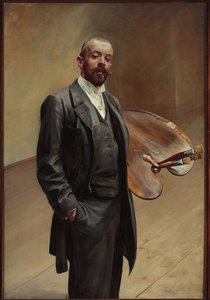
1854–1929, Puola
Jacek Malczewski
Jacek Malczewskin elämä ja taiteellinen perintö Jacek Malczewski, vuonna 1854 Radomissa syntynyt puolalainen taidemaalari, oli paljon enemmän kuin pelkkä siveltimen taituri. Hän nousi kansallisen identiteetin visuaaliseksi ilmentymäksi ja syväksi äänitorveksi kansalle, joka janosi itsenäisyyttä. Hänen elämänsä ja taiteellinen näkemyksensä kietoutuivat erottamattomasti romanttisiin vapauden ihanteisiin, jotka hänen isänsä Julian Malczewski oli syvästi juurruttanut nuoren Jacekin mieleen. Isän omistautuminen isänmaalle ja rakkaus puolalaiseen kulttuuriin, kirjallisuuteen ja historiaan muodostivat pohjan pojan luovalle ilmaisulle.
Tietoa taiteilijasta Jacek Malczewski Jacek Malczewskin merkittävimmät teokset
Myös Jacek Malczewski -teoksia
 Self-portrait in armor with violin.1908
 Madonna and Children1897
 Portrait of artist's sister Helene with lute1906
 The Artist's death1909
Esseitä teoksesta Art
 19th century Polish painters19th-century Polish art comes alive through the masterpieces of Jan Matejko and Jacek Malczewski. View the full collection online at Origin…
 Masterpieces of the Soil: The Top 25 Jean-François Millet ArtworksImmerse yourself in the soul of French Realism with our curated list of the top 25 Jean-François Millet artworks. From iconic peasant scene…
 20th century Polish painters20th-century Polish painters like Tamara de Lempicka, Sigmar Polke, and Aleksandra Ekster define an era. Find museum-quality reproductions …