() ·

A painting made for you, by hand

Crucifix (14)

Käsinmaalattu öljyvärinen jäljennös

Käsinmaalattu öljyväri kankaalle haluamassasi koossa ja kehyksissä, taiteilijoidemme valmistamana tilauksesta. ( Vaihda tulosteeseen Siirry digitaaliseen kuvaan)

Keräilykohteen kuvaus

Explore Giotto di Bondone's Crucifix (14), a masterpiece of Proto-Renaissance art showcasing profound emotion and realism—a pivotal work at the San Felice Museum.

Taiteilijan elämäkerta

Tutustu Giotto di Bondoneen (1267-1337), italialaisen renessanssitaiteen mullistajaan! Löydä hänen varhaisrenessanssin freskonsa, naturalisminsa ja tunteiden syvyytensä teoksista kuten Scrovegnin kappelista.

from ·

Chapter 1

How large should it be?

Slide to change the size; the picture on the left shows the frame at its real width. The proportions of the original are kept.

Vakiokoko
räätälöity
CM
INCH

Valitse valmiista mitoistamme sellaiset, jotka vastaavat teoksen alkuperäisiä mittasuhteita.

leveys
korkeus

Kirjoita tarvitsemasi leveys ja korkeus, jotta teos sopii kehyksiisi tai seinällesi. Koska kyseessä on käsinmaalattu teos, taiteilija voi maalata hieman enemmän kuvan ympärille tai rajata sitä hieman, jos haluat eri muotoisen koon — valinta on sinun. Lähetämme sinulle digitaalisen mallikuvan hyväksyttäväksi ennen kuin maalaus alkaa. Tällä sivulla näkyvä kuva ei vastaa lopullista tulosta — vain mallikuva näyttää sen.

Chapter 2

How should it arrive?

Choose the edges of the stretched canvas

Choose your frame

Corner sample of the WhiteWrap canvas edge finish, stretched on massiivipuu bars
White €1
Corner sample of the BlurSideWrap canvas edge finish, stretched on massiivipuu bars
Blurside €1
Corner sample of the ExtendedWrap canvas edge finish, stretched on massiivipuu bars
Extended €1
Corner sample of the P118B picture frame: valettu polystyreeni, 5 cm wide and 3 cm thick
P118B €10
Corner sample of the P118H picture frame: valettu polystyreeni, 5 cm wide and 3 cm thick
P118H €10
Corner sample of the P118W picture frame: valettu polystyreeni, 5 cm wide and 3 cm thick
P118W €10
Corner sample of the P438Z picture frame: valettu polystyreeni, 5.5 cm wide and 3.5 cm thick
P438Z €10
Corner sample of the P508JH picture frame: valettu polystyreeni, 7 cm wide and 3.5 cm thick
P508JH €12
Corner sample of the P508YH picture frame: valettu polystyreeni, 7 cm wide and 3.5 cm thick
P508YH €12
Corner sample of the P805H picture frame: valettu polystyreeni, 5 cm wide and 3.5 cm thick
P805H €10
Corner sample of the P805Z picture frame: valettu polystyreeni, 5 cm wide and 3.5 cm thick
P805Z €10
Corner sample of the P919BZ picture frame: valettu polystyreeni, 7 cm wide and 3.5 cm thick
P919BZ €10
Corner sample of the P919G picture frame: valettu polystyreeni, 7 cm wide and 3.5 cm thick
P919G €10
Corner sample of the P919XJ picture frame: valettu polystyreeni, 7 cm wide and 3.5 cm thick
P919XJ €10
Corner sample of the P959ZH picture frame: valettu polystyreeni, 5 cm wide and 3 cm thick
P959ZH €10
Corner sample of the P968JZ picture frame: valettu polystyreeni, 6 cm wide and 4 cm thick
P968JZ €12
Corner sample of the W106C picture frame: massiivipuu, 5 cm wide and 3 cm thick
W106C €8
Corner sample of the W218G picture frame: massiivipuu, 5 cm wide and 3 cm thick
W218G €10
Corner sample of the W218JH picture frame: massiivipuu, 5 cm wide and 3 cm thick
W218JH €8
Corner sample of the W218Y picture frame: massiivipuu, 5 cm wide and 3 cm thick
W218Y €10
Corner sample of the W307PJ picture frame: massiivipuu, 6 cm wide and 3 cm thick
W307PJ €10
Corner sample of the W316G picture frame: massiivipuu, 6 cm wide and 3 cm thick
W316G €10
Corner sample of the W316PJ picture frame: massiivipuu, 6 cm wide and 3 cm thick
W316PJ €8
Corner sample of the W316Y picture frame: massiivipuu, 6 cm wide and 3 cm thick
W316Y €10
Corner sample of the W398PJ picture frame: massiivipuu, 5 cm wide and 3 cm thick
W398PJ €8
Corner sample of the W4111J picture frame: massiivipuu, 6.5 cm wide and 3.5 cm thick
W4111J €10
Corner sample of the W500HY picture frame: massiivipuu, 7 cm wide and 5 cm thick
W500HY €15
Corner sample of the W500JH picture frame: massiivipuu, 7 cm wide and 5 cm thick
W500JH €15
Corner sample of the W692G picture frame: massiivipuu, 8 cm wide and 4 cm thick
W692G €12
Corner sample of the W849H picture frame: massiivipuu, 5 cm wide and 3 cm thick
W849H €8
Corner sample of the W940BG picture frame: massiivipuu, 7.5 cm wide and 4.5 cm thick
W940BG €15
Corner sample of the W953PJ picture frame: massiivipuu, 6 cm wide and 3.5 cm thick
W953PJ €8
Corner sample of the H24-GOLD picture frame: kaiverrettua puuta ja gessoa, 10 cm wide and 6 cm thick
H24-GOLD €30
Corner sample of the H24-SILVER picture frame: kaiverrettua puuta ja gessoa, 10 cm wide and 6 cm thick
H24-SILVER €30
Corner sample of the H36-GOLD picture frame: kaiverrettua puuta ja gessoa, 15 cm wide and 6.5 cm thick
H36-GOLD €45
Corner sample of the H36-SILVER picture frame: kaiverrettua puuta ja gessoa, 15 cm wide and 6.5 cm thick
H36-SILVER €45
Kehyksen esikatselu
Kehystetty

Moulding: . Overall size with the frame: .

Chapter 3

Who paints it, and should anything change?

Examples of what can be changed: Replace face with customer photo; Add pet (e.g., replace cat with dog); Include hidden message in background; Change background landscape or elements.
After order, OriginalUniqueArt.com team will email client for instructions and provide a mockup preview

Maailmanlaajuinen toimitus () 3–4 viikossa tavallisen 5 viikon sijaan. (1 marraskuu). Laadusta ei tingitä.

Chapter 4

The finishing touches

A nameplate, as in a museum?

Kaiverretun pronssilaatan tiedot

This elegant plaque features the artist's name and the title of the artwork, finely engraved for a timeless presentation.

It is made from bronze with a refined, elegant finish. The text is precisely laser-engraved for a sharp and permanent result. Measuring 9x2 cm, the plaque is compact yet easy to read. It's built to be durable and scratch-resistant, offering a professional, museum-quality look. Mounting is simple thanks to the included adhesive backing.

Läpinäkyvän akryylilaatan tiedot

The plaque includes essential engraved details such as the artist's name, the title of the artwork, the date it was created, the type of media used-like oil on canvas or watercolor-a brief description of the piece, and a QR code that links to the complete artwork information.

It is crafted from clear acrylic, offering a sleek, modern appearance. The text is UV-engraved in black to ensure strong visual contrast. With a size of 10x15 cm, it ensures optimal readability. It comes equipped with two metal hooks for secure wall mounting. The plaque is designed to be weather-resistant, making it suitable for various environments, and it includes interactive features that work seamlessly with smartphone scanning.

Mustan akryylilaatan tiedot

This elegant plaque includes engraved information such as the artist's name, the title of the artwork, the date it was created, the type of media used (like oil on canvas or watercolor), a short description of the artwork, and a QR code for quick access to more information.

The plaque itself is made from refined black acrylic with a premium finish. The text is laser-engraved in white for high contrast and readability. Its size is 10x15 cm, designed to be easy to read. It comes with two metal hooks for professional mounting. The design is sleek and fits any interior style. It is also weather-resistant and durable, with built-in digital integration for mobile compatibility.

A protective varnish?

When do you need it?

Chapter 5

Your painting, as you ordered it

Crucifix (14)

Reproduktiotekniikka

Replikaatin koko

-

Kokenut huipputaiteilija

Lisää yksityiskohtia, hienostuneisuutta ja enemmän aikaa tuotantoon

-

Reproduktion kehystysvaihtoehdot

-

-

Teoksille tai reproduktioille, joiden mikä tahansa sivu on suurempi kuin 105 cm (noin 41 tuumaa), kehys toimitetaan osina purettuna sarjana. Tämä menetelmä varmistaa turvallisen toimituksen ja ehkäisee vaurioita kuljetuksen aikana.

Vaatii ammattimaista kokoamista – kyseessä ei ole tee-se-itse-tuote.
Sarja on koottava ja kangas kiristettävä kokeneen kehystysammattilaisen toimesta käyttäen puuliimaa (ei sisälly pakkaukseen), kangaspinnetteitä ja puristimia, jotta kehyksen kulmat pysyvät suorina liiman kuivuessa. Virheellinen kokoaminen tai epätasainen kankaan kiristys voi vaurioittaa teosta pysyvästi, eikä tällaiset vauriot ala takuun piiriin.

  • Kaikki massiivipuupalat sisältyvät, tarkasti mittojen mukaan leikattuina.

  • Kootaan mukana tulevilla ruuveilla sekä kulmaliitoksia varten tarvittavalla puuliimalla, jota ei toimiteta, joten se on hankittava kehystäjältä.

  • Vaatii ammattilaisvälineitä, jotka eivät sisälly pakkaukseen: kankaan venytyspihdit (kiristin) ja puristimet, joilla pidetään kehyksen puut suorassa liiman kuivuessa.

Tärkeää:
Kulmaliitoksissa tarvitaan puuliimaa, kehyksien osat on pidettävä puristimilla, kunnes liima on täysin kuivunut, ja koottuun kehykseen jännitettävän kankaan kiristämiseen tarvitaan kangaspenssipihti. Mikään näistä ei sisälly pakkaukseen. Suosittelemme varmistamaan kokeneen kehystäjän saatavuuden ennen tämän kokoisen kehyksen tilaamista.

Nimilaatta

-

-

Suojalakkaus

Kiiltävä lakka (syventää värejä, suojaa valolta ja kosteudelta)

-

Mukauta taideteokseni

Esimerkkejä muokattavista asioista: Vaihda kasvot asiakkaan omaan valokuvaan; Lisää lemmikki (esim. vaihda kissa koiraan); Lisää taustalle piilotettu viesti; Muuta taustan maisemaa tai elementtejä.

-

Pikatoimitus

Maailmanlaajuinen toimitus () 3–4 viikossa tavallisen 5 viikon sijaan. (1 marraskuu). Laadusta ei tingitä.

-

Pikatoimitus

Maailmanlaajuinen toimitus () 5 viikon kuluessa. (8 marraskuu).

Sisältyy hintaan

Kokonaishinta

€ 267

Kokonaishinta € 267

Lasivaihtoehto on saatavilla vain alle 110 cm kokoisille teoksille

Included with every order

  • Ilmainen pikatoimitus ympäri maailman
  • Korkealaatuinen pellavakangas
  • Kattava kuljetusvakuutus
  • Tulliveron palautustakuu
  • Takuu täydellisestä värien vastaavuudesta
  • 100 päivän palautusoikeus (vain valmistusvirheet)
  • 100% rahat takaisin -takuu
  • Määräalennus tarjolla

Giotto Di Bondone Crucifix (14)

The Crucifix by Giotto di Bondone stands as an unparalleled testament to the artistic fervor and spiritual contemplation of the Early Renaissance, captivating viewers with its profound emotional depth and masterful execution. Created in 1330, this tempera on wood artwork—now housed at the San Felice Museum in Florence—represents more than just a depiction of Christ’s suffering; it embodies Giotto's revolutionary approach to portraying human emotion and spatial realism, fundamentally reshaping the visual language of Western art.

Artistic Significance: A Break from Byzantium

Prior to Giotto’s groundbreaking work, Byzantine painting dominated artistic sensibilities, favoring stylized figures and opulent gold backgrounds—a stylistic choice designed to convey divine majesty rather than earthly reality. Giotto decisively rejected these conventions, embarking on a path toward naturalism that would inspire generations of artists. His innovative use of perspective—particularly evident in the San Felice Museum’s Crucifix—created an illusion of depth and space previously unattainable, mirroring the burgeoning humanist worldview of the era. This shift wasn't merely aesthetic; it reflected a deeper yearning to capture the psychological complexity of human experience, as Giotto skillfully conveyed sorrow, compassion, and acceptance within his composition.

Composition and Details: Telling a Story Through Form

The Crucifix’s arrangement is strikingly deliberate, positioning Jesus at its center—a focal point that underscores the significance of the crucifixion event itself. Surrounding him are figures rendered with meticulous attention to detail—Mary Magdalene kneeling in grief beside Jesus, symbolizing penitence and devotion; other onlookers conveying expressions of astonishment and sorrow—all contributing to a dramatic narrative unfolding before the viewer’s eyes. Giotto's mastery extends beyond mere representation; he imbues his subjects with palpable emotion, capturing nuances of expression that resonate deeply with audiences centuries later. The intricate patterns woven into the drapery and backgrounds enrich the painting’s visual tapestry, demonstrating Giotto’s unwavering commitment to realism and artistic virtuosity.

Historical Context: Florence at the Dawn of Renewal

Giotto's Crucifix emerged during a period of transformative cultural change in Florence—a city experiencing an intellectual revival fueled by rediscovered classical texts and burgeoning humanist ideals. His influence extended far beyond his immediate contemporaries, shaping the artistic trajectory of Michelangelo and Raphael, among others. The painting serves as a poignant reflection of the spiritual climate of the time—a fervent belief in divine grace intertwined with profound empathy for human suffering. Giotto’s work stands as an enduring symbol of Florence's ambition to recapture the grandeur of antiquity while simultaneously forging its own distinctive artistic identity.

Preservation and Display: A Masterpiece Revealed

The Crucifix is meticulously preserved at the San Felice Museum, where it continues to inspire awe and admiration among visitors from around the globe. The museum’s carefully curated environment ensures that this monumental artwork retains its luminous beauty and communicates its historical significance effectively—allowing viewers to contemplate Giotto's genius firsthand and appreciate the enduring legacy of his artistic vision. Wikipedia Reference: Giotto
This article provides a comprehensive look at Giotto’s Crucifix, highlighting its artistic and historical significance.

Kysymykset ja vastaukset

Kuinka voimakas kontrasti teoksessa Giotto di Bondone:n "Crucifix (14)" on?

Teoksen Giotto di Bondone:n "Crucifix (14)" kontrastitaso on Voimakas.

Mihin huoneeseen Giotto di Bondone:n "Crucifix (14)" suositellaan sijoitettavaksi sen värien perusteella?

Giotto di Bondone:n "Crucifix (14)"-teoksen Maanläheinen värit soveltuvat erinomaisesti sen suositeltuun tilaan: Olohuone.

Missä voin nähdä alkuperäisen teoksen Giotto di Bondone:n "Crucifix (14)"?

Alkuperäinen Giotto di Bondone:n "Crucifix (14)" on osa San Felice, Firenze, Italia-museon kokoelmaa. Reproduktio mahdollistaa teoksen näyttämisen kotona.

More about this painting

Esikatselu Esikatsele AR-tilassa Vaihda tulosteeseen Siirry digitaaliseen kuvaan Jaa teos
Tiedot Opas Lisää suosikkeihin Lataa kuva Samanlaisia kohteita Röntgenkuvaus Diaesitys Q&A Tilastot

In numbers

  • 1330the year it was painted
  • 29frames to choose from
  • standard sizes, in its own proportions
  • 5weeks to paint and deliver it
Giotto di Bondone

Giotto di Bondone

1267 - 1337, Italia

Quick facts about Giotto di Bondone

  • Artistic Movement Or Style: Proto-renesanssi
  • Artists Or Movements Influenced By This Artist: ['Masaccio']
  • Artists Who Influenced This Artist: ['Cimabue']
  • Date Of Birth: noin 1267
  • Date Of Death: 1337
  • Full Name: Giotto di Bondone
  • Nationality: Italialainen
  • Notable Artworks: ['Scrovegnin kappeli']
  • Place Of Birth: Firenze, Italia

Taiteilijan elämäkerta

Varhaiset Vuodet ja Cimabuen Oppipoika

Giotto di Bondone, syntynyt noin vuonna 1267 Firenzen lähellä Vespignanossa, on yksi kaikkien aikojen merkittävimmistä taiteilijoista. Hänen lapsuudestaan kiertää lukuisia legendoja, joissa kerrotaan nuoren Giotton piirtäneen eläväisiä lampaita kallioihin ja kiviin paimentaessaan laumojaan. Tarinat kertovat mestari Cimabuen huomanneen pojan lahjakkuuden ja ottaneen hänet oppilaakseen. Vaikka tarinan todenperäisyydestä kiistellään, se kuvaa osuvasti Giotton luontaisen kyvyn havainnoida ja kuvata maailmaa realistisesti – taitoa, joka mullisti tuolloisen taidemaailman.

Tuon ajan hallitseva bysanttilainen tyyli korosti litteitä kuvia, kultaa ja hengellistä symboliikkaa. Giotto kuitenkin pyrki kuvaamaan ihmisiä yksilöinä, tunteineen ja elämänkokemuksineen, sijoittaen heidät konkreettiseen tilaan. Cimabuen oppipoikana hän omaksui teknisiä taitoja, mutta alkoi nopeasti kehittää omaa ainutlaatuista tyyliään, joka poikkesi radikaalisti vallitsevasta perinteestä.

Uuden Naturalismin Synty ja Assisin Freskot

Giotton taiteellinen vallankumous ei ollut äkillinen muutos, vaan asteittainen kehitys. Hänen varhaiset teoksensa viittaavat jo tulevaan muutokseen, osoittaen kasvavaa painotusta volyymiin, painoon ja uskottavaan anatomiaan. Hän alkoi tarkkailla valoa ja varjoa ei pelkästään koristeellisina elementteinä, vaan välineinä muodon veistämiseen ja syvyyden luomiseen. Tämä orastava naturalismi näkyy hänen osallistumisessaan Assisin yläbasilikan freskoihin – vaikka tekijyyttä on kiistelty, monet tutkijat tunnistavat Giotton käden kohtauksissa, jotka poikkeavat selvästi vallitsevasta bysanttilaisesta estetiikasta.

Giotto ei hylännyt perinteitä kokonaan; hän rakensi niiden päälle, rikastuttaen niitä uudella inhimillisyyden ja tunteiden syvyydellä. Hän ymmärsi narratiivin voiman, luoden sommitelmia, jotka kertoivat tarinoita ei jäykän symboliikan kautta, vaan ilmeikkäiden eleiden, uskottavien vuorovaikutusten ja huolellisesti rakennettujen ympäristöjen avulla.

Scrovegnin Kappeli: Mestarikertomus Padovassa

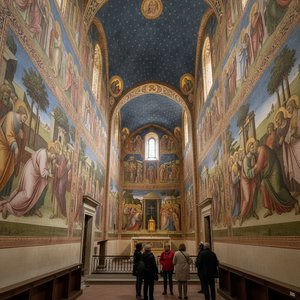
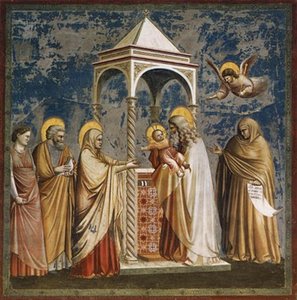
Giotton mestariteos, ja yksi länsimaisen taiteen historian tärkeimmistä teoksista, on Scrovegnin kappelin (tunnetaan myös Arena Chapelina) freskokokonaisuus Padovassa. Vuonna 1305 valmistunut hengästyttävä sarja kuvaa Kristuksen ja Neitsyt Marian elämää ennennäkemättömällä realismilla ja tunteiden voimalla. Jokainen kohtaus avautuu kuin huolellisesti lavastettu näytelmä, jossa hahmot eivät ole pelkästään uskonnollisten arkkityyppien esityksiä, vaan täysiverisiä ihmisiä kokemassa iloa, surua, pelkoa ja toivoa.

Viimeinen Tuomio, joka hallitsee koko seinää, on voimakas todiste Giotton taidosta välittää sekä jumalallista majesteettisuutta että ihmiskunnan haavoittuvuutta viimeisessä tuomiossa. Perspektiivin käyttö, vaikka se ei olekaan matemaattisesti täydellistä myöhempien renessanssimaalareiden standardeilla, luo vakuuttavan illuusion syvyydestä ja vetää katsojan osaksi tarinaa. Hahmot ovat maadoitettuja, niiden vartaloilla on painoa ja volyymiä, ja niiden ilmeet välittävät tunteita, joita ei aiemmin oltu nähty uskonnollisessa taiteessa.

Arkkitehtuuria ja Kestävä Perintö

Giotton lahjakkuudet eivät rajoittuneet maalaamiseen; hän oli myös arvostettu arkkitehti. Vuonna 1334 hänet kutsuttiin suunnittelemaan Firenzen tuomiokirkon kellotapulin, projektin, joka osoitti hänen innovatiivista lähestymistapaansa arkkitehtoniseen muotoiluun. Vaikka hän kuoli ennen sen valmistumista, hänen suunnitelmansa loivat pohjan tälle ikoniselle Firenzen maamerkille.

Hänen vaikutuksensa myöhempiin taidesukupolviin on mittaamaton. Hän silmoitti keskiajan ja renessanssin maailman välisen kuilun, luoden pohjan mestareille kuten Masacciolle, Leonardolle da Vincille ja Michelangelolle. Vasari mainitsi Taiteilijaelämäkertoja-teoksessaan Giotton “antaneen maalaukselle suuren taidon tehdä asioita elävästä”, mikä on todiste hänen syvällisestä vaikutuksestaan länsimaisen taiteen kulkuun. Giotto ei pelkästään kuvannut maailmaa; hän pyrki ymmärtämään sitä, vangitsemaan sen olemuksen ja välittämään tämän ymmärryksen visuaalisen tarinankerronnan voiman kautta. Hänen perintönsä inspiroi edelleen ihmetystä ja kunnioitusta vuosisatojen kuluttua hänen kuolemastaan, vahvistaen paikkansa yhtenä historian suurimmista taiteellisista uudistajista.

  • Vallankumouksellinen Maalaustapa: Siirtyminen bysanttilaisesta tyylittelystä naturalismiin ja tunteiden realismiin.
  • Perspektiivin Edelläkävijä: Uusien tekniikoiden käyttöönotto syvyyden ja tilan luomiseksi maalauksissa.
  • Mestarillinen Tarinankerronta: Vakuuttavien tarinoiden luominen freskokokonaisuuksien avulla, kuten Scrovegnin kappelissa.
  • Arkkitehtuuriset Panokset: Firenzen tuomiokirkon kellotapulin suunnittelu, osoittaen arkkitehtonista taitoa.
  • Renessanssitaiteen Perusta: Hänen työnsä loi pohjan renessanssin taiteellisten saavutusten kehitykselle.