Baroque Landscape
Landscape (Gillis Van Coninxloo)
Gillis Van Coninxloo (1544–1607) on luonut teoksen Landscape. Se kuuluu Baroque Landscape-liikkeeseen. Se on valmistettu materiaalilla Oil On Copper. Teos sijaitsee Museo del Prado -museossa paikassa Madrid, Espanja. Koko on 24 × 19 cm.
- Oil On Copper
- 24 × 19 cm
- Museo del Prado, Madrid

 Esikatselu

 Käsinmaalattu öljymaalaus
 Jaa teos
 Jaa
 Tiedot-arkki


 Lataa kuva
 Samanlaisia kohteita
 Röntgenkuvaus
 Diaesitys
 Kysymykset ja vastaukset

 Tilastot
Landscape lyhyesti
- Otsikko
- Landscape
- Taiteilija
- Gillis Van Coninxloo (1544–1607)
- Taiteilija syntynyt
- Antwerpen, Belgia
- Tekniikka
- Oil On Copper
- Mitat
- 24 × 19 cm
- Missä teos on nähtävissä
- Museo del Prado, Madrid, Espanja
- Tyylisuunta
- Baroque Landscape
- Aihe
- landscape, flemish style, baroque art, forest scene, castle architecture, atmospheric perspective
Mitä Landscape esittää?
A Flemish Master’s Woodland Reverie: Gillis van Coninxloo's “Landscape”
Gillis van Coninxloo’s “Landscape,” a captivating oil on copper panel, transports the viewer to a realm of serene contemplation within a meticulously rendered Flemish forest. Painted around 1598, this work stands as a pivotal example of the artist’s mastery in capturing the atmospheric depth and intricate detail characteristic of the early 16th-century Golden Age. More than just a depiction of nature, it's an invitation to lose oneself within a carefully constructed world of light, shadow, and subtle symbolism – a testament to van Coninxloo’s profound understanding of both landscape painting and the human experience.
The scene unfolds before us with remarkable realism. A dense thicket of trees dominates the foreground, their leaves rendered with an almost obsessive attention to detail; each vein, each curl of bark, is painstakingly observed and faithfully reproduced. These trees aren’t merely static elements; they create a palpable sense of depth, drawing the eye into the heart of the forest. Beyond them, a modest collection of buildings – likely farmhouses or small dwellings – nestles amongst the foliage, suggesting a quiet rural existence. The architecture is understated yet solid, reflecting a pragmatic approach to building within this natural setting. In the distance, a formidable castle rises above the horizon, its imposing silhouette anchoring the composition and hinting at notions of power, protection, and perhaps even isolation.
The Alchemy of Light and Shadow: Technique and Style
Van Coninxloo’s technical skill is immediately apparent in his masterful use of oil on copper. This medium allowed for a remarkable level of detail and luminosity – the surface retains a subtle sheen that enhances the richness of the colors and creates an almost three-dimensional effect. The artist employs a technique known as “chiaroscuro,” skillfully manipulating light and shadow to sculpt the forms and create a dramatic sense of depth. Notice how the sunlight filters through the trees, dappling the ground in pools of brightness while simultaneously casting deep shadows beneath the foliage. This interplay of light and dark isn’t merely decorative; it imbues the scene with a palpable atmosphere – a feeling of both tranquility and mystery.
Stylistically, “Landscape” aligns itself with the Flemish tradition of landscape painting, yet van Coninxloo departs from some of the more rigid conventions of the time. While influenced by the Northern Mannerist style—characterized by its emphasis on detail and symbolic imagery—he introduces a greater sense of naturalism and emotional resonance. The composition is carefully balanced, creating a harmonious whole that invites contemplation. The muted color palette – dominated by greens, browns, and grays – contributes to the overall feeling of serenity and timelessness.
A Window into 16th-Century Life and Belief
To fully appreciate “Landscape,” it’s important to consider its historical context. Painted during a period of religious upheaval and political instability in the Netherlands, this work reflects both the anxieties and the enduring values of the era. The castle, for instance, can be interpreted as a symbol of authority – whether representing secular power or divine protection. The humble dwellings nestled within the forest suggest a connection to the land and a reverence for rural life. Furthermore, the dense woodland itself has long been associated with themes of solitude, introspection, and the spiritual realm.
Interestingly, this painting was originally housed in the Museo del Prado in Madrid, Spain, a testament to its enduring appeal across national boundaries. The artist’s biography reveals a fascinating journey – from Antwerp to Germany and eventually Amsterdam—reflecting the shifting political landscape of the time. His work served as a bridge between artistic styles, incorporating elements of Mannerism while embracing the burgeoning realism of the Dutch Golden Age.
A Timeless Masterpiece: Reproduction and Inspiration
Reproductions of “Landscape” capture only a fraction of its original impact. The subtle nuances of light, texture, and atmosphere are difficult to replicate fully, but OriginalUniqueArt’s hand-painted reproductions strive to honor the artist's vision with remarkable fidelity. This piece offers an exceptional opportunity for interior designers seeking to evoke a sense of tranquility and connection to nature – imagine it adorning a study or a living room, providing a focal point that invites contemplation. Collectors will find “Landscape” to be a valuable addition to any art collection, representing a significant moment in the history of Flemish landscape painting.
For further exploration, we encourage you to visit the linked resources:
Missä museossa teos Landscape on?
Museo del Prado
Madrid, Espanja
Museo del Pradon historia Museo del Pradon juuret kietoutuvat tiiviisti Espanjan kuninkaalliseen kokoelmaan, ja niiden alkuperä ulottuu aina 1700-luvulle saakka. Se, mikä alkoi Ferdinand VII:n aikana visiona luonnontieteellisestä kabinetista, muuttui ajan myötä pyhäköksi, joka oli omistettu yksinomaan maalaustaiteelle ja veistotaiteelle. Tämä siirtymä muutti tieteellisen pyrkimyksen Espanjan kruunun arvokkaimpien aarteiden säilytyspaikaksi.


Landscape korkearesoluutioiset kuvat
Gillis Van Coninxloo, Landscape, Museo del Prado. Tekijänoikeudet vapaat.
Kysymyksiä teoksesta Landscape, vastaukset
Missä teosta Gillis Van Coninxloo:n "Landscape" voidaan tällä hetkellä nähdä?
Alkuperäinen Gillis Van Coninxloo:n "Landscape" on osa Museo del Prado, Madrid, Espanja-museon kokoelmaa. Reproduktio mahdollistaa teoksen näyttämisen kotona.
Mitä tekniikkaa teoksessa Gillis Van Coninxloo:n "Landscape" on käytetty?
Teoksen Gillis Van Coninxloo:n "Landscape" tekniikka on Oil On Copper. Vedosten tavoitteena on jäljitellä tämän tekniikan ulkoasua.
Mitkä ovat alkuperäisen "Landscape" mitat?
Teoksen Gillis Van Coninxloo:n "Landscape" mitat ovat 24 x 19 cm. Vedoksia voi tilata muissa koossa säilyttäen samat mittasuhteet.
Mitä Gillis Van Coninxloo:n "Landscape" esittää?
Gillis Van Coninxloo:n "Landscape" esittää: landscape, flemish style, baroque art, forest scene, castle architecture, atmospheric perspective, detailed rendering.
Onko teos "Landscape" tekijänoikeusvapaa?
Tekijänoikeustiedot teokselle Gillis Van Coninxloo:n "Landscape": teos on vapaasti käytettävissä – tekijänoikeussuoja on päättynyt. Tämä määrittää, voidaanko kuvasta tehdä vapaasti jäljennöksiä.
Kuka on luonut teoksen "Landscape"?
Teos "Landscape" on yhdistetty Gillis Van Coninxloo.
Mihin taidesuuntaukseen Gillis Van Coninxloo:n "Landscape" kuuluu?
"Landscape" on Baroque Landscape-tyylisuuntaan kuuluva teos. Tyylisuunta ilmaisee taiteellisen perinteen, johon teos kuuluu.
Mihin Gillis Van Coninxloo'n uran vaiheeseen "Landscape" kuuluu?
"Landscape" edustaa taiteilijan Gillis Van Coninxloo tuotantokautta Late Baroque."
Onko Gillis Van Coninxloo teos "Landscape" tekijänoikeudeltaan vapaa (public domain), ja miksi?
Gillis Van Coninxloon teos "Landscape" on vapaasti käytettävissä – tekijänoikeussuoja on päättynyt. Tekijänoikeusajat lasketaan taiteilijan kuolinvuodesta, ja Gillis Van Coninxloo kuoli vuonna 1607.
Tietoa taiteilijasta, Gillis Van Coninxloo
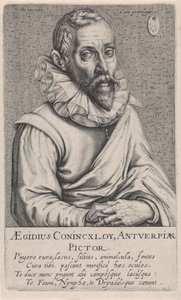
1544–1607, Belgia
Gillis Van Coninxloo
Vihreän valtakunnan mestari Gillis Van Coninxloo seisoo keskeisenä hahmona pohjoisen maisemataiteen evoluutiossa, toimien elintärkeänä siltana monimutkaisten manierististen perinteiden ja varhaisen barokin kasvavan ilmakehän syvyyden välillä. Belgiassa, Antwerpenissa syntyneen taiteilijan elämä kietoutui syvästi Alankomaiden rikkaaseen taideperintöön. Maalari-isän poikana hän uppoutui maailmaan, jossa käsityötaito ja luonnon tarkkailu olivat ensisijaisia. Varhainen koulutus mestareiden, kuten Pieter Coecke van Aelst nuoremman ja Lenaert Kroesin, johdolla antoi hänelle vankan pohjan, mutta vasta työskentely Gillis Mostaertin työpajassa antoi hänen lahjakkuudelleen todellisen mahdollisuuden kukoistaa, antaen hänen osallistua ammattimaisiin teoksiin samalla kun hän hioi ainutlaatuista visiotaan.
Tietoa kohteesta Gillis Van Coninxloo Gillis Van Coninxloon merkittävimpiä teoksia
Myös Gillis Van Coninxloo -teoksia
 Jonah Preaching to the Ninevites1583
 Woodland with Saint Jerome1583
 Landscape with the judgment of Midas1598
 Landscape with the Judgement of Paris1610
Esseitä teoksesta Landscape
 Masterpieces of Jan van Goyen: Top 25 Iconic Dutch LandscapesExplore 25 iconic Jan van Goyen landscapes from the Dutch Golden Age. Discover these tonal masterpieces on OriginalUniqueArt.com.
 Chiaroscuro & Shadows: The High-Impact Power of Moonlight in Masterpiece LandscapesMaster the drama of chiaroscuro and moonlight in classical landscapes. Explore the power of light and shadow now.
 Masterpieces of Nature: The Top 25 Artworks by Jacob van RuisdaelExplore 25 iconic Jacob van Ruisdael landscapes. Discover the soul of Dutch Golden Age art. Explore the full collection online at OriginalU…