Expressionism
Marsh landscape (Emil Nolde)
Emil Nolde (1867–1956) on luonut teoksen Marsh landscape. Se kuuluu Expressionism-liikkeeseen. Se on valmistettu materiaalilla Watercolor.
- Watercolor

 Esikatselu

 Käsinmaalattu öljymaalaus
 Jaa teos
 Jaa
 Tiedot-arkki


 Lataa kuva
 Samanlaisia kohteita
 Röntgenkuvaus
 Diaesitys
 Kysymykset ja vastaukset

 Tilastot
Marsh landscape lyhyesti
- Otsikko
- Marsh landscape
- Taiteilija
- Emil Nolde (1867–1956)
- Taiteilija syntynyt
- Nolde, Tanska
- Tekniikka
- Watercolor
- Tyylisuunta
- Expressionism
- Aikakausi
- Modern
- Aihe
- marsh, houses, sky, clouds, waterway, green
Mitä Marsh landscape esittää?
Identification of the Artwork and Artist
Marsh landscape emerges from the canvas as a direct window into the expressive spirit of Emil Nolde. The scene captures a quiet, atmospheric moment within a marshland, where the land and sky meet in a dance of color and light. This work reflects the artist's deep, personal connection to the natural world, a bond that defined his creative life from his beginnings in the rural, agrarian landscapes of his youth until his death in 1956.
Born in 1867 in Nolde, Denmark, the artist carries the rhythms of the Danish and Frisian countryside into his brushstrokes. His identity is inextricably linked to the very soil and water he depicts, having transitioned from the tactile labor of woodcarving to the fluid, urgent application of paint. In Marsh landscape, we see the result of this transformation, where the physical environment is translated through a lens of intense, subjective feeling.
The painting exists as a piece of Expressionism, moving beyond simple representation to find the pulse of the marsh. It is a work that prioritizes the internal sensation of the landscape over a literal likeness. Through this approach, Emil Nolde transforms a simple view of houses and waterways into a profound encounter with the essence of the natural environment.
The Composition and Visual Elements
The scene unfolds in a wide-angle, panoramic view of the marshland. A horizontal arrangement anchors the landscape, placing clusters of houses in the foreground to act as focal points amidst the expansive terrain. A winding path or waterway cuts through the greenery, leading the eye toward the horizon and creating a sense of depth. This movement draws the viewer deeper into the marshy expanse.
Above the land, a dramatic sky dominates the upper portion of the canvas. The celestial space feels immense, pressing down upon the earth with heavy, swirling clouds. Perspective is achieved through the careful use of size diminution, as the houses appear smaller as they recede into the distance. Overlapping forms further establish the layers of the environment, building a sense of physical space within the composition.
Technique, Materials and Support
The medium breathes with the immediacy of watercolor or gouache, a choice that allows the artist to capture the shifting light of the marshland with urgent, direct movement. Layers of color wash over one another, creating a sense of depth that feels both translucent and heavy. These washes do not merely sit upon the surface; they seem to pool and flow, mimicking the very water and sky they seek to represent. The pigment moves with a certain speed, as if the artist is racing to fix a fleeting moment of atmosphere before it vanishes.
Visible brushstrokes define the very substance of the scene. Rather than smooth, blended transitions, the paint is applied in distinct, gestural strokes that leave a palpable texture across the surface. This layering of pigment creates a physical presence, where the ridges of the brush meet the paper to build a sense of weight. The texture is not a byproduct of the process but a vital part of the work's energy, giving the clouds and the marshland a tactile, lived-in quality. Every mark feels intentional, contributing to the overall sense of movement within the landscape.
The Expressive Style and Color Palette
The scene breathes with an Expressionistic intensity, where the landscape is felt through a subjective lens rather than a literal one. Every brushstroke carries a sense of urgency, pushing the boundaries of how color can be used to convey a specific moment of light. The marshland unfolds in deep, saturated greens, grounding the composition in the damp reality of the wetlands. Amidst this verdant expanse, small houses emerge, punctuated by sharp red accents that draw the eye through the center of the view. These touches of color provide a rhythmic contrast against the organic forms of the earth.
Above the horizon, the sky dominates the canvas with a dramatic, swirling energy. Yellows and oranges wash across the heavens, suggesting the warm, diffused glow of a twilight hour or an overcast afternoon. This warmth meets the cooler, heavier tones of the clouds, which are rendered in deep purples and blues. The interplay between these opposing temperatures creates a palpable sense of movement, as if the atmosphere itself is in a state of constant flux. The colors do not merely sit upon the surface; they seem to possess a weight and substance that defines the very shape of the clouds and the terrain below.
Related Works by Emil Nolde
The artist's fascination with the shifting moods of the coast and the sky reveals itself in other compositions. One finds a similar pull toward the wetlands in Marsh landscape with peasent houses. The landscape breathes with a sense of solitude in many of his pieces. In Autumn Sea, created about 1908, the water and atmosphere command the viewer's attention. The horizon meets the weight of the clouds in a way that feels both restless and immediate.
His exploration of form often moves toward the psychological and the primal. Around 1906-1907, he produced Masks, a work that leans into the expressive power of primitive forms. This search for a deeper, more visceral visual language also appears in his religious subjects. In 1909, he produced The Mocking of Christ, capturing the intensity of the moment through a focus on emotion rather than literal likeness.
Marsh landscape korkearesoluutioiset kuvat
Emil Nolde, Marsh landscape. Tekijänoikeudet vapaat.
Kysymyksiä teoksesta Marsh landscape, vastaukset
Mitä tekniikkaa Emil Nolde:n "Marsh landscape" on käytetty?
"Marsh landscape" on toteutettu tekniikalla Watercolor.
Mitä "Marsh landscape" esittää?
Teoksen Emil Nolde:n "Marsh landscape" teemoihin kuuluvat marsh, houses, sky, clouds, waterway, green, orange, purple. Yhdessä ne tiivistävät teoksen aiheen.
Onko teos "Marsh landscape" tekijänoikeusvapaa?
Tekijänoikeustiedot teokselle Emil Nolde:n "Marsh landscape": teos on vapaasti käytettävissä – tekijänoikeussuoja on päättynyt. Tämä määrittää, voidaanko kuvasta tehdä vapaasti jäljennöksiä.
Kuka on luonut teoksen "Marsh landscape"?
"Marsh landscape" on Emil Nolde:n luoma teos. Tällä sivulla olevat tiedot kuvaavat Emil Nolde:n alkuperäistä työtä.
Mihin tyylisuuntaan "Marsh landscape" kuuluu?
"Marsh landscape" on Expressionism-tyylisuuntaan kuuluva teos. Tyylisuunta ilmaisee taiteellisen perinteen, johon teos kuuluu.
Onko Emil Nolde teos "Marsh landscape" tekijänoikeudeltaan vapaa (public domain), ja miksi?
Emil Nolde:n "Marsh landscape" on vapaasti käytettävissä – tekijänoikeussuoja on päättynyt. Tekijänoikeuden voimassaolo lasketaan taiteilijan kuolinvuodesta, joka oli 1956.
Miten teos "Marsh landscape" sijoittuu osaksi Emil Nolde'n tuotantoa?
"Marsh landscape" kuuluu Emil Nolde:n Expressionism-kauden tuotantoon, jonka tunnettuun teemaan kuuluvat post-impressionism, die brücke, expressionism, subjective emotion, nature's pulse."
Miten teoksen "Marsh landscape" aihe liittyy Emil Nolde'n tavallisiin teemoihin?
"Marsh landscape" esittää aiheita marsh, houses, sky, clouds, waterway, green, orange, purple, kun taas Emil Nolde tunnetaan teemoistaan post-impressionism, die brücke, expressionism, subjective emotion, nature's pulse. Näiden kahden vertaaminen osoittaa, miten teos liittyy taiteilijan tavallisiin aiheisiin.
Tietoa taiteilijasta, Emil Nolde
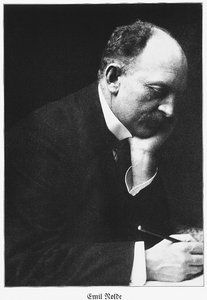
1867–1956, Tanska
Emil Nolde
Emil Nolden elämä ja identiteetti Hans Emil Hanseninä 7. elokuuta 1867 syntynyt mies, joka tulisi tuntemaan maailman nimellä Emil Nolde, kasvoi Schleswigin herttuakunnan Nolden kylän läheisyydessä. Hänen varhaislapsuutensa ja nuoruutensa muovautuivat hänen perheensä maaseutumaisten ja maatalousvaltaisten elämänrytmien tahdissa. Lopulta hän kuitenkin kääntyi pois tästä polusta ja valitsi urakseen puunveiston ja huonekalujen koristelun.
Tietoa kohteesta Emil Nolde Emil Nolden merkittävimpiä teoksia
Myös Emil Nolde -teoksia
 Sunset
 Sea with Red Sky
 Couple on the beach1903
 Masks1911
Esseitä teoksesta Marsh landscape
 Emil Nolde: The 25 Most Powerful Expressionist MasterpiecesExplore 25 iconic Emil Nolde masterpieces. Discover the soul of Expressionism through his vibrant colors. Explore the full collection onlin…
 19th century Danish painters19th-century Danish painters like Vilhelm Hammershøi, Michael Ancher, and Anna Ancher defined a golden era. Find museum-quality art on Orig…
 Danish artworks of the 1900sDanish art from the 1900s featuring Vilhelm Hammershøi, Anna Ancher, and Michael Ancher. View the full collection online at OriginalUniqueA…