Guariento Di Arpo muotokuva

13 tunnetuinta Guariento Di Arpo -maalausta, gallerian valikoima

Päivitetty marraskuu 2026 · järjestetty suosituimmuuspisteiden mukaan (jokaisen teoksen haut, vierailut ja tilaukset) · 13 teosta taiteilijalta Guariento Di Arpo luettelossamme

Lyhyesti

Kaikista Guariento Di Arpo jättämistä alkuperäisteoksista kuuluisin on Madonna of Humility (1345), joka kuuluu J. Paul Getty Museum -kokoelmaan, Los Angeles. Heti perässä tulevat The Virgin and Blessing Child Enthroned with a Donor (1360) ja Christ on the Cross (1360). Katalogissamme on 13 teosta taiteilijalta Guariento Di Arpo; galleria on säilyttänyt 13 maailman ihailluimmista teoksista, ja jokaisesta on esitetty sen päivämäärä, museo sekä tarina.

1310 – 1370, Piove di Sacco Gothic Eniten teoksia: Harvard Art Museums

Guariento Di Arpo -taiteilijan 10 parasta maalausta: gallerian valinnat

1
Madonna of Humility (1345) tekijä Guariento Di Arpo

Madonna of Humility

1345 · Tempera On Panel · J. Paul Getty Museum, Los Angeles

The Madonna of Humility is a sacred panel painting by Guariento di Arpo. Created during the 1340s, the work captures a quiet moment of maternal divinity. The Virgin Mary sits upon the ground, cradling the Christ Child within a composition defined by a sense of stillness and devotion. This intimate scene is framed by a pointed-arch tabernacle, a structure that directs the eye toward the figures held in a golden…

2
The Virgin and Blessing Child Enthroned with a Donor (1360) tekijä Guariento Di Arpo

The Virgin and Blessing Child Enthroned with a Donor

1360 · Tempera On Panel · Gemäldegalerie, Berliini

Guariento di Arpo, working in the fourteenth century, occupied a unique position in the transition from the Middle Ages to the early Renaissance. This tempera on wood panel reflects a sophisticated marriage of styles. It combines the volumetric weight and spatial awareness characteristic of the Florentine school with the linear elegance and ornamental splendor of the Venetian Gothic tradition. The composition is centered and symmetrical, anchored by an elaborate architectural…

3
Christ on the Cross (1360) tekijä Guariento Di Arpo

Christ on the Cross

1360 · Tempera On Panel · Harvard Art Museums, Cambridge

This late Gothic religious painting, executed in 1360, depicts the Crucifixion of Christ upon a highly ornate, gilded cruciform panel. The composition is centered on the figure of Christ, whose body is stretched across a dark wooden cross. His head leans to his right with eyes closed in death, and a subtle halo surrounds his head. The figure is rendered with anatomical attention, featuring a pale, luminous skin tone that…

4
Virgin and Child Enthroned (1355) tekijä Guariento Di Arpo

Virgin and Child Enthroned

1355 · Tempera On Panel · Courtauld Gallery, Lontoo

The Virgin and Child Enthroned emerges from the shadows of the mid-fourteenth century, a sacred vision captured in 1355. In this panel, Guariento di Arpo presents a moment of profound stillness. The figures of the Virgin Mary and the Christ Child occupy a central, symmetrical space, held within the graceful lines of an arched panel. There is a sense of quiet authority in their presence, as if the viewer has…

Guariento Di Arpo-valikoima jatkuu, 11–13

Aiheet, jotka vangitsivat Guariento Di Arpoin katseen

Nämä neljä aihetta toistuvat näissä alkuperäisteoksissa useimmin, jokaisesta löytyy hienoin esimerkki.

Museot, joissa Guariento Di Arpo'n alkuperäisteokset sijaitsevat

Tämän sivun teoksista eniten sisältävät 7 museota.

Museo Kaupunki Guariento Di Arpo teokset Tämän listan maalaukset
Harvard Art Museums, CambridgeHarvard Art Museums Cambridge 2 Christ on the Cross, Armed Angel (Principatus)
J. Paul Getty Museum, Los AngelesJ. Paul Getty Museum Los Angeles 1 Madonna of Humility
Gemäldegalerie, BerliiniGemäldegalerie Berliini 1 The Virgin and Blessing Child Enthroned with a Donor
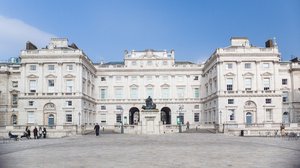
Courtauld Gallery, LontooCourtauld Gallery Lontoo 1 Virgin and Child Enthroned
Metropolitan Museum of Art, New YorkMetropolitan Museum of Art New York 1 Madonna and Child
Museo Correr, VeneziaMuseo Correr Venezia 1 San Michele Arcangelo combatte contro Satana
Collezione Vittorio Cini, VenetsiaCollezione Vittorio Cini Venetsia 1 Ascension of Christ

Guariento Di Arpo vuosikymmenittäin: jokaisen aikakauden määrittänyt alkuperäisteos

Teokset vuosikymmenittäin

Valitse vuosikymmen nähdäksesi sen määrittäneen alkuperäisteoksen.

Keräilijöiden kysymyksiä Guariento Di Arpo -taiteilijan maalauksista

Mistä teoksesta Guariento Di Arpo on tunnetuin?Paljasta vastaus

Madonna of Humility (1345), J. Paul Getty Museum, Los Angeles. Seuraavina ovat The Virgin and Blessing Child Enthroned with a Donor (1360) ja Christ on the Cross (1360).

Kuinka vanha Guariento Di Arpo oli, kun Madonna of Humility tehtiin?Paljasta vastaus

35 vuotta vanha: Madonna of Humility on peräisin vuodelta 1345, ja Guariento Di Arpo on syntynyt vuonna 1310.

Mitkä ovat kymmenen kuuluisinta Guariento Di Arpo -taideteosta?Paljasta vastaus

Madonna of Humility, The Virgin and Blessing Child Enthroned with a Donor, Christ on the Cross, Virgin and Child Enthroned, Madonna and Child, San Michele Arcangelo combatte contro Satana, Armed Angel (Principatus), Archangel, Angel ja Angel. Yllä oleva sijoitus kertoo kunkin teoksen vuosiluvun ja museon.

Kuinka monta maalausta Guariento Di Arpo jätti jälkeensä?Paljasta vastaus

Katalogissamme on 13 teosta taiteilijalta Guariento Di Arpo, aikaväliltä 1345–1360.

Missä museoissa Guariento Di Arpo's mestariteokset sijaitsevat?Paljasta vastaus

Pääasiassa Harvard Art Museums (Cambridge), J. Paul Getty Museum (Los Angeles) ja Gemäldegalerie (Berliini). Yllä oleva museotaulukko listaa ne kaikki.

Minä vuosina Guariento Di Arpo maalasi kuuluisimmat teoksensa?Paljasta vastaus

Aikakaudella 1350s: 2 sivun 13 teoksista on tehty silloin, joista Virgin and Child Enthroned.

Mitkä ovat Guariento Di Arpo ensimmäinen ja viimeinen tunnettua alkuperäisteosta?Paljasta vastaus

Tällä sivulla vanhin on Madonna of Humility (1345) ja uusin The Virgin and Blessing Child Enthroned with a Donor (1360).

Mitä aiheita Guariento Di Arpo käytti useimmiten?Paljasta vastaus

Woman (4), Child (4) ja Gold background (3), yhteensä 13 teosta tällä sivulla.

Mitä tekniikkaa Guariento Di Arpo käytti eniten?Paljasta vastaus

Tempera On Panel, 5 teoksesta sivun 13 teoksesta.

Mihin taidesuuntaukseen Guariento Di Arpo kuuluu?Paljasta vastaus

Gothic, tämän sivun alkuperäisteosten perusteella.

Mitä Guariento Di Arpo -teoksia Harvard Art Museums -museossa on esillä?Paljasta vastaus

Christ on the Cross ja Armed Angel (Principatus): Harvard Art Museums, Cambridge -ssä on 2 tämän sivun teoksista.

Guariento Di Arpo: elämä ja tuotanto

The Master of Padua: The Life and Legacy of Guariento di Arpo

In the vibrant, intellectual atmosphere of fourteenth-century Padua, a transformative artistic voice emerged that would forever alter the trajectory of Venetian painting. Guariento di Arpo (c. 1310–1370) stands as a monumental figure of the Trecento, acting as the essential bridge between the grounded, volumetric realism of Florence and the ethereal, ornamental splendor of the Venetian Gothic tradition. Born into a city flourishing with humanist ideals and Byzantine echoes, Guariento did not merely inherit a style; he synthesized two worlds. His career was defined by an extraordinary ability to marry the structural innovations of the early Renaissance with the decorative grace that would become the hallmark of the Veneto region.

The foundations of Guariento’s genius were laid in the workshops of his contemporaries, where the shadows of masters like Giotto di Bondone and Giovanni Pisano loomed large. From Giotto, Guariento absorbed the revolutionary language of spatial perspective and weight, learning how to imbue figures with a sense of physical presence and psychological depth. Yet, he did not become a mere imitator of the Florentine school. Instead, he infused this new naturalism with a uniquely Venetian sensibility—a penchant for linear elegance and a luminous, almost spiritual abstraction derived from Byzantine influences. This delicate balance allowed his work to possess both a tangible human emotion and a transcendent, heavenly beauty.

A Legacy in Fresco and Panel

Guariento’s most profound contributions to the history of art are etched into the very walls of Padua. His magnum opus remains the breathtaking cycle of frescoes within the choir of the Church of San Bernardino. Commissioned in 1338, these monumental depictions of the life of St. Augustine serve as a masterclass in narrative storytelling. Through these works, one can witness his mastery of volumetric modeling, where figures seem to occupy real space, yet they are draped in a stylistic grace that prevents them from feeling heavy or earthbound. Though much of this cycle was tragically scarred by the bombardments of 1944, the surviving fragments continue to whisper of a lost era of Paduan splendor.

Beyond the expansive reach of his frescoes, Guariento’s skill as a panel painter brought intimacy to the altarpieces of the era. His ability to command precious materials like gold leaf and tempera is evident in several surviving masterpieces held in the world's most prestigious collections:

Historical Significance and the Venetian Horizon

As his reputation ascended, so too did his influence beyond the borders of Padua. In 1365, the prestige of the Venetian Republic itself beckoned him to the Palazzo Ducale. Tasked with painting a representation of the Coronation of the Virgin, Guariento left an indelible mark on the heart of Venice. In a remarkable twist of art history, his work was only rediscovered in the modern era, hidden beneath the layers of Tintoretto’s later masterpiece, Paradise, during conservation efforts in 1903. This discovery underscored the profound depth of his contribution to the Venetian aesthetic.

Ultimately, the significance of Guariento di Arpo lies in his role as a stylistic pioneer. He was the artist who successfully navigated the transition from the rigid, symbolic forms of the Middle Ages to the more human-centric, three-dimensional reality of the early Renaissance. By weaving together the structural logic of Florence and the decorative lyricism of the Veneto, he provided the blueprint for generations of Venetian painters to follow, ensuring that his name would remain forever entwined with the golden age of Italian art.