Menüü
TASUTA KUNSTIKONSULTATSIOON

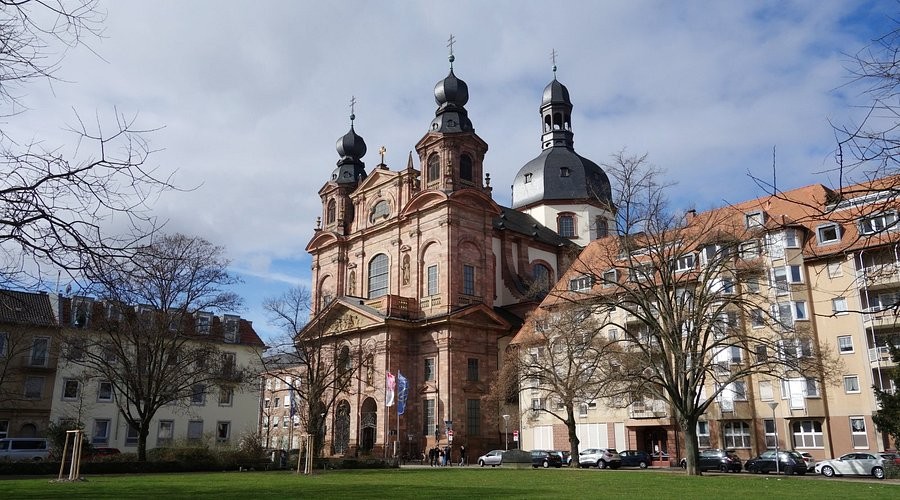
Jesuit Church

Olulisim info

  • Alternate names:
    • Jesuit Kirche
    • Jesuit Church
    • Mannheim Jesuit Church
    • Jesuit Church, Mannheim
    • Jesuit Church Mannheim
  • Location: Mannheim, Germany
  • Featured artists: Philipp Hieronymus Brinckmann
  • Works on APS: 1

Kunstiviktoriin

Iga küsimuse kohta on ainult üks õige vastus.

Küsimus 1:
What architectural style is prominently featured in the Mannheim Jesuit Church?
Küsimus 2:
The church’s frescoes were created by:
Küsimus 3:
Which religious artifact is considered the most celebrated piece housed within the Mannheim Jesuit Church?
Küsimus 4:
What historical event led to the rebuilding of the Jesuit Church?
Küsimus 5:
Who were the saints honored by dedicating the Mannheim Jesuit Church?

A Baroque Gem: The Jesuit Church of Mannheim

The Jesuit Church in Mannheim stands as a testament to the grandeur and artistic fervor of the Baroque period, offering visitors an unparalleled glimpse into both religious devotion and masterful architectural design. Constructed in 1733 under the patronage of Johann Anton Wilhelm Theodor von Nassau-Weilbach, Grand Duke of Hesse Darmstadt, this church represents more than just stone and pigment; it embodies a profound cultural legacy.

  • Specializations & Collections: The church’s artistic treasures fall squarely within Baroque Art, showcasing breathtaking frescoes by Egid Quirin Asam and his workshop—a cornerstone of Mannheim’s artistic heritage. Furthermore, its collection centers on religious iconography, specifically honoring Saints Ignatius and Francis Xavier, reflecting the Jesuit Order's commitment to spiritual education and missionary endeavors.
  • Collection Highlights: Undoubtedly, the centerpiece is the Crowned Silver Madonna, a devotional object crafted with exceptional skill and imbued with symbolic significance. Its intricate detailing and radiant surface exemplify the artistic standards of its time—a remarkable achievement that continues to inspire admiration.

Architecture & Design: The church’s interior is dominated by monumental Baroque architecture, characterized by soaring ceilings adorned with gilded stucco work and expansive frescoes that bathe the space in ethereal light. Asam’s vision prioritized creating a sensory experience—a deliberate attempt to transport worshippers into a realm of divine beauty.

  • History & Significance: Originally conceived as a bastion of Jesuit influence in Darmstadt, the church underwent significant reconstruction following World War II, preserving its historical integrity while adapting to modern needs. Its dedication to Saints Ignatius and Francis Xavier underscores the Order’s enduring role in shaping European religious thought.
  • Notable Exhibitions: Mannheim Jesuit Church has hosted several exhibitions exploring Baroque art and architecture, attracting scholars and enthusiasts alike. These events illuminate the broader context of artistic production during the period and celebrate the church's contribution to cultural heritage.

What Makes It Unique? The confluence of Asam’s unparalleled frescoes—particularly the Spandrel painting depicting Saint Ignatius—the Crowned Silver Madonna’s historical provenance, and the church’s role as a symbol of Darmstadt’s Baroque past distinguishes Mannheim Jesuit Church from countless other ecclesiastical buildings. Visiting this sanctuary is akin to stepping back in time, immersing oneself in an environment where art served as a conduit for spiritual contemplation.

  • Further Exploration: For those interested in delving deeper into the artistic techniques employed by Asam and his workshop, consider researching Charles Frederick Church’s work—a fellow American artist who tackled similar themes of social responsibility.