William Tom Warrener portree

William Tom Warrener maalid: 13 kuulsumat teost galeriin läbi

Uuendatud november 2026 · järjestatud meie populaarsusindeksi järgi (otsingud, külastused ja tellimused igale teosele) · 13 teost William Tom Warrener meie kataloogis

Lühidalt

Galleriist vaadatuna on William Tom Warrener kõige kuulsam teos Quadrille I (1890), mille originaal ripub Usher Gallery-is, Lincoln. Portrait of an Unknown Man (1882) ja Leonline (1890) täidavad kolmikut, mille iga silm tunnistab. Kunstnii William Tom Warrener 13 teose põhjal esitleb galeriis allpool 13 kõige kuulsumat, kus iga originaal on märgitud aastaga, muuseumiga ja kirjeldatud, mis teeb selle unikaalseks.

1861 – 1934 Enamama teoseid: Usher Gallery

Galeria 10 parimat William Tom Warrener maali

1
Quadrille I (1890) autor William Tom Warrener

Quadrille I

1890 · Oil On Canvas · Usher Gallery, Lincoln

The air feels thick with the hum of a crowd as the scene unfolds in a burst of movement. Sunlight filters through an overcast sky, casting a soft, diffused glow over a bustling outdoor gathering. Figures move in a rhythmic, almost chaotic dance, their forms blending into one another through loose, expressive brushstrokes. Men, women, and children populate the space, their attire and poses suggesting a moment of spontaneous social…

William Tom Warrener maalid, järjestus 11 kuni 13

Muuseumid, kus on säilitatud William Tom Warrener originaalteosed

Muuseum, milles on kõige rohkem sellel lehel esitatud maaleid.

Muuseumid Linn William Tom Warrener teosid Selle nimekirja maalid
Usher Gallery, LincolnUsher Gallery Lincoln 13 Quadrille I, Portrait of an Unknown Man, Leonline

William Tom Warrener, iga aasta esindavad teosed

Mõnel kümnendal aastal, 1882 kuni 1891, oli William Tom Warrener jaoks piisavalt aega: galeriis liigutakse läbi aastate, üks kuulus originaal teisega pärast.

Teosed aasta kaupa

Vali aasta, et näha originaale.

William Tom Warrener maalid: galerii vastused

Milline William Tom Warrener maal on kõige kuulsam?Paljasta vastus

Quadrille I (1890), Usher Gallery, Lincoln. Järgnevad Portrait of an Unknown Man (1882) ja Leonline (1890).

Kui vana William Tom Warrener oli teose Quadrille I valmimisel?Paljasta vastus

29 aastat vanus: teos Quadrille I on pärinev aastast 1890 ning William Tom Warrener sündis aastal 1861.

Millised on William Tom Warrener top 10 maali?Paljasta vastus

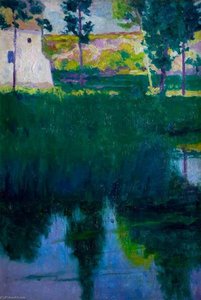
Quadrille I, Portrait of an Unknown Man, Leonline, December Day at Grez sur Loing, France, Reflections, Quadrille II, Undergrowth, Vineyard, Mary Ann Carlton ja Le lavoir. Ülemine reiting näitab iga teose puhul aastat ja muuseumi.

Kui palju teoseid William Tom Warrener lõi?Paljasta vastus

Meie kataloogist leiate 13 teost kunstnikult William Tom Warrener, mis on pärinevad ajastust 1882 kuni 1891.

Kust leiad William Tom Warrener kõige kuulsamad originaalteosed?Paljasta vastus

Peamiselt Usher Gallery (Lincoln) muuseumites. Ülalpool olevate muuseumite tabelis on nendest kõik loetletud.

Millal lõi William Tom Warrener oma kuulsamad maalid?Paljasta vastus

Ajal 1890: 7 13 sellel lehel olevat teost on sellel perioodil loodud, მათart közül Quadrille I.

Millised on William Tom Warrener varased ja hilised kuulsad teosed?Paljasta vastus

Sellel lehel on kõige vanem teos Portrait of an Unknown Man (1882) ja kõige värskeim December Day at Grez sur Loing, France (1891).

Milliseid William Tom Warrener originaalte Usher Gallery kogumuses on?Paljasta vastus

Quadrille I, Portrait of an Unknown Man ja Leonline: Usher Gallery, Lincoln säilitab 13 selle lehel olevat teost.

William Tom Warrener: kunstnik

William Tom Warrener (1861–1934): A Painter of Rural England

William Tom Warrener (1861–1934) was a British landscape painter born in Worcestershire, England. His artistic journey spanned decades, marked by an unwavering dedication to capturing the beauty and tranquility of rural England—a fascination that would define his oeuvre and solidify his place as a significant figure within the Impressionist movement.
  • Early Life & Education: Warrener’s formative years were spent in Worcestershire, where he received a grounding in classical art principles at Worcester Royal Grammar School. He subsequently pursued formal artistic training at Slade School of Fine Art in London, honing his skills under influential instructors like Frederic Leighton and Joseph Hibberd—artists known for their meticulous realism and masterful depiction of light and atmosphere.
  • Impressionist Style & Influences: Warrener’s artistic vision was profoundly shaped by Impressionism, spearheaded by artists such as Claude Monet and Pierre-Auguste Renoir. He embraced the movement's core tenets—loose brushwork, vibrant color palettes, and a focus on capturing fleeting moments of light—translating these principles into his own distinctive style.

Notable Paintings & Artistic Development

Warrener’s artistic output encompassed numerous landscapes rendered in oil paint, predominantly depicting vineyards, orchards, and idyllic rural vistas. His canvases are characterized by a remarkable sensitivity to light—particularly the dappled sunlight filtering through foliage—resulting in luminous compositions that convey an unparalleled sense of atmosphere. Recurring motifs included depictions of cottages nestled amongst rolling hills, reflecting Warrener’s deep appreciation for the pastoral landscapes of Worcestershire and surrounding areas.
  • "Quadrille I": This celebrated painting exemplifies Warrener's Impressionist technique—a lively depiction of a fairground scene bathed in warm sunlight, showcasing masterful brushstrokes and vibrant hues.
  • "Le Lavoir": A poignant portrayal of rural domestic life, “Le Lavoir” captures the quiet dignity of everyday tasks against a backdrop of muted greens and browns, demonstrating Warrener’s ability to convey emotion through subtle tonal variations.

Recognition & Legacy

Warrener's work gained considerable acclaim during his lifetime, securing commissions from prominent patrons and exhibiting regularly at the Royal Academy in London. His paintings are held in collections across Britain and internationally, testament to their enduring appeal and artistic merit. Warrener’s contribution to Impressionist landscape painting is particularly noteworthy—he championed a style that prioritized observation and emotion over academic convention, establishing himself as one of England's foremost artists of the late nineteenth century.

Further Exploration