William Simpson portree

William Simpson maalid: 100 kuulsumat teost galeriin läbi

Uuendatud november 2026 · järjestatud meie populaarsusindeksi järgi (otsingud, külastused ja tellimused igale teosele) · 195 teost William Simpson meie kataloogis

Lühidalt

Galleriist vaadatuna on William Simpson kõige kuulsam teos Lama in a monastery working the prayer wheels (1861), mille originaal ripub Victoria and Albert Museum-is, London. The Bull Nandi in the courtyard of the Golden Temple, Benares (1864) ja View of the Kaiser Bagh in Lucknow (1864) täidavad kolmikut, mille iga silm tunnistab. Kunstnii William Simpson 195 teose põhjal esitleb galeriis allpool 100 kõige kuulsumat, kus iga originaal on märgitud aastaga, muuseumiga ja kirjeldatud, mis teeb selle unikaalseks.

1823 – 1899, Glasgow Romanticism Enamama teoseid: Victoria and Albert Museum

Galeria 10 parimat William Simpson maali

1
Lama in a monastery working the prayer wheels (1861) (autor) William Simpson

Lama in a monastery working the prayer wheels

1861 · Watercolor · Victoria and Albert Museum, London

A solitary monk sits within the quietude of a monastery, likely located in the Ladakh region. He is engaged in the rhythmic, spiritual practice of spinning prayer wheels, a central act of Buddhist devotion. The composition centers on a large, ornate cylindrical wheel that dominates the mid-ground, its form contrasting with the organic silhouette of the seated figure. Light enters through arched openings to the left, casting a soft glow…

2
The Bull Nandi in the courtyard of the Golden Temple, Benares (1864) (autor) William Simpson

The Bull Nandi in the courtyard of the Golden Temple, Benares

1864 · Watercolor · Victoria and Albert Museum, London

In "The Bull Nandi in the courtyard of the Golden Temple, Benares" by William Simpson, a profound sense of quietude settles over a sacred space. The scene unfolds within a serene courtyard in Benares, where the eye is immediately drawn to the center of the composition. There, a massive, white Nandi bull statue rests, its pale form anchoring the mid-ground of the view. This religious and cultural subject occupies the…

3
View of the Kaiser Bagh in Lucknow (1864) (autor) William Simpson

View of the Kaiser Bagh in Lucknow

1864 · Watercolor · Victoria and Albert Museum, London

The scene unfolds in the watercolor painting titled View of the Kaiser Bagh in Lucknow. This work, rendered by the artist William Simpson, captures a moment of intense struggle amidst the grand architecture of the city. The artist, William Simpson, brings a sense of immediacy to the canvas, documenting the unfolding chaos of the Siege of Lucknow through his delicate yet precise application of pigment.

4
The Temple of Poseidon, Sunium (autor) William Simpson

The Temple of Poseidon, Sunium

Watercolor

The Temple of Poseidon, Sunium by William Simpson captures a quiet moment at the edge of the Attica peninsula. The ancient Greek temple of Poseidon sits under a sky heavy with clouds, catching the fading light of a sunset. This celestial display casts a dramatic glow over the stone architecture, turning the scene into a study of light and shadow. The atmosphere feels still, as if the world is holding…

5
Circassia. Teherkess Of The Soubash (autor) William Simpson

Circassia. Teherkess Of The Soubash

Oil

The oil painting titled Circassia. Teherkess Of The Soubash is a work by the artist William Simpson. He was born in Glasgow, United Kingdom, in 1823. His brush captured a specific moment in the mid-19th century, documenting a world of dirt roads and traditional robes. He remained an observer of distant lands until his death in 1899.

6
The Gate Of Huldah The Prophetess, Jerusalem (autor) William Simpson

The Gate Of Huldah The Prophetess, Jerusalem

The painting titled The Gate Of Huldah The Prophetess, Jerusalem is a work by the artist William Simpson. The subject of the piece is the gate of Huldah the prophetess located in Jerusalem. This architectural feature serves as the central focus of the composition.

7
Pheel Khana, Or Elephants Quarters (autor) William Simpson

Pheel Khana, Or Elephants Quarters

Watercolor

In Pheel Khana, Or Elephants Quarters, William Simpson captures a specific moment of repose and labor within an Indian encampment. The composition centers on several large elephants gathered around a cluster of tents. These massive animals form the structural weight of the scene, their heavy bodies anchored near the canvas fabric. Some individuals are perched high upon the backs of the elephants, looking out over the camp, while others move…

8
Kailasanatha temple, Ellora (1862) (autor) William Simpson

Kailasanatha temple, Ellora

1862 · Watercolor · Victoria and Albert Museum, London

This artwork is titled Kailasanatha temple, Ellora, and was executed by the artist William Simpson. The work focuses on the Kailasanatha temple located in Ellora, Maharashtra, India. The subject is a monolithic rock temple, a structure carved directly from the living stone. The painting captures the architectural scale of this free-standing rock temple situated within a rock pit.

9
Worship of the Devi at Kothi, near Chini (1860) (autor) William Simpson

Worship of the Devi at Kothi, near Chini

1860 · Watercolor · Victoria and Albert Museum, London

The scene unfolds in the Worship of the Devi at Kothi, near Chini, a work that captures a moment of intense devotion. Painted by William Simpson around 1860, the image brings us into the heart of a religious gathering. We find ourselves amidst a crowd of devotees, their presence felt through the collective energy of the assembly. Musicians move through the throng, their long horns and drums providing a rhythmic…

10
The Sanchi tope, Tanjore (1861) (autor) William Simpson

The Sanchi tope, Tanjore

1861 · Watercolor · Victoria and Albert Museum, London

In this landscape watercolor, William Simpson presents "The Sanchi tope, Tanjore," a work dating from about 1861. The composition adopts a wide view, looking across a rugged, debris-strewn foreground toward the monument. From this slightly low angle, the large, hemispherical dome of the stupa occupies the center of the frame, positioned slightly to the right. The structure is surrounded by the organic shapes of foliage and the weathered textures of…

William Simpson maalid, järjestus 11 kuni 100

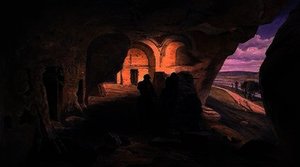
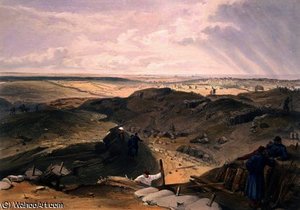
11Buddhist stupa at Sarnath, Benaras (1864) (autor) William SimpsonBuddhist stupa at Sarnath, Benaras1864 · Victoria and Albert Museum 12Gateway of the Buddhist Top at Sanchi (1865) (autor) William SimpsonGateway of the Buddhist Top at Sanchi1865 · Victoria and Albert Museum 13Akalis at the Holy Tank, Umritsar (autor) William SimpsonAkalis at the Holy Tank, Umritsar 14Temple Of Minerva Sunium (autor) William SimpsonTemple Of Minerva Sunium 15Portrait Of Mary Seacole (autor) William SimpsonPortrait Of Mary Seacole 16The Oxford ^ Cambridge Boat Race (autor) William SimpsonThe Oxford ^ Cambridge Boat Race 17Sevastopol (autor) William SimpsonSevastopol 18Prinsep's Ghat, Calcutta (autor) William SimpsonPrinsep's Ghat, Calcutta 19Circassians At The Fort Of Waia (autor) William SimpsonCircassians At The Fort Of Waia 20Graves At The Head Of The Harbour Of Balaklava (autor) William SimpsonGraves At The Head Of The Harbour Of Balaklava 21Attack On The Malakoff (autor) William SimpsonAttack On The Malakoff 22The Field of Inkermann (autor) William SimpsonThe Field of Inkermann 23Elephant Battery (autor) William SimpsonElephant Battery 24Camp of the Fourth Division (autor) William SimpsonCamp of the Fourth Division 25Bastion du Mat from the Central Bastion (autor) William SimpsonBastion du Mat from the Central Bastion 26Yosemite Falls (autor) William SimpsonYosemite Falls 27The Camp of the First Division (autor) William SimpsonThe Camp of the First Division 28Ditch of the Bastion du Mat (autor) William SimpsonDitch of the Bastion du Mat 29Mine In The Bastion Du Mat - (autor) William SimpsonMine In The Bastion Du Mat - 30Second Charge of the Guards at Inkerman (autor) William SimpsonSecond Charge of the Guards at Inkerman 31Shalimar Gardens. Cashmere. (autor) William SimpsonShalimar Gardens. Cashmere. 32The plains, landour church, mussoorie (autor) William SimpsonThe plains, landour church, mussoorie 33Mongolia. Group Near The Great Wall Of China. (autor) William SimpsonMongolia. Group Near The Great Wall Of China. 34Quarantine Cemetery and Church (autor) William SimpsonQuarantine Cemetery and Church 35The graves on cathcart's hill of the officers of the fourth division who fell at inkerman (autor) William SimpsonThe graves on cathcart's hill of the officers of the fourth division who fell at inkerman 36The Maristan Or Mosque-hospital Of Kalaun, Cairo (autor) William SimpsonThe Maristan Or Mosque-hospital Of Kalaun, Cairo 37The river chenab, punjab (autor) William SimpsonThe river chenab, punjab 38Pheel Khan, Or Elephants' Quarters, Holcar's Camp (autor) William SimpsonPheel Khan, Or Elephants' Quarters, Holcar's Camp 39The wellesley monument, bombay (autor) William SimpsonThe wellesley monument, bombay 40Excavated Church in the Caverns of Inkerman (autor) William SimpsonExcavated Church in the Caverns of Inkerman 41Interior Of Fort Nicholas, Sebastopol (autor) William SimpsonInterior Of Fort Nicholas, Sebastopol 42Interior of Lord Raglan's Head Quarters (autor) William SimpsonInterior of Lord Raglan's Head Quarters 43Lintel Of Barclay's Doorway (autor) William SimpsonLintel Of Barclay's Doorway 44Mine of the Bastion du Mat (autor) William SimpsonMine of the Bastion du Mat 45Wilson's arch, jerusalem, (autor) William SimpsonWilson's arch, jerusalem, 46Fallen Voussoirs of Robinson's Arch, Jerusalem (autor) William SimpsonFallen Voussoirs of Robinson's Arch, Jerusalem 47The Church Of Ecce Homo, Convent Of The Soeurs De Sion, Jerusalem (autor) William SimpsonThe Church Of Ecce Homo, Convent Of The Soeurs De Sion, Jerusalem 48Glen Massen (autor) William SimpsonGlen Massen 49Dahad Ziaret (autor) William SimpsonDahad Ziaret 50Kyleakin, Skye (autor) William SimpsonKyleakin, Skye 51The Siege Of Rome (autor) William SimpsonThe Siege Of Rome 52The Shah Nujeef (autor) William SimpsonThe Shah Nujeef 53Ghelenjik (autor) William SimpsonGhelenjik 54A Hot Day in the Batteries (autor) William SimpsonA Hot Day in the Batteries 55An Album Of Sketches Of India (autor) William SimpsonAn Album Of Sketches Of India 56Sentinel of the Zouaves (autor) William SimpsonSentinel of the Zouaves 57Kertch from the north (autor) William SimpsonKertch from the north 58Buddhist Rock Cut Temple, Ajanta (autor) William SimpsonBuddhist Rock Cut Temple, Ajanta 59Cavalry camp (autor) William SimpsonCavalry camp 60The Pir Panjal Pass Into Kashmir (autor) William SimpsonThe Pir Panjal Pass Into Kashmir 61The admiralty, sebastopol (autor) William SimpsonThe admiralty, sebastopol 62The Chitpore Road (autor) William SimpsonThe Chitpore Road 63Fortress of Yenikale (autor) William SimpsonFortress of Yenikale 64Ditch of the Malakoff (autor) William SimpsonDitch of the Malakoff 65Camp of the 3rd Division (autor) William SimpsonCamp of the 3rd Division 66Hospital and cemetry at Scutari (autor) William SimpsonHospital and cemetry at Scutari 67Balaklava Harbour Scene (autor) William SimpsonBalaklava Harbour Scene 68The Old Tower At Cannes (autor) William SimpsonThe Old Tower At Cannes 69A Tibetan Weaver (autor) William SimpsonA Tibetan Weaver 70A Scene From Rob Roy, Theatre Royal, Edinburgh (autor) William SimpsonA Scene From Rob Roy, Theatre Royal, Edinburgh 71Battle of the Tchernaya (autor) William SimpsonBattle of the Tchernaya 72Church Of St. Peter And St. Paul (autor) William SimpsonChurch Of St. Peter And St. Paul 73Camp of the Naval Brigade (autor) William SimpsonCamp of the Naval Brigade 74The Village Welll (autor) William SimpsonThe Village Welll 75Leh, The Capital Of Tibet (autor) William SimpsonLeh, The Capital Of Tibet 76One of the wards of the hospital at Scutari (autor) William SimpsonOne of the wards of the hospital at Scutari 77Bastion du Mat (autor) William SimpsonBastion du Mat 78Valley of the Tchernaya (autor) William SimpsonValley of the Tchernaya 79The Ruins of Inkerman (autor) William SimpsonThe Ruins of Inkerman 80Docks At Sebastopol With Ruins Of Fort St Paul (autor) William SimpsonDocks At Sebastopol With Ruins Of Fort St Paul 81Disembarkation Of The Expedition To Kertch At Kamish (autor) William SimpsonDisembarkation Of The Expedition To Kertch At Kamish 82The Cow's Mouth Glacier, India (autor) William SimpsonThe Cow's Mouth Glacier, India 83The Camp of the Second Division (autor) William SimpsonThe Camp of the Second Division 84Highland brigade camp (autor) William SimpsonHighland brigade camp 85Head of the harbour, Sebastopol (autor) William SimpsonHead of the harbour, Sebastopol 86Interior Of The Malakoff (autor) William SimpsonInterior Of The Malakoff 87The Cavalry Affair of the Heights of Bulganak (autor) William SimpsonThe Cavalry Affair of the Heights of Bulganak 88Interior of the Mamelon Vert (autor) William SimpsonInterior of the Mamelon Vert 89Huts and war clothing for the army (autor) William SimpsonHuts and war clothing for the army 90The Blessing Of The Suez Canal (autor) William SimpsonThe Blessing Of The Suez Canal 91Lord Raglan's Head Quarters At Khutor-karagatch - (autor) William SimpsonLord Raglan's Head Quarters At Khutor-karagatch - 92The Sun Temple Of Martand, Kashmir (autor) William SimpsonThe Sun Temple Of Martand, Kashmir 93The Landing At Calimita Bay (autor) William SimpsonThe Landing At Calimita Bay 94A Hot Night In The Batteries (autor) William SimpsonA Hot Night In The Batteries 95Sketch in the interior of the Mamelon Vert (autor) William SimpsonSketch in the interior of the Mamelon Vert 96Russian Rifle Pit (autor) William SimpsonRussian Rifle Pit 97A Christmas Dinner On The Heights Before Sebastopol (autor) William SimpsonA Christmas Dinner On The Heights Before Sebastopol 98Town batteries (autor) William SimpsonTown batteries 99Sebastopol From The Sea (autor) William SimpsonSebastopol From The Sea 100A Quiet Night In The Batteries (autor) William SimpsonA Quiet Night In The Batteries

Teemad, mis püüdisid William Simpson pilma

Neli teemat, mis esinevad neis originaalkindel kõige sagedamini, ning iga teema parim näide.

Muuseumid, kus on säilitatud William Simpson originaalteosed

Muuseum, milles on kõige rohkem sellel lehel esitatud teoseid.

Muuseum Linn William Simpson teosed Selle nimekirja maalid
Victoria and Albert Museum, LondonVictoria and Albert Museum London 8 Lama in a monastery working the prayer wheels, The Bull Nandi in the courtyard of the Golden Temple, Benares, View of the Kaiser Bagh in Lucknow

William Simpson, iga aasta esindavad teosed

6 aastat, 1860 kuni 1865, on esitatud William Simpson kogu ajastatud karjäär selles lehel: lühike ülevaade, mis on koostatud aastaaegult läbi tema kõige kuulsamate originaalteoste.

Teosed aasta kaupa

Vali aasta, et näha originaale.

William Simpson maalid: galerii vastused

Milline William Simpson maal on kõige kuulsam?Paljasta vastus

Lama in a monastery working the prayer wheels (1861), Victoria and Albert Museum, London. Järgnevad The Bull Nandi in the courtyard of the Golden Temple, Benares (1864) ja View of the Kaiser Bagh in Lucknow (1864).

Kui vana William Simpson oli teose Lama in a monastery working the prayer wheels valmimisel?Paljasta vastus

38 aastat vanus: teos Lama in a monastery working the prayer wheels on pärinev aastast 1861 ning William Simpson sündis aastal 1823.

Millised on William Simpson top 10 maali?Paljasta vastus

Lama in a monastery working the prayer wheels, The Bull Nandi in the courtyard of the Golden Temple, Benares, View of the Kaiser Bagh in Lucknow, The Temple of Poseidon, Sunium, Circassia. Teherkess Of The Soubash, The Gate Of Huldah The Prophetess, Jerusalem, Pheel Khana, Or Elephants Quarters, Kailasanatha temple, Ellora, Worship of the Devi at Kothi, near Chini ja The Sanchi tope, Tanjore. Ülemine reiting näitab iga teose puhul aastat ja muuseumi.

Kui palju teoseid William Simpson lõi?Paljasta vastus

Meie kataloogist leiate 195 teost kunstnikult William Simpson, mis on pärinevad ajastust 1860 kuni 1865.

Kust leiad William Simpson kõige kuulsamad originaalteosed?Paljasta vastus

Peamiselt Victoria and Albert Museum (London) muuseumites. Ülalpool olevate muuseumite tabelis on nendest kõik loetletud.

Millal lõi William Simpson oma kuulsamad maalid?Paljasta vastus

Ajal 1864: 3 100 sellel lehel olevat teost on sellel perioodil loodud, sellest The Bull Nandi in the courtyard of the Golden Temple, Benares.

Millised on William Simpson varased ja hilised kuulsad teosed?Paljasta vastus

Sellel lehel on kõige vanem teos Worship of the Devi at Kothi, near Chini (1860) ja kõige värskeim Gateway of the Buddhist Top at Sanchi (1865).

Millist teemat William Simpson kõige rohkem käsitledas?Paljasta vastus

Sky (7), Landscape (7) ja Crimean war (6), kogu selle lehekülje 100 teose kohta.

Millises tehnikas töötas William Simpson kõige rohkem?Paljasta vastus

Watercolor, 10 teoseks 100 töödelt sellel lehel.

Millise suunaga on William Simpson seotud?Paljasta vastus

Romanticism, seda lähtudes selle lehe originaalteostest.

Milliseid William Simpson originaalte Victoria and Albert Museum kogumuses on?Paljasta vastus

Lama in a monastery working the prayer wheels, The Bull Nandi in the courtyard of the Golden Temple, Benares ja View of the Kaiser Bagh in Lucknow: Victoria and Albert Museum, London säilitab 8 selle lehel olevat teost.

William Simpson: kunstnik

Elu ja Konfliktide Kirjeldus: William Simpson, Krimmi Sõja Kroonik

William Simpson, kelle nimi on igaveseks seotud Krimmi sõja karmide tõlgendustega – sageli sosistatakse kui “Krimmi Simpson” – ei olnud pelgalt sõjakunstnik. Ta oli visuaalne kroonik, julge vaatleja, kes dokumenteeris 19. sajandi maailma kiiret muutumist. Sündinud Glasgow’ vaesusesse 1823. aastal, on tema teekond raskustest kuulsusse tunnistus nii kaasasündinud andest kui ka vankumatu visaduse kohta. Tema varajast elu varjutas keeruline perekonnatingimus; vägivallatsev ja alkohoolik isa viis ta kümneaastaselt elama vanaema juurde Perth’i – samm, mis pakkus stabiilsust, kuid piiras ametlikku haridust, süüdes tema sees elukestva eneseõppe pühendumise. See teadmiste otsing jätkus õpingutega Glasgow’ lithograafiakompaniis Macfarlane, mida ta hiljem kirjeldas kui pöördelist, ning õhtused uuringud Andersonian University's ja Mechanics' Institutel. Need kujundavad aastad panid aluse karjäärile, mis sujuvalt ühendaks kunstilised oskused maailma vahetumata uudishimuga.

Sõja Tunnistaja: Krimmi Ilmutus

Krimmi sõja (1853-1856) puhkemine muutis Simpson’i trajektoori pöördumatult. Esialgu telliti tal luua litograaf põhinedes teise käe kontodel Alma lahingust, tema talent tõi kiiresti tähelepanu Colnaghi & Sonilt, kes saatis ta otse Krimmi novembrikuus 1854. aastal. See ei piirdunud lihtsalt lahingute illustreerimisega; see puudutas *kogemist* ja selle kogemuse tõlkimist paberile täpse detailiga. Simpson ei kartnud kujutada sõja karmisid tõlgendusi – muda, kannatusi, paljast väsimust, mis on söövitatud sõdurite nägudele. Tema akvarellid polnud romantiseeritud visioonid, vaid kompromissitud ülestähendused brutaalsest konfliktist. Need pildid muundati seejärel litograafiadeks publikatsioonide jaoks nagu The Illustrated London News, tuues Krimmi sõja õudused ja kangelaslikkuse otse Briti kodudesse. Ta sai tuntuks kui “Krimmi Simpson” mitte ainult tema kohaloluga seal, vaid ka autentsuse ja vahetu täpsusega, mille ta oma kujutistele tõi. Tema töö andis olulise visuaalse narratiivi sõja ajal, mis oli muidu paljudele kodumaal kaugel ja abstraktne. The Seat of War in the East, tema silmapaistev litograafiaseeria nendest joonistustest, on endiselt tähtsaim saavutus sõjakorrespondentsis ja visuaalses jutustamises – tunnistus tema julgusele ja kunstilisele oskusele tule all.

Krimmist kaugemale: India, uurimine ja kunstiline ambitsioon

Simpson’i edu Krimmis avas uksed täiendavatele ülesannetele erikunstnikuna ja korrespondendina The Illustrated London Newsile. 1850ndate lõpus asus ta ulatuslikule reisile Indiasse, dokumenteerides 1857. aasta Sepoy mässu tagajärgi. See ekspeditsioon ei piirdunud lihtsalt sõjaliste sündmuste registreerimisega; see oli sügav sukeldumine India maastikku, kultuuri ja igapäevaelu. Ta tabas kihavaid turge, rahulikke templeid, majesteetlikke paleesid ja kohalike inimeste portreid tähelepanuväärse tundlikkusega. Tema akvarellid Indiast näitavad nüansitud arusaama alamkontinentist – kaugele lihtsatest kujutustest, mis olid tollal tavalised. Simpson visioonis India kohta ulatuslikku illustreeritud köidet, ambitsioosset projekti, mis kahjuks nurjus Day & Son’i finantslike raskuste tõttu, kavandatud kirjastaja. Vaatamata sellele tagasilöögile on tema India akvarellid hindamatud ülestähendused pöördelisest hetkest Briti koloniaalajaloos, mis näitavad mitte ainult alamkontinendi uhkust, vaid ka keerukusi ja pingeid, mis on seotud imperialistliku valitsusega. Ta jätkas laialdast reisimist, dokumenteerides stseene Venemaalt, Hiinast ja mujalt, tuues alati tagasi üksikasjalikke vaatlusi, mis on esitatud tähelepanuväärse oskusega.

Pärand ja püsiv mõju

William Simpson’i pärand ulatub kaugele tema vapustavast visuaalsest dokumentatsioonist 19. sajandi sündmustest. Ta aitas luua “erikunstniku” rolli – sisalduva vaatleja, kes andis esmase käe visuaalse aruandluse konfliktitsoonidest ja kaugele paikadest. Tema töö ei olnud ainult kunst; see oli ajakirjandus, ajalugu ja kultuuriline tähelepanek kõik ühes. Simpson nautis ka kuninganna Victoria patroonimist, mis on tunnistus tema kunsti austusele. Ta valiti 1874. aastal Institute of Painters in Water Colours’i assotsieerunuks ja viis aastat hiljem täisliikmeks. Tema üksikasjalikke akvarelle ja litograafiadeid uurivad tänapäevani ajaloolased ja kunstihuvilised, pakkudes hindamatuid ülevaateid minevikust. Nagu mõned teda kutsusid, oli ta “Piltlikkude Korrespondentide Prints,” kelle töö jätkab publiku inspireerimist tänapäevalgi.

Tuntud tööd

  • The Seat of War in the East: Silmapaistev litograafiaseeria, mis põhineb tema Krimmi joonistel, pakkudes üksikasjalikku visuaalset ülestähendust konfliktist.
  • Venelaste taganemine Sevastopolist: Võimas akvarell, mis tabab pöördelist hetke Sevastopoli languses, näidates Simpson’i oskust dramaatiliste stseenide kujutamisel.
  • Mongoolia. Grupp Suure Hiina müüri lähedal.: Näitab tema võimet tabada kultuurivahetust ja maastikke realismiga ja romantismiga.
  • Akalis Pühajal Tiigis, Umritsaris: Elav kujutus Sikh’i jumalateenistusest, rikas ajalooliste detailidega.
  • Neljanda divisjoni laagris: Evokatiivne maaling, mis kujutab 19. sajandi sõjaväelaagrit.
Simpson’i võime tabada nii inimkonfliktide uhkust kui ka kannatusi kinnistas tema koha olulise figuurina viktoriaanlikus kunstis ja ajaloos – visuaalse jutustaja töö, mis jätkab informeerimist ja inspireerimist tänapäevalgi.