William Peters portree

16 kulubumatamatum William Peters maali, galeriiselektsioon

Uuendatud november 2026 · järjestatud meie populaarsusindeksi järgi (otsingud, külastused ja tellimused igale teosele) · 19 teost William Peters meie kataloogis

Lühidalt

Kõigist William Peters jäetud originaalteostest on kõige kuulsam Lady Elizabeth Isabella Manners (1778–1853), as a Child, Later Lady Richard Norman (1782). Järgnevad sellest Portrait of Sir William Robinson, Bt (1703-1777) (1777) ja Sylvia, a Courtesan (1778). Meie kataloogist löytyb 19 teost kunstnikult William Peters; galeriist on säilitatud 16 maailmas kõige imetlustunud teost, millest iga on esitatud koos kuupäeva, museumi ja oma luguga.

1741 – 1814, Freshwater Enamama teoseid: Imperial College Healthcare Charity Art Collection

William Peters top 10 maalist: galeriis valitud teosed

1
Lady Elizabeth Isabella Manners (1778–1853), as a Child, Later Lady Richard Norman (1782) (autor) William Peters

Lady Elizabeth Isabella Manners (1778–1853), as a Child, Later Lady Richard Norman

1782 · Oil

The painting depicts a young girl positioned against a textured brick wall. She wears a white dress accented with pink ribbons at the neck and waist. In her left hand, she holds a bunch of grapes, while her right hand carries a basket. Two apples rest in the foreground on the ground. The girl's expression is a smile, and her gaze is directed toward the viewer. The lighting emphasizes the…

2
Portrait of Sir William Robinson, Bt (1703-1777) (1777) (autor) William Peters

Portrait of Sir William Robinson, Bt (1703-1777)

1777 · Oil On Canvas · National Gallery of Ireland, Dublin

Sir William Robinson sits in a quiet, heavy stillness, his presence filling the space with the weight of a life lived through the complexities of the eighteenth century. He is positioned in a three-quarter view, leaning slightly behind a table that anchors him within the composition. A soft, directional light descends from the upper left, carving his features out of the gloom and casting gentle shadows across the right side…

3
Sylvia, a Courtesan (1778) (autor) William Peters

Sylvia, a Courtesan

1778 · Oil · National Gallery of Ireland, Dublin

In this intimate portrait, we encounter Sylvia, a Courtesan, a work painted by the English artist William Peters. Created about 1778, the image captures a woman in a quiet moment of repose. The subject rests within a soft, dreamlike atmosphere that draws the viewer into her private space. Every line of her form and the delicate folds of her drapery suggest a sense of vulnerability and grace.

4
Lydia (1776) (autor) William Peters

Lydia

1776 · Oil On Canvas · Rhode Island School of Design Museum of Art, Providence

A young woman lies diagonally across the frame, her body positioned in a state of relaxed repose upon a bed. She is the central focus of this 1776 oil on canvas, her pale, pearlescent skin rendered with smooth brushwork that contrasts against the crisp, white linens surrounding her. A muted pink headpiece rests upon her head, providing a subtle point of color amidst the neutral tones of the bedding. The…

5
HRH Henry Frederick (1745–1790), 1st Duke of Cumberland and Strathearn (1785) (autor) William Peters

HRH Henry Frederick (1745–1790), 1st Duke of Cumberland and Strathearn

1785 · Oil On Canvas · The Library And Museum of Freemasonry, London

The Duke of Cumberland stands before us, a figure of absolute composure and aristocratic weight. He is draped in a deep blue coat, its surface catching the light to reveal the intricate gold trim that traces the edges of his silhouette. Every stitch of his attire speaks of a life lived within the highest circles of the British court. A white wig frames a face of pale, smooth skin, lending…

6
Charles Bromfield (1779) (autor) William Peters

Charles Bromfield

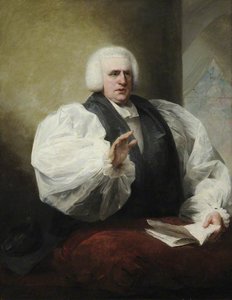
This oil on canvas portrait, titled Charles Bromfield, depicts a gentleman seated in a formal pose. Created by the artist William Peters about 1779, the work presents the subject from the waist up against a muted, warm brown background. The man is shown with white, powdered hair and a serious facial expression. He holds an open book or manuscript in his hands, with the geometric lines of the pages providing…

7
HM King George III (1738–1820) (1761) (autor) William Peters

HM King George III (1738–1820)

In this 1761 portrait, we encounter King George III at a moment of profound significance. The painting captures the monarch in a formal setting, his presence defined by the weight of his station. He is depicted wearing a suit accompanied by a bow tie, with a crown resting upon his head to signify his sovereign authority. The artist has focused heavily on the intricate details of the clothing, allowing the…

8
Edward Wortley Montagu (1775) (autor) William Peters

Edward Wortley Montagu

1775 · Oil · National Portrait Gallery, London

In this portrait of Edward Wortley Montagu, William Peters captures a man of significant intellectual and social standing. Created about 1775, the work presents the subject not merely as a figure of status, but as a man shaped by his extensive travels and scholarly pursuits. As the son of Edward Wortley Montagu and Lady Mary Wortley Montagu, the sitter occupied a unique position in English society, blending the roles of…

9
Lydia (1777) (autor) William Peters

Lydia

1777 · Oil On Canvas

is an oil on canvas created by William Peters in 1776. This work belongs to the Neoclassicism (Early Modern) movement, reflecting the technical precision and stylistic shifts of the late eighteenth century. The artist, born in Freshwater, United Kingdom, developed a command of light and shadow that characterizes this period of British art.

10
Mrs Eleanor Barr (1779) (autor) William Peters

Mrs Eleanor Barr

The portrait of Mrs Eleanor Barr, executed in 1779, presents a woman positioned in a three-quarter view against a muted beige background. She wears a dark-colored hat with a wide brim, which is accented by a single plume or feather on the left side. A white lace collar provides a sharp tonal contrast against her dark attire. This clothing includes a coat featuring a visible fur lining at the neckline.…

Kunstianikut William Peters nimekiri jätkub, 11 kuni 16

Teemad, mis püüdisid William Peters pilma

Neli teemat, mis esinevad neis originaalkindel kõige sagedamini, ning iga teema parim näide.

Muuseumid, kus on säilitatud William Peters originaalteosed

Kümne 6 muuseumi kollektsioonid, mis sisaldavad kõige rohkem sellel lehel esitatud teoseid.

Muuseum Linn William Peters teosed Selle nimekirja maalid
Imperial College Healthcare Charity Art Collection, LondonImperial College Healthcare Charity Art Collection London 3 Charles Bromfield, Mrs Eleanor Barr, Thomas Williams
National Gallery of Ireland, DublinNational Gallery of Ireland Dublin 2 Portrait of Sir William Robinson, Bt (1703-1777), Sylvia, a Courtesan
The Library And Museum of Freemasonry, LondonThe Library And Museum of Freemasonry London 2 HRH Henry Frederick (1745–1790), 1st Duke of Cumberland and Strathearn, HM King George III (1738–1820)
Rhode Island School of Design Museum of Art, ProvidenceRhode Island School of Design Museum of Art Providence 1 Lydia
National Portrait Gallery, LondonNational Portrait Gallery London 1 Edward Wortley Montagu
Oxford College Anon i, OxfordOxford College Anon i Oxford 1 Walter de Stapeldon (1261–1326)

William Peters aastak aegades: originaalteos, mis määratleb iga ajastu

Teosed aastakate kaupa

Vali vuosakülg, et näha selle ajastu definieerivat originaalteost.

Sammlajate küsimused William Peters maalide kohta

Millise teosega on William Peters kõige kuulsam?Paljasta vastus

Lady Elizabeth Isabella Manners (1778–1853), as a Child, Later Lady Richard Norman (1782). Järgnevad Portrait of Sir William Robinson, Bt (1703-1777) (1777) ja Sylvia, a Courtesan (1778).

Kui vana oli William Peters, kui teos Lady Elizabeth Isabella Manners (1778–1853), as a Child, Later Lady Richard Norman loodi?Paljasta vastus

41 aastat vanus: teos Lady Elizabeth Isabella Manners (1778–1853), as a Child, Later Lady Richard Norman on pärinev aastast 1782 ning William Peters sündis aastal 1741.

Millised on kümne kõige kuulsama William Peters maalid?Paljasta vastus

Lady Elizabeth Isabella Manners (1778–1853), as a Child, Later Lady Richard Norman, Portrait of Sir William Robinson, Bt (1703-1777), Sylvia, a Courtesan, Lydia, HRH Henry Frederick (1745–1790), 1st Duke of Cumberland and Strathearn, Charles Bromfield, HM King George III (1738–1820), Edward Wortley Montagu, Lydia ja Mrs Eleanor Barr. Ülemine reiting näitab iga teose puhul aastat ja muuseumi.

Kui palju maali William Peters jäeti?Paljasta vastus

Meie kataloogist leiate 19 teost kunstnikult William Peters, mis on pärinevad ajastust 1761 kuni 1814.

Mitteks muuseumides rihangavad William Peters meistriteosed?Paljasta vastus

Peamiselt Imperial College Healthcare Charity Art Collection (London), National Gallery of Ireland (Dublin) ja The Library And Museum of Freemasonry (London) muuseumites. Ülalpool olevate muuseumite tabelis on nendest kõik loetletud.

Millah aastades maalas William Peters oma kuulsamaid teoseid?Paljasta vastus

Ajal 1770s: 9 16 sellel lehel olevat teost on sellel perioodil loodud, sellest Portrait of Sir William Robinson, Bt (1703-1777).

Mis on William Peters esimene ja viimane kuuls fama originaalteos?Paljasta vastus

Sellel lehel on kõige vanem teos HM King George III (1738–1820) (1761) ja kõige värskeim Portrait of a Child (1814).

Milliseid teemasid William Peters kõige sagedamini valis?Paljasta vastus

Man (6), Woman (5) ja Hat (4), kogu selle lehekülje 16 teose kohta.

Millist tehnikat kasutas William Peters kõige rohkem?Paljasta vastus

Oil, 10 teoseks 16 töödelt sellel lehel.

Millised William Peters teosed on Imperial College Healthcare Charity Art Collection näituses?Paljasta vastus

Charles Bromfield, Mrs Eleanor Barr ja Thomas Williams: Imperial College Healthcare Charity Art Collection, London säilitab 3 selle lehel olevat teost.

William Peters: elu ja looming

The Dual Legacy of Matthew William Peters: Artistry and Altar

In the vibrant tapestry of Georgian England, few figures possess a biography as strikingly dualistic as Matthew William Peters. A man who navigated the profound tension between the sensual grandeur of the Italianate painting style and the solemnity of the Anglican ministry, Peters remains a singular presence in British art history. Born in 1742 in Freshwater, Isle of Wight, his early life was shaped by an intellectual environment rooted in scientific precision; his father, a prominent civil engineer and member of the Royal Dublin Society, instilled in him a capacity for rigorous observation. This analytical foundation would later serve as the bedrock for both his meticulous brushwork and his theological contemplations.

Peters’s artistic journey was one of constant movement and profound discovery. His formative training began in Dublin under Robert West, but it was the patronage of the Dublin Society that truly propelled him onto the international stage. Sent to London to study under the esteemed Thomas Hudson, Peters soon embarked on a transformative pilgrimage to Italy between 1761 and 1765. This period acted as a spiritual and aesthetic rebirth. Immersed in the masterpieces of the Renaissance and Baroque, he did not merely observe but actively engaged with the ghosts of Raphael, Michelangelo, and Caravaggio. By meticulously studying their use of chiaroscuro and complex compositional structures, he developed an "Italian manner" so authentic that contemporary critics noted no British peer could match his command of such dramatic light and shadow.

A Mastery of Portraiture and Genre

Upon his return to England in 1765, Peters emerged as a formidable force within the London art scene. His ascent was marked by consistent recognition from the most prestigious institutions of his era, including regular exhibitions at the Society of Artists and, most notably, his election to the Royal Academy in 1769. As he transitioned into the professional identity often known simply as "W. Peters," his work began to reflect a sophisticated blend of classical elegance and emotional depth. His portraiture, such as the refined Edward Wortley Montagu, showcased an ability to capture both the social stature and the psychological nuance of his subjects through a lens of classical grace.

Beyond the formal constraints of portraiture, Peters explored the evocative realms of genre painting and narrative illustration. His talent for storytelling allowed him to breathe life into scenes that ranged from the intimate to the epic. This versatility was further demonstrated in his later contributions to the Shakespeare Gallery, where his ability to translate literary drama into visual splendor helped define a significant movement in British visual culture. Whether through the delicate rendering of fabric or the dramatic interplay of light across a face, his work remained anchored in the profound aesthetic lessons learned during his Italian sojourn.

The Final Transition: From Canvas to Clergy

As the tides of his life shifted, Peters underwent one of the most remarkable professional transformations of the eighteenth century. The man who had once sought fame within the halls of the Royal Academy eventually turned his gaze toward the eternal. Entering the Anglican ministry, he transitioned from a painter of earthly beauty to an Anglican clergyman and chaplain to George IV. This shift did not represent a rejection of his artistic past but rather a redirection of his creative spirit toward the service of faith. The same precision that guided his hand in capturing light was now applied to the stewardship of the soul.

The historical significance of Matthew William Peters lies in this very synthesis of the temporal and the divine. He stands as a bridge between the exuberant, often eroticized aesthetics of the late Baroque and the disciplined, moralistic atmosphere of the Georgian religious landscape. His life serves as a testament to the idea that art and faith are not opposing forces, but rather two different languages used to describe the same profound human experience. Through his enduring works, we continue to witness the legacy of an artist who found beauty in the shadows of Italy and truth in the light of the pulpit.