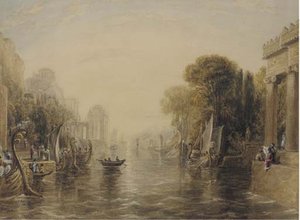
William Linton portree

William Linton maalid: 45 kuulsumat teost galeriin läbi

Uuendatud oktoober 2026 · järjestatud meie populaarsusindeksi järgi (otsingud, külastused ja tellimused igale teosele) · 46 teost William Linton meie kataloogis

Lühidalt

Galleriist vaadatuna on William Linton kõige kuulsam teos Self-portrait (1813), mille originaal ripub Kanada Rahvusgalerii-is, Ottawa. Louise-Amélie Panet (1815) ja Indian Dance at Amherstburg (1825) täidavad kolmikut, mille iga silm tunnistab. Kunstnii William Linton 46 teose põhjal esitleb galeriis allpool 45 kõige kuulsumat, kus iga originaal on märgitud aastaga, muuseumiga ja kirjeldatud, mis teeb selle unikaalseks.

1791 – 1876, Liverpool Romanticism Enamama teoseid: Kanada Rahvusgalerii

Galeria 10 parimat William Linton maali

1
Self-portrait (1813) autor William Linton

Self-portrait

1813 · Black and White Photography · Kanada Rahvusgalerii, Ottawa

In the work titled Self-portrait by William Linton, a sepia-toned, black and white photograph captures a formal gathering of people. The composition is strictly symmetrical, anchored by a large group posed before a textured building. A light-colored wall rises behind them, featuring a large arched doorway and a niche that holds a standing statue. The subjects, likely a class or an organization, are arranged in a series of precise, tiered…

William Linton maalid, järjestus 11 kuni 45

Teemad, mis püüdisid William Linton pilma

Neli teemat, mis esinevad neis originaalkindel kõige sagedamini, ning iga teema parim näide.

Muuseumid, kus on säilitatud William Linton originaalteosed

Kümne 5 muuseumi kollektsioonid, mis sisaldavad kõige rohkem sellel lehel esitatud teoseid.

Muuseumid Linn William Linton teosid Selle nimekirja maalid
Kanada Rahvusgalerii, OttawaKanada Rahvusgalerii Ottawa 3 Self-portrait, Louise-Amélie Panet, Indian Dance at Amherstburg
Yale Center for British Art, New HavenYale Center for British Art New Haven 1 Cottages By A River
Anglesey AbbeyAnglesey Abbey 1 Windsor Castle From The Road To Virginia Water
Hartwell House, AylesburyHartwell House Aylesbury 1 View Of The Forum With Two Herdsmen And Three Cows
Fitzwilliam MuseumFitzwilliam Museum 1 Mistra

William Linton, iga aasta esindavad teosed

William Linton karjäär on sellel lehel olnud 13 aastat, aastatest 1813 kuni 1825: iga aasta on esitatud koos sellea kõige kuulsamate originaalte enough.

Teosed aasta kaupa

Vali aasta, et näha originaale.

William Linton maalid: galerii vastused

Milline William Linton maal on kõige kuulsam?Paljasta vastus

Self-portrait (1813), Kanada Rahvusgalerii, Ottawa. Järgnevad Louise-Amélie Panet (1815) ja Indian Dance at Amherstburg (1825).

Kui vana William Linton oli teose Self-portrait valmimisel?Paljasta vastus

22 aastat vanus: teos Self-portrait on pärinev aastast 1813 ning William Linton sündis aastal 1791.

Millised on William Linton top 10 maali?Paljasta vastus

Self-portrait, Louise-Amélie Panet, Indian Dance at Amherstburg, View Of Edinburgh; And View Of Stirling, Bury From Blackford Bridge, An Italianate Landscape, With Peasants And Livestock In The Foreground, A classical landscape, The Bathing Pool, Cottages By A River ja Scotch Thistle. Ülemine reiting näitab iga teose puhul aastat ja muuseumi.

Kui palju teoseid William Linton lõi?Paljasta vastus

Meie kataloogist leiate 46 teost kunstnikult William Linton, mis on pärinevad ajastust 1813 kuni 1825.

Kust leiad William Linton kõige kuulsamad originaalteosed?Paljasta vastus

Peamiselt Kanada Rahvusgalerii (Ottawa), Yale Center for British Art (New Haven) ja Anglesey Abbey muuseumites. Ülalpool olevate muuseumite tabelis on nendest kõik loetletud.

Millised on William Linton varased ja hilised kuulsad teosed?Paljasta vastus

Sellel lehel on kõige vanem teos Self-portrait (1813) ja kõige värskeim Indian Dance at Amherstburg (1825).

Millist teemat William Linton kõige rohkem käsitledas?Paljasta vastus

Landscape (9), Scenes (7) ja Rural landscape (4), kogu selle lehekülje 45 teose kohta.

Millise suunaga on William Linton seotud?Paljasta vastus

Romanticism, seda lähtudes selle lehe originaalteostest.

Milliseid William Linton originaalte Kanada Rahvusgalerii kogumuses on?Paljasta vastus

Self-portrait, Louise-Amélie Panet ja Indian Dance at Amherstburg: Kanada Rahvusgalerii, Ottawa säilitab 3 selle lehel olevat teost.

William Linton: kunstnik

The Romantic Visionary of Classical Landscape

William Linton, born in the maritime atmosphere of Liverpool in 1791, emerged as a pivotal figure in British landscape painting during the Victorian era—a period defined by a profound fascination with both scientific observation and idealized beauty. His artistic journey began not with the grand gestures of a master, but through the humble and disciplined practice of copying the works of legends like Claude Lorrain and Richard Wilson. These early encounters were transformative, instilling in Linton a deep-seated appreciation for the interplay of natural light and the sweeping grandeur of panoramic compositions. This foundational period shaped his distinctive style, allowing him to weave classical sensibilities into the fabric of 19th-century Romanticism.

Linton’s connection to the natural world was deeply rooted in his formative years spent amidst the picturesque landscapes of Lancaster and Cartmel. His education at Windermere School fostered a lifelong intimacy with the serene, mist-covered vistas of the Yorkshire Dales and the Lake District. While he initially pursued a career in the merchant’s trade—a vocation he found spiritually unfulfilling—his innate talent for visual representation eventually compelled him to dedicate himself fully to the pursuit of art. This transition from commerce to creativity marked the beginning of a prolific career that would see him become a mainstay of the London art scene.

A Journey Through Light and Atmosphere

As his reputation grew, Linton became a regular presence at the Royal Academy and the British Institution, exhibiting his works from 1817 onwards. His subject matter often drew from the rugged beauty of Scotland and Northern England, where he captured scenes imbued with an atmospheric grandeur that reflected the prevailing Romantic sensibility. However, it was his travels through Italy between 1828 and 1829 that perhaps most significantly expanded his artistic vocabulary. During these extensive sketching expeditions, Linton absorbed the sun-drenched textures and classical ruins of the Mediterranean, producing a substantial collection of drawings that would later serve as the blueprint for his monumental oil paintings.

His ability to blend historical reverence with naturalistic detail allowed him to create landscapes that felt both grounded in reality and elevated by fantasy. Whether depicting the dramatic coastal fortresses of Positano or the serene, pastoral charm of an Italianate Landscape populated by peasants and livestock, Linton utilized a masterful command of light to evoke emotion. His works often feature:

  • Classical Grandeur: A focus on architectural elements and ruins that suggest the weight of history.
  • Atmospheric Depth: The use of soft, hazy horizons and dramatic shadows to create a sense of infinite space.
  • Textural Richness: Detailed rendering of geological formations, water, and foliage to ground his idealized scenes in tactile reality.

Legacy and Artistic Leadership

Beyond his individual canvases, Linton was a vital architect of the British art community. His commitment to fostering innovation and collaboration led him to play a crucial role in the establishment of the Society of British Artists in 1823-1824. His leadership qualities were formally recognized when he served as the society's president in 1837, a testament to the respect he commanded among his peers. Through this role, he helped create a platform for emerging artists to navigate the complexities of the Victorian art market.

The historical significance of William Linton lies in his ability to bridge the gap between the classical traditions of the past and the burgeoning Romanticism of his era. He did not merely record landscapes; he reimagined them, infusing the rugged terrain of the English Lakes and the sun-soaked coasts of Italy with a sense of poetic timelessness. Today, his legacy survives in collections such as the Tate, where his works continue to invite viewers into a world of architectural fantasy and sublime natural beauty, reminding us of a time when the canvas was a window into the eternal.