Wilhelm Sonmans portree

29 kulubumatamatumat Wilhelm Sonmans maalist, millist on vaid üks

Uuendatud oktoober 2026 · järjestatud meie populaarsusindeksi järgi (otsingud, külastused ja tellimused igale teosele) · 29 teost Wilhelm Sonmans meie kataloogis

Lühidalt

Dervorguilla of Galloway (d.1290), Lady of Balliol (1670) on Wilhelm Sonmans maalide kõige silmapaistvam teos; originaal kuulub museumi Bodleian Libraries, Oxford. Pärast seda suunatakse pilk John de Balliol (d.1269) (1670) ja Richard Wightwick (1547 –1629) (1670) suunas. Meie kataloogis olevatest Wilhelm Sonmans 29 teosest on need 29 kõige kuulsumat, millist igaüks on esitatud koos aasta, muuseumi ja põhjusega, miks teos on püsiv.

1650 – 1708 Baroque Enamama teoseid: Bodleian Libraries

Wilhelm Sonmans top 10 maalist galeriist vaatenurgast

1
Dervorguilla of Galloway (d.1290), Lady of Balliol (1670) autor Wilhelm Sonmans

Dervorguilla of Galloway (d.1290), Lady of Balliol

1670 · Oil On Canvas · Bodleian Libraries, Oxford

The room feels heavy with the weight of centuries as the woman sits, her hands clasped in a quiet, steady gesture of composure. She wears a white veil that catches the light, framing a face that carries the gravity of her station. This is Dervorguilla of Galloway, a figure of substance from a vanished age, captured here in the soft, luminous glazes that define the Baroque style. Around her, the…

2
John de Balliol (d.1269) (1670) autor Wilhelm Sonmans

John de Balliol (d.1269)

1670 · Oil On Canvas · Bodleian Libraries, Oxford

The portrait depicts John de Balliol, a man who held the title of King of Scotland from 1292 to 1306. He is positioned in a standing posture, clad in a suit of metal armor. A helmet and a sword are visible as part of his attire. The subject is situated near a structure composed of brick, which resembles a castle wall. Two other figures occupy the periphery of the composition;…

3
Richard Wightwick (1547 –1629) (1670) autor Wilhelm Sonmans

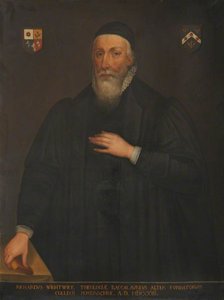
Richard Wightwick (1547 –1629)

1670 · Oil On Canvas · Bodleian Libraries, Oxford

In this portrait, we encounter Richard Wightwick, a man whose life was deeply intertwined with the foundations of Pembroke College, Oxford. He is presented as an elderly figure, his presence defined by a long, white beard that flows over a dark robe. There is a quiet gravity in his gaze, suggesting a life spent in study and religious devotion. He holds a book in his left hand, a gesture that…

4
William of Waynflete (1398–1486) (1670) autor Wilhelm Sonmans

William of Waynflete (1398–1486)

1670 · Oil On Canvas · Bodleian Libraries, Oxford

The figure of William of Waynflete commands the space, his presence heavy and dignified within the frame. He sits as a man of immense ecclesiastical weight, his gaze steady and serious, reflecting a life spent navigating the corridors of power and prayer. Light spills from the upper left, washing over the intricate folds of his robes and catching the metallic glint of his insignia. This illumination does more than reveal…

5
Walter de Stapledon (1261–1326) (1670) autor Wilhelm Sonmans

Walter de Stapledon (1261–1326)

1670 · Oil On Canvas · Bodleian Libraries, Oxford

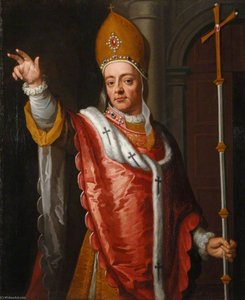
A figure of ecclesiastical power occupies the center of this oil on canvas portrait. Dressed in heavy, layered robes, the subject is presented in a frontal pose that demands immediate recognition of his status. The lighting is directional, carving deep shadows into the folds of the fabric and defining the contours of a face marked by gravity. A prominent mitre sits atop the head, while a crosier is held as…

6
Richard Fleming (d.1431) (1670) autor Wilhelm Sonmans

Richard Fleming (d.1431)

1670 · Oil On Canvas · Bodleian Libraries, Oxford

The portrait of Richard Fleming (d.1431) emerges from the canvas as a presence that commands the space it occupies. Created by Wilhelm Sonmans, this oil on canvas work captures the likeness of the subject with a focused intensity. The figure of Richard Fleming (d.1431) remains fixed in a moment of quiet dignity, his presence felt through the careful application of pigment that defines his form. It is a work that…

Wilhelm Sonmans kuulsad maalid, numbrid 11 kuni 29

Teemad, mis püüdisid Wilhelm Sonmans pilma

Neli teemat, mis esinevad neis originaalkindel kõige sagedamini, ning iga teema parim näide.

Muuseumid, kus on säilitatud Wilhelm Sonmans originaalteosed

Kümne 5 muuseumi kollektsioonid, mis sisaldavad kõige rohkem sellel lehel esitatud teoseid.

Muuseumid Linn Wilhelm Sonmans teosid Selle nimekirja maalid
Bodleian Libraries, OxfordBodleian Libraries Oxford 20 Dervorguilla of Galloway (d.1290), Lady of Balliol, John de Balliol (d.1269), Richard Wightwick (1547 –1629)
Wadham College, OxfordWadham College Oxford 3 Mrs Alice George (1582 –1691), Dorothy Wadham (1534–1618), Nicholas Wadham (1532–1609)
The Library And Museum of Freemasonry, LondonThe Library And Museum of Freemasonry London 1 William Talman (c.1650–1719)
Oriel College, OxfordOriel College Oxford 1 John Hudson, Librarian and Principal of St Mary's Hall
National Trust, YorkNational Trust York 1 Portrait of an Unknown Virtuoso Holding a Drawing over a Plinth with the Relief of a River God

Wilhelm Sonmans aastakatega: iga aastakannaga üks unikaalne originaal

Teosed aastakate kaupa

Vali vuosakülg, et näha selle ajastu definieerivat originaalteost.

Wilhelm Sonmans maalid: küsimused galeriile

Mis on Wilhelm Sonmans kõige kuulsam teos?Paljasta vastus

Dervorguilla of Galloway (d.1290), Lady of Balliol (1670), Bodleian Libraries, Oxford. Järgnevad John de Balliol (d.1269) (1670) ja Richard Wightwick (1547 –1629) (1670).

Mis vanuses luunud Wilhelm Sonmans teos Dervorguilla of Galloway (d.1290), Lady of Balliol?Paljasta vastus

20 aastat vanus: teos Dervorguilla of Galloway (d.1290), Lady of Balliol on pärinev aastast 1670 ning Wilhelm Sonmans sündis aastal 1650.

Millised on Wilhelm Sonmans kümneks kuulsumat maalatist?Paljasta vastus

Dervorguilla of Galloway (d.1290), Lady of Balliol, John de Balliol (d.1269), Richard Wightwick (1547 –1629), William of Waynflete (1398–1486), Walter de Stapledon (1261–1326), Richard Fleming (d.1431), Thomas Tesdale (1547–1610), Nicholas Wadham (1532–1609), Dorothy Wadham (1534–1618) ja Richard Fox (1448 –1528). Ülemine reiting näitab iga teose puhul aastat ja muuseumi.

Kui palju teoseid kunstniku Wilhelm Sonmans kohta on teada?Paljasta vastus

Meie kataloogist leiate 29 teost kunstnikult Wilhelm Sonmans, mis on pärinevad ajastust 1670 kuni 1705.

Kust saab näha kõige kuulsamaid Wilhelm Sonmans originaalteoseid?Paljasta vastus

Peamiselt Bodleian Libraries (Oxford), Wadham College (Oxford) ja The Library And Museum of Freemasonry (London) muuseumites. Ülalpool olevate muuseumite tabelis on nendest kõik loetletud.

Mille perioodi jooksul lõi Wilhelm Sonmans oma tuntumad maalid?Paljasta vastus

Ajal 1670s: 17 29 sellel lehel olevat teost on sellel perioodil loodud, მათart közül Dervorguilla of Galloway (d.1290), Lady of Balliol.

Milline kuuls Wilhelm Sonmans maal on kõige varasem ja milline kõige hiljema?Paljasta vastus

Sellel lehel on kõige vanem teos Dervorguilla of Galloway (d.1290), Lady of Balliol (1670) ja kõige värskeim Welbore Ellis (1651–1734), Bishop of Meath (1705).

Millist teemasid Wilhelm Sonmans eelistas?Paljasta vastus

Portrait (3), Religious figure (3) ja People (2), kogu selle lehekülje 29 teose kohta.

Mida Wilhelm Sonmans kõige rohkem kasutas oma maalide nimiseks?Paljasta vastus

Oil On Canvas, 6 teoseks 29 töödelt sellel lehel.

Millisse toomangu kuulub Wilhelm Sonmans teos?Paljasta vastus

Baroque, seda lähtudes selle lehe originaalteostest.

Mida Wilhelm Sonmans originaalte ma näen Bodleian Libraries muuseumis?Paljasta vastus

Dervorguilla of Galloway (d.1290), Lady of Balliol, John de Balliol (d.1269) ja Richard Wightwick (1547 –1629): Bodleian Libraries, Oxford säilitab 20 selle lehel olevat teost.

Wilhelm Sonmans: kunstniku portree

The Baroque Visionary: The Life and Legacy of Wilhelm Sonmans

In the grand, sweeping tapestry of European art history, certain names flicker with a particular, haunting brilliance, even if they remain tucked within the shadows of more famous contemporaries. Wilhelm Sonmans (1650–1708) is such a figure—a painter whose work serves as a profound window into the spiritual and dramatic essence of the Baroque era. Born in Cologne, Germany, Sonmans emerged from an age defined by movement, light, and intense emotionality. While much of his early life remains shrouded in the mists of time, his artistic journey is anchored by his formative apprenticeship under Johann Baptist Lingwerde, a distinguished painter in Düsseldorf. This period of rigorous training provided the foundation for a career defined by technical mastery and an uncanny ability to breathe life into both the human countenance and the natural landscape.

The stylistic DNA of Sonmans’ work is a sophisticated dialogue between the masters who preceded him. Through his lineage of training, he absorbed the dramatic chiaroscuro—the interplay of deep shadow and brilliant light—that defined the Dutch master Rembrandt, alongside the muscular dynamism and fluid energy characteristic of Rubens. This synthesis allowed Sonmans to develop a technique that was uniquely his own: a method of applying glazes to achieve luminous, skin-like surfaces and an atmospheric depth that seems to pull the viewer into the canvas. His brushwork, while precise enough to capture the intricate textures of ecclesiastical vestments, never lost the rhythmic vitality required to convey the spiritual fervor of the seventeenth century.

Mastery of Portraiture and the Sacred Landscape

Sonmans found his greatest acclaim in the realms of portraiture and religious iconography, where he could utilize his command of symbolism to communicate power and piety. His portraits of the nobility and high-ranking clergy were more than mere likenesses; they were carefully constructed narratives of authority and grace. A preeminent example is his 1705 depiction of Bishop Welbore Ellis. In this work, Sonmans achieves a level of neoclassical realism that borders on the transcendent, using rich textures and symbolic elements to underscore the subject's ecclesiastical importance. The painting stands as a testament to his ability to marry the physical reality of a sitter with the metaphysical weight of their office.

Beyond the structured confines of the portrait studio, Sonmans possessed a deeply contemplative relationship with the natural world. His landscapes, particularly those capturing the serene and mist-laden valleys of the Rhine, reveal an artist seeking the divine within the earthly. These works are characterized by:

  • Atmospheric Depth: A masterful use of light to create a sense of infinite distance and seasonal mood.
  • Spiritual Quietude: Landscapes that function as sites of meditation rather than mere topographical records.
  • Technical Precision: The delicate rendering of foliage, water, and sky through sophisticated glazing techniques.

A Lasting Influence on the Düsseldorf School

The historical significance of Wilhelm Sonmans extends far beyond the frames of his individual masterpieces. He was a pivotal figure in the cultural evolution of Düsseldorf, helping to transform the city into a vital hub for Baroque art production. By establishing a workshop that functioned as a crucible for talent, he ensured that the stylistic innovations of his apprenticeship—the blend of German precision and Flemish energy—would be disseminated to a new generation of artists. His legacy is not merely found in museums across Cologne, Düsseldorf, and Munich, but in the very fabric of the regional artistic identity he helped weave. Through his devotion to capturing the interplay of light, shadow, and soul, Sonmans remains an essential voice for those seeking to understand the profound spiritual landscape of the Baroque period.