Wang Meng portree

Wang Meng maalid: 10 kuulsumat teost galeriin läbi

Uuendatud oktoober 2026 · järjestatud meie populaarsusindeksi järgi (otsingud, külastused ja tellimused igale teosele) · 13 teost Wang Meng meie kataloogis

Lühidalt

Galleriist vaadatuna on Wang Meng kõige kuulsam teos 元 王蒙 素庵圖 軸 The Simple Retreat (1370), mille originaal ripub Metropolitan Museum of Art-is, New York. Writing Books under the Pine Trees (1323) ja Ge Zhichuan Moving to the Mountains (1350) täidavad kolmikut, mille iga silm tunnistab. Kunstnii Wang Meng 13 teose põhjal esitleb galeriis allpool 10 kõige kuulsumat, kus iga originaal on märgitud aastaga, muuseumiga ja kirjeldatud, mis teeb selle unikaalseks.

1308 – 1385, Huzhou Enamama teoseid: Metropolitan Museum of Art

Galeria 10 parimat Wang Meng maali

1
元 王蒙 素庵圖 軸 The Simple Retreat (1370) autor Wang Meng

元 王蒙 素庵圖 軸 The Simple Retreat

1370 · Ink On Paper · Metropolitan Museum of Art, New York

We are looking at 元 王蒙 素庵圖 軸 The Simple Retreat, a significant ink and paper drawing from the Yuan Dynasty. This work was created by the artist Wang Meng about 1370. It is a hanging scroll that captures a specific vision of the natural world, presented through the delicate medium of ink and color on paper.

2
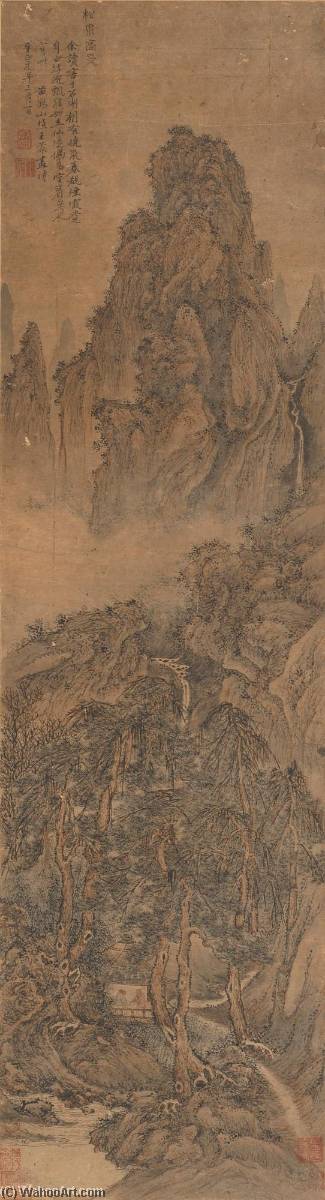
Writing Books under the Pine Trees (1323) autor Wang Meng

Writing Books under the Pine Trees

1323 · Ink On Paper · Cleveland Museum of Art, Cleveland

The ink on paper captures a quiet moment in 1323, titled Writing Books under the Pine Trees. This landscape emerges from the brush of Wang Meng, a man whose roots trace back to Huzhou, People's Republic of China. Within this scene, the stillness of the mountains meets the steady presence of the scholar, creating a space where the act of reading becomes part of the natural rhythm of the earth.

Teemad, mis püüdisid Wang Meng pilma

Neli teemat, mis esinevad neis originaalkindel kõige sagedamini, ning iga teema parim näide.

Muuseumid, kus on säilitatud Wang Meng originaalteosed

Kümne 5 muuseumi kollektsioonid, mis sisaldavad kõige rohkem sellel lehel esitatud teoseid.

Muuseumid Linn Wang Meng teosid Selle nimekirja maalid
Metropolitan Museum of Art, New YorkMetropolitan Museum of Art New York 3 元 王蒙 素庵圖 軸 The Simple Retreat, 元 王蒙 丹崖翠壑圖 軸 Red Cliffs and Green Valleys, 元 王蒙 蕭林寂亭圖 團扇 Sparse Trees and Pavilion
Cleveland Museum of Art, ClevelandCleveland Museum of Art Cleveland 1 Writing Books under the Pine Trees
The Palace Museum, BeijingThe Palace Museum Beijing 1 Ge Zhichuan Moving to the Mountains
Art Institute of Chicago, ChicagoArt Institute of Chicago Chicago 1 Quiet Life in a Wooded Glen
China Modern and Contemporary Art Document Research Center, PekingChina Modern and Contemporary Art Document Research Center Peking 1 Seclusion in Green Bian Mountain

Wang Meng, iga kümnendiga üks signatuurpilt

Teosed aastakate kaupa

Vali vuosakülg, et näha selle ajastu definieerivat originaalteost.

Wang Meng maalid: galerii vastused

Milline Wang Meng maal on kõige kuulsam?Paljasta vastus

元 王蒙 素庵圖 軸 The Simple Retreat (1370), Metropolitan Museum of Art, New York. Järgnevad Writing Books under the Pine Trees (1323) ja Ge Zhichuan Moving to the Mountains (1350).

Kui vana Wang Meng oli teose 元 王蒙 素庵圖 軸 The Simple Retreat valmimisel?Paljasta vastus

62 aastat vanus: teos 元 王蒙 素庵圖 軸 The Simple Retreat on pärinev aastast 1370 ning Wang Meng sündis aastal 1308.

Millised on Wang Meng top 10 maali?Paljasta vastus

元 王蒙 素庵圖 軸 The Simple Retreat, Writing Books under the Pine Trees, Ge Zhichuan Moving to the Mountains, Quiet Life in a Wooded Glen, 元 王蒙 丹崖翠壑圖 軸 Red Cliffs and Green Valleys, 元 王蒙 蕭林寂亭圖 團扇 Sparse Trees and Pavilion, STUDIO SURROUNDED BY TEN THOUSAND PINE TREES, SECLUSION AMID PINES AND SPRINGS, LANDSCAPE ja Seclusion in Green Bian Mountain. Ülemine reiting näitab iga teose puhul aastat ja muuseumi.

Kui palju teoseid Wang Meng lõi?Paljasta vastus

Meie kataloogist leiate 13 teost kunstnikult Wang Meng, mis on pärinevad ajastust 1323 kuni 1370.

Kust leiad Wang Meng kõige kuulsamad originaalteosed?Paljasta vastus

Peamiselt Metropolitan Museum of Art (New York), Cleveland Museum of Art (Cleveland) ja The Palace Museum (Beijing) muuseumites. Ülalpool olevate muuseumite tabelis on nendest kõik loetletud.

Millal lõi Wang Meng oma kuulsamad maalid?Paljasta vastus

Ajal 1360s: 3 10 sellel lehel olevat teost on sellel perioodil loodud, მათart közül Quiet Life in a Wooded Glen.

Millised on Wang Meng varased ja hilised kuulsad teosed?Paljasta vastus

Sellel lehel on kõige vanem teos Writing Books under the Pine Trees (1323) ja kõige värskeim 元 王蒙 素庵圖 軸 The Simple Retreat (1370).

Millist teemat Wang Meng kõige rohkem käsitledas?Paljasta vastus

Mountains (2), Landscape (2) ja Rocks (2), kogu selle lehekülje 10 teose kohta.

Millises tehnikas töötas Wang Meng kõige rohkem?Paljasta vastus

Ink On Paper, 2 teoseks 10 töödelt sellel lehel.

Milliseid Wang Meng originaalte Metropolitan Museum of Art kogumuses on?Paljasta vastus

元 王蒙 素庵圖 軸 The Simple Retreat, 元 王蒙 丹崖翠壑圖 軸 Red Cliffs and Green Valleys ja 元 王蒙 蕭林寂亭圖 團扇 Sparse Trees and Pavilion: Metropolitan Museum of Art, New York säilitab 3 selle lehel olevat teost.

Kas ma saan Wang Meng maali käsitsi reprodutseerida?Paljasta vastus

Jah, reproduktsioonina: originaal jääb oma museumi, kuid mis tahes selle lehe maal võib olla teie jaoks käsitsi maaldav, tellustööna valmistatud üksik teos, mida saab tellida maali oma lehel.

Wang Meng: kunstnik

Wang Meng: The Ropy Brush and the Silent Landscape

Born in Wuxing, Zhejiang province – now Huzhou – around 1308, Wang Meng stands as a pivotal figure within the artistic landscape of the Yuan Dynasty (1271-1368). His life was marked by both privilege and profound misfortune; he descended from Zhao Mengfu, a prominent Song Dynasty official and artist, inheriting a lineage steeped in cultural significance. However, his later years were tragically consumed by false accusations of treason against the Ming Emperor Taizu, resulting in five years spent imprisoned – an experience that profoundly shaped his artistic vision and ultimately contributed to his unique style.

Wang Meng’s place within art history is firmly secured as one of the “Four Masters” of the Yuan Dynasty alongside Huang Gongwang, Wu Zhen, and Ni Zan. This esteemed group distinguished themselves by rejecting the patronage of the Mongol rulers who had conquered China, choosing instead to remain independent artists working primarily on paper rather than the traditional silk canvases favored by previous generations. This decision reflected a deep conviction that landscapes held the key to unlocking deeper truths – a philosophy central to their artistic practice.

A Style Defined by Texture and Movement

Unlike the more restrained approaches of his contemporaries, Wang Meng’s paintings are characterized by an extraordinary density and dynamism. His brushstrokes—often described as “ropy” or “layered”—were meticulously applied in thick, overlapping patterns, creating a palpable sense of texture and movement. This technique wasn't simply decorative; it was a deliberate attempt to capture the essence of nature – its complexity, its energy, and its inherent instability. He eschewed the smooth, polished surfaces favored by earlier landscape painters, embracing instead a more tactile and expressive approach.

Wang Meng’s compositions are often densely populated with elements—trees, rocks, mountains, streams—creating an immersive experience for the viewer. He avoided clear focal points or dramatic perspectives, preferring to present a holistic view of the natural world, inviting contemplation rather than immediate recognition. This deliberate ambiguity is a hallmark of his style and reflects his belief in the interconnectedness of all things.

Key Works and Artistic Influences

Among Wang Meng’s most celebrated works are “Ge Zhichuan Relocating” (a depiction of a scholar moving to a new location), “Forest Grotto at Juqu,” “Writing Books Under the Pine Trees,” “The Simple Retreat,” and “Dwelling in the Qingbian Mountains.” These paintings, now housed in prestigious museums worldwide – including the Palace Museum, National Palace Museum, Shanghai Museum, Cleveland Museum of Art, and the Metropolitan Museum of Art – demonstrate his mastery of technique and his profound understanding of landscape painting. Notably, "Ge Zhichuan Relocating" sold for an astonishing $62.1 million at auction in 2011, a testament to its artistic merit and historical significance.

Wang Meng’s style was profoundly influenced by the landscape painters who preceded him – Wang Wei, Dong Yuan, and Juran – but he developed his own distinctive voice through his innovative use of brushwork and composition. He also drew inspiration from the literati tradition, a movement that emphasized personal expression and intellectual engagement with nature. His work stands as a bridge between these traditions, forging a new path for Chinese landscape painting.

Legacy and Historical Significance

Despite his relatively obscure status during his lifetime, Wang Meng’s influence on subsequent generations of Chinese painters is undeniable. Dong Qichang, a prominent scholar-artist of the Southern Song Dynasty, greatly admired Wang Meng's style and incorporated elements of it into his own work. Wang Meng’s ropy brushstrokes and dense compositions became a defining characteristic of landscape painting for centuries to come.

His decision to reject court patronage and remain an independent artist also holds significant historical importance. It reflects a growing sense of artistic autonomy and a desire to preserve traditional values in the face of foreign rule. Wang Meng’s life and work serve as a powerful reminder of the enduring power of art to transcend political boundaries and express profound human truths. He remains a vital figure in understanding the evolution of Chinese landscape painting and its continuing relevance today.

Kõik 13 teost Wang Meng →