Theo Van Doesburg portree

Theo Van Doesburg maalid: 100 kuulsumat teost galeriin läbi

Uuendatud november 2026 · järjestatud meie populaarsusindeksi järgi (otsingud, külastused ja tellimused igale teosele) · 225 teost Theo Van Doesburg meie kataloogis

Lühidalt

Galleriile on Theo Van Doesburg kõige kuulsam teos Counter composition XV (1925). Rhythm of a Russian Dance ja Troelstra (1910) täidavad kolmikut, mille iga silm tunnistab. Kunstnii Theo Van Doesburg 225 teose põhjal esitleb galeriis allpool 100 kõige kuulsumat, kus iga originaal on märgitud aastaga, muuseumiga ja kirjeldatud, mis teeb selle unikaalseks.

1883 – 1931, Utrecht De stijl Enamama teoseid: Centraal Museum

Galeria 10 parimat Theo Van Doesburg maali

1
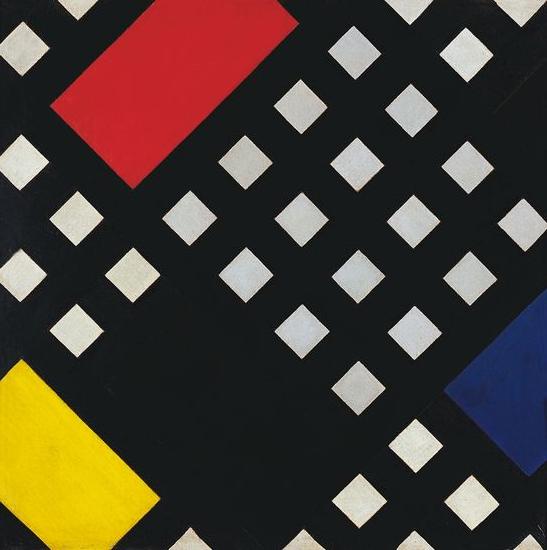
Counter composition XV (1925) autor Theo Van Doesburg

Counter composition XV

1925 · Acrylic On Canvas

Theo van Doesburg's "Counter Composition XV," painted in 1925, isn’t merely a painting; it’s a distilled essence of the De Stijl movement – a radical declaration of order and universal harmony. This deceptively simple work, executed against a stark white canvas, pulsates with an underlying tension born from the careful orchestration of geometric forms and primary colors. It represents a pivotal moment in 20th-century art, moving beyond representational imagery to…

2
Rhythm of a Russian Dance autor Theo Van Doesburg

Rhythm of a Russian Dance

Oil On Canvas

The composition consists of an arrangement of intersecting horizontal and vertical lines that form a series of rectangular and square shapes. These geometric forms overlap across the canvas, creating a sense of depth through visual layering rather than traditional perspective. The color palette is restricted to white, black, blue, pink, and gold or yellow hues. Each color is applied in flat planes with minimal shading, resulting in a smooth and…

3
Troelstra (1910) autor Theo Van Doesburg

Troelstra

1910 · Charcoal

The artwork Troelstra is a monochromatic portrait rendered in charcoal on paper, dating to 1910. The composition is tightly focused on the head and shoulders of the subject, creating an intimate and close-up view. The man's face occupies the majority of the frame, characterized by an asymmetrical arrangement where features are not proportionally accurate. A collar or cravat is visible around the neck, providing a sense of formality to the…

4
Study for Composition VIII (The Cow) (1918) autor Theo Van Doesburg

Study for Composition VIII (The Cow)

1918 · Oil

A cow is reduced to a series of intersecting planes. In this 1918 study, the animal is no longer a creature of flesh and breath, but a rhythmic arrangement of vertical and horizontal lines. The subject is stripped of its organic curves, replaced by the sharp precision of a geometric skeleton. Green blocks of color anchor the composition, cutting through a field of white and black. There is a tension…

5
Composition (The Cow) (1917) autor Theo Van Doesburg

Composition (The Cow)

1917 · Pencil

The eye meets Composition (The Cow), a work that captures a moment of radical transformation. Created by the artist Theo van Doesburg, this piece emerges from 1917, a time when the boundaries of representation begin to fracture. The subject, a cow, exists here not as a living creature of flesh and breath, but as a series of energetic, geometric investigations. It is a study of form that seeks to find…

6
Composition (1923) autor Theo Van Doesburg

Composition

1923 · Oil On Canvas

The canvas known as Composition emerges from the mind of Theo van Doesburg, a work that captures a specific moment in 1923. This piece exists as a precise arrangement of form and color, born from a period of intense creative focus. The artist, Theo van Doesburg, brings a sense of equilibrium to the surface, translating abstract thought into a tangible presence. It is a work that demands attention through its…

7
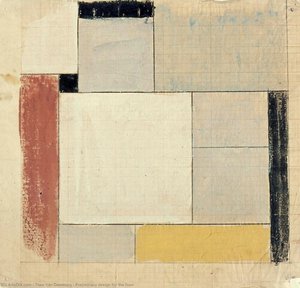
Preliminary design for the floor (1923) autor Theo Van Doesburg

Preliminary design for the floor

1923 · Pencil

The gaze meets Preliminary design for the floor, a work that breathes with the structured intent of Theo van Doesburg. Created in 1923, this piece exists as a vision for a specific space: a tiled floor intended for the De Vonk holiday home located in Noordwijkerhout. It is a moment of pure architectural thought captured on paper, where the abstract becomes a tangible plan for a lived environment.

8
Composition (1931) autor Theo Van Doesburg

Composition

1931 · Oil

The painting titled Composition is a work by the artist Theo van Doesburg. Created in 1931, this piece occupies a small, intimate space of 31 x 24 cm. It exists as a quiet arrangement of form and color, captured within its rectangular boundaries.

9
Portrait of a man with hat (1908) autor Theo Van Doesburg

Portrait of a man with hat

1908 · Oil On Board · Kunstmuseum Den Haag, Haag

The portrait presents a close-up, bust-length view of a man wearing a hat. The subject's face occupies the central portion of the frame, positioned slightly to the left. The lighting is low-key, catching the left side of the forehead and the cheek, while the remaining features recede into deep shadow. This use of chiaroscuro creates a sense of depth through the contrast between light and dark. The color palette is…

Theo Van Doesburg maalid, järjestus 11 kuni 100

11Portrait of Agnita Feis (1904) autor Theo Van DoesburgPortrait of Agnita Feis1904 · Centraal Museum 12Female Nude (1904) autor Theo Van DoesburgFemale Nude1904 13Portrait of a Man with Hat (1909) autor Theo Van DoesburgPortrait of a Man with Hat1909 14Portrait of a Man with Hat (1908) autor Theo Van DoesburgPortrait of a Man with Hat1908 15Portrait of Christian Leibbrandt (1908) autor Theo Van DoesburgPortrait of Christian Leibbrandt1908 16Portrait of Agnita Feis (1906) autor Theo Van DoesburgPortrait of Agnita Feis1906 · Centraal Museum 17Smiling man (self-portrait?) (1907) autor Theo Van DoesburgSmiling man (self-portrait?)1907 · Centraal Museum 18Workman head (1906) autor Theo Van DoesburgWorkman head1906 · Centraal Museum 19Man with moustache and cap (self-portrait?) (1907) autor Theo Van DoesburgMan with moustache and cap (self-portrait?)1907 · Centraal Museum 20Portrait of a boy en profil (1906) autor Theo Van DoesburgPortrait of a boy en profil1906 · Centraal Museum 21Workmanshead (1906) autor Theo Van DoesburgWorkmanshead1906 · Centraal Museum 22Portrait of Agnita Feis with closed eyes (1906) autor Theo Van DoesburgPortrait of Agnita Feis with closed eyes1906 · Centraal Museum 23Portrait of een man met baret (1908) autor Theo Van DoesburgPortrait of een man met baret1908 24Don Juan (1910) autor Theo Van DoesburgDon Juan1910 25Burgerman (1910) autor Theo Van DoesburgBurgerman1910 26Archangel (1910) autor Theo Van DoesburgArchangel1910 27Abraham Kuyper (1910) autor Theo Van DoesburgAbraham Kuyper1910 28Farmer (1910) autor Theo Van DoesburgFarmer1910 29Alderman of education (1910) autor Theo Van DoesburgAlderman of education1910 30Quérido (1910) autor Theo Van DoesburgQuérido1910 31Frederik van Eeden (1910) autor Theo Van DoesburgFrederik van Eeden1910 32Old Faun (self portrait) (1909) autor Theo Van DoesburgOld Faun (self portrait)1909 33Dutch peasent girl (1913) autor Theo Van DoesburgDutch peasent girl1913 · Centraal Museum 34Portrait of A. J. J. de Winter (1916) autor Theo Van DoesburgPortrait of A. J. J. de Winter1916 35Study for Composition VIII (The Cow) (1917) autor Theo Van DoesburgStudy for Composition VIII (The Cow)1917 36Beggar (1914) autor Theo Van DoesburgBeggar1914 · Centraal Museum 37Abstract portrait (1915) autor Theo Van DoesburgAbstract portrait1915 · Museum de Lakenhal 38Portrait of Nelly van Doesburg (1899-1975) (1922) autor Theo Van DoesburgPortrait of Nelly van Doesburg (1899-1975)1922 · Museum de Lakenhal 39Self portrait (1928) autor Theo Van DoesburgSelf portrait1928 · Centraal Museum 40Nelly van Doesburg Viewed from behind, and a harbor scene (1924) autor Theo Van DoesburgNelly van Doesburg Viewed from behind, and a harbor scene1924 41Dancing man from sketchbook 60 (1931) autor Theo Van DoesburgDancing man from sketchbook 601931 42Archer (1919) autor Theo Van DoesburgArcher1919 · Szépművészeti Múzeum 43Tripartite stained glass window autor Theo Van DoesburgTripartite stained glass window 44Self portrait with hat (1909) autor Theo Van DoesburgSelf portrait with hat1909 · Centraal Museum 45Café Aubette, Strasbourg, France (Preliminary color scheme for ceiling and short walls of ballroom) (1927) autor Theo Van DoesburgCafé Aubette, Strasbourg, France (Preliminary color scheme for ceiling and short walls of ballroom)1927 · MoMA - Museum of Modern Art 46Self portrait with hat (1909) autor Theo Van DoesburgSelf portrait with hat1909 47Composition I (still life) (1916) autor Theo Van DoesburgComposition I (still life)1916 · Kröller-Müller Museum 48Landscape (1901) autor Theo Van DoesburgLandscape1901 49Figure on Bridge in Forest (1903) autor Theo Van DoesburgFigure on Bridge in Forest1903 50Woman in Landscape (1903) autor Theo Van DoesburgWoman in Landscape1903 · Centraal Museum 51Figure on a Bridge in a Forest (1903) autor Theo Van DoesburgFigure on a Bridge in a Forest1903 · Centraal Museum 52Landscape (1901) autor Theo Van DoesburgLandscape1901 · Centraal Museum 53River Landscape with Steeple and Mill (1900) autor Theo Van DoesburgRiver Landscape with Steeple and Mill1900 54A Child (1904) autor Theo Van DoesburgA Child1904 55Landscape with hay cart, church towers and windmill (1901) autor Theo Van DoesburgLandscape with hay cart, church towers and windmill1901 · Centraal Museum 56Still Life (1906) autor Theo Van DoesburgStill Life1906 57Tree (1906) autor Theo Van DoesburgTree1906 · Centraal Museum 58Banister post, Huis De Lange, Alkmaar autor Theo Van DoesburgBanister post, Huis De Lange, Alkmaar 59Portrait of Nelly van Doesburg autor Theo Van DoesburgPortrait of Nelly van Doesburg 60Self portrait (1906) autor Theo Van DoesburgSelf portrait1906 61Cover of ''The masks'' (1910) autor Theo Van DoesburgCover of ''The masks''1910 62The discarded basket (1913) autor Theo Van DoesburgThe discarded basket1913 · Centraal Museum 63Haystacks (1913) autor Theo Van DoesburgHaystacks1913 · Centraal Museum 64Study for Composition X (1917) autor Theo Van DoesburgStudy for Composition X1917 65Composition VI (on black fond) (1917) autor Theo Van DoesburgComposition VI (on black fond)1917 66Composition (The Cow) (1917) autor Theo Van DoesburgComposition (The Cow)1917 67Composition (The Cow) (8) (1917) autor Theo Van DoesburgComposition (The Cow) (8)1917 68Cover of "Balance" by J. Elgenhuis (1916) autor Theo Van DoesburgCover of "Balance" by J. Elgenhuis1916 69Composition (The Cow) (1917) autor Theo Van DoesburgComposition (The Cow)1917 70Composition (The Cow) (1917) autor Theo Van DoesburgComposition (The Cow)1917 71Composition (The Cow) (1917) autor Theo Van DoesburgComposition (The Cow)1917 72Krishna playing a flute (1916) autor Theo Van DoesburgKrishna playing a flute1916 73Lena in interieur (1917) autor Theo Van DoesburgLena in interieur1917 74Colour design for a chimney (1917) autor Theo Van DoesburgColour design for a chimney1917 75Design for a tile floor, and entrance hall (1917) autor Theo Van DoesburgDesign for a tile floor, and entrance hall1917 76Stained glass composition ''Woman'' (1917) autor Theo Van DoesburgStained glass composition ''Woman''1917 77Potrait of Evert Rinsema (1915) autor Theo Van DoesburgPotrait of Evert Rinsema1915 78Abstract church (1915) autor Theo Van DoesburgAbstract church1915 79Dance II (1917) autor Theo Van DoesburgDance II1917 80Street Music I (1915) autor Theo Van DoesburgStreet Music I1915 81Dance I (1917) autor Theo Van DoesburgDance I1917 82Street Music II (1915) autor Theo Van DoesburgStreet Music II1915 83Design for a tile floor, and entrance hall (1917) autor Theo Van DoesburgDesign for a tile floor, and entrance hall1917 84Leaded glass composition I (1917) autor Theo Van DoesburgLeaded glass composition I1917 85The Cardplayers (1916) autor Theo Van DoesburgThe Cardplayers1916 86Composition with window with coloured glass III (1917) autor Theo Van DoesburgComposition with window with coloured glass III1917 87Composition II (Still life) (1916) autor Theo Van DoesburgComposition II (Still life)1916 88Landscape (1916) autor Theo Van DoesburgLandscape1916 89Portrait of Lena Milius (1915) autor Theo Van DoesburgPortrait of Lena Milius1915 90Dunes and sea (1912) autor Theo Van DoesburgDunes and sea1912 · Kröller-Müller Museum 91Still Life with Bottle (1919) autor Theo Van DoesburgStill Life with Bottle1919 · Museum de Lakenhal 92Still Life (1918) autor Theo Van DoesburgStill Life1918 93Plastic garden (Vases) (1919) autor Theo Van DoesburgPlastic garden (Vases)1919 94Study for Rhythm of a Russian Dance (1918) autor Theo Van DoesburgStudy for Rhythm of a Russian Dance1918 95Study for Rhythm of a Russian Dance (1918) autor Theo Van DoesburgStudy for Rhythm of a Russian Dance1918 96Landscape (study for composition XII) (1918) autor Theo Van DoesburgLandscape (study for composition XII)1918 97Composition in gray (Rag Time) (1919) autor Theo Van DoesburgComposition in gray (Rag Time)1919 · Solomon R. Guggenheimi muuseum 98Cover design for magazine ''Klei'' (1920) autor Theo Van DoesburgCover design for magazine ''Klei''1920 99Cover of ''Classic, Modern, Baroque'' (1920) autor Theo Van DoesburgCover of ''Classic, Modern, Baroque''1920 100Cover of ''Three lectures about the new art'' (1919) autor Theo Van DoesburgCover of ''Three lectures about the new art''1919

Theo Van Doesburg kuulsaimad maalid ajastult ajastule

Teemad, mis püüdisid Theo Van Doesburg pilma

Neli teemat, mis esinevad neis originaalkindel kõige sagedamini, ning iga teema parim näide.

Muuseumid, kus on säilitatud Theo Van Doesburg originaalteosed

Kümne 7 muuseumi kollektsioonid, mis sisaldavad kõige rohkem sellel lehel esitatud teoseid.

Muuseumid Linn Theo Van Doesburg teosid Selle nimekirja maalid
Centraal Museum, UtrehtiCentraal Museum Utrehti 33 Self-portrait with beard, Portrait of Agnita Feis, Portrait of Agnita Feis
Museum de Lakenhal, LeidenMuseum de Lakenhal Leiden 9 Abstract portrait, Portrait of Nelly van Doesburg (1899-1975), Still Life with Bottle
Kröller-Müller Museum, OtterloKröller-Müller Museum Otterlo 12 Composition I (still life), Dunes and sea
MoMA - Museum of Modern Art, New YorkMoMA - Museum of Modern Art New York 9 Café Aubette, Strasbourg, France (Preliminary color scheme for ceiling and short walls of ballroom)
Kunstmuseum Den Haag, HaagKunstmuseum Den Haag Haag 4 Portrait of a man with hat
Solomon R. Guggenheimi muuseum, New YorkSolomon R. Guggenheimi muuseum New York 3 Composition in gray (Rag Time)
Szépművészeti Múzeum, BudapestSzépművészeti Múzeum Budapest 1 Archer

Theo Van Doesburg, iga kümnendiga üks signatuurpilt

Teosed aastakate kaupa

Vali vuosakülg, et näha selle ajastu definieerivat originaalteost.

Theo Van Doesburg maalid: galerii vastused

Milline Theo Van Doesburg maal on kõige kuulsam?Paljasta vastus

Counter composition XV (1925). Järgnevad Rhythm of a Russian Dance ja Troelstra (1910).

Kui vana Theo Van Doesburg oli teose Counter composition XV valmimisel?Paljasta vastus

42 aastat vanus: teos Counter composition XV on pärinev aastast 1925 ning Theo Van Doesburg sündis aastal 1883.

Millised on Theo Van Doesburg top 10 maali?Paljasta vastus

Counter composition XV, Rhythm of a Russian Dance, Troelstra, Study for Composition VIII (The Cow), Composition (The Cow), Composition, Preliminary design for the floor, Composition, Portrait of a man with hat ja Self-portrait with beard. Ülemine reiting näitab iga teose puhul aastat ja muuseumi.

Kui palju teoseid Theo Van Doesburg lõi?Paljasta vastus

Meie kataloogist leiate 225 teost kunstnikult Theo Van Doesburg, mis on pärinevad ajastust 1900 kuni 1931.

Kust leiad Theo Van Doesburg kõige kuulsamad originaalteosed?Paljasta vastus

Peamiselt Centraal Museum (Utrehti), Museum de Lakenhal (Leiden) ja Kröller-Müller Museum (Otterlo) muuseumites. Ülalpool olevate muuseumite tabelis on nendest kõik loetletud.

Millal lõi Theo Van Doesburg oma kuulsamad maalid?Paljasta vastus

Ajal 1910s: 56 100 sellel lehel olevat teost on sellel perioodil loodud, მათart közül Troelstra.

Millised on Theo Van Doesburg varased ja hilised kuulsad teosed?Paljasta vastus

Sellel lehel on kõige vanem teos River Landscape with Steeple and Mill (1900) ja kõige värskeim Composition (1931).

Millist teemat Theo Van Doesburg kõige rohkem käsitledas?Paljasta vastus

Men (12), Designs and sketches (11) ja Characters (8), kogu selle lehekülje 100 teose kohta.

Millises tehnikas töötas Theo Van Doesburg kõige rohkem?Paljasta vastus

Oil On Canvas, 3 teoseks 100 töödelt sellel lehel.

Millise suunaga on Theo Van Doesburg seotud?Paljasta vastus

De stijl, seda lähtudes selle lehe originaalteostest.

Milliseid Theo Van Doesburg originaalte Centraal Museum kogumuses on?Paljasta vastus

Self-portrait with beard, Portrait of Agnita Feis ja Portrait of Agnita Feis: Centraal Museum, Utrehti säilitab 20 selle lehel olevat teost.

Theo Van Doesburg: kunstnik

Abstraktse Arhitekt: Elu Geomeetrilises Harmoonias

Theo van Doesburg, sündinud Christian Emil Marie Küpperina 1883. aastal Utrechtis Hollandis, ei olnud pelgalt maalikunstnik; ta oli revolutsiooniline jõud, mis muutis põhjalikult kaasaegse kunsti aluseid. Tema teekond algas muljetavaldavate ja post-muljetavaldavate kajade keskel, peegeldades esialgu stiile, mis meenutasid Vincent van Goghi loomingut – nii tema teemade kui ka emotsionaalse intensiivsuse poolest. Kuid see varajane etapp oli oluline eeltingimus, vajalik samm radikaalseks muundumiseks, mis määratleks tema püsiva legendi. Pöördepunkt saabus 1913. aastal kohtumisega Wassily Kandinsky teosega *Rückblicke*. See tekst sütitas van Doesburgis sügava arusaama: tõeline kunstiline väljendus ei seisne välist maailma kopeerimises, vaid sisemise vaimse reaalsuse kanaliseerimises puhta abstraktsiooni kaudu. Just sellest veendumusest sündis Neoplastitsism, tavalisemalt tuntud kui De Stijl – liikumine, mille ta asutas ja ägedasti propageeris, saades selle kõige innukamaks pooldajaks.

Uue Visuaalse Keele Loomine: De Stijli Printsiiibid

De Stijl ei olnud pelgalt kunstiline stiil; see oli terviklik filosoofiline manifest, mis tõlgiti visuaalsesse vormi. Van Doesburg uskus kunsti viimistlemises selle kõige olulisemate elementideni – sirgete joonte, täisnurkade ja punase, kollase ja sinise põhivärvidega, koos musta, valge ja halliga. See austere palett ei sündinud piirangutest, vaid soovist universaalsuse järele – uskumusest, et need põhilisemad vormid resonantsisid alusleva kosmose korraga. Ta nägi *terviktööd*, mis ulatub lõuendi väljast arhitektuuri, disaini ja isegi igapäevaste esemete juurde. Koostöö oli võtmetähtis; van Doesburg töötas tihedalt arhitektidega nagu J.J.P. Oud ja Gerrit Rietveld, kujundades vitraažakendeid, mööblit ja terveid interjööre, mis kehastasid De Stijli printsiipe. Tema koostöö laienes ka teistele kunstnikele, näiteks Piet Mondrianile, kellega ta asutas mõjukat ajakirja *De Stijl*, platvormi oma ideede levitamiseks ja sarnameelsete loovate inimeste meelitamiseks. Kuigi neil oli ühine algus, tekkisid van Doesburgi ja Mondriani vahel pinged Neoplastitsismi jäikuse osas. 1926. aastal tutvustas van Doesburg “Elementarismi”, propageerides diagonaalseid jooni ja dünaamilisemaid kompositsioone – lahknevust, mis viis lõpuks liikumise killustumisele, paljastades tema rahutu vaimu ja pideva kunstilise evolutsiooni otsingu.

Väljaspool Maalimist: Mitmekülgne Kunstiline Visioon

Kuigi teda tähistati maalikunstnikuna, olid van Doesburgi kunstilised püüdlused tähelepanuväärselt mitmekesised. Ta oli viljakas kirjanik, luuletaja ja kriitik, kasutades oma sulge De Stijli teoreetiliste aluste artikuleerimiseks ja traditsiooniliste kunsti arusaamade väljakutsumiseks. Tema kaasamine Dadaismi alguses 20. sajandi alguses laiendasid tema kunstilisi horisonte veelgi, viies eksperimentaalsete töödeni, mis sisaldasid kollaaži ja tüpograafiat. Sel perioodil õpetas ta ka Bauhausi, kus jagas oma ideid uue põlvkonna kunstnike ja disaineritega. Ta ei olnud rahul traditsiooniliste kunstivormide piiridega; van Doesburg otsis aktiivselt kunsti integreerimist igapäevaelu, uskudes selle võimet ühiskonda muuta. Tema sisekujunduse ja mööblidisainid polnud pelgalt esteetilised harjutused, vaid katsed luua harmoonilisi eluruume, mis peegeldasid De Stijli printsiipe. Hea näide on tema koostöö Sophie Taeuber-Arpiga ja Georges Vantongerlooga kunstnike elukohtade kujundamisel, mis demonstreeris holistilist lähenemist kunstilisele loomingule – katset ehitada maailma *oma ideaalide järgi*.

Pärand ja Püsiv Mõju: Modernismi Pioneer

Theo van Doesburgi elu katkestati tragiliselt 1931. aastal 47-aastaselt, kuid tema mõju kaasaegsele kunstile on sügav. De Stijl, kuigi suhteliselt lühiealine ühtse liikumisena, avaldas tohutut mõju järgnevatele kunstilistele arengutele, sealhulgas Bauhausi disainile, Minimalismile ja Konstruktivismile. Tema rõhk geomeetrilisel abstraktsioonil, puhtal värvil ja funktsionalismil on tänaseni resonantsis kunstnike ja disaineritega. Tema töö on meeldetuletus sellest, et kunst ei seisne pelgalt representatsioonis, vaid põhilisemate vormide ja ideede uurimises. Van Doesburgi pärand ulatub tema maalide ja kujunduste väljast; see peitub tema vankumas kompromissitus kunstilises innovatsioonis ja uskumuses abstraktsiooni muundumisvõimes. Tema visioon ühtse, harmoonilise maailma kohta – väljendatud De Stijli keeles – jätkab inspireerides neid, kes otsivad ilusamat ja tähenduslikumat keskkonda.

Põhitööd & Püsiv Mõju

  • Study for Simultaneous Compositions XXII (1922): Tüüpiline näide Neoplastitsismist, mis demonstreerib liikumise allkirjatud geomeetrilisi vorme ja piiratud värvipaletti.
  • Composition with half values (1928): Demonstreerib van Doesburgi uurimist toonivariatsioonidega De Stijli esteetikas.
  • Dancers (1917-1918): Esindab üleminekufaasi tema töös, segades figuurseid elemente uute abstraktsete tendentsidega.
  • Koostöö *De Stijl* ajakirjaga: Oluline platvorm liikumise ideede levitamiseks ja dialoogi edendamiseks kunstnike ja intellektuaalide vahel.
  • Elementarism (1926): Van Doesburgi katse süstida Neoplastitsismi dünaamikasse, tutvustades diagonaalseid jooni ja vedelikuma lähenemist kompositsioonile.
Van Doesburgi mõju on näha lugematutes kaasaegse disaini aspektides – arhitektuurist ja mööblidisainist graafilise disaini ja tüpograafiani. Ta jääb kunstiajaloo võtmeisikuks, tõeliseks pioneeriks, kes julges väljakutseid traditsioonidele ja kujundas uue visuaalse keele 20. sajandi jaoks ja edasi – pärand on raiitud sirgete joonte ja põhivärvidega.