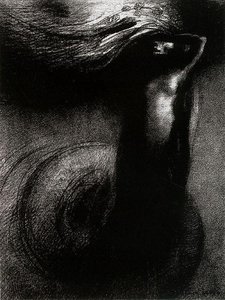
Odilon Redon portree

100 kulubumatamatumat Odilon Redon maalist, millist on vaid üks

Uuendatud oktoober 2026 · järjestatud meie populaarsusindeksi järgi (otsingud, külastused ja tellimused igale teosele) · 804 teost Odilon Redon meie kataloogis

Lühidalt

The cyclops (1914) on Odilon Redon maalide kõige silmapaistvam teos; originaal kuulub museumi Kröller-Müller Museum, Otterlo. Pärast seda suunatakse pilk The Black Pegasus ja Woman and Centaur (1900) suunas. Meie kataloogis olevatest Odilon Redon 804 teosest on need 100 kõige kuulsumat, millist igaüks on esitatud koos aasta, muuseumi ja põhjusega, miks teos on püsiv.

1840 – 1916, Bordeaux Symbolism Enamama teoseid: Musée d'Orsay

Odilon Redon top 10 maalist galeriist vaatenurgast

1
The cyclops (1914) autor Odilon Redon

The cyclops

1914 · Kröller-Müller Museum, Otterlo

Odilon Redon's "The Cyclops," painted around 1914, isn’t merely a depiction of the Greek myth; it’s an immersion into a profoundly personal and unsettling dream world. This arresting work, now housed in the Kröller-Müller Museum in Otterlo, Netherlands, transcends simple illustration, offering instead a glimpse into the artist's subconscious – a realm populated by shadowy figures, potent symbols, and a palpable sense of yearning.

2
The Black Pegasus autor Odilon Redon

The Black Pegasus

Oil On Canvas

To gaze upon Odilon Redon's The Black Pegasus is not merely to look at a painting; it is to step through a veil into the shimmering, melancholic landscape of the subconscious mind. This captivating oil on canvas transports the viewer beyond the mundane realities of the visible world, inviting an intimate communion with the realm of dreams and myth. The central figure—the magnificent black pegasus—is breathtaking in its impossible grace.…

3
Woman and Centaur (1900) autor Odilon Redon

Woman and Centaur

1900 · Drawing

To stand before Odilon Redon’s Woman and Centaur is to step across the threshold into a dreamscape, a place where the boundaries between myth, instinct, and profound human emotion dissolve. Created in the year 1900, this work is not merely a depiction of two figures; it is a visual poem rendered in ink and shadow, embodying the very spirit of Symbolism. Redon, an artist forever drawn to the unseen realms…

4
Saint Sebastian (1900) autor Odilon Redon

Saint Sebastian

1900 · Oil On Canvas · Musée d'Orsay, Pariis

A nude male figure, Saint Sebastian, occupies the center of this Symbolist composition, his pale skin illuminated against a dark, atmospheric backdrop. He is pierced by arrows, a physical manifestation of martyrdom and spiritual endurance. Large, vertical forms resembling ancient trees or rocky outcroppings loom over him, creating a sense of enclosure. The background features patches of ochre, gold, and cool blues that suggest a nebulous, dreamlike space.

5
The Martyrdom of Saint Sebastian (1910) autor Odilon Redon

The Martyrdom of Saint Sebastian

1910 · Oil On Canvas · Kunstmuseum Basel, Basel

To stand before Odilon Redon's depiction of The Martyrdom of Saint Sebastian is to step across a threshold into the deep, resonant chambers of the Symbolist imagination. This 1910 oil on canvas does not merely record an event; it excavates a profound state of being—one caught between agonizing vulnerability and transcendent spiritual endurance. The composition immediately arrests the viewer with its intense chromatic drama. Saint Sebastian, bound to the base…

6
The Death of Ophelia (1905) autor Odilon Redon

The Death of Ophelia

1905 · Oil On Canvas

The Death of Ophelia is a captivating painting by the French artist Odilon Redon, created in 1905. This oil on canvas piece is a representation of the tragic death of Ophelia from Shakespeare's play Hamlet. The painting is a prime example of the Symbolist art movement, which sought to represent absolute truths symbolically through language and metaphorical images. Symbols and Metaphors The painting features a woman sitting on a rock…

7
The Birth of Venus (1910) autor Odilon Redon

The Birth of Venus

1910 · Oil On Canvas

The sea breathes with a quiet, rhythmic pulse as a figure begins to take shape upon the water. Venus lies reclined within a red boat, her form emerging from the depths of the ocean in a moment caught between sleep and awakening. The surface of the water reflects soft shades of blue and yellow, casting a warmth that settles over the scene like a gentle afternoon sun. There is a…

8
White Pegasus (1908) autor Odilon Redon

White Pegasus

1908 · Oil On Canvas

To gaze upon Odilon Redon's White Pegasus is to step across a threshold into a realm where myth breathes and the spirit takes flight. This captivating oil on canvas, dating from 1908, is far more than a mere depiction of a winged horse; it is a profound meditation on freedom, purity, and the sublime mystery that underpins our visible reality. The composition centers around the magnificent white Pegasus, poised atop…

9
Breton Village (1890) autor Odilon Redon

Breton Village

1890 · Oil On Canvas · National Gallery of Art, Washington

To gaze upon Odilon Redon's Breton Village is not merely to observe a scene; it is to step through a veil into a meticulously crafted dream. Painted in 1890, this work stands as a profound testament to the Post-Impressionist spirit—a movement that dared to look beyond the fleeting shimmer of natural light and instead plumb the depths of human emotion and subjective experience. Redon eschews the purely objective record of…

10
Sacred Heart (1910) autor Odilon Redon

Sacred Heart

1910 · Painting

To gaze upon Odilon Redon’s Sacred Heart is to step through a veil into a realm where the spiritual meets the exquisitely tangible. Painted in 1910, this masterpiece transcends mere portraiture; it is a profound meditation on divine love and boundless compassion. The composition immediately draws the eye to the central figures—a woman, perhaps evoking the timeless grace of Mary, cradling a child whose form, rendered in striking black and…

Odilon Redon kuulsad maalid, numbrid 11 kuni 100

11La Barque Mystique autor Odilon RedonLa Barque Mystique 12Flower of Blood (1895) autor Odilon RedonFlower of Blood1895 13The Green Horseman (1904) autor Odilon RedonThe Green Horseman1904 14The Flame (Goddess of Fire) (1896) autor Odilon RedonThe Flame (Goddess of Fire)1896 15Reflection autor Odilon RedonReflection 16Portrait of Madame Redon with Ari (1902) autor Odilon RedonPortrait of Madame Redon with Ari1902 17The Black Sun autor Odilon RedonThe Black Sun 18The Cyclops (1914) autor Odilon RedonThe Cyclops1914 · Kröller-Müller Museum 19Underwater Flora autor Odilon RedonUnderwater Flora 20Death: My irony surpasses all others! (1889) autor Odilon RedonDeath: My irony surpasses all others!1889 21Arbre sur fond jaune (1901) autor Odilon RedonArbre sur fond jaune1901 22Prayer, Face, Flowers (1893) autor Odilon RedonPrayer, Face, Flowers1893 · Musée d'Orsay 23Mystical Conversation (1896) autor Odilon RedonMystical Conversation1896 · Gifu prefektuuri kunstimuuseum 24Siren (1900) autor Odilon RedonSiren1900 · Kunstmuseum Basel 25On the Horizon, the Angel of Certitude, and in the Dark Sky, A Questioning Glance (1882) autor Odilon RedonOn the Horizon, the Angel of Certitude, and in the Dark Sky, A Questioning Glance1882 · Los Angeles County Museum of Art 26Head with Flowers (1907) autor Odilon RedonHead with Flowers1907 27Le Bouddha (The Buddha) autor Odilon RedonLe Bouddha (The Buddha) 28The Road to Peyrelebade autor Odilon RedonThe Road to Peyrelebade 29The Window (1907) autor Odilon RedonThe Window1907 · Neue Pinakothek 30Lenor appears in front of the black sun of melancholy (1882) autor Odilon RedonLenor appears in front of the black sun of melancholy1882 31Vision (1883) autor Odilon RedonVision1883 32The Prisoner (Boulet) (1879) autor Odilon RedonThe Prisoner (Boulet)1879 33Sita (1893) autor Odilon RedonSita1893 34Portrait of Mademoiselle Jeanne Roberte de Domecy (1905) autor Odilon RedonPortrait of Mademoiselle Jeanne Roberte de Domecy1905 35Screen for Olivier Sainsère (1903) autor Odilon RedonScreen for Olivier Sainsère1903 36Les Origines — Plate 2 (1883) autor Odilon RedonLes Origines — Plate 21883 37The Departure (1906) autor Odilon RedonThe Departure1906 38Veiled Woman (1895) autor Odilon RedonVeiled Woman1895 · Kröller-Müller Museum 39Woman in Red autor Odilon RedonWoman in RedMusée d'Orsay 40The Gambler (1879) autor Odilon RedonThe Gambler1879 41The Mask of the Red Death (1883) autor Odilon RedonThe Mask of the Red Death1883 42Everywhere eyeballs are aflame (1888) autor Odilon RedonEverywhere eyeballs are aflame1888 43Flowers (1909) autor Odilon RedonFlowers1909 44I am still the great Isis! None has yet lifted my veil! My fruit is the Sun! (plate 16) (1896) autor Odilon RedonI am still the great Isis! None has yet lifted my veil! My fruit is the Sun! (plate 16)1896 · MoMA - Museum of Modern Art 45untitled (5561) autor Odilon Redonuntitled (5561) 46Saint George and the Dragon (Saint Georges et le dragon) (1909) autor Odilon RedonSaint George and the Dragon (Saint Georges et le dragon)1909 · Barnes Foundation 47Cup of cognition (The Children's Cup) (1894) autor Odilon RedonCup of cognition (The Children's Cup)1894 48The Dream (also known as Thought) (1908) autor Odilon RedonThe Dream (also known as Thought)1908 49Hantise (Obsession) (1894) autor Odilon RedonHantise (Obsession)1894 · British Museum 50The Mysterious Boat (1890) autor Odilon RedonThe Mysterious Boat1890 51Yellow Tree (1900) autor Odilon RedonYellow Tree1900 · Musée d'Orsay 52Woman and the mountain landscape (1865) autor Odilon RedonWoman and the mountain landscape1865 53The Mystical Knight (Oedipus and the Sphinx) (1869) autor Odilon RedonThe Mystical Knight (Oedipus and the Sphinx)1869 54Two trees (1875) autor Odilon RedonTwo trees1875 55The Smiling Spider (1881) autor Odilon RedonThe Smiling Spider1881 56Les Origines — Plate 1 (1883) autor Odilon RedonLes Origines — Plate 11883 57Les Origines — Cover (1883) autor Odilon RedonLes Origines — Cover1883 58Christ and the Samaritan Woman (The White Flower Bouquet) (1895) autor Odilon RedonChrist and the Samaritan Woman (The White Flower Bouquet)1895 · Städel Museum 59Madness (1882) autor Odilon RedonMadness1882 60There were also embryonic beings (1885) autor Odilon RedonThere were also embryonic beings1885 61The Egg (1885) autor Odilon RedonThe Egg1885 62A madman in a dismal landscape (1885) autor Odilon RedonA madman in a dismal landscape1885 63In the balance (1880) autor Odilon RedonIn the balance1880 64Flower of the swamp, a head human and sad (1885) autor Odilon RedonFlower of the swamp, a head human and sad1885 65Upon awakening I saw the Goddess of the Intelligible with her severe and hard profile (1885) autor Odilon RedonUpon awakening I saw the Goddess of the Intelligible with her severe and hard profile1885 66Profile of Light (1886) autor Odilon RedonProfile of Light1886 · Scottish National Gallery 67Cauldron of the Sorceress (1879) autor Odilon RedonCauldron of the Sorceress1879 68Red Boat with Blue Sails (1907) autor Odilon RedonRed Boat with Blue Sails1907 69Anthony: Help me, O my God! (plate 2) (1896) autor Odilon RedonAnthony: Help me, O my God! (plate 2)1896 70Immediately three goddesses arise (plate 11) (1896) autor Odilon RedonImmediately three goddesses arise (plate 11)1896 71Helena (Ennoia) (plate 10) (1896) autor Odilon RedonHelena (Ennoia) (plate 10)1896 72And the eyes without heads were floating like molluscs (plate 13) (1896) autor Odilon RedonAnd the eyes without heads were floating like molluscs (plate 13)1896 73She draws from her bosom a sponge, perfectly black, and covers it with kisses (plate 8) (1896) autor Odilon RedonShe draws from her bosom a sponge, perfectly black, and covers it with kisses (plate 8)1896 74The Old Woman: What are you afraid of? A wide black hole! Perhaps it is a void? (plate 19) (1896) autor Odilon RedonThe Old Woman: What are you afraid of? A wide black hole! Perhaps it is a void? (plate 19)1896 75Here is the Good Goddess, the Idaean mother of the mountains (plate 15) (1896) autor Odilon RedonHere is the Good Goddess, the Idaean mother of the mountains (plate 15)1896 76Oannès: I, the first consciousness of chaos, arose from the abyss that I might harden matter, and give law unto forms (plate 14) (1896) autor Odilon RedonOannès: I, the first consciousness of chaos, arose from the abyss that I might harden matter, and give law unto forms (plate 14)1896 77My kisses have the taste of fruit which would melt in your heart! ... You distain me! Farewell! (plate 4) (1896) autor Odilon RedonMy kisses have the taste of fruit which would melt in your heart! ... You distain me! Farewell! (plate 4)1896 78Different peoples inhabit the countries of the Ocean (plate 23) (1896) autor Odilon RedonDifferent peoples inhabit the countries of the Ocean (plate 23)1896 79Portrait of Ari Redon (1898) autor Odilon RedonPortrait of Ari Redon1898 80Auricular Cell (1894) autor Odilon RedonAuricular Cell1894 81The Two Graces (1900) autor Odilon RedonThe Two Graces1900 · Columbus Museum of Art 82Centaur (1900) autor Odilon RedonCentaur1900 83Woman in a gothic arcade- woman with flowers (1905) autor Odilon RedonWoman in a gothic arcade- woman with flowers1905 · Van Gogh muuseum 84Profile of a Woman with a Vase of Flowers (1900) autor Odilon RedonProfile of a Woman with a Vase of Flowers1900 85The Gothic Window (1900) autor Odilon RedonThe Gothic Window1900 · Indianapolis Kunstimuuseum 86The Chariot of Apollo (1907) autor Odilon RedonThe Chariot of Apollo1907 · Pola Museum of Art 87Flowers in a Japanese Vase (1908) autor Odilon RedonFlowers in a Japanese Vase1908 · Pola Museum of Art 88The Muse on Pegasus (1908) autor Odilon RedonThe Muse on Pegasus1908 · The Museum of Modern Art, Gunma 89Stained Glass Window autor Odilon RedonStained Glass Window 90The Captive (1914) autor Odilon RedonThe Captive1914 · Wallraf-Richartz-Museum 91Evocation of Roussel (1912) autor Odilon RedonEvocation of Roussel1912 · National Gallery of Art 92Jacob's Struggle with the Angel (1910) autor Odilon RedonJacob's Struggle with the Angel1910 · Musée d'Orsay 93Dante's Vision (1914) autor Odilon RedonDante's Vision1914 94Venetian Landscape (1908) autor Odilon RedonVenetian Landscape1908 95Concern for the Absolute… Philosopher (1880) autor Odilon RedonConcern for the Absolute… Philosopher1880 96Les yeux clos (Closed Eyes) autor Odilon RedonLes yeux clos (Closed Eyes) 97Virgin of the Dawn (1890) autor Odilon RedonVirgin of the Dawn1890 98Vase of Flowers (1904) autor Odilon RedonVase of Flowers1904 · Virginia Kunstimuuseum 99cyclops (1898) autor Odilon Redoncyclops1898 100Landscape with Eve (1900) autor Odilon RedonLandscape with Eve1900

Odilon Redon kuulsaimad maalid ajastult ajastule

Teemad, mis püüdisid Odilon Redon pilma

Neli teemat, mis esinevad neis originaalkindel kõige sagedamini, ning iga teema parim näide.

Muuseumid, kus on säilitatud Odilon Redon originaalteosed

Kümne 8 muuseumi kollektsioonid, mis sisaldavad kõige rohkem sellel lehel esitatud teoseid.

Muuseumid Linn Odilon Redon teosid Selle nimekirja maalid
Musée d'Orsay, PariisMusée d'Orsay Pariis 29 Saint Sebastian, Prayer, Face, Flowers, Woman in Red
Kröller-Müller Museum, OtterloKröller-Müller Museum Otterlo 7 The cyclops, The Cyclops, Veiled Woman
National Gallery of Art, WashingtonNational Gallery of Art Washington 7 Breton Village, Evocation of Roussel
Pola Museum of Art, HakonePola Museum of Art Hakone 5 The Chariot of Apollo, Flowers in a Japanese Vase
Kunstmuseum Basel, BaselKunstmuseum Basel Basel 2 The Martyrdom of Saint Sebastian, Siren
MoMA - Museum of Modern Art, New YorkMoMA - Museum of Modern Art New York 9 I am still the great Isis! None has yet lifted my veil! My fruit is the Sun! (plate 16)
Van Gogh muuseum, AmsterdamVan Gogh muuseum Amsterdam 5 Woman in a gothic arcade- woman with flowers
British Museum, LondonBritish Museum London 2 Hantise (Obsession)

Odilon Redon aastakatega: iga aastakannaga üks unikaalne originaal

Teosed aastakate kaupa

Vali vuosakülg, et näha selle ajastu definieerivat originaalteost.

Odilon Redon maalid: küsimused galeriile

Mis on Odilon Redon kõige kuulsam teos?Paljasta vastus

The cyclops (1914), Kröller-Müller Museum, Otterlo. Järgnevad The Black Pegasus ja Woman and Centaur (1900).

Mis vanuses luunud Odilon Redon teos The cyclops?Paljasta vastus

74 aastat vanus: teos The cyclops on pärinev aastast 1914 ning Odilon Redon sündis aastal 1840.

Millised on Odilon Redon kümneks kuulsumat maalatist?Paljasta vastus

The cyclops, The Black Pegasus, Woman and Centaur, Saint Sebastian, The Martyrdom of Saint Sebastian, The Death of Ophelia, The Birth of Venus, White Pegasus, Breton Village ja Sacred Heart. Ülemine reiting näitab iga teose puhul aastat ja muuseumi.

Kui palju teoseid kunstniku Odilon Redon kohta on teada?Paljasta vastus

Meie kataloogist leiate 804 teost kunstnikult Odilon Redon, mis on pärinevad ajastust 1865 kuni 1914.

Kust saab näha kõige kuulsamaid Odilon Redon originaalteoseid?Paljasta vastus

Peamiselt Musée d'Orsay (Pariis), Kröller-Müller Museum (Otterlo) ja National Gallery of Art (Washington) muuseumites. Ülalpool olevate muuseumite tabelis on nendest kõik loetletud.

Mille perioodi jooksul lõi Odilon Redon oma tuntumad maalid?Paljasta vastus

Ajal 1900s: 29 100 sellel lehel olevat teost on sellel perioodil loodud, მათart közül Woman and Centaur.

Milline kuuls Odilon Redon maal on kõige varasem ja milline kõige hiljema?Paljasta vastus

Sellel lehel on kõige vanem teos Woman and the mountain landscape (1865) ja kõige värskeim The cyclops (1914).

Millist teemasid Odilon Redon eelistas?Paljasta vastus

Dreamlike (12), Woman (8) ja Flowers (8), kogu selle lehekülje 100 teose kohta.

Mida Odilon Redon kõige rohkem kasutas oma maalide nimiseks?Paljasta vastus

Oil On Canvas, 18 teoseks 100 töödelt sellel lehel.

Millisse toomangu kuulub Odilon Redon teos?Paljasta vastus

Symbolism, seda lähtudes selle lehe originaalteostest.

Mida Odilon Redon originaalte ma näen Musée d'Orsay muuseumis?Paljasta vastus

Saint Sebastian, Prayer, Face, Flowers ja Woman in Red: Musée d'Orsay, Pariis säilitab 5 selle lehel olevat teost.

Kust saan tellida käsitööna maalatud Odilon Redon reproduktsiooni?Paljasta vastus

Jah, reproduktsioonina: originaal jääb oma museumi, kuid mis tahes selle lehe maal võib olla teie jaoks käsitsi maaldav, tellustööna valmistatud üksik teos, mida saab tellida maali oma lehel.

Odilon Redon: kunstniku portree

Early Life, Family and Training

Born Bertrand-Jean Redon on 20 April 1840 in Bordeaux, Aquitaine, France, the boy who would become known as Odilon Redon entered a world shaped by his family's origins. His mother, Marie Guérin, was a French Creole from Île Bourbon, and it was from her name that he eventually acquired his chosen moniker. Even in his youth, a certain visual aptitude was evident; at the age of ten, he was awarded a drawing prize at school, a small triumph that hinted at the sensitivity he would later apply to his craft.

The path toward an artistic life was not a straight one. Though he began formal study of drawing at fifteen, his father’s wishes initially pulled him toward the structured world of architecture. This pursuit led him to Paris, where in 1864 he briefly studied painting under Jean-Léon Gérôme. However, the rigid requirements of architectural training did not suit his temperament. After failing to pass the entrance exams for the École des Beaux-Arts, he returned to his native Bordeaux to seek a different way of seeing.

In the quiet of his home region, his hands found new textures. He took up sculpture and began to master the intricate, shadowy arts of etching and lithography. It was under the guidance of Rodolphe Bresdin that these technical skills took root, providing him with the tools to explore the darker, more ambiguous realms of the human psyche. These early years of experimentation with line and stone laid the foundation for everything that followed.

The Monochromatic Noirs Period

The course of Redon's life took an unexpected turn in 1870 when the Franco-Prussian War called him to serve in the army. This period of military duty interrupted his developing artistic path, yet it could not extinguish the visions that stirred within him. Upon his return, he turned his focus toward the shadows, working almost exclusively in black and white until he reached his fifties. He began to call these visionary works his noirs, a term that captured the intense, dark nature of his explorations. Through these monochromatic studies, he sought to give form to the unseen, moving away from the literal world to find a language of pure light and darkness.

His method was as varied as the creatures he conjured. He mastered the art of lithography and used charcoal to build his compositions, often layering different materials to achieve a specific depth. He would combine vine and oiled charcoal with touches of compressed charcoal and black crayon to create his effects. These tools allowed him to render nocturnal scenes and strange, fantastical creatures that seemed to emerge from a swirling mist. His hands worked with a deliberate intensity, using the hardness of black chalk to outline forms against the softer, more atmospheric passages of charcoal. The results were not mere drawings but windows into a private, shadowy realm.

Evolution into Color and Symbolism

As the 1890s arrived, a new light began to touch Redon's studio. The heavy, monochromatic shadows of his earlier years gave way to a sudden embrace of color. He turned his hand to pastels and oils, finding in these mediums a way to express the shifting moods of the soul. This was no mere change in technique, but a profound expansion of his vision. He moved away from the starkness of his charcoal studies toward a dreamlike abstraction, where forms seemed to dissolve into light and hue. This transition marked his place at the heart of the Symbolist movement, as he sought to give shape to the intangible through the language of color.

This newfound luminosity was deeply influenced by the arrival of Japanese art in France. Redon found himself drawn to the aesthetic of Japanese prints, finding much to admire in their flattened perspective and the boldness of their colors. This fascination allowed him to move further into a realm of suggestion rather than literal depiction. His compositions began to reflect this Eastern influence, blending a sense of mystery with a more decorative, ethereal quality. The world he painted was no longer a place of solid objects, but a space of spiritual and emotional resonance.

Key Works and Notable Commissions

As Redon moved away from the shadows of his early years, his brush found new purpose through the patronage of those who shared his fascination with the unseen. Baron Robert de Domecy became a significant figure in this period, commissioning the artist to capture the likenesses of his family. These portraits of the Baroness and her daughter, Jeanne, allowed Redon to apply his evolving sense of light to the human form, seeking to reveal an inner life beneath the surface of the skin.

His imagination often turned toward the myths of old, reimagining them through a lens of dreamlike abstraction. In one notable oil painting, he depicted the myth of Polyphemus and the nymph Galatea, known as The Cyclops. This work captures the giant as he turns a single eye toward the sleeping maiden, a composition that reflects his ability to blend classical subject matter with a sense of psychological mystery. Similarly, his 1900 pastel work, Portrait of Marie Botkine, invites a closer look at the quiet, introspective depths of the subject, rendered with a soft, luminous touch that defines his later style.

In his final years, the influence of Eastern aesthetics became even more pronounced, leading to works that embraced a more decorative and flattened perspective. Toward the end of his life, around 1916, he produced Large Bouquet in a Japanese Vase, a piece that demonstrates how the principles of Japanese art had become deeply woven into his visual language. This late work shows an artist who had fully embraced the power of color to express the intangible.

Technique and Artistic Style

Redon moved through the world of art as a draughtsman, printmaker, and painter, always seeking to place the logic of the visible at the service of the invisible. In his early years, he found a profound language in the shadows, working primarily in black and white. He mastered the art of lithography, using the medium to achieve subtle tonal gradations that allowed light to emerge from deep darkness. To achieve greater precision, he often applied fabricated black chalk to outline specific compositional elements over broad, soft passages of charcoal. These works were often described as a synthesis of nightmares and dreams, where the boundaries between the physical and the imagined became blurred.

As his hand grew more confident, his approach to texture and light shifted. He moved away from the heavy, monochromatic depths of his early charcoal studies toward the use of pastels and oils. This transition allowed him to explore a different kind of luminosity, though he never lost his preoccupation with the subconscious. Even when working with color, his compositions often retained a sense of mystery, as if the subjects were emerging from a dream rather than a physical landscape. His ability to manipulate different media allowed him to translate the most elusive parts of the human psyche into tangible forms.

Legacy and Influence on Modern Art

The ripples of Redon’s vision reached far beyond the quiet rooms of the Symbolist circle, touching the very foundations of the coming century. By turning his gaze inward to map the strange, irrational territories of the subconscious, he prepared the ground for the Surrealists. His ability to give form to the logic of dreams provided a blueprint for later artists like Marcel Duchamp and Max Ernst, who sought to liberate the mind from the constraints of reason. He did not merely paint scenes; he visualized the unseen currents of human thought, creating a bridge between the visible world and the internal psyche.

This preoccupation with subjective experience and the emotional weight of the unseen also found a deep resonance with the Expressionist painters. His work suggested that the true essence of a subject lay in how it was felt rather than how it was measured by the eye. Beyond his canvases and pastels, his graphic art remains a profound achievement. His lithographs and charcoal drawings, those shadowy explorations of the dark and the mysterious, are regarded as some of the most innovative achievements in nineteenth-century printmaking. He mastered the subtle gradations of tone to suggest worlds that felt both ancient and entirely new.

Where to See His Works Today

To encounter the traces of his imagination, one must travel to the great repositories of European art. In Paris, the Musée d'Orsay holds several of his works, offering a glimpse into the evolution of his vision. Those who seek his more colorful, later explorations might find themselves in New York City, where the Museum of Modern Art preserves several pieces that reflect his shift toward a more luminous aesthetic.

The reach of his influence extends across borders, finding homes in diverse collections. In the Netherlands, the Kröller-Müller Museum houses The Cyclops, a work that captures the mythological and dreamlike qualities of his mid-to-late career. Meanwhile, across the Atlantic, the J. Paul Getty Museum in Los Angeles maintains the portrait of Baronne de Domecy, a piece that speaks to the personal connections and commissions that shaped his life.

Kõik 804 teost Odilon Redon →