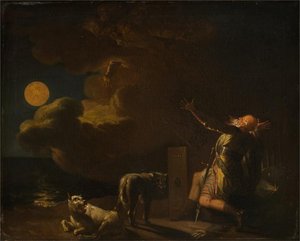
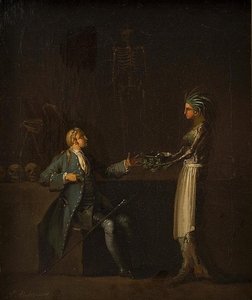
Nicolai Abildgaard portree

100 kulubumatamatum Nicolai Abildgaard maali, galeriiselektsioon

Uuendatud oktoober 2026 · järjestatud meie populaarsusindeksi järgi (otsingud, külastused ja tellimused igale teosele) · 106 teost Nicolai Abildgaard meie kataloogis

Lühidalt

Kõigist Nicolai Abildgaard jäetud originaalteostest on kõige kuulsam The Greek Poet Sappho and the Girl from Mytilene (1809), mis kuulub Statens Museum For Kunst kogele linnas Kooberemaa. Järgnevad sellest Cupid Playing the Lyre. (1782) ja Christian V Presents Danish Law 1683 (1784). Meie kataloogist löytyb 106 teost kunstnikult Nicolai Abildgaard; galeriist on säilitatud 100 maailmas kõige imetlustunud teost, millest iga on esitatud koos kuupäeva, museumi ja oma luguga.

1743 – 1809, Kopenhaagen Neoclassicism Enamama teoseid: Statens Museum For Kunst

Nicolai Abildgaard top 10 maalist: galeriis valitud teosed

1
The Greek Poet Sappho and the Girl from Mytilene (1809) autor Nicolai Abildgaard

The Greek Poet Sappho and the Girl from Mytilene

1809 · Acrylic On Canvas · Statens Museum For Kunst, Kooberemaa

Nicolai Abildgaard’s Sappho and Mytilene: A Vision of Romantic Idealism The painting “The Greek Poet Sappho and the Girl from Mytilene,” created by Nicolai Abraham Abildgaard in 1809, stands as a cornerstone of Danish neoclassical art and embodies the fervent spirit of Romantic idealism. More than just a depiction of two figures, it’s an exploration of beauty, longing, and the sublime—themes central to the artistic sensibilities of the era. Housed…

2
Cupid Playing the Lyre. (1782) autor Nicolai Abildgaard

Cupid Playing the Lyre.

1782 · Oil On Canvas · Thorvaldseni muuseum, Kööpenhaagen

In the quiet stillness of a mythological moment, Cupid Playing the Lyre. emerges from the shadows. This oil on canvas work, created by Nicolai Abildgaard around 1782, captures a solitary figure caught in a private, celestial act. The scene centers on a youthful, winged Cupid, whose presence brings a sense of soft grace to the composition. He leans toward a lyre that rests upon a stone pedestal, his delicate form…

3
Christian V Presents Danish Law 1683 (1784) autor Nicolai Abildgaard

Christian V Presents Danish Law 1683

1784 · Oil On Canvas · Statens Museum For Kunst, Kooberemaa

Christian V Presents Danish Law 1683 is an oil painting by Nicolai Abildgaard. Created in 1784, this work functions as a history scene depicting a specific real event. The subject matter focuses on a Danish king presenting a body of law, capturing a moment of official legal or political significance. The scene is rendered in a documentary style that emphasizes the gravity of the proceedings.

4
Julia and Fulvia (1803) autor Nicolai Abildgaard

Julia and Fulvia

1803 · Oil On Canvas · Statens Museum For Kunst, Kooberemaa

The oil on canvas painting titled Julia and Fulvia was executed by the artist Nicolai Abildgaard. This work depicts a literary scene or figure, focusing on the physical interaction between two female subjects. The composition centers on the tension between these figures within a classical setting.

6
Frederik II Builds Kronborg Castle at Elsinore (1782) autor Nicolai Abildgaard

Frederik II Builds Kronborg Castle at Elsinore

1782 · Oil On Canvas · Statens Museum For Kunst, Kooberemaa

In this significant work of Danish history, Frederik II Builds Kronborg Castle at Elsinore, the artist Nicolai Abildgaard captures a moment of profound national construction. The painting centers on Frederick II of Denmark, depicted during the foundational stages of the Kronborg Castle at Elsinore. It is a scene that looks back at the 18th century through a lens of historical narrative, focusing on the architectural ambitions of the Danish monarchy.

7
Kulturens herredømme (1796) autor Nicolai Abildgaard

Kulturens herredømme

1796 · Oil · Statens Museum For Kunst, Kooberemaa

The oil painting titled Kulturens herredømme, known in English as The supremacy of culture, was executed by the artist Nicolai Abildgaard. This work is identified by the accession number KMS1836. The composition features a monochromatic, black-and-white palette that emphasizes the play of light and shadow across the figures.

8
Christian VII Uniting the Ducal with the Royal Part of Holstein in 1767 (1790) autor Nicolai Abildgaard

Christian VII Uniting the Ducal with the Royal Part of Holstein in 1767

1790 · Oil On Canvas · Statens Museum For Kunst, Kooberemaa

The composition centers on a seated male figure, identified as King Christian VII, positioned on the right side of the canvas. He is dressed in white and gold regalia, wearing a crown and holding a scepter. To his left, two female figures are positioned; one faces the viewer directly, while the other is seen in profile, gesturing toward the king. Above the central group, a dark eagle flies through a…

9
Magnus Stenbock Surrenders the Fortress of Tønningen to Frederik IV in 1714 (1785) autor Nicolai Abildgaard

Magnus Stenbock Surrenders the Fortress of Tønningen to Frederik IV in 1714

1785 · Oil On Canvas · Statens Museum For Kunst, Kooberemaa

In the grand tapestry of European history, few moments capture the gravity of shifting power quite like the scene depicted in Nicolai Abraham Abildgaard’s 1785 masterpiece, Magnus Stenbock Surrenders the Fortress of Tønningen to Frederik IV in 1714. This evocative oil painting serves as a window into a pivotal era of military diplomacy and sovereign command. The composition is masterfully orchestrated, drawing the viewer into a crowded, dynamic tableau where…

10
The robber's housekeeper comforts the young girl by telling the myth of Amor and Psyche. Motif from Apulejus, The Golden Donkey (1808) autor Nicolai Abildgaard

The robber's housekeeper comforts the young girl by telling the myth of Amor and Psyche. Motif from Apulejus, The Golden Donkey

1808 · Oil On Canvas · Statens Museum For Kunst, Kooberemaa

The robber's housekeeper comforts the young girl by telling the myth of Amor and Psyche. Motif from Apulejus, The Golden Donkey is an oil on canvas work created about 1808. This piece captures a quiet, narrative moment between two figures, framed by the presence of a donkey in the shadows. The scene draws its inspiration from the literary motifs found in Apuleius's writings.

Kunstianikut Nicolai Abildgaard nimekiri jätkub, 11 kuni 100

11Apollo charging the Parcae to visit Ceres, who has fled from the Earth (1809) autor Nicolai AbildgaardApollo charging the Parcae to visit Ceres, who has fled from the Earth1809 · Statens Museum For Kunst 12Christian III Succouring Denmark (1780) autor Nicolai AbildgaardChristian III Succouring Denmark1780 · Statens Museum For Kunst 13Christian III Succouring Denmark (1780) autor Nicolai AbildgaardChristian III Succouring Denmark1780 · Statens Museum For Kunst 14The Construction of Copenhagen´s Dock in the Reign of Christian VI (1786) autor Nicolai AbildgaardThe Construction of Copenhagen´s Dock in the Reign of Christian VI1786 · Statens Museum For Kunst 15The Prayers of the Potuans at the Feast of the Unfathomable God (1785) autor Nicolai AbildgaardThe Prayers of the Potuans at the Feast of the Unfathomable God1785 · Statens Museum For Kunst 16A farewell scene (1783) autor Nicolai AbildgaardA farewell scene1783 · Nivaagaards Malerisamling 17Rome as Ruler of the World (1784) autor Nicolai AbildgaardRome as Ruler of the World1784 · Statens Museum For Kunst 18The Triumph of a Potuan, whose Reform Proposal has been Approved (1785) autor Nicolai AbildgaardThe Triumph of a Potuan, whose Reform Proposal has been Approved1785 · Statens Museum For Kunst 19Absolute Monarchy Assigned to Frederik III in 1660 (1783) autor Nicolai AbildgaardAbsolute Monarchy Assigned to Frederik III in 16601783 · Statens Museum For Kunst 20The Establishment of Schools (1781) autor Nicolai AbildgaardThe Establishment of Schools1781 · Statens Museum For Kunst 21Asiatic Trade (1782) autor Nicolai AbildgaardAsiatic Trade1782 · Statens Museum For Kunst 22Niels Klim thinks he hears the Deacon when he is awakened by a Bull (1785) autor Nicolai AbildgaardNiels Klim thinks he hears the Deacon when he is awakened by a Bull1785 · Statens Museum For Kunst 23Standardization of Weights and Measures in 1683 (1784) autor Nicolai AbildgaardStandardization of Weights and Measures in 16831784 · Statens Museum For Kunst 24The Foundation of the Royal Library (1783) autor Nicolai AbildgaardThe Foundation of the Royal Library1783 · Statens Museum For Kunst 25Richard III wakes up from his nightmare in his tent in Bosworth (1785) autor Nicolai AbildgaardRichard III wakes up from his nightmare in his tent in Bosworth1785 · Statens Museum For Kunst 26Alexander's messenger at the Persian philosopher (1785) autor Nicolai AbildgaardAlexander's messenger at the Persian philosopher1785 27Alexander the Great and an officer visit Diogenes. (1785) autor Nicolai AbildgaardAlexander the Great and an officer visit Diogenes.1785 28The Prince Royal Frederik awakens the sleeping Fama with the help of Clio. Study. (1783) autor Nicolai AbildgaardThe Prince Royal Frederik awakens the sleeping Fama with the help of Clio. Study.1783 · The Museum of National History at Frederiksborg Castle 29Richard III Before the Battle of Bosworth (1780) autor Nicolai AbildgaardRichard III Before the Battle of Bosworth1780 · Randers Kunstmuseum 30The Archangel Michael and Satan Disputing about the Body of Moses (1785) autor Nicolai AbildgaardThe Archangel Michael and Satan Disputing about the Body of Moses1785 · ARoS Aarhus Kunstmuseum 31Niels Klim Receives the Homage of the Quamites. (1787) autor Nicolai AbildgaardNiels Klim Receives the Homage of the Quamites.1787 · Statens Museum For Kunst 32King Priam Pleading with Achilles for the Corpse of Hector (1794) autor Nicolai AbildgaardKing Priam Pleading with Achilles for the Corpse of Hector1794 · Statens Museum For Kunst 33The Foundation of the Copenhagen Fire Insurance (1786) autor Nicolai AbildgaardThe Foundation of the Copenhagen Fire Insurance1786 · Statens Museum For Kunst 34Mercury by the Seashore (1794) autor Nicolai AbildgaardMercury by the Seashore1794 · Statens Museum For Kunst 35Richard III (1787) autor Nicolai AbildgaardRichard III1787 36Achilles and the Centaur Cheiron (1796) autor Nicolai AbildgaardAchilles and the Centaur Cheiron1796 · Statens Museum For Kunst 37Thetis Immersing her Infant Son Achilles in the River Styx to Make him Invulnerable (1796) autor Nicolai AbildgaardThetis Immersing her Infant Son Achilles in the River Styx to Make him Invulnerable1796 · Statens Museum For Kunst 38The Death of Achilles (1796) autor Nicolai AbildgaardThe Death of Achilles1796 · Statens Museum For Kunst 39Philosophy. Allegorical figure. (1800) autor Nicolai AbildgaardPhilosophy. Allegorical figure.1800 · Statens Museum For Kunst 40The Slave Davus and the Maid Mysis. From Terence´s Andria. (1804) autor Nicolai AbildgaardThe Slave Davus and the Maid Mysis. From Terence´s Andria.1804 · Statens Museum For Kunst 41Christian I Raising the Province of Holstein to the State of a Duchy in 1460 (1778) autor Nicolai AbildgaardChristian I Raising the Province of Holstein to the State of a Duchy in 14601778 · Statens Museum For Kunst 42Jurisprudence. Allegorical Figure (1800) autor Nicolai AbildgaardJurisprudence. Allegorical Figure1800 · Statens Museum For Kunst 43Achilles and the Daughters of Lycomedes (1796) autor Nicolai AbildgaardAchilles and the Daughters of Lycomedes1796 · Statens Museum For Kunst 44Theology. Allegorical figure (1800) autor Nicolai AbildgaardTheology. Allegorical figure1800 · Statens Museum For Kunst 45Simo and his former slave Sosia. From Terence´s Andria. (1803) autor Nicolai AbildgaardSimo and his former slave Sosia. From Terence´s Andria.1803 · Statens Museum For Kunst 46Julia and Fulvia (1800) autor Nicolai AbildgaardJulia and Fulvia1800 · National Museum of Art, Architecture and Design 47Portrait of the artist's son Marcus Aurelius Abildgaard. (1797) autor Nicolai AbildgaardPortrait of the artist's son Marcus Aurelius Abildgaard.1797 48Fingal gives his weapons to Oscar. (1796) autor Nicolai AbildgaardFingal gives his weapons to Oscar.1796 · Kunsten Museum of Modern Art Aalborg 49Allegory of Philosophy (1800) autor Nicolai AbildgaardAllegory of Philosophy1800 50Allegory of Protestantism (1809) autor Nicolai AbildgaardAllegory of Protestantism1809 · Ribe Kunstmuseum 51The Catholic Worldview, Allegory (1809) autor Nicolai AbildgaardThe Catholic Worldview, Allegory1809 · Ribe Kunstmuseum 52The Oath of Fealty in 1660 (1806) autor Nicolai AbildgaardThe Oath of Fealty in 16601806 · Statens Museum For Kunst 53Odysseus Takes Counsel with Teiresias. From Homer´s Odyssey (1809) autor Nicolai AbildgaardOdysseus Takes Counsel with Teiresias. From Homer´s Odyssey1809 · Statens Museum For Kunst 54Fotis sees her Lover Lucius Transformed into an Ass. Motif from Apeleius' The Golden Ass (1809) autor Nicolai AbildgaardFotis sees her Lover Lucius Transformed into an Ass. Motif from Apeleius' The Golden Ass1809 · Statens Museum For Kunst 55Tarquin and the Sibyl (1809) autor Nicolai AbildgaardTarquin and the Sibyl1809 · Statens Museum For Kunst 56Hierarchy at its Peak at the time of the Crusades (1784) autor Nicolai AbildgaardHierarchy at its Peak at the time of the Crusades1784 · Statens Museum For Kunst 57The Revival of Learning, the Invention of Printing and Gunpowder and the Discovery of America (1784) autor Nicolai AbildgaardThe Revival of Learning, the Invention of Printing and Gunpowder and the Discovery of America1784 · Statens Museum For Kunst 58Papirius and his Mother (1809) autor Nicolai AbildgaardPapirius and his Mother1809 · Statens Museum For Kunst 59Alexander the Great and Diogenes. (1809) autor Nicolai AbildgaardAlexander the Great and Diogenes.1809 · Kunsten Museum of Modern Art Aalborg 60Fotis sees her Lover Lucius Transformed into an Ass. Motif from Apeleius' The Golden Ass (1809) autor Nicolai AbildgaardFotis sees her Lover Lucius Transformed into an Ass. Motif from Apeleius' The Golden Ass1809 · Statens Museum For Kunst 61Tibullus Lamenting outside the Door of his Beloved (1808) autor Nicolai AbildgaardTibullus Lamenting outside the Door of his Beloved1808 · Statens Museum For Kunst 62Christian IV Aboard his Flagship "The Trinity" (1782) autor Nicolai AbildgaardChristian IV Aboard his Flagship "The Trinity"1782 · Statens Museum For Kunst 63Two Young Men Confessing to Alexander the Great their Conspiracy against Him (1800) autor Nicolai AbildgaardTwo Young Men Confessing to Alexander the Great their Conspiracy against Him1800 · Statens Museum For Kunst 64Niels Klim Attends the Sentencing of the Deceased Potuan Prince. (1785) autor Nicolai AbildgaardNiels Klim Attends the Sentencing of the Deceased Potuan Prince.1785 · Statens Museum For Kunst 65The Abolition of Adscription in 1788 (1790) autor Nicolai AbildgaardThe Abolition of Adscription in 17881790 · Statens Museum For Kunst 66Frederik V as Patron of Science and Arts (1787) autor Nicolai AbildgaardFrederik V as Patron of Science and Arts1787 · Statens Museum For Kunst 67The Midwife Taking Leave of the Girl from Andros (from Terence's Andria ) (1801) autor Nicolai AbildgaardThe Midwife Taking Leave of the Girl from Andros (from Terence's Andria )1801 · Statens Museum For Kunst 68Nature Untamed (1784) autor Nicolai AbildgaardNature Untamed1784 · Statens Museum For Kunst 69Hamlet Delivering a Letter Written by Himself to the Queen of Scotland (1776) autor Nicolai AbildgaardHamlet Delivering a Letter Written by Himself to the Queen of Scotland1776 · Statens Museum For Kunst 70From Ludvig Holbergs´s The Journey of Niels Klim to The World Underground (1785) autor Nicolai AbildgaardFrom Ludvig Holbergs´s The Journey of Niels Klim to The World Underground1785 · Statens Museum For Kunst 71Frederik II Builds Kronberg Castle at Elsinore (1781) autor Nicolai AbildgaardFrederik II Builds Kronberg Castle at Elsinore1781 · Statens Museum For Kunst 72The Dying Messalina and Her Mother (1797) autor Nicolai AbildgaardThe Dying Messalina and Her Mother1797 · Statens Museum For Kunst 73The Greek Poet Anacreon and Bathyll (1808) autor Nicolai AbildgaardThe Greek Poet Anacreon and Bathyll1808 · Statens Museum For Kunst 74Christian I Elevates Holstein to a Duchy in 1474 (1778) autor Nicolai AbildgaardChristian I Elevates Holstein to a Duchy in 14741778 · Statens Museum For Kunst 75Socrates in Prison (1784) autor Nicolai AbildgaardSocrates in Prison1784 · Ny Carlsberg Glyptotek 76Niels Klim in Potu (1785) autor Nicolai AbildgaardNiels Klim in Potu1785 · Statens Museum For Kunst 77Allegory on the Right of Citizenship (1790) autor Nicolai AbildgaardAllegory on the Right of Citizenship1790 · Statens Museum For Kunst 78Fingal Sees the Ghosts of his Forefathers by Moonlight (1782) autor Nicolai AbildgaardFingal Sees the Ghosts of his Forefathers by Moonlight1782 · Statens Museum For Kunst 79Male Figure after Michelangelo's 'Last Judgement' in the Sistine Chapel (1774) autor Nicolai AbildgaardMale Figure after Michelangelo's 'Last Judgement' in the Sistine Chapel1774 · Statens Museum For Kunst 80Ismene and Antogone Plead with Theseus (1799) autor Nicolai AbildgaardIsmene and Antogone Plead with Theseus1799 · Statens Museum For Kunst 81Hamlet and His Mother (1778) autor Nicolai AbildgaardHamlet and His Mother1778 · Statens Museum For Kunst 82Richard III terrified by nightmarish visions. Shakespeare, Act 5, Scene 9 autor Nicolai AbildgaardRichard III terrified by nightmarish visions. Shakespeare, Act 5, Scene 9Nivaagaards Malerisamling 83Amor and Psyche embracing each other autor Nicolai AbildgaardAmor and Psyche embracing each otherNivaagaards Malerisamling 84Two Roman warriors watching a seated man embracing a child autor Nicolai AbildgaardTwo Roman warriors watching a seated man embracing a child 85Scenes from 'Niels Klim's Subterranean Journey' autor Nicolai AbildgaardScenes from 'Niels Klim's Subterranean Journey'Hamburger Kunsthalle 86Audhumla autor Nicolai AbildgaardAudhumlaStatens Museum For Kunst 87The Doctor's Wife Reveals Her Husband's Intention of Anatomising Niels Klim (1787) autor Nicolai AbildgaardThe Doctor's Wife Reveals Her Husband's Intention of Anatomising Niels Klim1787 · Statens Museum For Kunst 88The Finding of the Infant Moses autor Nicolai AbildgaardThe Finding of the Infant MosesStatens Museum For Kunst 89Adam and Eve (1780) autor Nicolai AbildgaardAdam and Eve1780 · Nationalmuseum 90Catullus, and Lesbia Seeking Comfort in his Arms for the Death of her Sparrow (1809) autor Nicolai AbildgaardCatullus, and Lesbia Seeking Comfort in his Arms for the Death of her Sparrow1809 · Nivaagaards Malerisamling 91A view of Schie Church in Sweden autor Nicolai AbildgaardA view of Schie Church in SwedenSorø Art Museum 92Adrastos Slays Himself on Atys' Tomb autor Nicolai AbildgaardAdrastos Slays Himself on Atys' TombARoS Aarhus Kunstmuseum 93Lover Pamfilus in conversation with his forslagne serve Davus autor Nicolai AbildgaardLover Pamfilus in conversation with his forslagne serve DavusStatens Museum For Kunst 94Portrait of Nicolai Abraham Abildgaard autor Nicolai AbildgaardPortrait of Nicolai Abraham Abildgaard 95Ossian's swansong autor Nicolai AbildgaardOssian's swansongStatens Museum For Kunst 96Hamlet Shows His Mother the Ghost of His Father autor Nicolai AbildgaardHamlet Shows His Mother the Ghost of His Father 97Fingal Sees the Ghosts of His Ancestors in the Moonlight autor Nicolai AbildgaardFingal Sees the Ghosts of His Ancestors in the Moonlight 98Jupiter Weighing the Fate of Man autor Nicolai AbildgaardJupiter Weighing the Fate of ManRibe Kunstmuseum 99Sitting male nude with the face partly covered by his raised arms autor Nicolai AbildgaardSitting male nude with the face partly covered by his raised arms 100The Wounded Philoctetes (1775) autor Nicolai AbildgaardThe Wounded Philoctetes1775 · National Gallery of Denmark

Nicolai Abildgaard kuulsaimad maalid ajastult ajastule

Teemad, mis püüdisid Nicolai Abildgaard pilma

Neli teemat, mis esinevad neis originaalkindel kõige sagedamini, ning iga teema parim näide.

Muuseumid, kus on säilitatud Nicolai Abildgaard originaalteosed

Kümne 8 muuseumi kollektsioonid, mis sisaldavad kõige rohkem sellel lehel esitatud teoseid.

Muuseumid Linn Nicolai Abildgaard teosid Selle nimekirja maalid
Statens Museum For Kunst, KooberemaaStatens Museum For Kunst Kooberemaa 70 The Greek Poet Sappho and the Girl from Mytilene, Christian V Presents Danish Law 1683, Julia and Fulvia
Nivaagaards Malerisamling, NibeNivaagaards Malerisamling Nibe 4 A farewell scene, Richard III terrified by nightmarish visions. Shakespeare, Act 5, Scene 9, Amor and Psyche embracing each other
Ribe Kunstmuseum, EsbjergRibe Kunstmuseum Esbjerg 3 Allegory of Protestantism, The Catholic Worldview, Allegory, Jupiter Weighing the Fate of Man
ARoS Aarhus Kunstmuseum, AarhusARoS Aarhus Kunstmuseum Aarhus 2 The Archangel Michael and Satan Disputing about the Body of Moses, Adrastos Slays Himself on Atys' Tomb
Kunsten Museum of Modern Art Aalborg, AalborgKunsten Museum of Modern Art Aalborg Aalborg 2 Fingal gives his weapons to Oscar., Alexander the Great and Diogenes.
The Museum of National History at Frederiksborg Castle, HillerødThe Museum of National History at Frederiksborg Castle Hillerød 2 The Prince Royal Frederik awakens the sleeping Fama with the help of Clio. Study.
Nationalmuseum, StockholmNationalmuseum Stockholm 2 Adam and Eve
Sorø Art Museum, SorøSorø Art Museum Sorø 2 A view of Schie Church in Sweden

Nicolai Abildgaard aastak aegades: originaalteos, mis määratleb iga ajastu

Teosed aastakate kaupa

Vali vuosakülg, et näha selle ajastu definieerivat originaalteost.

Sammlajate küsimused Nicolai Abildgaard maalide kohta

Millise teosega on Nicolai Abildgaard kõige kuulsam?Paljasta vastus

The Greek Poet Sappho and the Girl from Mytilene (1809), Statens Museum For Kunst, Kooberemaa. Järgnevad Cupid Playing the Lyre. (1782) ja Christian V Presents Danish Law 1683 (1784).

Kui vana oli Nicolai Abildgaard, kui teos The Greek Poet Sappho and the Girl from Mytilene loodi?Paljasta vastus

66 aastat vanus: teos The Greek Poet Sappho and the Girl from Mytilene on pärinev aastast 1809 ning Nicolai Abildgaard sündis aastal 1743.

Millised on kümne kõige kuulsama Nicolai Abildgaard maalid?Paljasta vastus

The Greek Poet Sappho and the Girl from Mytilene, Cupid Playing the Lyre., Christian V Presents Danish Law 1683, Julia and Fulvia, The Potuans are Surprised to see Niels Klim Genuflect in front of the Wise Prince., Frederik II Builds Kronborg Castle at Elsinore, Kulturens herredømme, Christian VII Uniting the Ducal with the Royal Part of Holstein in 1767, Magnus Stenbock Surrenders the Fortress of Tønningen to Frederik IV in 1714 ja The robber's housekeeper comforts the young girl by telling the myth of Amor and Psyche. Motif from Apulejus, The Golden Donkey. Ülemine reiting näitab iga teose puhul aastat ja muuseumi.

Kui palju maali Nicolai Abildgaard jäeti?Paljasta vastus

Meie kataloogist leiate 106 teost kunstnikult Nicolai Abildgaard, mis on pärinevad ajastust 1774 kuni 1809.

Mitteks muuseumides rihangavad Nicolai Abildgaard meistriteosed?Paljasta vastus

Peamiselt Statens Museum For Kunst (Kooberemaa), Nivaagaards Malerisamling (Nibe) ja Ribe Kunstmuseum (Esbjerg) muuseumites. Ülalpool olevate muuseumite tabelis on nendest kõik loetletud.

Millah aastades maalas Nicolai Abildgaard oma kuulsamaid teoseid?Paljasta vastus

Ajal 1780s: 40 100 sellel lehel olevat teost on sellel perioodil loodud, მათart közül Cupid Playing the Lyre..

Mis on Nicolai Abildgaard esimene ja viimane kuuls fama originaalteos?Paljasta vastus

Sellel lehel on kõige vanem teos Male Figure after Michelangelo's 'Last Judgement' in the Sistine Chapel (1774) ja kõige värskeim The Greek Poet Sappho and the Girl from Mytilene (1809).

Milliseid teemasid Nicolai Abildgaard kõige sagedamini valis?Paljasta vastus

Man (20), Woman (17) ja Drapery (16), kogu selle lehekülje 100 teose kohta.

Millist tehnikat kasutas Nicolai Abildgaard kõige rohkem?Paljasta vastus

Oil On Canvas, 34 teoseks 100 töödelt sellel lehel.

Minge pihta kunstisuunasse, kuhu Nicolai Abildgaard kuulub?Paljasta vastus

Neoclassicism ja Neoclassical romanticism, seda lähtudes selle lehe originaalteostest.

Millised Nicolai Abildgaard teosed on Statens Museum For Kunst näituses?Paljasta vastus

The Greek Poet Sappho and the Girl from Mytilene, Christian V Presents Danish Law 1683 ja Julia and Fulvia: Statens Museum For Kunst, Kooberemaa säilitab 70 selle lehel olevat teost.

Nicolai Abildgaard: elu ja looming

Varajärgi ja kunstiline alus

Nicolai Abraham Abildgaard, kes sündis Kopenhaagenis 11. september 1743, tõusel kunstist ja teadust hoolitsevast perest. Tema isa, Søren Abildgaard, oli austatud antikvaari joonistaja, koda loomates noores Nicolais varajast arvedust klassikalistele vormidele ja täpsetele tähelepanekutele. See pereline mõju tõusus fundamentumiks, kui Abildgaard alustas oma kunstilist teekonda, saades esialsetest koolitustest kohaliku maalikmeisteri juures enne uue Kuningliku Taani Kunstiakadeemia õppehasseule astumist 1764. Aju talent muutus kiiresti nähtavaks; aastatel 1764 kuni 1767 kogus ta pidevalt tunnustust ja medaleid, mis kinnitasid tema kasvavat oskust. Need varajased edukused culminatsioonid reisitoetusega, mis anti talle 1767. aastal – see oli võtmetähtsusega võimalus, mis kujundaks tema kunstilist arengut, kuigi läks viis aastat, enne kui ta seda lõpuks kasutada sai. Akadeemia kujustavatel aastatel leidis Abildavalt abi Johan Edvard Mandelbergi ja Johannes Wiedewelti õpetusest, imeldes nende tehnikaid ja vaateoskuseid, samal ajal kui ta kujundas välja oma unikaalse tee.

Rooma äratus: perspektiivimuutus

1772. aastal tõi Nicolai Abildgaard lõpuks ellu oma ootatud unistuse Rooma reisist. See viisiaastane viibimine tõusus transformativeks, tähistades kriitilist pöördepunktid tema kunstilises evolutsioonis. Süvenedes klassikalise antikviidi südamesse, pühendas ta end mitte ainult skulptuuride, vaid ka arhitektuuri, dekoratsiooni ja Palazzo Farnese katekisme magnifikaatsete freskode uuringule. Külastus NAPOLI 1776. aastal koos kaaslasikuna kunstniku Jens Jueliga laiendas tema horisonti veelgi. Roma ei olnud pelgalt tehnilise õppimise koht; see oli intellektuaalne äratus. Abildgaard süvenes ajaloolisse maaliartusse, püüdes meistri kätte saada selle keerukusi ja narratiivset jõudu. Ta kogus inspiratsiooni suurmeisteritest – Annibale Carracci, Raphael, Titian ja Michelangelo –, imeldes nende kompositsioonistrateegiaid, dramaatilist valguskasutust ja sügavat inimanatomia mõistmist. Kuid tema kokkupuutus ei piirdunud vaid rangelt klassikalismiga. Kunstnike nagu Johan Tobias Sergel ja Johann Heinrich Füssli mõju hakkas tema esteetilisi meeleelasid peenelt muudama, tuues tema töödes kaasa alguse korralatud romantilise tundlikkuse. Samal ajal kultiveeris Abildgaard sügavat austust kirjanduse vastu, leidides inspiratsiooni Shakespeare'i, Homeruse ja Ossiani teostest – narratiividest, mis hiljem täitsid tema linateed tähendusrikka ja emotsionaalselt resonanteeritud kihtidega.

Kuninglikud tellimused ja rahvuslikud narratiivid

Pärast Kopenhaagenisse naasmist detsemberis 1777, tunnustati Abildgaardi koheselt tõusva tähena. Ta saavutas kiiresti professori ametikoja Akadeemias 1778. aastal ja peagi pärast, umbes 1780. aastal, tõusis ta prestiižsese kuningliku ajaloolise maali kunstniku positsioonile. See ametikoht tõi endaga kaasa monumentaalsete tellimuse Taani riikult: luua seeria maale, mis kujutaks Taani ajalugu Christiansborgi palatsi rüütisaalis (Riddersal). See projekt sai tema karjääri määravaks tegevuseks. Need ei olnud lihtsalt ajaloolised illustratsioonid; need olid hoolikalt konstrueritud jutustused, mis olid loodud monarhiat ülistama ja rahvuslikku uhkust installeerimiseks. Abildgaard ühendas meisterlikult täpsed ajaloolised kujutlused allegoriliste elementide ja müüdiliste viidetega, luues visuaalselt lummavaid ja intellektuaalselt stimuliteerivaid kompositsioone. Ta teatas koostööd Johan Edvard Mandelbergiga ka Fredensborgi palatsi dekoratiivprojektide osas, kinnistades veelgi oma positsiooni Taani juhtiva kunstniku rollis.

Stiilide süntees: neoklassitsism ja romantika

Nicolai Abildgaardi kunstiline stiil esindab neoklassikalise ranguse ja ilmuvate romantiliste meeleeluste põnevat sünteesi. Kuigi põhinevad tema teosed klassikalise kompositsiooni, selguse ja anatomilise täpsuse põhimõtetel, on need täidetud dramaatilise valgustusega, rikkete värvikujudega ja hoolikalt detailide tähelepanuga, mis vihjavad sügavamale emotsionaalsele alusvoole. Märkimisväärsed maalid nagu „Christian I Elevates Holstein to a Duchy in 1474” illustreerivad seda segu – väärikas ajalooline stseen, mis on kujundatud klassikalise täpsusega, kuid on samas täidetud suuremusega ja teatrailisusega. Teised teosed, nagu kummituslik „The Nightmare”, demonstreerivad tema tahet uurida pimedamaid psühholoogilisi teemasid, ennustades täielikku romantiikat, mis domineeris peagi Euroopa kunstis. Tema uurimine lahendus ka üle ajaloolise maaliartusse; „Culmin's Ghost Appears to his Mother” näitab tema oskust kujutada üle üleloomulisi sündmusi draamatilise intensiivsusega, samas kui teosed nagu „The Wounded Philoctetes” paljastavad tundlikkuse inimliku kannatuse ja haavatavuse vastu. Ta ei kordanud pelgalt ajaloolisi või müüdilisi stseneed; ta tõlkis neid oma kunstilise visiooni kaudu, andes neile sümboolsete tähenduste kihtide, mis olid kogenud publikule kättesaadavad. Tema piktoriaalne allegoria sai tema stiili tunnusomaks, kasutades sümboleid visuaalse lühikoodina keeruliste ideede ja emotsioonide väljendamiseks.

Pärand ja igav mõju

Abildgaard teenis Akadeemia direktorina aastatel 1789–1791 ning uuesti alates 1801. aastast kuni oma surmani Kopenhaagenis 14. novembril 1809. Kogu oma karjääri jooksul toitestis ta talentide põlvkonda, sealhulgas Asmus Jacob Carstens, Bertel Thorvaldsen, J. L. Lund ja ehk kõige olulisemalt, Christoffer Wilhelm Eckersberg. Eckersberg, keda sageli peetakse „Taani maali kunningaks”, pani aluse Taani maali kunniks, ehitades sellele põhja Abildgaardi õpetatud põhimõtetele. Abildgaardi mõju ulatus kaugemale kui tema otsesed õpilased; ta kujundas fundamentaalselt Taani kunstimaastikku, sillutades sildid neoklassitsismi ja romantiika vahel. Tema töö ei peegeldanud mitte ainult oma ajastu kultuuriväärtusi, vaid ennustas ka tulevasi kunstilisi suunamaid, tuues olulise panuse Põhja-Euroopa romantiika arendusse ning jättes temmatematud jälje Taani kunstile. Ta jääb võtmefiguuriks valgupäeva (Enlightenment) ideaalide ja 19. sajandi emotsionaalse intensiivsuse ülemineku mõistamisel.