Portrait of Masaccio

The 97 Most Famous Masaccio Paintings, Each One of a Kind

Updated oktoober 2026 · ranked by our popularity score (searches, visits and orders for each work) · 97 works by Masaccio in our catalogue

In short

Kolmainsus (1428) is the Masaccio painting that draws the most eyes. After it, the eye goes to Üleandmise raha (1425) and Eedeni aiast välja tõstmine (1426). Among the 97 works of Masaccio in our catalog, these 97 are the most famous, each a unique original presented with its year, its museum and the reason it endures.

1401 – 1428, San Giovanni Valdarno Vararenessanss Most works: Santa Maria del Carmine

Top 10 paintings by Masaccio, through the gallery's eye

1
Kolmainsus (1428) by Masaccio

Kolmainsus

1428 · Fresko

Masaccio'i "Kolmainsus" oli murghangust teos, mis tõi kaasa mitmeid kunstilisi uuendusi. See on üks esimesi monumentaalseid renessanssi maale, mis kasutas lineaarset perspektiivi, luues sügavuse ja ruumi tunde. Chiaroscuro ja sfumato tehnikate kasutamine lisab figureeridele volüümi ja tekstuuru, muudes need erakordselt realistiliseks.

2
Üleandmise raha (1425) by Masaccio

Üleandmise raha

1425 · Fresko

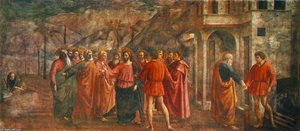
Soodne stseen avaneb Firences, Santa Maria del Carmine basilika Brancacci kapellis. Siin toob fresco pealkirjaga Üleandmise raha, mille on loonud Masaccio, piiratud piirdedega bibliseel stori kapelli seintel ellu. Felice Brancacci tellimul loodud teos on oluline osa suuremast tsüklist, mis on pühendatud püha Peetru elule. Kapellis liigub figuurid läbi sügava tähendusega hetkest ning atmosfäär on täis selle pühima ajalooa rasket ja väärtuslikku tähendust.

3
Eedeni aiast välja tõstmine (1426) by Masaccio

Eedeni aiast välja tõstmine

1426 · Fresko

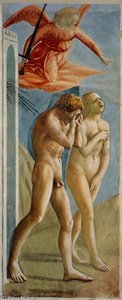
Itaalia Firenzes asuvas Santa Maria del Carmine kirikus asuv Brancaccii kapell on täis rasket vaikust, mis kannab endas sügava tragedy kaalu. Siin hingavad seinad lugudest, mis räägivad Eedeni aiast välja tõstmisest – freskoga, mille Masaccio onประมาณ 1425. aastal maalinud. Õhk tundub paksunemane uinemise ümber, kui figuurid seisvad silmitsi oma ägelise ja korduvaga paradiusest lahkumisega. See stseen tähistab suurema narratiivi algust, toimides esimese freskona sarjas, mis on pühendatud Püha Peetru elule.

4
Tulus Maksumuse Detail by Masaccio

Tulus Maksumuse Detail

Fresko

Masatsoo, kes töötas 1426–1428 Brancacci kiriku fressise, "Tulus Rahast" detailis, on üks renessansiaegse kunsti kõige tähtsamatest saavutustest. See ei ole lihtsalt religioonilist kujundust; see on revolutsiooni algus, mis muudab kunagi varem nähtava maailma. Masatsoo oskus luua illusiooni ruumist ja valguse mängu oli enne seda immatu, ja ta mõjutas järgida kunstnike põlvedele.

5
Predella panel from the Pisa Altar (1426) by Masaccio

Predella panel from the Pisa Altar

1426 · Oil On Panel · Berliini Riigimuseumid, Berliin

To stand before this Predella panel from the Pisa Altar is to encounter a moment frozen in time, yet vibrating with raw, undeniable human drama. Dating to 1426, this work captures Masaccio at the zenith of his revolutionary power. It is not merely a depiction of the Crucifixion; it is a profound meditation on sacrifice, community, and the weight of divine narrative rendered with startling immediacy. The composition draws the…

6
The Madonna of Humility (1424) by Masaccio

The Madonna of Humility

1424 · Tempera On Panel

In the quiet, profound stillness of Masaccio’s The Madonna of Humility, we encounter one of the most moving snapshots of the Early Italian Renaissance. Created around 1424, this masterpiece transcends mere religious iconography to offer a window into a moment of raw, maternal intimacy. The scene is set not upon a celestial throne, but on the earth itself, where the Virgin Mary sits upon a blue patterned cushion. This choice…

7
Trinity (detail) (1425) by Masaccio

Trinity (detail)

1425 · Fresco · Santa Maria Novella, Firenze

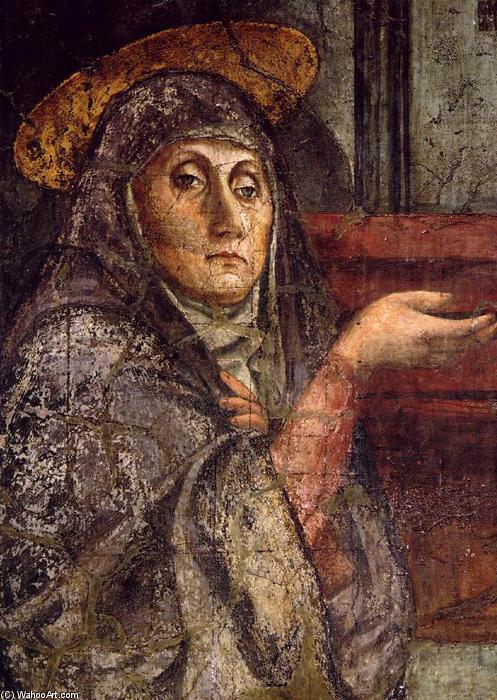
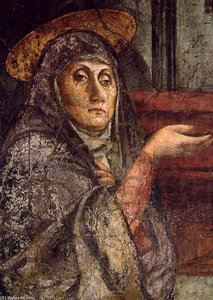
The image presents a detail from a fresco painting created in 1425 by Masaccio. Within this specific view, a figure is depicted that appears to be Mary Magdalene, identified by the traditional iconography of her long hair and a head covering. She possesses a contemplative expression, directing her gaze slightly downwards toward an object held in her right hand, which may be interpreted as a symbol of faith or devotion.

8
Two panels from the Pisa Altarpiece (1426) by Masaccio

Two panels from the Pisa Altarpiece

1426 · Tempera On Panel · Berliini Riigimuseumid, Berliin

In the quiet, hallowed halls of art history, few works capture the dawn of a new era as poignantly as Masaccio’s Two Panels from the Pisa Altarpiece. Completed in 1426, these panels are far more than mere fragments of a lost polyptych; they are windows into a transformative moment when the rigid conventions of the Gothic period began to dissolve, giving way to the profound humanism of the Early Italian…

9
Trinity (1425) by Masaccio

Trinity

1425 · Fresco · Santa Maria Novella, Firenze

To step before Masaccio’s Holy Trinity is to witness the exact moment when the flattened, symbolic world of the Middle Ages dissolved into the profound, breathing reality of the Renaissance. Painted between 1425 and 1427 within the hallowed walls of Santa Maria Novella in Florence, this fresco does not merely depict a religious scene; it carves a hole in the very wall of the chapel, inviting the viewer to step…

10
Trinity (detail) (1425) by Masaccio

Trinity (detail)

1425 · Acrylic On Canvas · Santa Maria Novella, Firenze

Masaccio’s “Trinity (detail),” housed within the magnificent Santa Maria Novella in Florence, isn't merely a fresco; it’s a pivotal moment in art history – a visual manifesto declaring the arrival of the High Renaissance. Painted between 1425 and 1427, this intimate section captures the essence of Masaccio’s revolutionary approach to depicting reality, a departure from the stylized elegance of the preceding Gothic era and a profound influence on generations of…

Masaccio's famous paintings, numbers 11 to 97

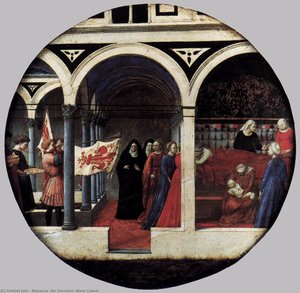
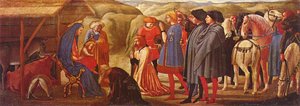
11View of the Cappella Brancacci (before restoration) (1426) by MasaccioView of the Cappella Brancacci (before restoration)1426 · Santa Maria del Carmine 12Trinity (scheme of the perspective) (1425) by MasaccioTrinity (scheme of the perspective)1425 · Santa Maria Novella 13Raising of the Son of Theophilus and St Peter Enthroned (detail) (1426) by MasaccioRaising of the Son of Theophilus and St Peter Enthroned (detail)1426 14St Peter Healing the Sick with his Shadow (detail) (1426) by MasaccioSt Peter Healing the Sick with his Shadow (detail)1426 15Frescoes in the Cappella Brancacci (right view) (1426) by MasaccioFrescoes in the Cappella Brancacci (right view)1426 · Santa Maria del Carmine 16Madonna Casini (1426) by MasaccioMadonna Casini1426 17Adam and Eve banished from Paradise (1427) by MasaccioAdam and Eve banished from Paradise1427 18The Distribution of Alms and the Death of Ananias (detail) (1426) by MasaccioThe Distribution of Alms and the Death of Ananias (detail)1426 19Frescoes in the Cappella Brancacci (left view) (1426) by MasaccioFrescoes in the Cappella Brancacci (left view)1426 · Santa Maria del Carmine 20Baptism of the Neophytes (1427) by MasaccioBaptism of the Neophytes1427 21Christ in the Garden of Gethsemane (detail) (1424) by MasaccioChrist in the Garden of Gethsemane (detail)1424 · Lindenau-Museum 22Crucifixion (1426) by MasaccioCrucifixion1426 · Museo di Capodimonte 23Tribute Money (detail) (1426) by MasaccioTribute Money (detail)1426 24The Agony in the Garden (1426) by MasaccioThe Agony in the Garden1426 25St Peter Healing the Sick with his Shadow (detail) (1426) by MasaccioSt Peter Healing the Sick with his Shadow (detail)1426 26St. Juvenal Triptych (1422) by MasaccioSt. Juvenal Triptych1422 27Maria and Child (1426) by MasaccioMaria and Child1426 28Tribute Money (detail) (1426) by MasaccioTribute Money (detail)1426 29The Expulsion from the Garden of Eden (detail) (1426) by MasaccioThe Expulsion from the Garden of Eden (detail)1426 30Birth tray (1428) by MasaccioBirth tray1428 31The Baptism of the Neophytes (1426) by MasaccioThe Baptism of the Neophytes1426 32Raising of the Son of Theophilus and St Peter Enthroned (1426) by MasaccioRaising of the Son of Theophilus and St Peter Enthroned1426 33The Distribution of Alms and the Death of Ananias (detail) (1426) by MasaccioThe Distribution of Alms and the Death of Ananias (detail)1426 34Adoration of the Knigs (1428) by MasaccioAdoration of the Knigs1428 35Tribute Money (detail) (1426) by MasaccioTribute Money (detail)1426 36Tribute Money (1426) by MasaccioTribute Money1426 37The Expulsion from the Garden of Eden (1426) by MasaccioThe Expulsion from the Garden of Eden1426 38Tribute Money (detail) (1426) by MasaccioTribute Money (detail)1426 39Raising of the Son of Theophilus and St Peter Enthroned (detail) (9) (1426) by MasaccioRaising of the Son of Theophilus and St Peter Enthroned (detail) (9)1426 40San Giovenale Triptych. Right panel. (1422) by MasaccioSan Giovenale Triptych. Right panel.1422 41Crucifixion (1426) by MasaccioCrucifixion1426 42Raising of the Son of Theophilus and St Peter Enthroned (detail) (1426) by MasaccioRaising of the Son of Theophilus and St Peter Enthroned (detail)1426 43Raising of the Son of Theophilus and St Peter Enthroned (detail) (1426) by MasaccioRaising of the Son of Theophilus and St Peter Enthroned (detail)1426 44The Raising of the Son of Theophilus and St Peter Enthroned (detail) (1426) by MasaccioThe Raising of the Son of Theophilus and St Peter Enthroned (detail)1426 45Raising of the Son of Theophilus and St Peter Enthroned (detail) (1426) by MasaccioRaising of the Son of Theophilus and St Peter Enthroned (detail)1426 46Christ in the Garden of Gethsemane (detail) (1424) by MasaccioChrist in the Garden of Gethsemane (detail)1424 · Lindenau-Museum 47San Giovenale Triptych. Central panel (1423) by MasaccioSan Giovenale Triptych. Central panel1423 48Distribution of Alms and Death of Ananias (1425) by MasaccioDistribution of Alms and Death of Ananias1425 49Profile Portrait of a Young Man by MasaccioProfile Portrait of a Young Man 50Profile Portrait of a Young Man (1425) by MasaccioProfile Portrait of a Young Man1425 · National Gallery of Art 51Rendering of the Tribute Money by MasaccioRendering of the Tribute Money 52Distribution of the Goods of the Community and the Death of Ananias (detail) by MasaccioDistribution of the Goods of the Community and the Death of Ananias (detail) 53St. Giovenale Triptych by MasaccioSt. Giovenale Triptych 54The Expulsion from Paradise by MasaccioThe Expulsion from Paradise 55The Adoration of the Magi by MasaccioThe Adoration of the Magi 56St. Peter Baptizing the Neophytes by MasaccioSt. Peter Baptizing the Neophytes 57Birth Salver by MasaccioBirth Salver 58Medallion by MasaccioMedallion 59Madonna and Child by MasaccioMadonna and Child 60Madonna Enthroned by MasaccioMadonna Enthroned 61St Jerome and St John the Baptist by MasaccioSt Jerome and St John the Baptist 62Christ in the Garden of Gethsemane (1424) by MasaccioChrist in the Garden of Gethsemane1424 · Lindenau-Museum 63San Giovenale Triptych. Left panel (1422) by MasaccioSan Giovenale Triptych. Left panel1422 64Portrait of a Young Woman (1425) by MasaccioPortrait of a Young Woman1425 65Distribution of the Goods of the Community and the Death of Ananias by MasaccioDistribution of the Goods of the Community and the Death of Ananias 66The Holy Trinity with the Virgin, St. John and Two Donors by MasaccioThe Holy Trinity with the Virgin, St. John and Two Donors 67The Cricifixion of St. Peter. The Beheading of St. John the Baptist by MasaccioThe Cricifixion of St. Peter. The Beheading of St. John the Baptist 68La Consagración by MasaccioLa Consagración 69Crucifixion by MasaccioCrucifixion 70St Jerome and St John the Baptist 1 by MasaccioSt Jerome and St John the Baptist 1 71The Madonna and Child with Saint Anne by MasaccioThe Madonna and Child with Saint Anne 72Two panels from the Pisa Altarpiece by MasaccioTwo panels from the Pisa Altarpiece 73Portrait of a young man by MasaccioPortrait of a young manIsabella Stewart Gardneri muuseum 74View of the Cappella Brancacci (after restoration) by MasaccioView of the Cappella Brancacci (after restoration) 75Putto and a Small Dog (back side of the Berlin Tondo) by MasaccioPutto and a Small Dog (back side of the Berlin Tondo) 76The Madonna and Child with st.Anna. (1424) by MasaccioThe Madonna and Child with st.Anna.1424 77Plate of Nativity (Berlin Tondo) (1427) by MasaccioPlate of Nativity (Berlin Tondo)1427 · Berliini Riigimuseumid 78Madonna with Child and Angels (1426) by MasaccioMadonna with Child and Angels1426 · National Gallery 79The Distribution of Alms and the Death of Ananias (1426) by MasaccioThe Distribution of Alms and the Death of Ananias1426 · Santa Maria del Carmine 80St Peter Healing the Sick with his Shadow (1426) by MasaccioSt Peter Healing the Sick with his Shadow1426 · Santa Maria del Carmine 81San Giovenale Triptych (1422) by MasaccioSan Giovenale Triptych1422 82Raising of the Son of Teophilus and St.Peter Enthroned (1427) by MasaccioRaising of the Son of Teophilus and St.Peter Enthroned1427 · Santa Maria del Carmine 83St Paul (1426) by MasaccioSt Paul1426 · Museo Nazionale di San Matteo 84Carnesecchi Triptych (1423) by MasaccioCarnesecchi Triptych1423 85Adoration of the Magi (1426) by MasaccioAdoration of the Magi1426 · Berliini Riigimuseumid 86Martyrdom of San Giovanni Battista (1426) by MasaccioMartyrdom of San Giovanni Battista1426 · Gemäldegalerie 87Predella panel from the Pisa Altar (1426) by MasaccioPredella panel from the Pisa Altar1426 · Berliini Riigimuseumid 88A Bearded Carmelite Saint (1426) by MasaccioA Bearded Carmelite Saint1426 · Gemäldegalerie 89Madonna Casini (1426) by MasaccioMadonna Casini1426 90Madonna of Humility (1420) by MasaccioMadonna of Humility1420 · National Gallery of Art 91Repentance of Saint Peter (1425) by MasaccioRepentance of Saint Peter1425 · Santa Maria del Carmine 92San Agustín by MasaccioSan AgustínGemäldegalerie 93St. Andrew (1426) by MasaccioSt. Andrew1426 · J. Paul Getty muuseum 94Carmelita by MasaccioCarmelitaGemäldegalerie 95St. Jerome by MasaccioSt. JeromeGemäldegalerie 96St.Girolamo end Giovanni Battista (1428) by MasaccioSt.Girolamo end Giovanni Battista1428 · National Gallery 97Crucifixion of St Peter (1426) by MasaccioCrucifixion of St Peter1426 · Berliini Riigimuseumid

Masaccio's famous paintings, period by period

The subjects that held Masaccio's eye

The four subjects that come back most often in these originals, each with its finest example.

The museums that keep Masaccio's originals

The 8 museums that hold the most of the paintings on this page.

Museum City Works by Masaccio Paintings from this list
Santa Maria del Carmine, FirenzeSanta Maria del Carmine Firenze 7 View of the Cappella Brancacci (before restoration), Frescoes in the Cappella Brancacci (right view), Frescoes in the Cappella Brancacci (left view)
Berliini Riigimuseumid, BerliinBerliini Riigimuseumid Berliin 6 Predella panel from the Pisa Altar, Two panels from the Pisa Altarpiece, Plate of Nativity (Berlin Tondo)
Gemäldegalerie, BerliinGemäldegalerie Berliin 5 Martyrdom of San Giovanni Battista, A Bearded Carmelite Saint, San Agustín
Santa Maria Novella, FirenzeSanta Maria Novella Firenze 4 Trinity (detail), Trinity, Trinity (detail)
Lindenau-Museum, AltengauLindenau-Museum Altengau 3 Christ in the Garden of Gethsemane (detail), Christ in the Garden of Gethsemane (detail), Christ in the Garden of Gethsemane
National Gallery of Art, WashingtonNational Gallery of Art Washington 2 Profile Portrait of a Young Man, Madonna of Humility
National Gallery, LondonNational Gallery London 2 Madonna with Child and Angels, St.Girolamo end Giovanni Battista
Museo di Capodimonte, NeapelMuseo di Capodimonte Neapel 1 Crucifixion

Masaccio across the years: the unique originals of each

Masaccio's dated originals shown here fit into about ten years, 1420 to 1428: the eye follows them year by year.

Works per year

Pick a year to see its originals.

Masaccio's paintings: questions for the gallery

What is the single most famous work of Masaccio?Reveal the answer

Kolmainsus (1428). Üleandmise raha (1425) and Eedeni aiast välja tõstmine (1426) come next.

At what age did Masaccio create Kolmainsus?Reveal the answer

27 years old: Kolmainsus dates from 1428, and Masaccio was born in 1401.

Which ten paintings by Masaccio are the most famous?Reveal the answer

Kolmainsus, Üleandmise raha, Eedeni aiast välja tõstmine, Tulus Maksumuse Detail, Predella panel from the Pisa Altar, The Madonna of Humility, Trinity (detail), Two panels from the Pisa Altarpiece, Trinity and Trinity (detail). The ranking above gives each one's year and museum.

How many works by Masaccio are known?Reveal the answer

Our catalog holds 97 works by Masaccio, dated from 1420 to 1428.

Where can the most famous Masaccio originals be seen?Reveal the answer

Mostly in Santa Maria del Carmine (Firenze), Berliini Riigimuseumid (Berliin) and Gemäldegalerie (Berliin). The museum table above lists them all.

During which period did Masaccio create the best-known paintings?Reveal the answer

In 1426: 41 of the 97 works on this page were made then, Eedeni aiast välja tõstmine among them.

Which famous Masaccio painting is the earliest, and which the latest?Reveal the answer

On this page, the earliest is Madonna of Humility (1420) and the latest Kolmainsus (1428).

What subjects did Masaccio favour?Reveal the answer

Saints (30), Religious (25) and Renaissance (14), across the 97 works on this page.

What materials did Masaccio paint with most?Reveal the answer

Acrylic On Canvas, for 9 of the 97 works on this page.

Which movement does the work of Masaccio belong to?Reveal the answer

Vararenessanss, judging by the originals on this page.

What Masaccio originals can I see at the Santa Maria del Carmine?Reveal the answer

View of the Cappella Brancacci (before restoration), Frescoes in the Cappella Brancacci (right view) and Frescoes in the Cappella Brancacci (left view): the Santa Maria del Carmine, Firenze holds 7 of the works on this page.

Where can I order a hand-painted Masaccio reproduction?Reveal the answer

Yes, as a reproduction: the original stays in its museum, but any painting on this page can be painted by hand for you, made to order one at a time, from the painting's own page.

Masaccio: a portrait of the artist

Masaccio (1401-1428): Renessansi Realismi Koit

Tommaso di Ser Giovanni di Simone, paremini tuntud kui Masaccio (tähendab 'kohmakas Tom'), oli varase Itaalia renessansi võtmeisik. Ta sündis 21. detsembril 1401. aastal San Giovanni Valdarnos, Itaalias ja suri traagiliselt noorelt 1428. aastal. Tema lühike karjäär revolutsioneeris maalikunsti murrangulise realismiga, perspektiiviga ja chiaroscuroga (tugevate valgus-varju kontrastidega kasutamine). Vaatamata oma lühikesele elule oli Masaccio mõju järgnevatele kunstnike põlvedele sügav, luues uue naturalismi standardi ja mõjutades Lääne kunsti kulgu.

Varajane Elu ja Koolitus

  • Päritolu: Sündinud Giovanni di Simone Cassai pojana, notarina, ja Jacopa di Martinozzo juures. Tema perekonnanimi Cassai tulenes isa vanaisa ameti järgi, kes oli kapimeister.
  • Varajased Aastad: Jäi orvuks viieselt isapoolse surma tõttu, tal oli vend Giovanni (Lo Scheggia), kes sai ka maalikunstnikuks.
  • Õpipõlves: Masaccio kunstilise koolituse detailsed üksikasjad on suures osas teadmata, mis on ebatavaline renessansi kunstnike jaoks. Usutakse, et ta õpipoisskoolis umbes 12-aastaselt, kuid kindlat meistrit pole identifitseeritud. Selle dokumenteerimata koolituse puudumine lisab müsteeriumi tema kiire arengu ja uuenduslike tehnikate ümber.
  • Gildi Liikmesus: Ta liitus maalikunstnike gildiga (Arte de’ Medici e Speziali) Firenzes 7. jaanuaril 1422, mis tähistas tema esilekerkimist iseseisva kunstnikuna.

Kunstiline Areng ja Peamised Teosed

  • Varajased Mõjud: Esialgu mõjutatud Giotto di Bondone’st, eelkäijast, kes oli tuntud oma naturalismi poolest, ületas Masaccio teda kiiresti perspektiivi ja anatoomia arusaamisega. Ta ammutas inspiratsiooni ka Filippo Brunelleschi arhitektuurilistest uuendustest, eriti Brunelleschi lineaarperspektiivi avastamisest.
  • Põhilised Uuendused: Masaccio tõi sisse mitmeid murrangulisi tehnikaid:
    • Lineaarperspektiiv: Kasutas kadumispunkte ja matemaatilist täpsust, et luua veenv illusioon sügavusest kahemõõtmelisel pinnal.
    • Chiaroscuro: Meistri oskusega kasutas valgust ja varju vormide modelleerimiseks, luues varem maalikunstis nägemata mahu- ja realismitunde.
    • Naturalism: Kirjeldas figuurid anatoomilise täpsuse ja emotsionaalse väljendusvõimega, liikudes varasemate perioodide stiliseeritud esitustest eemale.
  • Olulised Teosed:
    • San Giovenale Altarimaal (c. 1422): Varasem töö, mis demonstreerib tema arenevat oskust perspektiivis ja naturalistlikus esituses.
    • Madonna ja Laps Püha Annaga (c. 1423-1425): Koostöö Masolinoga, mis näitab Masaccio tõusvat naturalismi koos Masolino traditsioonilisema stiiliga.
    • Brancacci Chapel Freskod (c. 1425-1428): Tema tuntuimad ja mõjukaimad teosed, mis asuvad Santa Maria del Carmine kirikus Firenzes. Need freskod, sealhulgas "Rahamaksu Maksmine", "Paaritusparadiisist" ja "Püha Peetrus Neofüütide Pühitsemine", peetakse varase renessansi kunsti meistriteosteks.

Ajalooline Tähtsus ja Pärand

Masaccio mõju Lääne kunsti kulule on hindamatu, vaatamata tema traagiliselt lühikesele karjäärile. Tema uuendused perspektiivis, chiaroscuros ja naturalismis muutsid fundamentaalselt viisi, kuidas kunstnikud maailma kujutasid. Ta sillutas tõhusalt tee keskaegsete kunstikonventsioonide ja renessansi tekkivate ideaalide vahel.

  • Mõju Järgnevatele Kunstnikele: Masaccio töö mõjutas sügavalt põlvkondi maalikunstnikke, sealhulgas Donatello, Leonardo da Vinci, Michelangelo ja Raphael. Nad uurisid tema freskosid intensiivselt, omades ja kohandades oma stiilidesse tema tehnikaid.
  • Alusvaraks Kõrgele Renessansile: Tema rõhk realismile ja inimlikule emotsioonile pani aluse kõrge renessansi kunstilistele saavutustele.
  • Vasari Arvestus: Biograaf Giorgio Vasari tunnistas Masaccio geeniust, kiites teda kui "oma põlvkonna parimat maalikunstnikku" ja rõhutades tema võimet jäljendada loodust ületamatult oskusega.
  • Traagiline Kaotus: Tema surm 26-aastaselt leinati kaasaegsete poolt, nagu Filippo Brunelleschi, kes kahetses sellise tähelepanuväärse ande kaotust.

Kokkuvõte

Masaccio pärand kestab kui üks ajaloo olulisemaid ja mõjukamaid kunstnikke. Ta on võtmeisik üleminekul keskaegsest renessansi kunsti, muutes igaveseks viisi, kuidas me maailma kujutame ja maalime. Tema lühike, kuid särav karjäär on tunnistuseks uuenduste jõust ja kunstilise geeniuse püsivast mõjust.

All 97 works by Masaccio →