Lühidalt
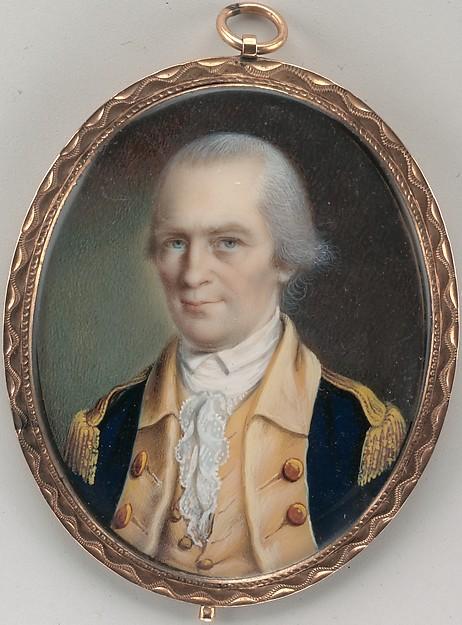
Galleriist vaadatuna on John Ramage kõige kuulsam teos Portrait of a Gentleman (1780), mille originaal ripub Metropolitan Museum of Art-is, New York. Major Greene, B.A (1777) ja Gilbert Van Cortlandt (1785) täidavad kolmikut, mille iga silm tunnistab. Kunstnii John Ramage 23 teose põhjal esitleb galeriis allpool 23 kõige kuulsumat, kus iga originaal on märgitud aastaga, muuseumiga ja kirjeldatud, mis teeb selle unikaalseks.
Galeria 10 parimat John Ramage maali
Theophylact Bache
Theophylact Bache was the father of Elizabeth (2002.476.2) and Sarah (2002.476.1).
John Ramage maalid, järjestus 11 kuni 23
Teemad, mis püüdisid John Ramage pilma
Neli teemat, mis esinevad neis originaalkindel kõige sagedamini, ning iga teema parim näide.
18th century 4 teost
Historical figure 4 teost
Portraiture 3 teost
Miniature art 3 teost
Muuseumid, kus on säilitatud John Ramage originaalteosed
Kümne 5 muuseumi kollektsioonid, mis sisaldavad kõige rohkem sellel lehel esitatud teoseid.
| Muuseumid | Linn | John Ramage teosid | Selle nimekirja maalid |
|---|---|---|---|
| New York | 17 | Portrait of a Gentleman, Major Greene, B.A, Gilbert Van Cortlandt | |
| Stockholm | 1 | Mrs. James Bleecker (Sarah Bache) | |
| Stiiitlinburg | 1 | George Washington | |

| Washington, D.C. | 1 | Col. Josiah Parker | |
| Chicago | 1 | Portrait of Augustine Taylor |
John Ramage, iga kümnendiga üks signatuurpilt
Teosed aastakate kaupa
Vali vuosakülg, et näha selle ajastu definieerivat originaalteost.
John Ramage maalid: galerii vastused
Milline John Ramage maal on kõige kuulsam?Paljasta vastus
Portrait of a Gentleman (1780), Metropolitan Museum of Art, New York. Järgnevad Major Greene, B.A (1777) ja Gilbert Van Cortlandt (1785).
Kui vana John Ramage oli teose Portrait of a Gentleman valmimisel?Paljasta vastus
32 aastat vanus: teos Portrait of a Gentleman on pärinev aastast 1780 ning John Ramage sündis aastal 1748.
Millised on John Ramage top 10 maali?Paljasta vastus
Portrait of a Gentleman, Major Greene, B.A, Gilbert Van Cortlandt, Governor George Clinton, Mrs. James Bleecker (Sarah Bache), Portrait of a Gentleman, Mrs. William Few (Catherine Nicholson), Mrs. Gulian Ludlow (Maria Ludlow), Thomas Witter ja Theophylact Bache. Ülemine reiting näitab iga teose puhul aastat ja muuseumi.
Kui palju teoseid John Ramage lõi?Paljasta vastus
Meie kataloogist leiate 23 teost kunstnikult John Ramage, mis on pärinevad ajastust 1777 kuni 1795.
Kust leiad John Ramage kõige kuulsamad originaalteosed?Paljasta vastus
Peamiselt Metropolitan Museum of Art (New York), Nationalmuseum (Stockholm) ja Hermitage muuseum (Stiiitlinburg) muuseumites. Ülalpool olevate muuseumite tabelis on nendest kõik loetletud.
Millal lõi John Ramage oma kuulsamad maalid?Paljasta vastus
Ajal 1780s: 13 23 sellel lehel olevat teost on sellel perioodil loodud, მათart közül Portrait of a Gentleman.
Millised on John Ramage varased ja hilised kuulsad teosed?Paljasta vastus
Sellel lehel on kõige vanem teos Major Greene, B.A (1777) ja kõige värskeim Mrs. James Bleecker (Sarah Bache) (1795).
Millist teemat John Ramage kõige rohkem käsitledas?Paljasta vastus
18th century (4), Historical figure (4) ja Portraiture (3), kogu selle lehekülje 23 teose kohta.
Millise suunaga on John Ramage seotud?Paljasta vastus
Neoclassicism, seda lähtudes selle lehe originaalteostest.
Milliseid John Ramage originaalte Metropolitan Museum of Art kogumuses on?Paljasta vastus
Portrait of a Gentleman, Major Greene, B.A ja Gilbert Van Cortlandt: Metropolitan Museum of Art, New York säilitab 17 selle lehel olevat teost.
Kas ma saan John Ramage maali käsitsi reprodutseerida?Paljasta vastus
Jah, reproduktsioonina: originaal jääb oma museumi, kuid mis tahes selle lehe maal võib olla teie jaoks käsitsi maaldav, tellustööna valmistatud üksik teos, mida saab tellida maali oma lehel.
John Ramage: kunstnik
A Life Bridging Worlds: The Story of John Ramage
Born in Dublin, Ireland, in 1748, John Ramage’s life was one of remarkable transition and artistic dedication, a journey that carried him from the refined world of Irish goldsmithing to the burgeoning art scene of colonial America. Details surrounding his early family life remain elusive, yet it is known he received formal training at the Dublin Society of Artists in 1763, laying a foundation in drawing and painting techniques that would serve as the bedrock for his future endeavors. Ramage’s initial career path was notably versatile; he skillfully combined the precision of a goldsmith with the delicate artistry of a miniaturist—a testament to his inherent talent for detail and decorative arts. This early period instilled within him not only technical proficiency but also an appreciation for craftsmanship that would distinguish his work throughout his life. In 1772, driven by ambition or perhaps circumstance, Ramage embarked on a new chapter, emigrating to Halifax, Nova Scotia, marking the beginning of his artistic journey in North America and setting the stage for a life intertwined with both art and political upheaval.Loyalty, Love, and Revolution: Navigating Turbulent Times
Ramage’s arrival in North America coincided with a period of immense political tension—the American Revolution. A staunch Loyalist, his allegiance lay firmly with the British Crown, leading him to join “the Loyal Irish Volunteers” in Boston, a military unit dedicated to defending the city. This commitment to the crown deeply impacted his personal life as well. In 1776, he married Victoria Ball, but this union was soon complicated by another marriage to a woman known only as “Mrs. Taylor” while stationed in Halifax. The ensuing legal battles and eventual divorce granted to Ball underscore the complexities of Ramage’s life during wartime—a period marked not only by political strife but also by personal turmoil. Forced to evacuate Boston with British forces in 1776, he relocated back to Halifax before eventually settling in New York City in 1777, seeking refuge and continuing his artistic practice amidst the ongoing conflict. His dedication extended beyond the canvas; Ramage served as a second lieutenant in the City Militia of New York, demonstrating a willingness to actively participate in the defense of the city he had come to call home.The Miniature Master: A Portraitist of an Emerging Nation
Despite the turbulent backdrop of revolution and political division, Ramage flourished as an artist, quickly gaining renown for his exquisite portrait miniatures on ivory. This was a particularly popular art form at the time, prized for its intimacy and portability. His skill lay in the masterful application of delicately shaded cross-hatching and fine linear strokes to model faces with remarkable realism and sensitivity. He didn’t merely replicate likenesses; he captured character, social standing, and a sense of individual presence within each miniature. Ramage's clientele quickly grew to include prominent figures from New York society—the Pintards, Gerrys, Ludlows, Van Rensselaers, and Van Cortlands all sought his services. Beyond his painting prowess, Ramage’s goldsmithing skills were also highly valued; he crafted elegant cases for his miniatures, showcasing a holistic artistic vision that combined artistry with meticulous craftsmanship. However, it was one commission in particular that cemented his place in history: in 1789, he received the honor of painting George Washington while serving as President of the United States—making him the first artist to officially portrait the president in office. Two distinct miniatures of Washington are known to exist today, each a testament to Ramage’s skill and a valuable historical record.A Final Chapter Marked by Hardship and Legacy
The latter years of John Ramage's life were unfortunately marred by financial difficulties and personal hardship. Facing mounting debts in 1794, he fled to Montreal in an attempt to escape his creditors, only to encounter further misfortune upon arrival—imprisonment and a struggle to revive his artistic career. Despite these challenges, he continued to paint, claiming to have produced “extraordinary pictures,” though success proved elusive. On October 24, 1802, John Ramage died in Montreal, receiving a burial that was, sadly, reflective of his isolation and diminished circumstances. Yet, despite the hardships he faced, Ramage’s legacy endures—primarily through his distinction as the first artist to paint George Washington as President, an achievement that holds significant historical and artistic weight. His miniatures offer invaluable insights into the fashion, social circles, and personalities of late 18th-century America. Contemporary artist William R. Dunlap aptly considered him "the best artist in his branch in America," a testament to Ramage’s enduring talent and contribution to the art world.Notable Works
- Portrait of George Washington (1789): The most famous work, marking Ramage as the first artist to officially portray the President.
- John Maunsell (1785): A rare and elegant miniature showcasing a stern figure in a red coat, demonstrating Ramage’s skill in capturing character.
- Miniature Portraits of Prominent New York Families: Works commissioned by the Pintards, Gerrys, Ludlows, Van Rensselaers, and Van Cortlands, offering glimpses into colonial society.